

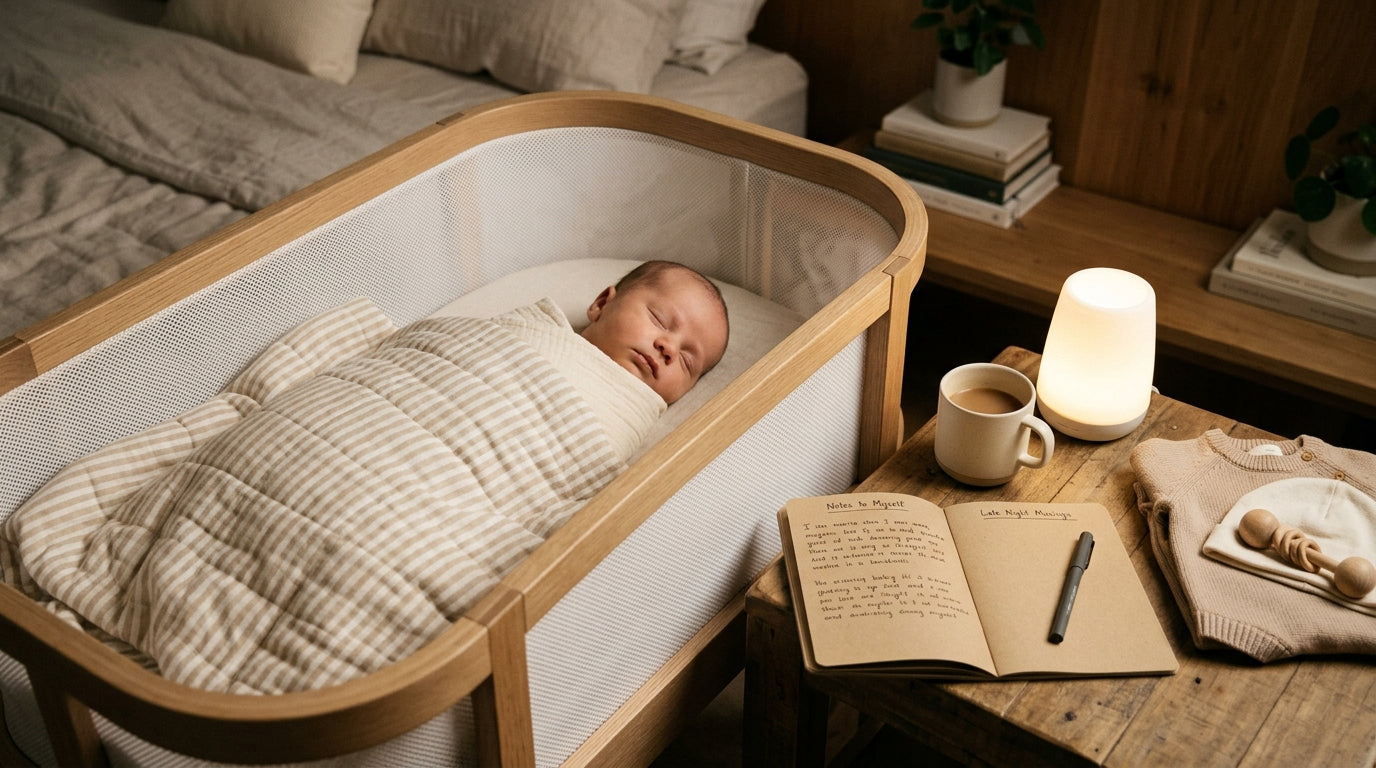
Dear Priya from last November.
You're sitting in the dark. The baby is finally down after three false starts. Your phone screen is blinding you because you forgot to turn on night mode. You're staring at a cart containing fourteen items of infant clothing, opening new tabs, and desperately searching for a coupon code for baby gap so you can justify spending your entire disposable income on cardigans that will fit her for exactly three weeks. Close the tab, yaar. We need to talk.
You think you're being financially responsible by hunting for a promo code. I've seen a thousand of these late-night panic buys. It's basically retail triage. You have a massive blowout that ruins her only clean sleeper, and suddenly you think you need to outfit her for the next six months right this second because she grew out of her newborn onesies yesterday. You're treating a minor wardrobe gap like an arterial bleed. Just breathe.
The illusion of retail savings
Let's break down the retail machine you're currently trying to game. The email newsletter trick is the oldest one in the book. You give them your email, they give you a quarter off the price. You're going to create six different burner email accounts over the next few months to keep getting that code. It's exhausting, and eventually, you lose track of which fake name you used.
Then there's the promotional cash. You buy things to earn the cash, then you've to buy more things to use the cash during a very specific window of time. It's a closed loop of continuous spending designed by people who know exactly how vulnerable a sleep-deprived millennial mother is at two in the morning. You think you're getting a steal on baby g apparel, but you're just buying inventory you don't actually need.
Listen, you need to abandon the cart, clear your browser history, and evaluate what fabrics are actually touching her skin before you fall for another buy-one-get-one trap.
What my doctor actually said about fabric
You're going to buy a bunch of synthetic blend sweaters because they look like tiny adult clothes. Don't do it. A week from now, she's going to develop this angry, raised rash across her chest. You'll panic. You'll take her to the clinic. My doctor took one look at it, sighed, and muttered something about contact dermatitis and cheap retail dyes. It's apparently very common when you buy discount fast-fashion for infants.
The medical consensus on this is somewhat murky, but the American Academy of Pediatrics talks endlessly about breathable layers to prevent overheating. Overheating is a major risk factor for SIDS. I used to recite this to parents in the pediatric ward all the time. Now I'm the one putting my kid in a polyester blend because it has a cute bear on it. I think the issue is that synthetic fibers trap heat and moisture against the skin. You end up with a baby who's simultaneously sweating and freezing, which disrupts their sleep, which in turn ruins your sleep.
Just stick to organic cotton. It's not a crunchy parenting trend, it's a structural necessity for their weird, sensitive skin.
The hierarchy of decent baby clothes
If you want a recommendation that really holds up to the reality of explosive diapers, look at the sleeveless organic cotton baby bodysuit from Kianao. This is the one thing I seriously kept reaching for in the dark. It's organic cotton with a tiny bit of stretch, and it doesn't have those ridiculous ruffled collars that bunch up under their chin.

The envelope shoulders mean you can pull it down over her body when she inevitably ruins it, rather than dragging a soiled garment over her face. That's the kind of practical engineering I respect. It's soft, it survives the hot wash cycle, and it's just a solid piece of fabric that doesn't irritate her eczema.
Then you've the accessories you buy to hit the free shipping threshold. The gentle baby building block set is fine. It's soft rubber. She's going to chew on the blue one for a week and then throw the rest under the sofa. They're safe and they don't have formaldehyde, which is a weirdly low bar for toys but here we're. They do the job.
The absolute betrayal of tiny denim
This is where I need you to focus. Stop buying rigid fabrics for an infant. I know the tiny jeans look hilarious. I know the miniature lumberjack aesthetic is strong. But putting a four-month-old in denim is a crime against humanity.
They have no core control. They spend their entire day curled up like a cashew. Putting them in stiff pants means the waistband is just digging into their distended milk belly for hours. I've watched babies scream for forty-five minutes straight, and the moment you take off the stylish pants, they immediately fall asleep.
You're paying premium prices for clothes that actively make your life harder. You're fighting a screaming child, trying to force their rigid little legs into stiff fabric tubes while sweating through your own shirt. It's madness. Stick to things that stretch.
Also, don't buy newborn shoes because they're a tax on the sleep-deprived and will fall off in the grocery store parking lot anyway.
How to honestly handle the retail system
If you're still determined to buy from the big retail chains, you need to know how the triage really works. You don't need a random discount code from a sketchy coupon site. You need to understand their internal policies to protect your wallet.

Here's the protocol I learned the hard way.
- The price adjustment window is real. If you buy that cardigan and it goes on sale a week later, they'll refund you the difference. You just have to watch the site like a hawk and be willing to sit on hold.
- The return policy is your safety net. Buy the sizes you think she'll need, keep the tags on, and leave them in the closet. If she skips a size entirely, which she absolutely will, just take them back. They take almost everything back if it's unwashed.
- Factory sites are essentially the same clothes. They just use slightly different thread counts and cheaper zippers. The baby won't know the difference. She's going to spit up on it regardless.
Navigating the sizing minefield
Let's talk about the arbitrary nature of infant sizing. You're looking at a baby gap tag that says three to six months. That means absolutely nothing. It's a suggestion made up by a corporation. I've had six-week-old infants in the clinic who couldn't squeeze their thighs into a six-month size, and I've seen nine-month-olds swimming in the three-month stuff.
You're trying to use a discount to buy clothes for next winter. You're doing complex calculus trying to predict her percentile growth curve. It's a fool's errand. You're going to guess wrong, and you'll end up with a pile of heavy sweaters that perfectly fit her during the hottest week of August. Buy for the body she has right now, plus maybe one size up. Everything else is a gamble.
The sleep environment is all that matters
When you're shopping, focus on sleep. That's the only time their clothing seriously impacts their health. You want snug fits and natural fibers. We started using the mono rainbow bamboo baby blanket for the stroller and floor time. The bamboo fabric is honestly impressive.
It keeps stable temperature better than the heavy fleece things you were looking at. The print is subtle enough that it doesn't give me a migraine, which is rare for baby gear. It's breathable, which aligns with my residual nursing anxiety about airflow. If you want to see what else they've, you can browse the baby blankets collection to find something that doesn't look like a cartoon exploded.
Listen, beta. You're doing fine. You don't need to optimize her wardrobe. She's going to spend the next six months in various states of undress anyway. Save your money, save your sanity, and stop scrolling. Go to sleep.
Before you close the laptop entirely, if you want clothes that genuinely make sense for her skin, explore the organic baby clothes collection and get her something she can really breathe in.
FAQ
Why does everyone care so much about organic cotton?
I thought it was a marketing scam at first. But regular cotton is heavily treated with pesticides and the manufacturing process uses some harsh chemicals. When you've a baby with skin that reacts to literally everything, including her own drool, you start caring about what's left in the fabric. Organic cotton is just softer and hasn't been bathed in industrial runoff. It really makes a difference for eczema.
How do I genuinely use the promotional cash without losing money?
You don't. That's the secret. Unless you were already planning to buy seventy dollars worth of socks and bodysuits, spending money just to earn a voucher is a trap. If you happen to have the cash, use it to buy boring staples like plain white onesies in the next size up. Don't use it on trendy seasonal items she'll wear once.
Are the factory outlet clothes safe for newborns?
Safety-wise, yes. They still have to pass consumer product guidelines for choking hazards and flammability. The issue isn't safety, it's durability. The snaps might break sooner and the fabric will pill after three washes. If you're buying it for daycare where it's going to get ruined anyway, it's fine. If you want it to last through multiple kids, maybe look elsewhere.
What's the deal with sleep sack sizing?
It's terrifying. If the neck hole is too big, the baby can slip down inside the sack, which is a massive suffocation risk. Never buy a sleep sack a size up hoping they'll grow into it. It needs to fit snugly around the chest and neck right now. I don't care if it's on clearance. Buy the size that fits today.
Should I wash everything before she wears it?
Absolutely. Always. Clothes sit in massive shipping containers, get sprayed with anti-fungal chemicals so they don't get moldy in transit, and then sit in dusty warehouses. I don't care how tired you're, run it through a cold cycle with a gentle detergent before you put it anywhere near her face.




Share:
Dear Tom: The Truth About Baby Games Online and Screen Time
The Day the Park Waterfowl Fought Back: A Survival Log