

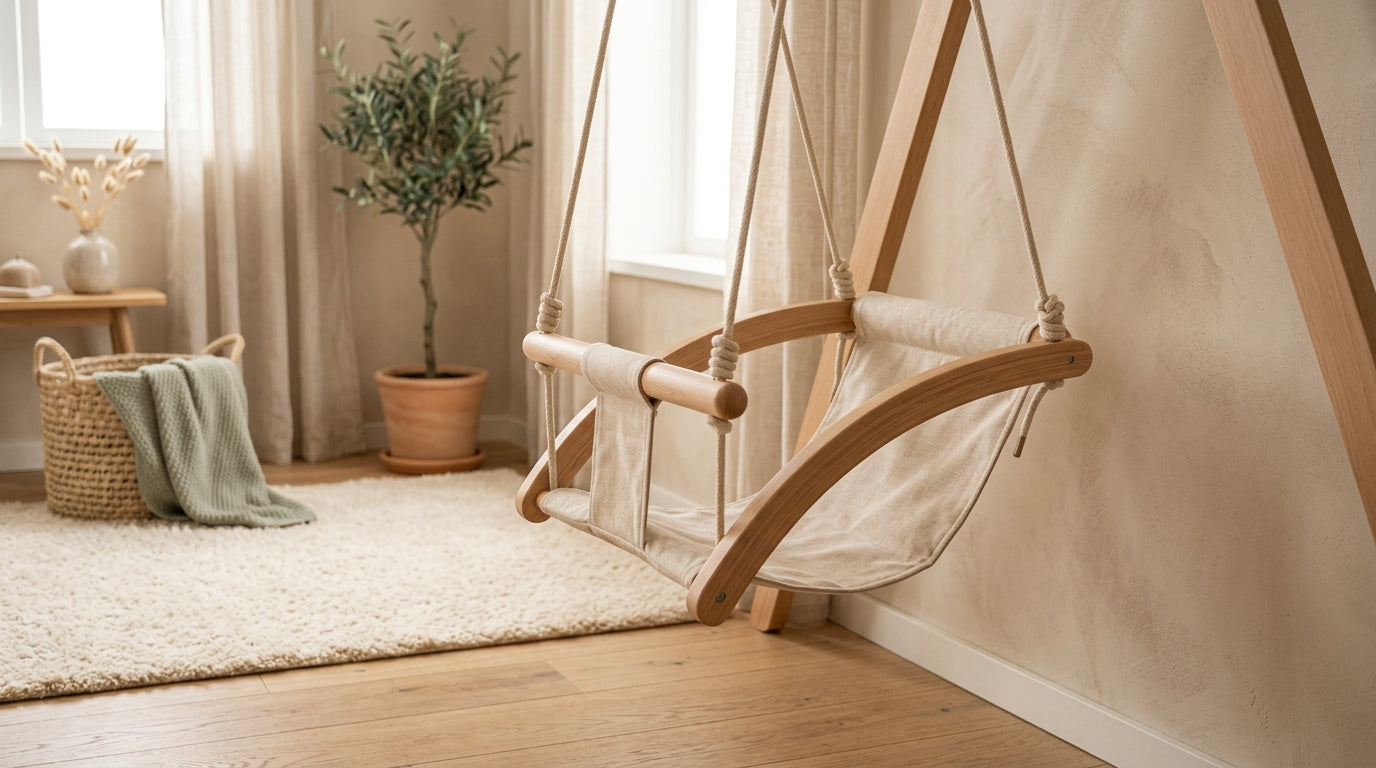
It was a Tuesday in November, right around 3 PM, and I was wearing a pair of maternity leggings that smelled vaguely of old spit-up and desperation. Maya was maybe two months old. She had been screaming for what felt like four consecutive years, and I had finally, mercifully, strapped her into this giant, obtrusive baby swing chair my mother-in-law had bought us.
The thing took up half our living room and looked like a piece of space equipment, but the second I turned the dial to level three, Maya’s eyes fluttered shut. Silence. Sweet, glorious, golden silence.
I sank onto the couch, completely paralyzed by exhaustion, holding a mug of coffee that had gone cold two hours ago. I think I just stared at the wall for like, forty-five minutes. I thought I had hacked motherhood. I felt like a genius.
And then my husband Dave walked in from work, looked at the swing, looked at me, and completely freaked out.
“Sarah, oh my god, she’s asleep in there! You can’t let her sleep in the swing!” he stage-whispered, frantically waving his hands around like the living room was on fire. I wanted to murder him. I had just gotten her down, my brain was 90% dry shampoo at this point, and he was waking the dragon. But he grabbed his phone and started reading me some terrifying statistics from an article he found about positional asphyxiation, and my stomach completely dropped into my shoes.
Why their heads are basically heavy bowling balls
So the next day, I dragged myself to our pediatrician, Dr. Miller, who's thankfully a very patient woman who deals with a lot of my sleep-deprived panic attacks. I basically confessed that I had let my newborn sleep in a mechanical chair for almost an hour and asked if I had permanently broken her.
She handed me a tissue and gently explained the whole airway thing, which is terrifying but also makes total sense once you actually think about it. She basically said that newborns have these giant, heavy heads—like little bowling balls—and absolutely zero neck strength to support them, which are like tiny wet noodles.
Dave had been rambling about this 10-degree incline rule, which I guess means if baby gear is tilted back more than ten degrees, gravity works against them. I still don't fully understand the exact physics of it or the specific oxygen level drops, but the point is, if they fall asleep semi-reclined, their chin can slump right down onto their chest. And because they can't lift their head back up, it silently cuts off their breathing.
Not to be dramatic, but I literally felt like the worst mother on the planet. I thought the swing was supposed to be a bed! It looks like a bed! It’s fluffy! But no, you basically have to strap them into the five-point harness like a fighter pilot and stare at them unblinkingly while setting a timer for twenty minutes so their skulls don't flatten, instead of just walking away to fold laundry like I wanted to do.
The absolute hell of the five-point harness
And speaking of the harness. Oh god, let me just rant about this for a second because it still makes my blood pressure spike just thinking about it.

You know the golden rule of baby gear, right? That you've to use the straps. But trying to get a thrashing, overtired infant into a five-point baby swing harness is like trying to wrestle a wet octopus into a corset. They go completely rigid. They plank. Maya used to arch her back so violently I thought she was going to snap in half, and meanwhile, I’m digging around under her chubby little thighs trying to find the plastic crotch buckle.
And the clips! Why do they require the pinch strength of a bodybuilder to open? I've lost so many fingernails trying to unclip my screaming child from a swing while Dave hovers behind me asking if I need help. You thread the left arm, you thread the right arm, you try to snap the plastic puzzle pieces together before they twist around—and then you realize the strap is twisted behind their back and you've to start all over again. It’s infuriating.
And don't even get me started on the built-in nature sounds on these swings—they all sound like static from a haunted TV, and we never turned them on once.
The ticking clock and the container guilt
Anyway, after the doctor visit, my whole relationship with the swing changed. It went from being my favorite piece of furniture to this ticking time bomb in my living room.
I had a friend, Jessica, who's a pediatric occupational therapist. She came over for coffee one morning and caught me nervously watching Leo (my second kid, who also lived in the swing) and she casually dropped the term "container baby syndrome." Which sounds fake, right? But apparently, it's a real thing. She mentioned how keeping them in buckets and seats and swings for too long limits their core development and can cause flat spots on their head.
So now I had double the guilt. Not only was I terrified of him falling asleep and suffocating, but I was also worried I was going to stunt his physical development and give him a flat head because I just wanted fifteen minutes to eat a piece of toast without someone crying on me.
I started setting literal timers on my phone. Fifteen minutes. Twenty minutes max. I’d plop him in, turn on the lowest swing setting, sprint to the kitchen, shove food in my face, chug coffee, and run back before the alarm went off. The swing became a strictly monitored holding pen. If his eyelids even started to droop, I'd yank him out of there so fast and throw him into his flat, boring bassinet, where he would immediately wake up and start screaming again.
It’s exhausting. You’re constantly weighing your own mental sanity against all these invisible safety rules that keep changing.
The day they try to escape
But the real kicker with baby swings is how short the lifespan actually is. You spend hundreds of dollars on this massive piece of plastic, you finally figure out how to use it safely without having a panic attack, and then suddenly, they hit six months old.

With Maya, I remember the exact moment. She was around six and a half months. I had her in the swing, strapped in (mostly), and I turned around to grab a burp cloth. When I looked back, she had somehow twisted her entire torso, grabbed the side of the swing frame, and was actively trying to launch herself over the edge onto the rug. She was practically sitting up on her own.
Dave saw it happen. "Uh, Sarah? I think she's done with the swing," he said, casually sipping his water while my heart stopped.
He was right. Once they can sit up, or roll, or exceed the weight limit (which is usually around 25 pounds, though Leo hit it way faster because he was a giant chunk), the baby swing is officially a hazard. You have to pack it away. Just like that. The magical soothing machine is gone.
And you know what replaces it? The highchair.
Trading one container for a much messier one
Transitioning from the baby swing to the highchair phase is wild because you think, "Great, a new place to put them where they're strapped in and occupied!" But nobody warns you about the flying food.
When Leo hit six months, we packed up the swing and started solid foods. We did that whole baby-led weaning thing where you just hand them chunks of real food and pray they don't choke. It was a disaster. I'd put a bowl of oatmeal or a plate of mashed sweet potatoes on his highchair tray, and he would just immediately backhand it across the kitchen like he was playing tennis. I was scraping dried yogurt off the baseboards for months.
If you're creeping up on this phase and want to save your sanity, our feeding collection has some absolute lifesavers, but I've to specifically talk about the plates, because they changed my entire life.
I finally got smart and started using the Baby Silicone Bear Plate. Honestly, I didn't even care that the bear face was cute—I cared that the suction base on this thing is practically industrial strength. The first time we used it, I stuck it to our kitchen island, and Dave actually tried to pull it off by the ear and spilled his own coffee because it wouldn't budge. Leo would sit there, violently tugging at the bear's face, getting so mad that he couldn't throw his spaghetti at the dog. It was a massive victory for me.
Now, I'll say I also bought the Walrus Silicone Plate later on, and it’s just okay for us. Don't get me wrong, the quality is exactly the same and the suction is crazy strong, but the little compartments shaped like tusks were just a bit too small for the giant, fist-sized mounds of food I was lazily doling out by the time Leo was a toddler. It's super cute, but the bear plate just fit our messy eating style better.
And for breakfast? The Silicone Bear Suction Bowl was the only reason I survived the yogurt and applesauce phase without needing to hose down the kitchen daily. It has this perfect curved edge so when they inevitably smash their spoon into it, the food rolls back into the bowl instead of launching onto your clean shirt.
It’s funny how parenting works like that. You spend the first six months terrified of the baby swing, staring at their chest to make sure they're breathing, stressing over the angle of recline and the harness buckles. And then overnight, you're packing it into a cardboard box in the garage, and your new biggest daily stressor is whether or not the sweet potato stains will come out of the rug.
Anyway, the point is—if you've a newborn, use the swing. Just don't let them sleep in it, strap them in even when it's annoying, and keep a timer running. It’s a tool, not a babysitter.
And if you're about to graduate from the swing phase to the highchair phase, do yourself a massive favor and armor up. Grab some of our suction plates and bowls before you end up with spaghetti on your ceiling. Seriously, don't say I didn't warn you.
You asked, I'm rambling: My messy FAQ
Can I just leave them in the swing if I'm staring right at them while they sleep?
Oh god, no. I tried to bargain with my pediatrician about this exact thing. I was like, "But what if I'm right there folding laundry?" She basically told me that positional asphyxiation is silent. They don't thrash or gasp or make noise. Their head just drops forward and cuts off the airway. By the time you notice from across the room, it could be way too late. If their eyes close, you gotta move them. It sucks, I know, but it's not worth the panic.
How do you really know when it's time to pack the swing away?
For us, it was the day Maya started doing abdominal crunches trying to sit up in the seat. Usually, the manuals say to stop when they hit 6 months, or around 25 pounds, or whenever they can sit up unassisted or roll over. Once they've the core strength to try and twist out of the harness, the swing becomes super tippy and dangerous. Just box it up. It’s sad, but it frees up so much living room space.
What the hell is a container baby?
Right?! It sounds like a horror movie. Basically, my OT friend explained that a "container" is anything that restricts a baby's movement—swings, bouncers, car seats (when used outside the car), Bumbos, whatever. If they spend all day going from one container to another, they don't get enough floor time to build their neck and back muscles, and the backs of their heads can get super flat. I tried to limit swing time to like 20-30 minutes tops, just enough time for me to shower or drink coffee.
Did your kids seriously even like the swing?
Maya was obsessed with it. It was the only way we survived the witching hour from 5 PM to 7 PM. Leo, on the other hand, acted like the swing was made of lava. He would just scream louder the second the motor turned on. Every kid is totally different, which is why it kills me when people spend $300 on a fancy swing before the baby is even born. Buy one second-hand or borrow a friend's first to see if your kid even tolerates the motion!




Share:
What I Got Entirely Wrong About The Whole Teething Nightmare
The Firmware Update I Needed On Finding The Best Baby Sun Hat