

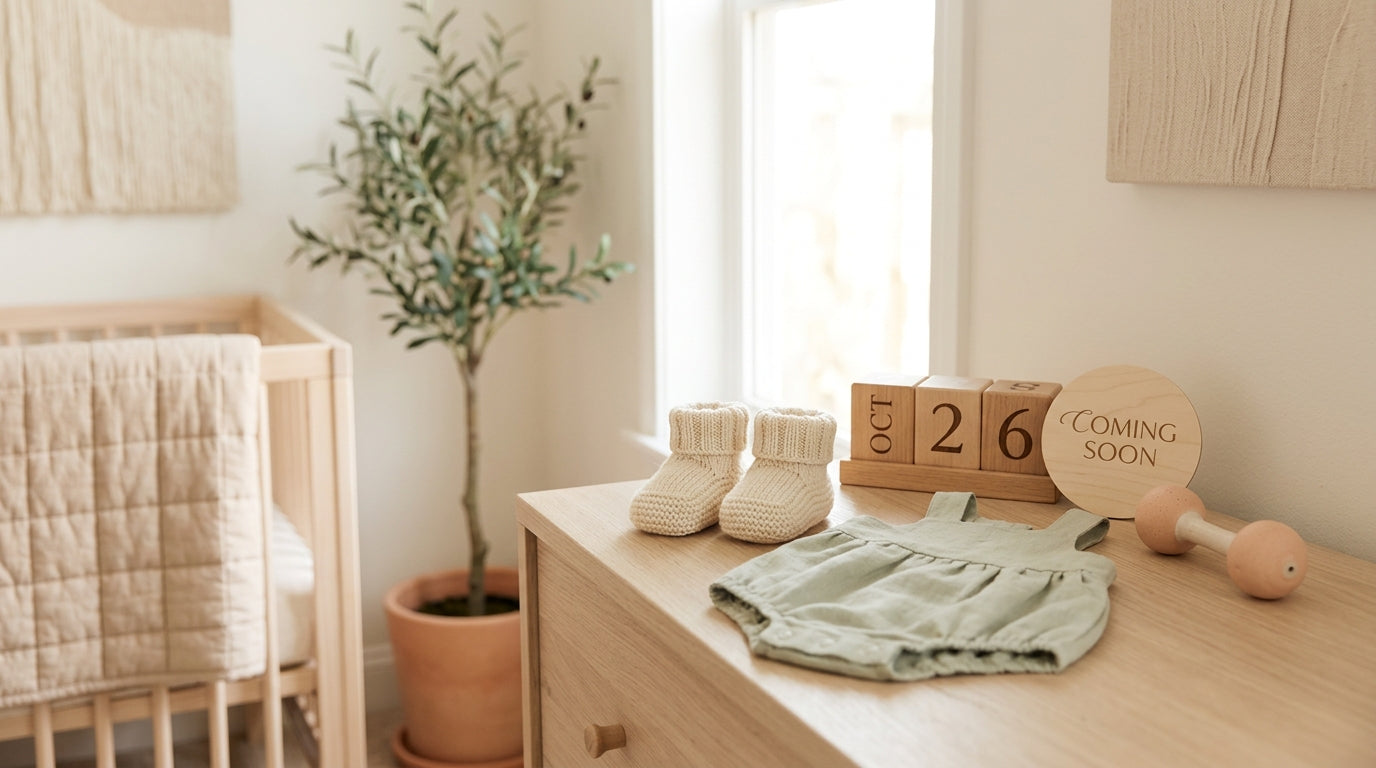
I was thirty-eight weeks pregnant, sitting in my kitchen with ankles the size of bruised grapefruits, aggressively googling when is kat timpf's baby due. It was a completely irrational fixation. I don't know this woman. But she had announced her pregnancy in July, and as a former triage nurse, my brain automatically started running the obstetric math. You add nine months, factor in the standard first-trimester secret window, and land somewhere in late January or early February. I was projecting my own late-pregnancy impatience onto a television personality just to avoid thinking about my own impending labor.
The final weeks of pregnancy are a psychological experiment in endurance. Time stops moving. Every time you stand up, you feel like a bowling ball is going to drop out of your pelvis. You spend hours calculating timelines for strangers on the internet because your own timeline feels entirely out of your control.
I've seen a thousand women come through the labor and delivery doors convinced that the date circled on their calendar is a legally binding contract. It's not. My own doctor looked at me around week thirty-nine and told me to treat the due date like a rough suggestion, maybe an astrological season. Less than five percent of babies actually arrive on that specific Tuesday. The rest just show up whenever the eviction notice finally processes.
The triage of late pregnancy
Listen, once you hit the final stretch, your brain shifts into survival mode. You stop caring about the aesthetic nursery themes and start caring about infrastructure. You start viewing your home the way I used to view a trauma bay before a shift change.
I spent my entire thirty-ninth week organizing a rolling cart of postpartum supplies. I was manic about it. I lined up the infant Tylenol, the mandatory vitamin baby d drops that smell like anise, the digital thermometer, and the nasal aspirator in perfectly straight rows. I washed tiny clothes at midnight. I paced the hallway trying to induce contractions.
There's this bizarre cultural narrative that you should spend your last weeks resting and glowing. I didn't glow. I sweated through my maternity leggings and snapped at my husband for breathing too loudly. I was huge, I was uncomfortable, and I was terrified of what was about to happen to my body.
The hospital bag delusion
Social media has ruined the hospital bag. You see these influencers packing matching silk robes and full makeup palettes, and it makes you think you're checking into a boutique hotel instead of a medical facility where you'll bleed heavily for several days.
You pack for a war zone, not a vacation. You don't need a bluetooth speaker. You won't care about your carefully curated birth playlist when you're transitioning at eight centimeters. I packed a small suitcase full of cashmere socks and important oils, and I used exactly none of it. What you actually need is infrastructure for your physical recovery.
You need the giant pads. You need the perineal ice packs that crack like glow sticks. You need the horrible mesh underwear that reaches your ribcage because nothing else will accommodate the swelling or the eventual c-section incision. I tell every expecting mom to steal everything that isn't bolted to the wall in the recovery room. Take the dermoplast spray. Take the weird plastic peri bottle.
The coming-home outfit for the baby is mostly just for a quick photo before they immediately spit up on it.
But since you do have to pack a bag, you might as well pack things that actually function in a high-stress environment. Here's my completely unsentimental, nurse-approved list of what really matters when the time comes.
- Your own pillow. Hospital pillows are wrapped in plastic and feel like sleeping on a deflated balloon.
- A ten-foot phone charging cable. The outlets in a hospital room are always hidden behind a terrifying medical monitor.
- Dark, loose clothing. Nothing tight. Nothing light-colored. You will understand why later.
- An envelope-shoulder bodysuit for the baby. Because trying to force a newborn's fragile, wobbly head through a tight collar will make you cry.
Dressing the fragile stranger
The first time you dress your own newborn, your hands shake. They feel like they're made of glass. As a pediatric nurse, I had handled hundreds of babies, but when it was my own son, my brain short-circuited. Suddenly I was terrified of breaking his collarbone while putting on a shirt.

Which is why clothing design honestly matters for those first few months. I'm fiercely loyal to the Short Sleeve Organic Cotton Baby Bodysuit from Kianao. It's the only thing my son wore for his first twelve weeks of life.
The reason I love this specific bodysuit is purely mechanical. It has envelope shoulders. When your baby inevitably has a massive, code-red diaper blowout in the middle of a coffee shop, you don't pull the soiled shirt up over their head and rub the mess in their hair. You pull it straight down. You slide it over their shoulders and off their legs. It's a trauma-saving design.
The organic cotton is a nice bonus because newborn skin is ridiculously permeable. It absorbs everything. I washed these bodysuits constantly, and they never lost their shape or got that stiff, scratchy texture that conventional cotton gets. The ribbed fabric stretches just enough to accommodate that weird newborn frog-leg posture.
Just buy it in a dark earth tone. White clothes for babies are a practical joke.
If you want to see what really survives a newborn, look at our organic clothing collection.
The safe sleep anxiety
Bringing the baby home is a shock to the system. You leave the hospital, where you've a call button and a team of doctors, and you walk into your silent house with a tiny, unpredictable human. The first night is always a disaster.
Safe sleep was my particular brand of postpartum anxiety. The American Academy of Pediatrics has very strict guidelines about sleep environments, and because my brain is wired to expect the worst-case clinical scenario, I followed them obsessively. Back to sleep. Firm mattress. Nothing in the crib. Not a single loose blanket, no matter how cold it was in Chicago.
It feels unnatural to put your tiny baby on a barren, flat mattress with nothing to keep them warm. You want to swaddle them in thick quilts. Don't do it. I guess the pediatricians are right about the risks of rebreathing carbon dioxide, so we stuck to wearable blankets and sleep sacks.
The transition from the womb to the crib is jarring for them. They're used to being tightly contained in fluid, and suddenly they're flailing in open space. It takes time for their nervous system to control. You just have to sit in the dark, watching their chest rise and fall, entirely consumed by this heavy, terrifying love.
Looking ahead to the mess
Eventually, you survive the newborn phase. The fog lifts slightly. You stop tracking their breathing every ten seconds and start worrying about new, entirely different developmental hurdles. You blink, and suddenly you've a six-month-old who's aggressively trying to chew on the coffee table.

Teething is a medical crisis in my house. My son would wake up screaming, his cheeks flushed, drooling like a mastiff. I threw every remedy at the problem. I rubbed his gums, I chilled washcloths, I prayed.
The Panda Teether is one of the few things that really bought me twenty minutes of peace. It's flat enough that he could genuinely grip it with his uncoordinated little hands, and the silicone gave just enough resistance for his swollen gums. I'd throw it in the fridge for ten minutes while I made coffee. It's entirely functional, which is the highest compliment I can give a baby product.
Then comes the solid food phase, which is its own special hell. You spend forty minutes steaming and pureeing organic sweet potatoes, only to watch your child paint the floor with them.
We used the Baby Silicone Plate for a while. It's fine. The bear shape is cute, and it holds the mush effectively. The suction base is decent. It will stop a casual swipe from a tired baby. But I'll be brutally honest with you, beta. If your child is truly determined, if they've decided that the oatmeal must be liberated, they'll eventually figure out how to peel up the edge and launch the plate across the room. Gravity always wins.
Parenting is mostly just buying time and minimizing property damage. You find the tools that slow down the chaos, and you cling to them.
The final waiting game
Whether you're tracking Kat Timpf's due date or staring at your own calendar waiting for a sign, the end of pregnancy is an exercise in surrender. You can't speed it up. You can't force the issue until your body decides it's time.
You just sit there, heavy and uncomfortable, knowing that your entire life is about to fracture and rebuild itself into something completely unrecognizable. It's terrifying. It's deeply exhausting. And then, abruptly, the waiting is over, and the real work begins.
Ready to prepare for the reality of those early days? Check out our newborn essentials before you pack that hospital bag.
The messy realities of the third trimester
Is it normal to be obsessed with exact due dates?
Yes, your brain is looking for control in a completely uncontrollable situation. You focus on the date because you need a finish line. I tracked celebrity pregnancies just to have an anchor point for time passing. Just remember the date is a statistical guess, not an appointment. The baby has no idea what a calendar is.
What honestly happens if I go past my due date?
Mostly, you just get incredibly annoyed. Your doctor will probably start talking about non-stress tests and amniotic fluid checks to make sure the placenta is still doing its job. By week forty-one, they usually discuss induction. It feels like a failure when your body won't go into labor naturally, but trust me, getting the baby out safely is the only metric that seriously matters.
Why do my hips hurt so much at night right now?
Because your body is pumping out a hormone called relaxin, which literally loosens your joints to let a human skull pass through your pelvis. It makes everything unstable. When you lie on your side, gravity pulls your heavy uterus down, torquing your hips. Stuffing a firm pillow between your knees helps a little, but mostly it just hurts until the baby is out.
Do I really need to wash all the baby clothes before they arrive?
I did, mostly out of manic nesting energy. But clinically, yes, you should. Factories are dusty, and fabrics are often treated with sizing chemicals to keep them crisp during shipping. Newborn skin is highly reactive. Just throw them in the wash with a gentle, unscented detergent. You don't need the expensive pink baby detergent that smells like artificial powder. Just unscented basics.
How do I stop staring at the baby monitor all night?
You don't, at least not at first. The anxiety is a biological imperative designed to keep the baby alive. It takes a few weeks for your nervous system to accept that the baby is breathing on their own. Following safe sleep rules religiously gave me a tiny bit of comfort, but honestly, the hyper-vigilance just slowly fades as you get more exhausted.




Share:
The Great Crawling Myth: When Do Infants Actually Start Moving?
When Do You Find Out The Gender Of Your Baby