

Dear Priya of six months ago.
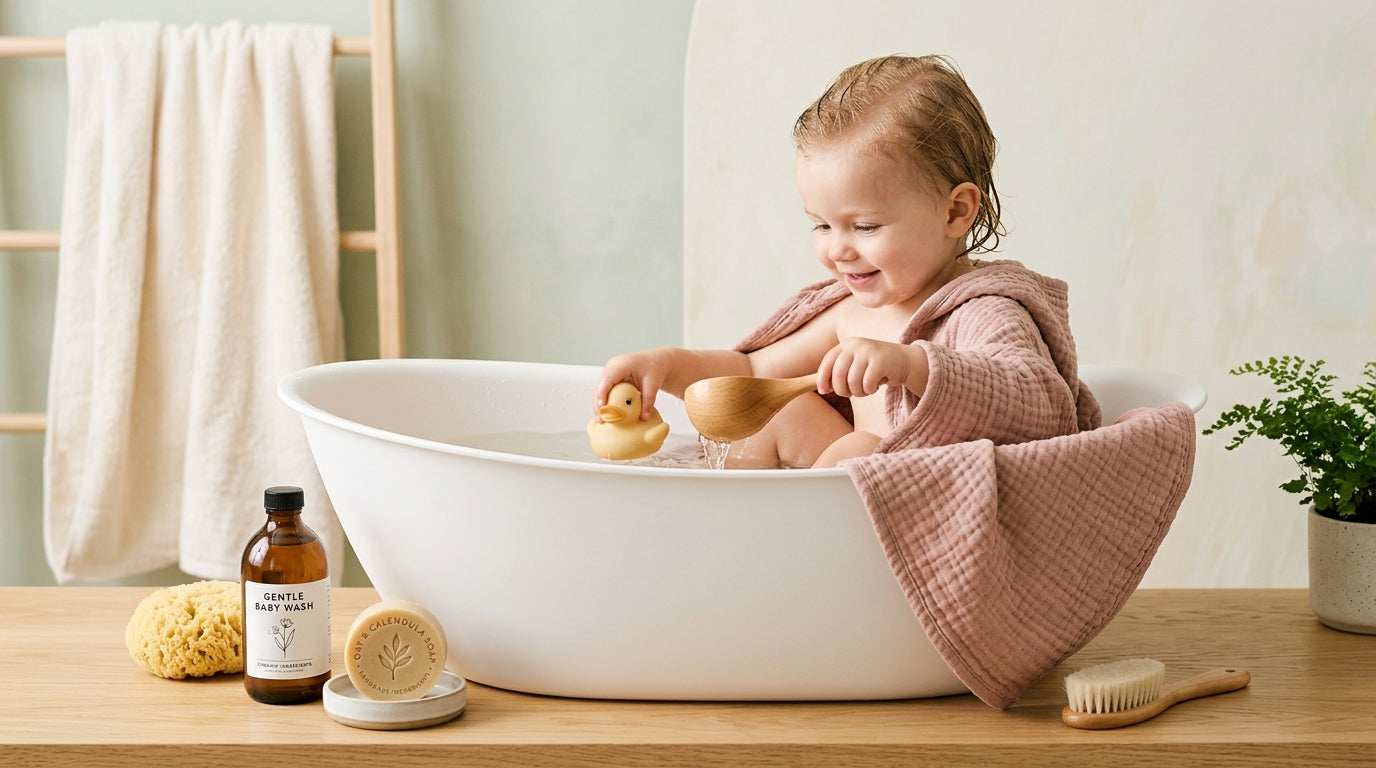
You're currently sitting on the cold bathroom tiles at two in the morning. You're holding a screaming, slippery infant who smells aggressively of artificial lavender. He is covered in suds, you're soaked in lukewarm tap water, and you're crying because he's crying. You bought into the whole soap baby aesthetic that you saw on social media. The fluffy towels, the mountain of bubbles, the sleepy newborn smiling peacefully in a pristine white tub.
I'm writing from the future to tell you it's all garbage.
You're treating this bath like a spa day when you should be treating it like hospital triage. As a pediatric nurse, I've seen a thousand of these well-meaning first-time mom mistakes, and yet I still fell for it the second they handed me my own kid. We lose all our clinical sense when it's our own blood. The truth is, that perfect, clean-smelling infant you're trying to cultivate is a marketing invention.
Listen. Your baby is not a coal miner. He doesn't need a ten-step deep cleansing routine to exist in your living room.
The great acid mantle misunderstanding
When we look at neonatal skin on the maternity ward, we basically treat it like an open wound. It's incredibly thin and wildly porous. My pediatrician casually mentioned that a baby loses moisture at a ridiculous rate through something called transepidermal water loss. Their skin barrier is currently about as robust as wet tissue paper.
Apparently, an infant's skin pH starts around 6.4 at birth and then supposedly drops to maybe 4.9 over the first few days. I guess this forms an acid mantle that keeps the bacteria away, though I'm hazy on the exact chemistry. What I do know for sure is that traditional bar soaps sit at a pH of about 10. Every time you lather up that tiny body with a generic commercial bar, you're nuking whatever fragile barrier the kid has managed to build.
The National Health Service over in the UK has the right idea. They tell parents to use just plain water for the first month. No cleansers. No fancy washes. Just tap water. It sounds gross to our heavily sanitized American brains, but babies just don't generate the kind of oily body odor that requires heavy-duty detergents to dissolve.
Stop washing the entire infant
We need to talk about the fragrance industry. The word fragrance on a baby product label is a legal loophole large enough to drive a minivan through. Companies use it to hide dozens of synthetic chemicals, most of which are known endocrine disruptors. They bottle up this toxic waste, slap a picture of a sleeping bear on the front, and call it calming bedtime wash. It's insidious. We're willingly paying corporations to strip our children's natural skin oils and replace them with phthalates just so they smell like fake chamomile.
I get irrationally angry thinking about how much money I spent on organic bubble baths that just gave my kid dry patches. The entire baby bath industry is built on manufacturing a problem so they can sell you the cure. You buy the harsh soap, it ruins the skin, so you've to buy their overpriced lotion to fix it.
If they get baby acne, just leave the spots alone.
Instead of drawing a drawn-out bubbly soak, freezing the bathroom, and aggressively scrubbing every limb like you're prepping for surgery, just run some lukewarm water for five minutes and wipe the actual biohazards. Focus on the diaper area, the hands, and maybe the neck folds if they smell like old cheese. That's it.
What actually happens in the tub
Six months from now, beta is going to start teething. The drool will be biblical. It will soak through three layers of clothing and pool in his neck folds, creating a highly acidic environment that leads to a bright red rash. You will be tempted to scrub it with soap. Don't do that.

We finally got ahead of the drool rash when we introduced the Panda Teether. I'm generally skeptical of teething toys that look too cute to be functional, but this one actually works. The flat shape makes it easy for his uncoordinated little hands to grip, and the silicone is firm enough to massage the gums without being a choking hazard. He chewed on that panda for six solid weeks while his lower incisors came in. It kept his hands out of his mouth and significantly reduced the amount of saliva cascading down his chin.
We also have the Squirrel Teether from the same brand. It's fine. The mint green color is nice and the acorn detail is okay, but he usually drops it in favor of the panda anyway. Still, it's made of food-grade silicone, which is better than the plastic junk my mother-in-law keeps trying to give him.
When you're dealing with a drooly, rashy teething baby, the tub should be a place of brief relief, not a prolonged soak. Five to ten minutes maximum. And absolutely no bubbles. Sitting in a tub of suds irritates the urethra and causes urinary tract infections, especially in little girls. Just get in, wipe the grime, and get out.
If you want to skip the tub altogether on certain days, which you should, just do a sponge bath on the floor. I usually lay him under his Rainbow Wooden Play Gym and let him bat at the wooden elephant while I wipe him down with a warm washcloth. It distracts him entirely. He gets his sensory development in, I get to clean the sour milk out of his elbow creases without him screaming, and we all move on with our evening.
If you're looking for ways to keep them occupied during these dry land wipe-downs, you can explore the teething toys collection here.
Decoding the back of the bottle
When you finally do decide to use a cleanser, you've to read the labels like a lawyer. Baby skin absorbs topical ingredients at a much higher rate than adult skin. What's a minor irritant for us is a major assault on their system.
My pediatrician warned me about sodium lauryl sulfate. It's the cheap detergent that makes things foam up nicely, but it completely wrecks the skin barrier. Worse is cocamidopropyl betaine. Brands love to slap coconut-derived on the label to make you feel like you're buying something from a health food store, but it's a synthetic surfactant that has become a leading cause of contact dermatitis in infants.
If you've to use soap, look for saponified oils. Real castile soap. Or ingredients like decyl glucoside. Wrap your head around the fact that safe cleansers don't really lather. If it looks like a foam party in Ibiza, it's probably destroying your kid's acid mantle.
The three minute moisture rule
This is the part that actually matters. The window immediately after the bath.

Chicago winters are brutal, yaar. The radiator heat dries out the apartment until the air feels like sandpaper. If your baby has any hint of atopic dermatitis or eczema, the post-bath routine is the only thing standing between you and a sleepless night of scratching.
Instead of rubbing him dry with a harsh towel and letting the remaining moisture evaporate into the dry air, simply pat his skin gently while leaving it slightly damp and immediately trap that hydration by slathering him in a thick, fragrance-free emollient. You have about three minutes to do this before the water loss begins.
Don't buy the thin, watery lotions that smell like baby powder. You need a thick cream or balm. Something with ceramides or colloidal oatmeal. It should feel vaguely greasy going on. You're essentially doing the job that his acid mantle is too immature to do on its own.
You will figure this out, Priya. You will stop buying the aesthetic and start looking at the biology. You will learn to embrace the slightly messy, unscented reality of an actual infant. Put down the lavender bubble bath, grab a plain wet washcloth, and go to sleep.
If you want to see the gear that really survives my cynical nurse standards, check out the full sustainable baby collection at Kianao.
The messy truth about infant bathing
How often should I really bathe my kid?
My pediatrician told me three times a week max for the first year. Honestly, we sometimes stretch it to twice a week in the dead of winter. Unless there's a catastrophic diaper blowout that goes up the back, a wet washcloth on the face, hands, and bottom is plenty. They're just not getting that dirty.
What's the deal with castile soap?
It's just soap made entirely from vegetable oils like olive or coconut oil rather than animal fats or synthetic detergents. It's very thin, it barely lathers, and it feels a bit weird if you're used to commercial body wash. But it cleans without stripping the skin. Just keep it out of their eyes because it's not tear-free. Tear-free usually just means they added chemical numbing agents.
Can I use breastmilk in the bath?
I mean, you can. People swear by it for eczema and baby acne. I tried it once when I had some expired milk in the fridge. It made the water cloudy and left him smelling slightly like a cheese factory, but his skin did feel soft afterward. It's not a miracle cure, but it's better than pouring synthetic detergents over him.
Why does my baby's skin peel so much in the first week?
Because they just spent nine months submerged in amniotic fluid and now they're dealing with dry air. It's completely normal. Don't pick at it, don't scrub it off, and definitely don't use a harsh soap baby wash on it. Just let it shed naturally. Their body is just figuring out how to exist on the outside.
What if they've a diaper rash?
Soap is the enemy of a diaper rash. It stings and removes whatever natural oils are left on that compromised skin. Use warm water, or saline if it's really bad. Let them air dry completely. I usually lay a towel down and let him be naked for twenty minutes. Then apply a thick zinc oxide paste. No scrubbing, no scented wipes.




Share:
Dear Past Priya: The Truth About Social Security Baby Names
Why My First Smashed Baby Potatoes Were a Complete Disaster