

We were sitting on the living room rug surrounded by flashcards when he just stopped trying. My toddler had his mouth open, a tiny little gasp of air caught in his throat, his face turning a blotchy red while he tried to push out the word for water. I was doing that terrible thing parents do where I leaned in so close my nose was practically touching his, hovering like some over-caffeinated game show host waiting for the final answer while my own anxiety suffocated the both of us.
I gave up and just handed him the cup.
Listen, you think having a nursing background makes you immune to the panic of early childhood development, but it actually just gives you a larger vocabulary for your paranoia. I used to see a thousand of these cases in the pediatric ward. Frustrated kids, crying moms, toddlers who felt broken just because their brains were running a marathon while their mouths were still lacing up their shoes. I knew the clinical protocols for speech delays, but sitting in my own Chicago apartment with a kid who was starting to hate the sound of his own voice, all that medical training felt like a pile of useless paper.
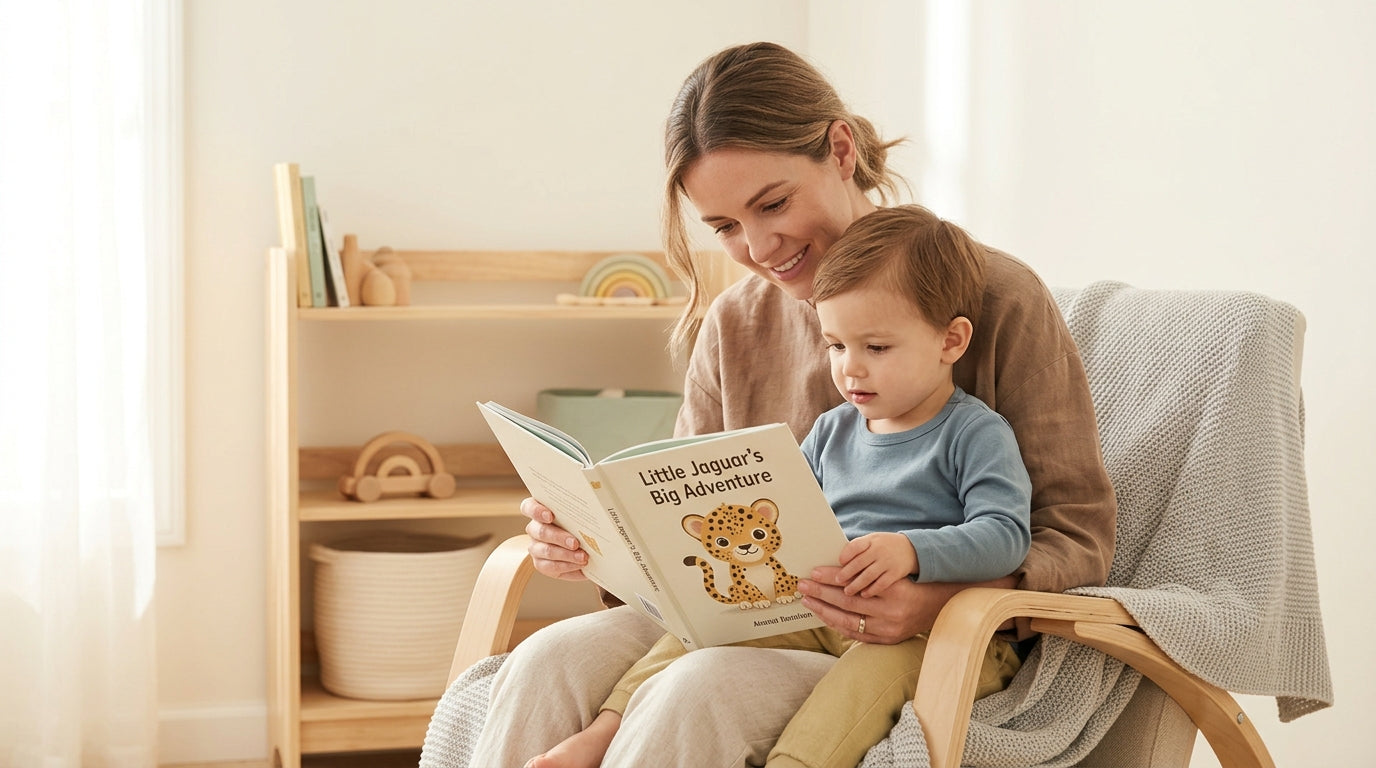
What finally broke the tension wasn't a speech app or a specialized tongue exercise, but a book about a baby jaguar. I grabbed it off a library shelf purely because the cover looked mildly less annoying than the talking trucks we usually read.
The worst thing I did for my kid's speech
My doctor, Dr. Gupta, told me confidentially that half the moms she sees are inducing clinical anxiety in their toddlers just by staring at them too hard when they try to talk. She said something about how maybe five percent of kids go through this intense stuttering phase, though honestly when your own child is the one struggling, statistics feel like an insult.
I was doing everything backwards. Whenever he got stuck on a syllable, I'd jump in and finish the sentence for him, thinking I was throwing him a life raft when I was really just telling him I had zero faith in his ability to swim. We get so uncomfortable with silence as adults. We fill every gap with chatter and correction, pointing at plastic cows and demanding our kids perform animal noises on command like trained circus acts.
Flashcards are mostly garbage anyway.
The AAP apparently suggests we stop telling our kids to slow down or take a deep breath when they stutter, because it just makes them hyper-aware of their failing mouth mechanics. You're supposed to just look at them with a relaxed face, which is incredibly difficult when your internal monologue is screaming about whether you need to remortgage your house for specialized therapy.
Why a stuttering zoologist actually matters
The book we found was called A Boy and a Jaguar. It's an autobiographical story by Alan Rabinowitz, who grew up with a stutter so severe he was basically written off by his teachers. The guy figured out he could speak completely fluently when he was talking to animals. He would go to the Bronx Zoo and just talk to the big cats.

There's some fascinating neurology behind this that I barely understand. When we speak to animals, we drop all the social pressure. Pets don't judge your cadence, they don't interrupt to correct your grammar, and they certainly don't finish your sentences for you. They just sit there and listen. For a neurodivergent kid, or a kid with a speech impediment, an animal is the safest audience in the world.
We started applying this concept immediately. I stopped asking my son to talk to me and started encouraging him to explain things to his plush toys. It was bizarre how well it worked. He would sit in the corner and give full, halting but complete lectures to a stuffed dog.
When he was a bit younger and just starting to babble, we used the Wooden Baby Gym from Kianao. It was actually my favorite piece of baby gear because it didn't light up or scream electronic songs at him. It just has these quiet, hanging wooden animal shapes, like a little elephant and some rings. I'd lay him under it and he would just coo and practice his vowels at the wooden animals for twenty minutes straight. No pressure. No performance. Just a baby and his silent audience figuring out how vocal cords work.
Fierce mom energy and jungle facts
Getting weirdly deep into jaguar facts became my coping mechanism. Did you know a baby jaguar is born completely blind and deaf. They weigh less than a standard bag of flour. The mothers raise these tiny, vulnerable cubs entirely alone in hidden dens.

Sometimes being a stay-at-home mom feels exactly like that. You're just dragging this tiny, confused mammal through the dense jungle of Chicago winters, trying to teach it how to survive while operating on zero sleep. Jaguar moms spend up to two years teaching their cubs how to swim and climb. Two years of intense, solitary instruction just so the kid doesn't drown in a river. It puts potty training into perspective.
I read somewhere that they take their first steps at eighteen days old. It's funny how we track these milestones across species. We have baby books full of dates for first smiles and first words, and the zoologists are out there doing the same thing with a baby j in the rainforest. Side note, baby j sounds like a nineties hip hop artist, but we're rolling with it.
Anyway, teaching my kid about how fiercely protective the jaguar mother is gave us this shared language. When he gets frustrated now, I tell him we're going to hide in our den for a minute. We build a fort. We retreat. We don't have to perform for anyone.
I also keep a basket of toys in his den for these moments. We have the Gentle Baby Building Block Set from Kianao in there. They're just okay to be honest. The rubber material is supposedly scentless, though I swear it smells faintly like a clean hospital corridor when you first open the box. The macaron colors are fine, but the real benefit is that he likes stacking them while practicing his animal noises to himself. They're soft enough that when he inevitably knocks the tower over in a fit of frustration, it doesn't sound like a construction site collapsing in my living room.
Check out our full collection of quiet, developmental play essentials that won't drive you crazy.
Setting up an animal sanctuary in your living room
If you want to try the animal therapy route for speech delays, you don't need to buy a zoo membership. You just need to create an environment where sensory overload is minimized. Neurodivergent kids, or kids who are just highly sensitive to their own mistakes, need a blank canvas to practice on.
I try to strip away anything that might cause a secondary meltdown. If a kid is struggling to form words, the last thing they need is an itchy tag distracting them. I keep my son in the Organic Cotton Baby Bodysuit on days when he's highly dysregulated. It's undyed, it has no scratchy tags, and it has enough elastane that it doesn't bunch up under his arms. It just takes one sensory complaint completely off the table so his brain can focus entirely on figuring out how to make his mouth move correctly.
We line up his stuffed animals. We read the Alan Rabinowitz book. We talk about the baby jaguar. I sit across the room, sip my lukewarm chai, and just let him dictate terms to a plush leopard. I don't intervene. I don't correct. I just watch him realize that his voice belongs to him.
He is talking a lot more now. The stutter is still there sometimes, usually when he's tired or overly excited, but the panic is gone. He knows that if the words get stuck, he can just stop, look at his toy animals, and try again when he's ready.
Listen, drop the flashcards and go find a book about a big cat. Your kid is not broken, they just need a better audience.
Ready to upgrade your nursery with fabrics and toys that really support your kid's development. Explore the Kianao shop for sustainable essentials.
Questions I really get asked
How do I know if my kid is stuttering or just babbling
Honestly it's messy. Dr. Gupta told me that true stuttering often comes with physical tension. You will see them blinking hard, their jaw might lock, or their face turns red. If they're just repeating a syllable easily like ba-ba-ba while pointing at a ball, they're probably just figuring out the wiring. If they look like they're trying to pass a kidney stone just to say the word milk, it might be a stutter.
Can reading animal books really help with speech delays
It's not magic, but it changes the dynamic. Books like A Boy and a Jaguar give kids representation, showing them adults who survived the exact thing they're struggling with. Plus, reading to an animal or talking about animals removes the conversational pressure. Animals don't ask follow up questions.
Why do you suggest avoiding electronic toys for speech practice
Because they interrupt. If a kid is struggling to find a word and takes a five second pause, a plastic toy will usually beep, flash, or demand they press a button to continue. It completely derails their train of thought. Wooden toys just sit there and wait, which is exactly what a stuttering kid needs from the world.
Is it bad if I finish my toddler's sentences
Yeah, it's terrible, and I did it constantly. Every time you finish their sentence, you're reinforcing the idea that they're too slow and you're tired of waiting. It takes massive self control to just sit there and watch them struggle, yaar, but you've to let them cross the finish line themselves.
What makes organic cotton better for neurodivergent kids
Sensory processing is a huge part of neurodivergence. Synthetic fabrics don't breathe well and the seams are often stiff. When a kid is wearing something that feels like a subtle cheese grater on their skin, their baseline anxiety is already elevated. Organic cotton with flat seams just removes that background noise so they can focus on harder things, like talking.




Share:
Confessions: Why a Plastic Bag is a Terrible Baby Keepsake Box
Dear Past Tom: The Baby Invasion Trailer Will Ruin Your Week