

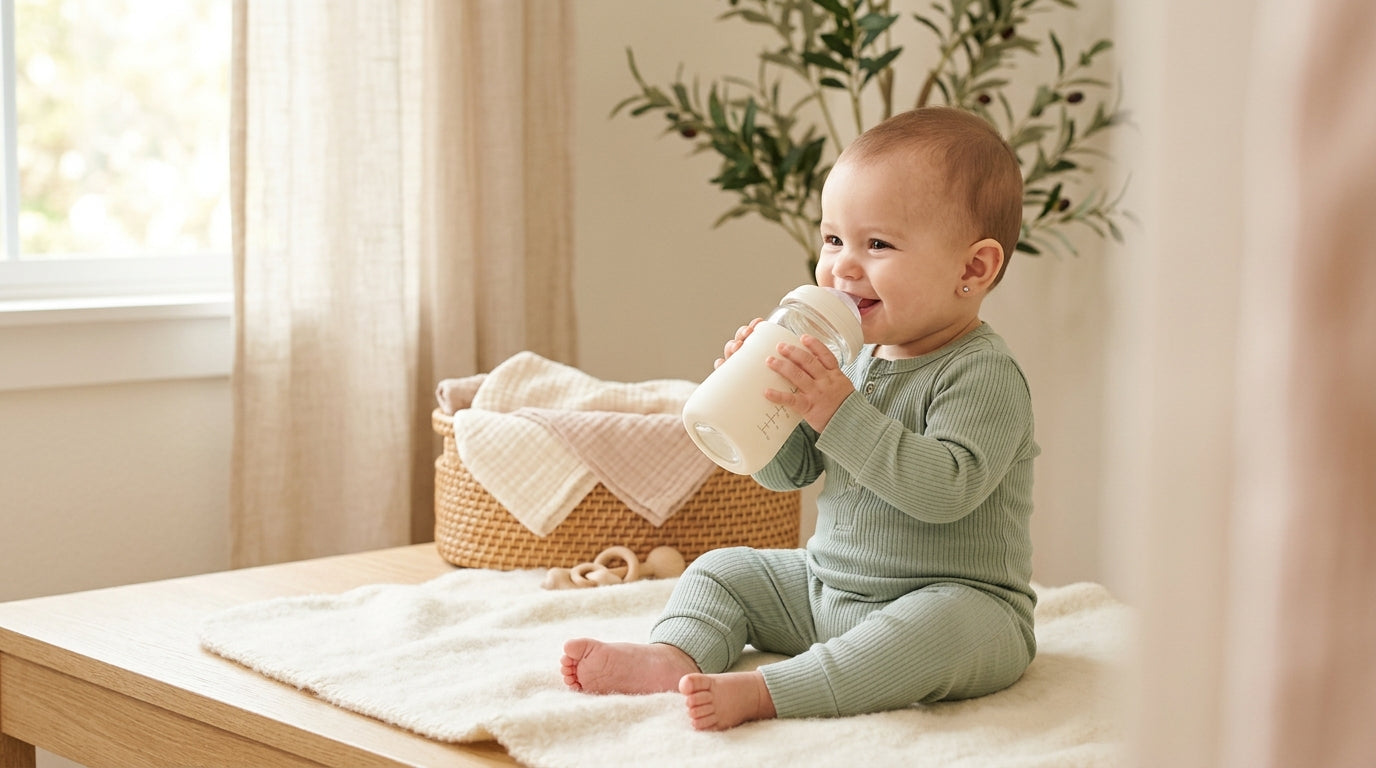
I was sitting on the edge of the Oak Street Beach splash pad last August when I watched a well-meaning grandmother twist the cap off a bottle of smartwater and bring it to the lips of a newborn. The kid couldn't have been more than six weeks old, swaddled tight in ninety-degree Chicago humidity. My fingers literally twitched with the urge to intervene. I spent five years working pediatric triage before staying home with my son, and let me tell you, the sheer volume of dangerous advice surrounding infants and water is enough to make my blood pressure permanently spike.
Listen, I completely get the instinct to hydrate a sweating kid. It feels unnatural to withhold fluids when the summer heat is melting the pavement. But giving plain water to a tiny infant is basically a severe medical hazard wrapped in good intentions. We need to talk about why the whole aquatic infant aesthetic is a myth, and how to actually keep them safe without ending up in my old ER department.
The great hydration lie we tell ourselves
I think part of our cultural obsession with infant hydration comes from old media. We all grew up looking at those classic coppertone water babies advertisements on sunscreen bottles, subconsciously absorbing the idea that toddlers are naturally aquatic creatures. If you go back further, the actual book the water babies from the eighteen hundreds is incredibly strange and honestly quite grim. It has a chimney sweep who falls into a river and turns into an amphibious creature. It's a bizarre Victorian fever dream, which tracks perfectly with how much ambient anxiety the whole concept gives me today. We took this weird old fairy tale, mixed it with vintage marketing, and somehow convinced a whole generation of parents that pushing water on a baby is a good idea.
My own mother-in-law does this constantly. Beta, he looks thirsty, just give him a sip. It's a very desi thing to push food and water as the ultimate cure for any discomfort. But a tiny babi (my phone autocorrects it to that now, just go with it) simply doesn't process fluids the way we do.
When we talk about hydration, we really need to talk about kidneys. My pediatrician, Dr. Weiss, laid this out for me beautifully at our four-month checkup. She said adults have kidneys the size of avocados, but a newborn's kidneys are roughly the size of a single grape. They operate at a fraction of our filtration rate. When you dump zero-calorie plain water into that tiny system, it flushes out all their critical sodium. This leads to hyponatremia, or water intoxication. I don't actually understand the exact cellular mechanism because I'm a nurse, not a nephrologist, but I know it buys you a helicopter ride to the nearest children's hospital because their brain cells can literally swell.
Then there's the financial angle. Sometimes parents dilute formula to make an expensive can stretch until payday. It's a completely understandable survival instinct that happens to be incredibly dangerous. If you add extra water to the powder ratio, you starve them of calories while simultaneously drowning their renal system. If you ever find yourself in that position, please just ask your pediatrician for clinic samples instead of messing with the mixing ratios.
The fluid transition timeline
You can't just hand a kid a bottle of Evian and hope for the best. There's a very specific sequence to how this works, and it usually looks like this.

- The zero to six month absolute dry spell where breastmilk or properly mixed formula is the only fluid allowed in their little bodies regardless of the weather.
- The six to twelve month practice phase where you hand them a tiny open cup with a single ounce of water and watch them pour it directly down their own chest.
- The chaotic toddler phase where they suddenly figure out silicone straws and demand crushed ice at three in the morning like a tiny dictator.
Speaking of losing fluids, teething is its own hydration nightmare. When my kid started cutting his front teeth, he was leaking saliva like a broken fire hydrant. He was so miserable I basically taped the Panda Teether Silicone Baby Bamboo Chew Toy to his hand. This thing is genuinely brilliant. The flat shape means he could grip it even when his motor skills were failing him due to sheer exhaustion, and he'd gnaw on that textured bamboo part for days while I sat on the nursery floor questioning my life choices. Plus, it goes straight into the dishwasher, which is a non-negotiable feature for anything covered in that much baby spit.
Triage protocol for your master bathroom
Now let's talk about the outside of the baby. Drowning prevention is another one of those topics that makes my chest tight. The internet acts like a babie in a tub is a calm, aesthetic lifestyle moment. It isn't. It's a high-risk extraction mission.

I treat bath time like I'm setting up a sterile field for a minor surgical procedure. Everything is staged before I even run the faucet. Diaper, towel, rash cream, and a clean outfit are stacked on the closed toilet lid. I highly suggest the Organic Cotton Baby Bodysuit for post-bath wrangling. It has just enough elastane stretch that I can pull it over his wet, thrashing head without anyone crying, and the organic fabric doesn't irritate his skin when it gets weirdly blotchy from sitting in warm tap water.
Let me tell you about bath rings. I hate them. I hate them with a very specific, clinical kind of fury. Companies sell these plastic seats with suction cups on the bottom and market them as a secure way to bathe your slippery infant. They give you this horrible false sense of security. You think your kid is propped up safely, so you turn your back for three seconds to grab the shampoo off the shelf. But those suction cups fail. They always fail. And when they do, the seat tips over, trapping your baby upside down in the water with their chubby legs wedged in the plastic holes. They can't right themselves. It happens silently and it happens in seconds. I've heard the frantic ER narratives from parents who only looked away for a moment.
As for those inflatable arm rings and neck floaties you see influencers putting on their infants at resort pools, they're death traps that belong in the garbage.
Instead of relying on plastic gimmicks, I keep things frustratingly simple.
- The prep phase involves staging all your supplies on the counter before the water even turns on so you aren't sprinting down the hall for a forgotten towel.
- You have to maintain physical touch on their slippery skin the entire time regardless of who's ringing the doorbell or what notification just popped up on your phone.
- Draining the tub the literal second you lift them out is critical because lingering puddle water is a massive accident waiting to happen.
To keep him from trying to stand up on the slick porcelain, I just toss random things in the water. The Squirrel Teether Silicone Baby Gum Soother is just okay as a daily chew toy because its mint color camouflages perfectly into the dark abyss of my diaper bag, but it happens to float really well. He stares at the little acorn shape and chews on the tail while I hurriedly scrub the sour milk smell out from under his chin.
If you need more soft layers to wrap them in after you successfully extract them from the tub, you can browse Kianao's organic clothing collection for options that won't chafe damp skin.
Dry land alternatives for my own sanity
Sometimes the whole concept of drowning prevention just feels too heavy for a random Tuesday afternoon. When my anxiety peaks, I just skip the bath entirely. A wipe-down with a warm washcloth works perfectly fine for a kid who hasn't been rolling in actual mud. Then I leave him on his back under the Wooden Baby Gym Set in the living room. It's solid wood, the little hanging animal toys don't make obnoxious electronic noises, and most importantly, the entire setup is completely dry. It buys me exactly fourteen minutes of peace to drink my lukewarm coffee without monitoring his respiratory rate.
Before you scroll down to my chaotic answers in the FAQ section, go do a sweep of your bathroom and throw out any plastic bath seats or inflatable neck rings you own.
Messy answers to your water questions
When can I give my baby water on a hot day?
Listen, if they're under six months old, the answer is never. You cool them down by getting them into the shade or wiping them with a damp cloth, but their kidneys just can't handle plain water. Stick entirely to breastmilk or formula, which is already heavily water-based and provides the exact sodium balance they need to survive.
How much water should a six-month-old actually drink?
When my kid hit six months, Dr. Weiss told me to offer about an ounce in an open cup at meals. That's barely a sip. Most of it ended up soaked into his bib anyway. You aren't trying to quench their thirst at this stage, you're just teaching their tongue how to manage a new fluid viscosity without choking.
What should I do if they swallow bath water?
I used to panic about this when my son would eagerly drink soapy tub water like it was a premium cocktail. A tiny bit of soapy water will usually just give them weird poop the next day. But if they cough heavily, struggle to breathe, or seem unusually lethargic after swallowing water, you treat it like a medical event and call the on-call doctor immediately.
Why can't I just dilute their formula to keep them hydrated?
Don't ever do this. Diluting formula is a fast track to water intoxication and seizures. The powder-to-water ratio on the can isn't a suggestion, it's a strict medical formulation. If you're struggling with formula costs, ask your pediatrician for clinic samples, but never add extra water to stretch the supply.
How do I safely bathe a newborn if I can't use a bath seat?
You use a plain, flat rubber mat and your own two hands. I spent the first few months just getting into the empty tub with my son and having my husband hand him to me. It's slippery and awkward, but holding them directly against your chest is infinitely safer than trusting a cheap plastic suction cup.




Share:
Why I Watch Cry-Baby 1990 When My Actual Baby Just Won't Stop
My 3 AM Diaper Rash Disaster: The Truth About Water Wipes Baby Care