

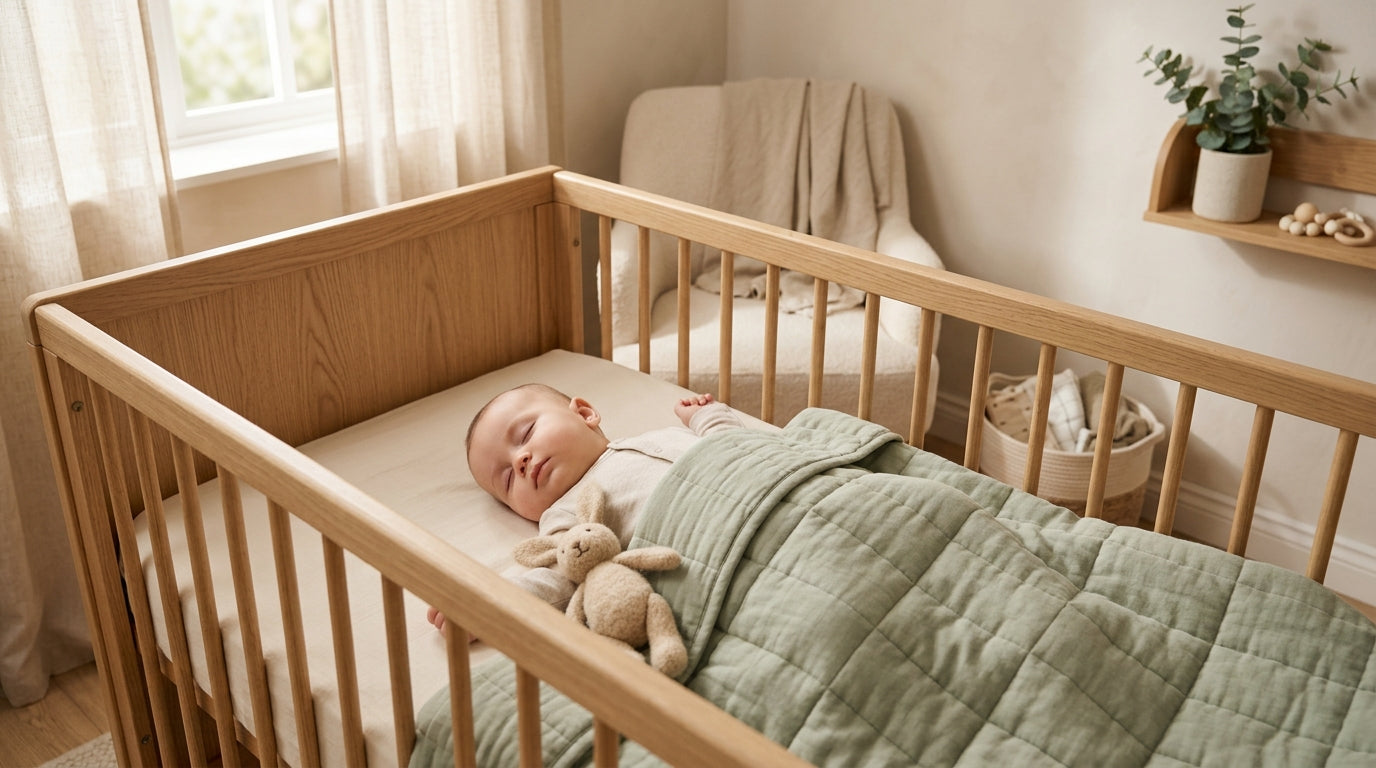
It's 3:14 AM on a Tuesday. The rain is lashing against our bedroom window in that specifically spiteful London way, and I'm standing in the dark watching my daughter Alice perform a flawless impression of a miniature, furious politician. She is standing at the bars of her cot, gripping them with white-knuckled intensity, yelling a speech entirely composed of vowels. Her twin sister, Maya, is asleep in the next cot, because the universe enjoys a cruel juxtaposition.
Three weeks ago, they both slept twelve unbroken hours. I had become smug. I had started telling childless friends that parenting was "really just about establishing boundaries." Tonight, Alice has decided that sleep is for the weak, and standing up is the most urgent biological imperative she has ever experienced. Welcome to the trenches. Your baby is broken, or so you think.
The terrible rebrand of a crisis
I dragged them to the health visitor clinic the next afternoon, fully expecting a diagnosis of some rare, nocturnal ear infection that only affects the left twin. The nurse, a lovely woman who always looks at me with a mixture of deep pity and mild amusement, casually dismantled my entire worldview. She told me the girls weren't broken at all; they were just busy.
According to the NHS pamphlets and this very patient nurse, what we call a regression in a baby's sleep is actually a massive neurological leap forward. When a tiny brain is frantically rewiring itself to figure out how to pull to a stand, or roll over, or remember that I still exist when I leave the room to find the Calpol, the biological urge to practice these new skills completely overrides the biological need for rest. They're progressing. The nurse smiled and called it a "sleep progression," which is, frankly, an incredibly irritating way to rebrand a crisis when you're operating on forty-three minutes of REM sleep.
The problem with the various baby sleep regression ages is that they don't arrive on a neat schedule with a polite warning letter. You will be reading one of those cheerful parenting books (page 47 suggests you "remain calm and project peaceful energy," which I found deeply unhelpful while covered in drool at 4 AM), only to realise your child hasn't read the manual.
The grand tour of ruined nights
If you look online, you'll find a supposed regression for basically every month of your child's first two years, which is just the internet's way of telling you that you're never going to sleep again. But in my hazy, caffeine-fueled experience, there are really only a couple of major ones that actually threaten your sanity.

The four-month mark is the absolute worst, and I'll happily complain about it to anyone who will listen. This isn't just a phase; it's a permanent shift in how their brains process sleep. They go from being deeply unconscious newborns who can sleep through a fire alarm to cycling between light and deep sleep every forty-five minutes like an anxious adult on a long-haul flight. If they don't know how to fall asleep on their own, they wake up at the end of every single cycle and demand that you recreate exactly whatever magic you used to put them down in the first place. For us, this meant bouncing on a yoga ball in a dark room while aggressively shushing, a physical routine that gave me the core strength of an Olympian and the mental stability of a wet paper towel.
Then comes the eight-to-ten-month disaster, which is where the mobility really kicks in. This is exactly what Alice was doing during her 3 AM political rally. She had learned to pull herself up to a standing position but lacked the mechanical knowledge to sit back down. She was effectively trapped in a standing ovation for no one, screaming for me to come and fold her legs back into a sitting position every twenty minutes.
Oh, and around eighteen months or two years, they learn to walk and talk properly and develop complex fears about shadows, but honestly, by that point, you're so numb to sleep deprivation that you just hand them a board book and tell them to figure it out themselves.
Teething is a very convenient scapegoat
When baby sleep goes completely off the rails, our first instinct as parents is to blame their teeth. We want a physical culprit. We want something we can fix with a damp cloth and some infant paracetamol. But our GP pointed out that actual teething pain—the sharp, sharp agony of a tooth cutting through the gum—typically only disrupts sleep for the day or two right before the tooth erupts. If your child has been waking up every two hours for three weeks, I'm incredibly sorry to tell you that it's probably not their teeth. They're just exploring the boundaries of their independence.

That said, the eight-month mobility leap almost perfectly overlaps with the arrival of the front teeth, creating a terrifying Venn diagram of misery. Having the right gear during the day actually seemed to take the edge off the night.
During this phase, Maya developed a chewing habit that would rival a nervous terrier. I ended up buying the Bear Teething Rattle, and it was genuinely a lifesaver. It has this soft crochet cotton bear head attached to an untreated beechwood ring. Maya would sit in her highchair aggressively gnawing on the wooden ring with a look of pure, unadulterated focus while I drank lukewarm tea. Because it's untreated and doesn't have any weird chemical finishes, I didn't have to worry about what she was ingesting, and the soft crochet bit gave her a different texture to investigate. It's one of the few baby items we own that seriously looks nice lying on the rug, rather than resembling a piece of primary-coloured plastic detritus.
We also picked up the Panda Silicone Teether. It's fine. It's 100% food-grade silicone, which is objectively great because you can just throw it in the dishwasher when it inevitably gets dropped in a puddle at the park. But it just doesn't have the same soul as the wooden bear, and because it's so rubbery, it bounces wildly under the sofa the second they drop it. Still, it works in a pinch when you're desperate and in the back of a moving car.
If you're currently surviving on sheer willpower and looking for something soft to cry into, you might want to take a break and browse Kianao's baby blankets collection for a small dose of organic comfort.
Flailing toward a solution
The internet is full of "sleep experts" who will try to sell you a PDF for £49 that promises to fix your child in three days. Having read most of them at 4 AM, I can tell you they all basically say the same thing, just wrapped in different fonts.
There's no magic switch, but rather than trying to enforce a rigid, military-style sleep schedule that your child is currently biologically hardwired to ignore, you might want to spend your daylight hours letting them practice their new skills to the point of absolute physical exhaustion on the living room floor while simultaneously ensuring their bedroom environment is dark enough to confuse a subterranean bat. If they want to practice standing, let them stand against the sofa all afternoon until their little legs give out. If they master it in the daylight, the novelty wears off, and they're significantly less likely to practice it in their cot at 3 AM.
Environment is everything, especially because these developmental leaps make them incredibly sensitive to physical discomfort. When they wake up at the end of a sleep cycle, if they're slightly too hot or tangling their legs in a scratchy blanket, they'll absolutely use it as an excuse to summon you. We ditched the thick synthetic sleep sacks once they started moving around a lot, because they kept getting tangled and furious.
Instead, we switched to the Polar Bear Organic Cotton Blanket. It sounds like a minor detail, but organic cotton is brilliantly breathable. It controls their temperature so much better than the cheap polyester stuff we were using before. They don't wake up sweaty, and I don't have to play the terrifying 2 AM game of "is my baby overheating or just drooling heavily?" Plus, it's GOTS-certified, so no weird pesticides against their skin, and the polar bear print is charming enough that I don't mind staring at it while I wait for them to finally close their eyes.
The most important thing I learned from the nurse (and from crying in the bathroom) is to hold the boundary without losing your empathy. They aren't trying to manipulate you; they're just overwhelmed by their own rapidly expanding brains. Keep the bedtime routine exactly the same—bath, book, bed, or whatever your sequence is—because that predictability is an anchor when their internal world is chaotic.
Eventually, the storm passes. Alice figured out how to sit back down. Maya got her front teeth. They went back to sleeping, mostly, until the next leap hit and we started the whole ridiculous circus all over again. You will survive it, even if you've to do it with a cold coffee in one hand and a wooden bear in the other.
If you're gearing up for the next phase of nocturnal negotiations, make sure you've the right comforts on hand. Check out our organic baby essentials to help soothe your little one through their biggest developmental leaps.
Questions you're probably asking at 4 AM
How long is this fresh hell going to last?
If you don't accidentally create a brand new, terrible habit (like deciding you'll now drive them around the M25 every time they wake up), these phases usually last anywhere from one to four weeks. If it goes on longer than a month, it's no longer a phase; it's just your new reality, and you might need to look at tweaking their daytime naps.
How do I know if it's their teeth or just a developmental leap?
My GP always reminded me that actual teething pain is a short, sharp shock. If they're screaming inconsolably and gnawing on their fists, and this lasts for 48 hours right before a white nub appears on their gums, it's teeth. If they're waking up happy, babbling, trying to crawl, and refusing to sleep for three straight weeks, congratulations, it's a progression.
Should I just start feeding them or rocking them to sleep again?
Look, survival is the primary goal here. If you need to rock them to sleep at 3 AM so you can function at your job the next day, do it. But know that babies are incredibly quick learners. If you do it for a week straight, they'll permanently expect the midnight rocking chair service. Try to give them a few minutes to fuss and figure it out themselves before you rush in to save them.
Is it possible to skip a regression entirely?
Some babies apparently breeze through these milestones without missing a single hour of sleep. I assume these are mythical creatures, like unicorns or toddlers who happily eat broccoli. If you've one of these babies, please don't brag about it to other parents at the park, for your own safety.




Share:
The truth about baby Sinclair sleep advice and 90s dinosaurs
The midnight triage of baby sleep and staying remotely sane