

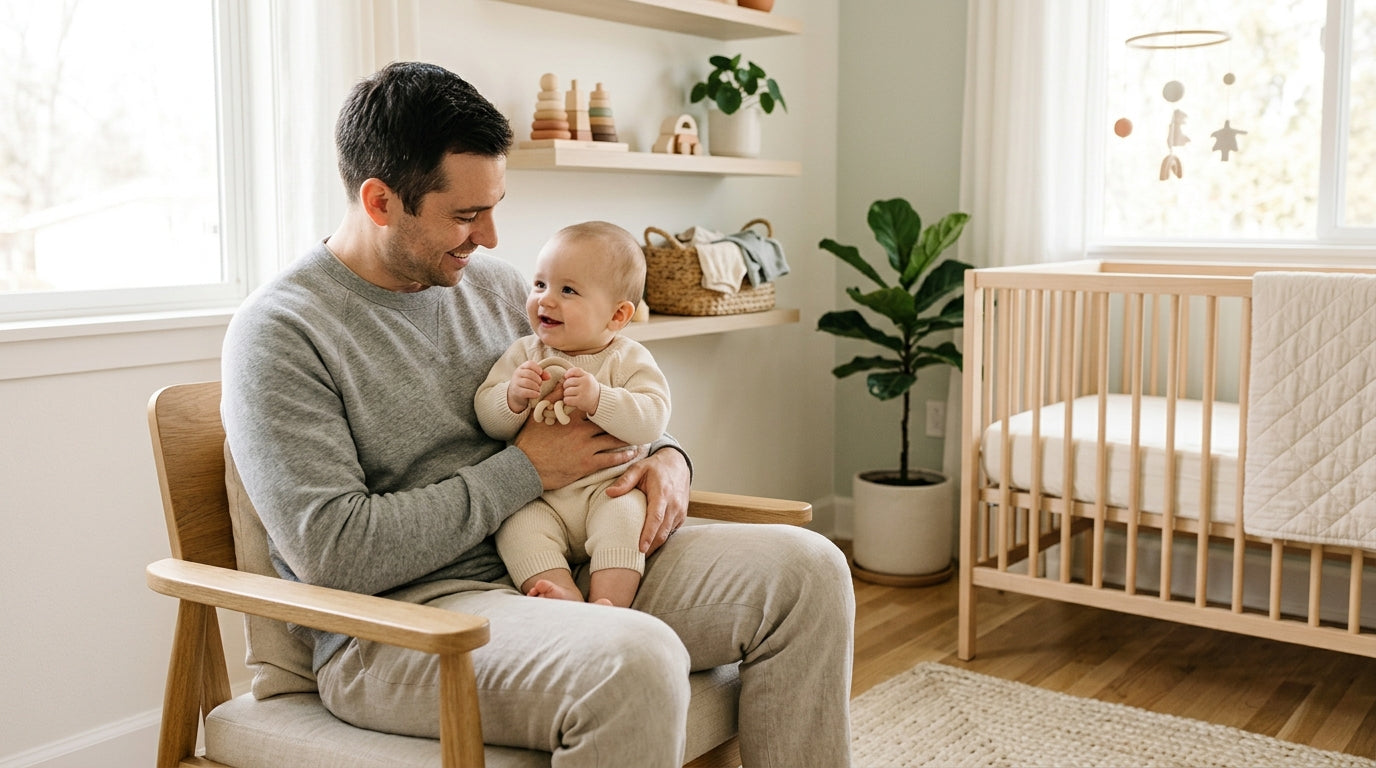
It was 2:14 AM, the Portland rain was actively trying to breach my window seals, and my eleven-month-old was staring at the ceiling fan like it held the secrets to the universe. We were deep in the middle of some sort of sleep regression firmware update. Sarah, my wife, was blissfully unconscious in the other room. I was desperately trying to keep my eyes open by scrolling through a pop-culture news feed, which is how I ended up down a massive rabbit hole trying to figure out when exactly a certain global music icon welcomed her second kid.
Before I had a baby, my mental model of celebrity parenting involved teams of night nannies, diamond-encrusted pacifiers, and zero actual contact with bodily fluids. I assumed billionaires just outsourced the messy parts of their genetic code. But as I sat there, getting kicked in the ribs by a tiny foot wearing a single sock, I started reading about how this particular mega-star was actually approaching motherhood. And honestly? It completely shattered my pre-baby assumptions. It turns out, whether you're performing at the Super Bowl or debugging payment gateways in your sweatpants, the core architecture of raising a tiny human is universally chaotic.
Why a pop billionaire hates iPads
Version 1.0 of me—the guy who existed before this baby compiled into reality—firmly believed that screens were going to save my life. I assumed an iPad was just standard-issue hardware for modern parents. You need twenty minutes of bandwidth to answer an email or chew solid food? Just boot up a brightly colored animation and hand over the tablet. It seemed like a flawless workflow.
Then I actually read what Rihanna said about refusing to raise 'tablet babies.' Apparently, she wants her kids running around barefoot in the dirt, completely disconnected from the digital matrix. At first, I scoffed at this. Easy to say when you own an island, right? But then our doctor cornered us at the nine-month checkup and essentially mumbled the same thing. He threw some fragmented data at us about how the American Academy of Pediatrics strongly suggests zero screens before eighteen months because it somehow corrupts their early visual processing and attention spans.
We've tried to implement this "barefoot and wild" protocol, and my data tracking shows some pretty brutal realities about how babies actually interface with the physical world:
- The dirt parameter: If there's a single particle of soil within a fifty-foot radius, the baby will locate it and attempt to ingest it.
- The barefoot variable: Trying to keep shoes on an infant is mathematically impossible anyway, so leaning into the "barefoot development" theory just saves me twenty minutes of wrestling every morning.
- The sensory overload crash: Plastic toys with flashing LEDs genuinely seem to cause my kid to glitch out and melt down twice as fast as just letting him hit a wooden spoon against a pot.
This is seriously why I ended up loving the Nature Baby Gym with Botanical Elements from Kianao. Before we got it, we were beta-testing this horrifying plastic arch that played a compressed MIDI file of 'Old MacDonald' on a continuous loop. I was ready to throw it into the Willamette River. The wooden gym is totally offline. It’s just solid wood, some textured crochet leaves, and zero batteries. The baby swats at the wooden rings, they make a highly satisfying acoustic clack, and his physics engine gets a workout without any artificial stimulation frying his tiny motherboard.
Old clothes and the speed of infant growth
Before Sarah went into labor, I was obsessed with outfitting the nursery with brand-new, pristine gear. I treated the baby registry like I was specking out a high-end gaming rig. Everything had to be spotless. I assumed hand-me-downs were just for people who couldn't figure out the supply chain.

Then the baby arrived, and I realized that an infant's growth rate is a violently aggressive curve. It turns out even billionaires reuse clothes, passing outgrown rompers from their first kid down to their second. The sheer volume of textiles a baby destroys in a week is staggering. If you can somehow manage to source clothes that aren't spun from petroleum while simultaneously accepting that they'll eventually be covered in mashed peas, you're doing better than I'm.
The apparel industry is apparently a massive environmental disaster, and throwing away a shirt after three weeks just because the kid gained two pounds is terrible for the planet. We started actively hunting for sustainable fibers that can really survive a heavy-duty wash cycle.
I'll be totally honest about the Organic Cotton Baby Blanket with the Deer Pattern. It's just okay to me. I'm a minimalist, dark-mode kind of guy, so a purple blanket covered in little green woodland creatures isn't exactly matching my aesthetic. But Sarah is entirely obsessed with it. She uses it for everything. And I've to admit, my initial skepticism faded when I researched the GOTS-certified organic cotton thing. I guess standard cotton is basically soaked in toxic pesticides during cultivation, and babies have highly permeable skin that absorbs everything. Since we switched to this blanket, the weird red friction rash on the back of his neck has randomly cleared up, so the organic fabric is clearly doing its job in the background.
If you're also trying to debug your nursery setup and figure out what textiles won't irritate your kid's skin, you can poke around Kianao's organic baby essentials collection to see if anything matches your parameters.
Surrendering to the postpartum uniform
I've a distinct memory from my pre-baby life where I told my buddy that Sarah and I weren't going to "let ourselves go" after the kid arrived. We were going to be those cool parents who still wore structured denim and went to microbreweries. I'd like to formally travel back in time and punch myself in the face.

The celebrity mom I was reading about that night admitted to a fashion magazine that she basically became a "lazy dresser" postpartum because her only metric for clothing now is whether it'll scratch her baby's face. This is the most relatable data point I've ever encountered.
The medical establishment calls it the "fourth trimester." ACOG apparently states that the physical recovery from birth takes months, but honestly, it's also about the sensory environment. My daily uniform is now whatever grey hoodie has the least amount of yogurt on the shoulder. Babies have zero spatial awareness. When they're tired, they'll just blindly face-plant into your chest. If you're wearing a jacket with a metal zipper or some synthetic scratchy material, they'll wake up screaming with a red grid pattern imprinted on their cheek.
Which means we've had to optimize all the textiles in our immediate radius. We keep the Colorful Dinosaur Bamboo Baby Blanket draped over the couch at all times. Bamboo is a weirdly incredible material. It reportedly controls temperature natively, which means when my son uses me as a human mattress for ninety minutes, neither of us wakes up drenched in sweat. Plus, the dinosaur graphics give me something to point at when I've completely run out of adult vocabulary by 5:00 PM.
The absolute myth of a balanced schedule
This is the part that really broke my brain. Before the baby, I read a bunch of optimized productivity blogs written by tech guys who claimed you could easily balance fatherhood with a full-time career and a side hustle if you just used the right calendar app. They were lying. All of them.
Rihanna gave an interview right before she played the Super Bowl where she said that work-life balance is basically impossible, and that every hour you spend working is an hour stolen from your kid. I read that line at 3:00 AM, holding my sleeping son in the dark, and I felt it in my bones. You can't hack parenthood. You can't optimize the chaotic, nonlinear progression of raising a child. I spend half my day feeling guilty that I'm looking at code instead of my baby, and the other half feeling guilty that I'm too exhausted to be a productive employee. It's a constant, grinding zero-sum game, and knowing that even someone with infinite resources feels that exact same friction is bizarrely comforting. She also refuses to let paparazzi take photos of her kids to protect their digital privacy, which makes sense since experts claim online oversharing leads to identity theft, but honestly, I haven't had the energy to post a photo on the internet in six months anyway.
Parenthood is essentially deploying a massive piece of software to production without any testing phase. You just have to let it run, watch the errors pile up, and patch things as you go. You learn to embrace the hand-me-downs, you ditch the plastic screens for wooden toys, and you surrender to the reality that you'll probably be wearing sweatpants for the foreseeable future.
Stop trying to optimize your baby's schedule like a machine, and just focus on gathering some reliable, non-toxic gear that won't break before they learn to walk. You can upgrade your nursery's hardware over at Kianao.
Frequently Asked Questions From the Trenches
Is it honestly bad if my baby watches a tablet sometimes?
Look, I'm not a doctor, I'm just a guy who googles things frantically at midnight. From what I understand, early screen time supposedly messes with their dopamine loops and visual processing. I try to keep it to zero, but if you need to put on a five-minute cartoon so you can safely pull a hot pan out of the oven without tripping over a crawling infant, your kid's firmware isn't going to permanently corrupt. Survival first.
Why are organic baby clothes considered better than standard ones?
Before I researched this, I thought "organic" was just an expensive marketing tag. Apparently, conventional cotton requires an insane amount of toxic pesticides to grow, and those chemicals can linger in the fibers. Babies have skin that's way thinner and more permeable than ours. If your kid is getting random red patches or eczema flare-ups, swapping out synthetic, chemically treated fabrics for GOTS-certified organic cotton is an easy variable to isolate and test.
Do wooden baby toys seriously help with development?
Based on my highly unscientific observation of my own son, yes. Plastic toys that do all the work—flashing lights, playing songs—turn the baby into a passive observer. Wooden toys force them to interact. When my son hits the wooden rings on his Kianao play gym, he gets immediate, authentic physical feedback. It's cause and effect. Plus, wood doesn't require triple-A batteries that inevitably die at 4:00 AM.
How do you handle the guilt of working instead of being with the baby?
If you figure this out, please write the documentation and send it to me. I haven't solved this bug yet. The best workaround I've found is compartmentalization. When my laptop is open, I'm working. When I shut it, I leave my phone in another room and sit on the floor with the kid. If you try to run both processes simultaneously, your system just crashes and you fail at both.
Does the fourth trimester really end?
My wife says the physical recovery takes much longer than the standard six weeks the medical brochures mention. Emotionally, I don't think it ever really ends; you just slowly adapt to the new operating system. You stop expecting to feel like your old self and start figuring out how to optimize this weird, exhausted, but completely functional new version of yourself.




Share:
What da baby's messy family structure taught me about boundaries
Why a weighted sleep sack almost broke my parenting resolve