

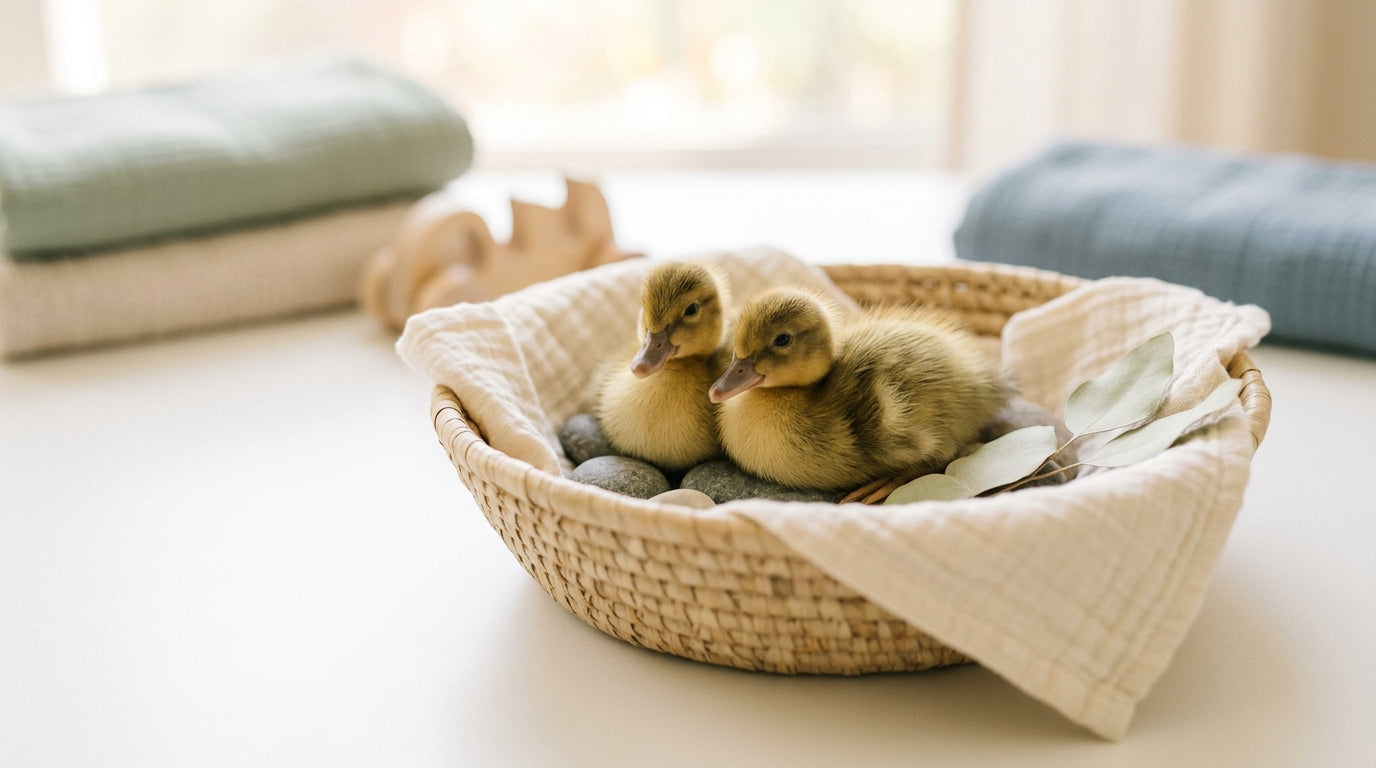
"Just get one at Tractor Supply, it's basically a low-maintenance puppy," my neighbor confidently declared over the fence last Tuesday while watering her petunias.
"They will literally coat your house in microscopic feces and your children will get dysentery," my sister texted me in ALL CAPS when I mentioned the idea an hour later.
"Oh, ducklings? Easiest thing in the world, just keep 'em in your bathtub," the teenager at the local feed store shrugged when I went in for dog food that afternoon.
So. That's incredibly helpful and not confusing at all.
I was standing in my kitchen at 6:15 AM yesterday, wearing those gray yoga pants with the mystery bleach stain on the left knee, pouring my third cup of dark roast. Maya, who's seven and currently in her "I want to be a farmer" phase, had successfully lobbied for a backyard flock after watching some aesthetic homesteading TikTok. You know the ones. The mom is wearing a pristine linen dress and smiling while holding a basket of eggs. I don't own a linen dress. I own stain-resistant activewear that hasn't seen a gym since 2019.
Meanwhile, Leo, my four-year-old, was just running around the kitchen island yelling "QUACK" at our exhausted golden retriever. I was dangerously close to typing variations of looking for baby ducks for sale somewhere near me into my phone browser before the coffee had even fully hit my bloodstream. Because they're cute. Oh god, they're so cute. But before you cave to the springtime pressure and bring a living, breathing, pooping bird into your home, we need to talk about what this actually looks like. Anyway, the point is, it's a lot more complicated than throwing them in a bathtub.
How they actually arrive in the mail
Okay, so let's say you decide to order a specific breed online. I had no idea about this, but you can't just buy one. Ducks are incredibly social flock animals, and if they don't have friends, they get depressed and just kind of give up. Plus, there are shipping minimums. Hatcheries usually make you order at least three to ten of them because they need to share body heat during transit. Yes, transit. The United States Postal Service delivers live birds. I still can't wrap my head around this.
Apparently, right before they hatch, a baby duck absorbs the rest of its egg yolk into its little belly. I guess this yolk acts like a biological lunchbox that gives them enough calories and hydration to survive being in a cardboard box in the mail for like two or three days. It sounds like terrible science fiction, but my husband Mark looked it up on some agricultural university site and said it's just how poultry works.
But here's the kicker. Your local post office will get this peeping, vibrating box of birds at roughly 4:30 in the morning. And they'll call you. They don't care that you were up until 2 AM dealing with a toddler's night terrors. A woman named Brenda will call your cell phone before the sun is up and tell you to get down there immediately because she doesn't want them dying on her loading dock. So there you're, driving through the dark in your pajamas, praying the heat kicks on in your minivan fast enough so your new mail-order flock doesn't freeze.
The whole salmonella situation
Our doctor, Dr. Davis, is this wonderfully exhausted man who always looks like he needs a nap, and I trust him with my life. When I brought Maya in for her annual checkup and casually asked him about backyard poultry, he gave me this long, slow sigh. He told me that kids under five really shouldn't be handling them at all.

He explained something about their tiny, underdeveloped immune systems and the fact that a baby bird, no matter how clean and fluffy it looks, is basically a little salmonella factory. The germs just sort of live on their feathers and their feet and in their droppings. It doesn't even make the ducks sick, it's just part of their normal bacteria, I think. But humans get incredibly ill from it.
Dr. Davis pointed out that four-year-olds like Leo will happily pet a bird, touch the side of the brooder box, and then immediately shove their entire fist into their mouth because they remembered they had a crumb of graham cracker on their thumb. Which is completely accurate. Leo does exactly that. So if you do this, you've to be militant about handwashing. Every single time anyone touches the ducks, their water, their food, or the room they live in. Getting Leo to wash his hands with actual soap is already like wrestling an alligator, so adding mandatory scrub-downs to our daily routine sounds like my own personal hell.
When I was deeply stressed out just thinking about the logistics of keeping everything sanitary, Leo was happily dragging his Polar Bear Organic Cotton Blanket around the living room like a superhero cape. I genuinely love this thing. We got it when he was tinier and it's 100% GOTS-certified organic cotton, so it's survived literally hundreds of trips through our heavy-duty wash cycle on hot water. It's soft, it breathes well, and the little bears on it are adorable. Anyway, my point is, keeping your kids clean and cozy is hard enough without adding literal farm animals to the mix.
Water everywhere all the time
You might think ducks just need a bowl of water like a dog. That's a massive underestimation of how much a duck loves to make a mess. They need water deep enough to dip their entire bill into, because apparently they've to clear out their little nostrils when they eat their dry food, otherwise they can choke. It's terrifying watching them eat, honestly.
But if you give them a wide bowl of water, they'll immediately try to jump into it. And because a baby d—sorry, a duckling—doesn't have its mother around to rub her waterproof oils onto its feathers, they can actually get completely waterlogged. If they get soaked in a bowl of cold water, their body temperature drops and they can literally chill to death right there in your house. So you've to rig up this absurd system with a shallow dish filled with glass marbles so they can only dip their beaks in, not their bodies.
Even with the marbles, they'll splash. They will turn a bone-dry brooder into a disgusting, muddy swamp in roughly four minutes flat. You will be changing wet pine shavings constantly. The smell of wet pine shavings mixed with duck poop is something that will haunt your dreams.
Oh, and they grow so insanely fast that their bones can't keep up. They need extra Vitamin B3, which is niacin, otherwise their legs can permanently warp and bow out. I spent three hours driving to different grocery stores in the rain wearing my Birkenstocks trying to find nutritional brewer's yeast to sprinkle on their feed. I felt like a deranged gourmet chef preparing a macrobiotic diet for a bird that was currently trying to eat a piece of its own dried poop.
By the way, if you're currently expecting an actual human infant and not a flock of birds, my sister just had her first baby and I sent her the Rainbow Play Gym Set. It's fine. It's one of those aesthetic wooden A-frames. Honestly, the little fabric elephant toy gets tangled up sometimes if you move the whole thing too fast, but the natural wood looks way better in her apartment than those massive plastic monstrosities that play electronic music. Plus it's non-toxic, which is great because human babies chew on things just as much as ducks do.
If you're setting up your nursery instead of a barn, you can browse some truly beautiful organic baby items to make your life easier right here on the site.
A quick word on breeds
People get really obsessed with picking the right breed. Pekins are the classic white ones, they grow massive very fast, and they're incredibly loud. If you want a quieter backyard, just get a flock of males (drakes) of whatever breed, because males just kind of have this raspy whisper sound instead of a loud quack. That's basically all I retained from Mark's three-hour deep dive into waterfowl genetics.

The stuff you genuinely have to buy
If you're still convinced you need to do this, just know the shopping list is long. It's not just a cardboard box and some food.
- A giant plastic trough or safe enclosure (don't use cardboard, it'll disintegrate from the water mess instantly).
- Radiant heat plates. Please don't use those red heat lamps with the metal clamps. Mark is terrified of house fires and read me like six articles about how heat lamps fall into the pine shavings and burn down barns. Get a radiant plate they can huddle under safely.
- Unmedicated chick starter feed. It has to be unmedicated because ducks eat more than chicks and can overdose on the medicine in the medicated stuff.
- Nutritional yeast for the leg bone thing we talked about.
- Like, ten million rolls of paper towels. Seriously. Just buy them in bulk now.
Speaking of heat and drafts, our mudroom where we were mapping out this hypothetical brooder gets weirdly breezy near the back door. I really sacrificed Maya's Colorful Leaves Bamboo Baby Blanket for an afternoon just to drape it over the wire side of the crate we were testing to block the wind. I know, using a premium organic bamboo blend to block a draft for farm animals is unhinged behavior. But it's so breathable and temperature-regulating that I didn't have to worry about cutting off the airflow completely, and the pretty watercolor leaf pattern totally hid the ugly metal crate from view. I just washed it on cold afterward and it's perfectly fine.
Before you commit to a decade of buying fifty-pound bags of feed, maybe just start by upgrading your human children's bedrooms. Check out our full line of sustainable nursery gear to keep your family perfectly cozy.
The messy questions everyone asks
Can we keep them in the house permanently?
Oh god, no. No, absolutely not. I mean, I guess some people buy those little duck diapers you see on the internet, but honestly? Ducks don't have sphincter control. They poop wherever, whenever, constantly. The smell of an adult duck living in your kitchen would probably force you to sell your house. They need to go outside into a secure, predator-proof coop as soon as they're fully feathered and the weather is warm enough.
Do they need a giant pond right away?
Not right away, and honestly, maybe never a giant one. When they're tiny babies, they shouldn't swim unsupervised anyway because of the drowning risk I mentioned earlier. When they're adults, they definitely need water to be happy, but a cheap plastic kiddie pool from the hardware store that you dump out and refill every few days works just fine. You don't need to excavate your yard for a koi pond.
What if I literally only want one baby duck?
You can't. Please don't do this. If you only get one, it'll imprint on you, which sounds cute until you realize it'll scream in pure panic every single time you leave the room to go to the bathroom. They're flock animals. They need at least one, preferably two or three, other ducks to feel safe and live a normal life.
Are they louder than chickens?
Yes and no. A rooster is loud, obviously. But female ducks (hens) can be incredibly loud. If they get excited about a worm, or if they want food, or if they just feel like yelling at a cloud, they'll let out this booming, machine-gun quack that your neighbors three houses down will definitely hear. If you live in a dense suburb, you might want to reconsider or look into quieter breeds.
Can my toddler hold them if we use lots of hand sanitizer?
I mean, you know your kid best, but Dr. Davis was pretty firm with me about this. Hand sanitizer doesn't always cut through the actual physical dirt and poop that might be on your kid's hands. Good old-fashioned soap and warm water is the only way to really wash the salmonella risk down the drain. If Leo holds one, I'm basically carrying him straight to the kitchen sink like a biohazard.




Share:
The 2 AM Google Panic: What a "Baby Drill" Actually Means Today
A Dad's 3 AM Guide to Surviving Your First Baby Ear Infection