

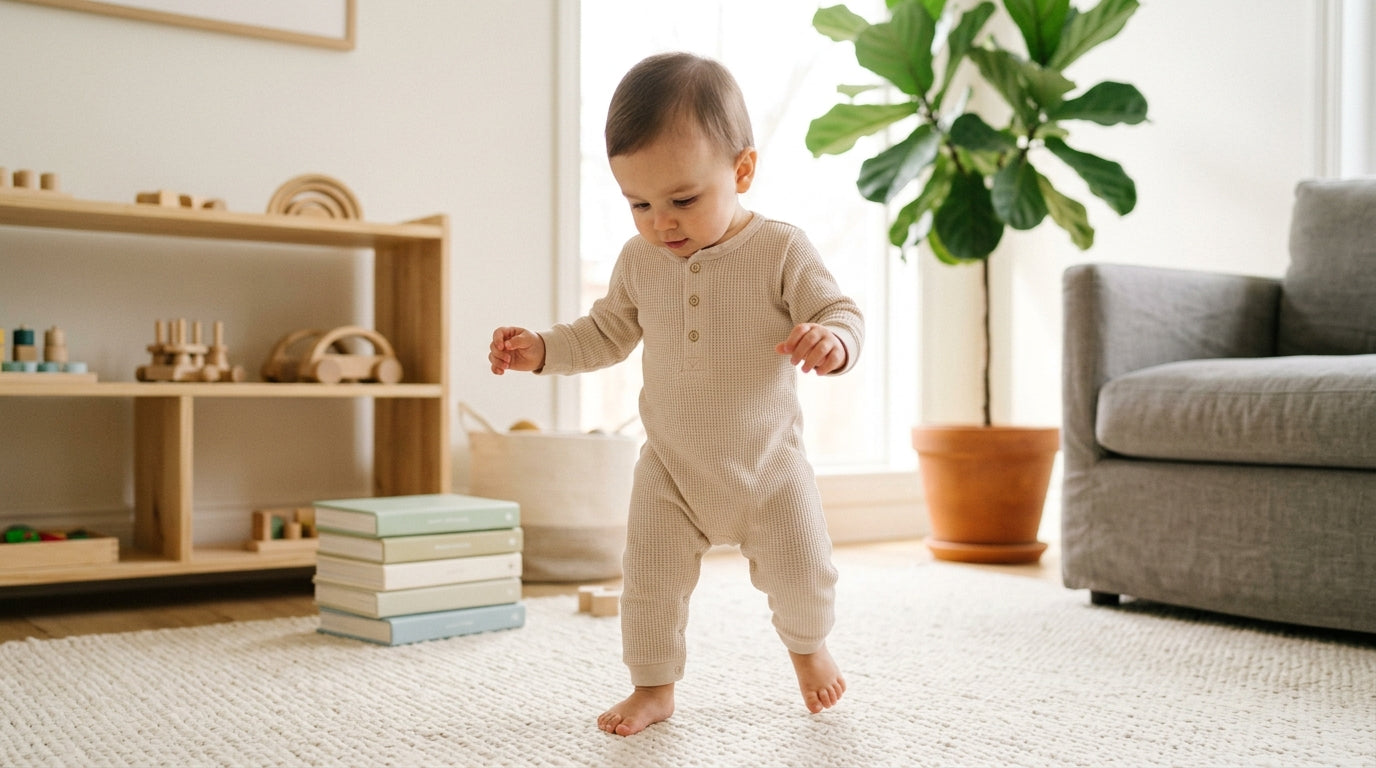
I was sitting on a damp park bench in Wicker Park last Tuesday, nursing a lukewarm coffee, when a mother I barely know ambushed me. She had that specific, tense energy of a woman who'd just read four different parenting blogs before breakfast. She sat down, sighed heavily, and asked me what age my son started walking. She asked it with the casual, overly rehearsed tone of someone who was just dying to tell me her daughter walked at nine months. I stared into my cup and told her the truth, which is that I honestly don't remember the exact week. She looked at me like I'd just confessed to feeding him battery acid. We've turned early childhood development into a ridiculous competitive sport, rating every wobble and stumble like we're compiling some sort of metacritic score for their baby steps to post online.
No one asks about your walking resume at Harvard
I've seen a thousand of these stressed-out parents in the pediatric ward. They come in for a routine checkup, completely sleep-deprived, and pull out a color-coded spreadsheet of developmental milestones. They want to know if their ten-month-old is behind because the neighbor's kid is already sprinting across the yard. I always want to ask them if they've ever been in a job interview where the hiring manager asked if they were an early walker.
It means absolutely nothing. Early walking doesn't mean your kid is a certified genius, and later walking doesn't mean they'll be living in your basement at thirty. The window for normal walking is massively wide. My pediatrician said independent steps can happen anywhere between nine and fifteen months, maybe even up to eighteen months. It depends on muscle tone, head size, personality, and whether or not they just prefer being carried around the house like royalty.
But we obsess over it anyway. We buy the right gear, we clear the floors, we post the videos with the perfect aesthetic filter. We want a flawless rating from our peers, a glowing review of our parenting skills based entirely on when a tiny, unpredictable human decides to put one foot in front of the other. It's exhausting, yaar. You're losing sleep over a timeline that your kid doesn't even know exists.
We all know that one mom in the playgroup who casually brings up that her child is doing parkour at ten months. It's completely toxic. The truth I learned from my nursing days is that kids balance their development. If they're heavily focused on motor skills like pulling up and walking, their language might stall for a bit. If they're busy learning how to talk, they might not care about walking until they're fourteen months old. They only have so much bandwidth in those tiny brains. They can't master everything at once.
The barefoot agenda
Put down the miniature stiff leather oxfords because your kid needs to be barefoot to figure this out.

My pediatrician told me that putting hard shoes on a baby learning to walk is like trying to learn the piano while wearing thick winter gloves. They need the sensory feedback from the floor. I think it has something to do with proprioception and natural arch development, but honestly, the science is a bit hazy to me. Basically, bare feet send rapid-fire messages to the brain about balance and spatial awareness. If you wrap their feet in tiny, expensive rubber prisons, you block those messages entirely.
A baby's foot isn't just a smaller version of an adult foot. It's mostly soft cartilage. My doctor mentioned that wrapping a cartilage foot in a rigid shoe actually changes how the bones form. When they grip the rug with their bare toes, they're building the arches they'll need for the rest of their lives. It's structural engineering happening in real time on your living room floor. So when your mother-in-law buys those expensive, rigid high-tops for a six-month-old, just smile, take the photo, and then conveniently lose them in the back of the closet.
Of course, you can't always be barefoot. When we had to go to my cousin's outdoor wedding last month, I couldn't exactly let my son walk barefoot through a hotel courtyard filled with dropped champagne glasses and questionable landscaping. That's when I bought the Baby Sneakers Non-Slip Soft Sole First Shoes. I'm usually highly skeptical of baby shoes, mostly because they're a nightmare to put on a squirming foot, but these are actually decent.
They have a pliable, soft sole that bends completely in half if you squeeze it. My son wore the brown ones, looked mildly like a tiny yacht captain, and managed to walk across the grass without face-planting into the buffet table. They stayed on his feet, which is honestly the only metric I care about when assessing infant footwear. The laces are elastic so you don't have to tie them, which is a blessing because tying shoes on a toddler is like trying to string a guitar while it's falling down the stairs.
Plastic death traps disguised as entertainment
I can't tell you how much I despise seated infant walkers.
As a nurse, I've seen a thousand of these play out in the emergency room. Parents buy them because they think they're helping their baby learn to walk, or maybe they just want five minutes to wash dishes without a child clinging to their leg. But really, they're just giving a wobbly infant the ability to move at four miles an hour toward the nearest staircase or hot stove. They cause horrible head injuries. Canada literally made them illegal to sell or own.
I've seen the aftermath of walker accidents too many times. A baby in a walker can suddenly reach things they normally couldn't grab, like the cord to the coffee pot. People think the rubber grips stop them from falling over steps, but physics usually wins. Beyond the obvious trauma risk, my pediatrician said they actually delay independent walking. A baby in a seated walker can't see their own feet. They learn to propel themselves forward by pushing off with their toes in a weird, unnatural posture that messes with their hip alignment. It's basically the exact opposite of the balance required for actual walking.
If you want to trap your kid in something so you can drink your coffee in peace, just put them in a stationary playpen and toss some blocks in there.
Setting up your living room for the inevitable
Listen, you don't need to transform your house into a sterile padded cell to get your kid moving.

Here's what honestly helps them practice, no fancy equipment required:
- Strategic baiting: Leaving their favorite snack or the TV remote on a low surface just out of reach forces them to pull themselves up if they want the good stuff.
- The human bridge: Sitting on the floor a few feet from your partner and holding out your arms makes the kid take a terrifying, wobbly step between you.
- Unrestricted clothing: Ditching the stiff denim jeans stops restricting their knees and hips from bending naturally.
- Maximal floor time: Getting them out of the bouncers and high chairs works better than any walking toy because gravity is their best teacher.
Speaking of clothing, I've to mention the Baby Shorts Organic Cotton Ribbed Retro Style Comfort. They're fine. They're shorts. They cover the diaper and the stretchy waistband doesn't leave those angry red marks on his stomach, which is all I really ask of infant clothing. They don't magically make him walk faster, but they don't get in his way either. If you want a whole matching aesthetic, you can browse Kianao's organic baby clothes, but honestly, as long as the fabric stretches and handles a blowout in the wash, you're golden.
When to genuinely worry about the timeline
It's incredibly easy to get sucked into an anxiety spiral when your mother-in-law keeps loudly asking why the baby isn't walking yet at Sunday dinner. My pediatrician said to just tune everyone out unless the kid hits eighteen months with zero independent steps, or if they only ever walk on their tiptoes.
Toe walking can sometimes be a sign of tight Achilles tendons, sensory processing issues, or other neurological stuff, though half the time they just do it because they think it's a fun new party trick. If you notice it constantly, mention it at your next checkup.
If you're really stressed about their progress, talk to your actual doctor. Don't go down a midnight internet rabbit hole on a parenting forum. The internet will confidently convince you that your child's perfectly normal mild delay is really a rare, incurable disease.
We need to let babies develop on their own deeply inconvenient timeline. You're much better off dressing them in stretchy clothes that don't fight their movements, like this Baby Jumpsuit Organic Cotton. It has buttons in the front so you aren't wrestling it over their giant head while they scream at you. Once you pad the sharp corners and get the fragile things off the coffee table, you really just have to sit back and let them figure it out.
They'll walk when their muscles and brain are good and ready. And once they do, you'll spend the next three years chasing them through grocery store aisles, desperately wishing they would just sit still for five consecutive minutes, beta.
If you're ready to stop stressing and start dressing your new walker in clothes that won't trip them up, grab some soft-soled shoes and stretchy basics from Kianao today before they run off entirely.
Messy questions about walking that you're too embarrassed to ask
Do babies really need walking shoes?
No, they don't. Indoors, they should be completely barefoot. When you take them to the park, the sidewalk, or somewhere gross, put them in something with a soft sole that bends completely in half. Thick, rigid rubber soles are terrible for learning balance.
What about those push walkers?
Wooden push walkers are fine, mostly. The ones that look like little shopping carts or block wagons. They force the kid to support their own weight rather than hanging from a crotch harness. Just watch them closely around corners and rugs because those things tip over easily, and then you'll be dealing with a fat lip and a lot of screaming.
My ten-month-old isn't cruising yet, should I panic?
No. Ten months is nothing. Some kids skip crawling entirely, some kids butt-scoot across the carpet for months, and some just sit there observing the room like a tiny judge until they're a year old. Stop comparing them to the influencer babies on your feed.
How do I stop the toe walking?
If it's just occasional, don't do anything at all. They're just experimenting with their calf muscles and discovering new ways to move. If it's the only way they walk and they're well past eighteen months, bring it up at their next checkup. My pediatrician said it's usually benign, but it's worth getting professional eyes on it just to be sure.
Are jumpers bad for walking development?
Yeah, they aren't great. A few minutes so you can use the bathroom won't ruin your child, but leaving them in a doorway jumper for an hour trains them to push off with their toes and puts weird stress on their hip joints. The floor is boring, but it's where the actual development happens.




Share:
How I Survived The Hunt For A Baby Sitter Without Losing My Mind
The Hilarious, Tear-Stained Baby Steps Story Every Mom Needs