

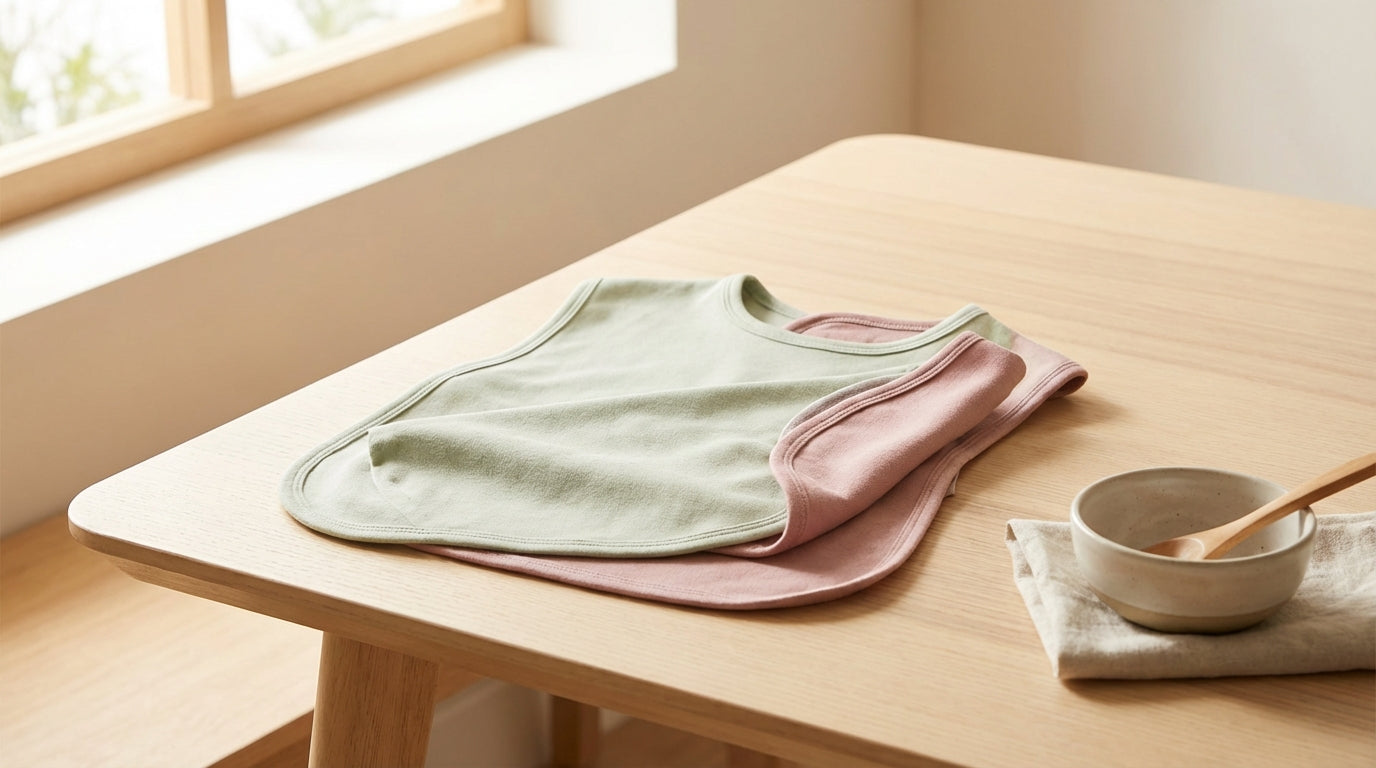
At exactly 6:14 PM on Thanksgiving, the system architecture of our family dinner completely collapsed. My eleven-month-old, currently running a highly unstable version of his motor-skills firmware, had just discovered the gravitational physics of mashed sweet potatoes, launching a spoonful across the room with terrifying accuracy. I was busy calculating the splash radius on our dining room wall, but the real catastrophic failure was happening at the other end of the table.
My father-in-law, Arthur, a seventy-two-year-old retired contractor who builds custom furniture for fun, was quietly struggling to process a bowl of butternut squash soup. A recent mild stroke had left him with a slight tremor in his right hand—essentially a five percent packet loss on his fine motor control. As a drop of orange soup landed on his pristine wool sweater, my well-meaning but socially unoptimized uncle grabbed a stained kitchen towel, leaned over, and joked about tucking it into Arthur's collar because he clearly needed a bib.
The silence in the room was so heavy you could have measured it in gigabytes. Arthur’s jaw clenched, his eyes dropped to the table, and I watched a proud man suddenly feel like he was sharing a demographic with my screaming, potato-throwing infant. The user interface of eating is totally broken at both ends of the human spectrum, and sitting there with a damp sponge in my hand, I realized that protecting a grown man's dignity requires a completely different troubleshooting manual than feeding a baby.
The vocabulary surrounding this hardware is a broken system
I spent the next forty-eight hours running background processes in my brain about how to fix this vulnerability before Christmas dinner, which naturally led to me frantically googling where to buy adult bibs at two in the morning while the baby did his scheduled sleep-regression crying. What I found was an absolute disaster of user experience and marketing.
Apparently, if you type that exact search query into the internet, the algorithm assumes you're outfitting a 1950s hospital ward. Everything I found looked infantile, clinical, or like a giant plastic trash bag with a neck hole. The word "bib" itself is a massive downgrade in human dignity, carrying a cognitive load that screams "toddler" to a guy who used to frame houses with a heavy-duty nail gun.
My wife finally caught me muttering at my laptop and gently pointed out that accessibility advocates and occupational therapists don't even use that word anymore, heavily preferring terms like "clothing protectors" or "dining scarves." Changing the search parameters changed the entire output. A clothing protector sounds like a premium feature you'd pay a subscription fee for, not something you strap onto a baby to catch drool. If we want adults with motor conditions, Parkinson’s, or post-stroke tremors to actually use this gear, we've to stop giving them hardware labeled with baby terminology.
Physics, gravity, and the moisture barrier problem
I initially thought the solution was just finding a darker, thicker towel, but the occupational therapist my wife dragged me to—mostly because I was obsessively explaining fabric absorbency rates to our cat—casually dropped a terrifying piece of data on me. She noted that a waterproof backing on these protectors isn't actually about preventing spaghetti sauce stains, but is a critical thermal barrier against third-degree burns.

My brain basically blue-screened. If Arthur drops a spoonful of 140-degree coffee or hot soup on his chest, a pure cotton towel just rapidly absorbs the boiling liquid and holds it directly against his skin like a thermal heat sink. I'm pretty sure the fluid dynamics of soup require entirely different absorbent layers than whatever pureed peas my baby is eating, but my limited understanding of thermal transfer rates tells me that relying on basic cotton is a massive safety hazard. The waterproof layer stops the liquid payload from reaching the skin, buying you major seconds to remove the garment without causing scalding. Safety apparently overrides softness every single time.
We did briefly try those disposable paper options that dental clinics use, but Arthur shifted in his chair once and the paper collar ripped in about three seconds, rendering the entire thing utterly useless.
Patching the dining table with baby tech
Before I could fix the clothing issue, I realized I needed to optimize the actual food containers. For the baby, we had already deployed the Silicone Baby Bowl with Suction Base, which is genuinely my favorite piece of feeding hardware. It creates a vacuum seal on the high chair tray that my son absolutely can't brute-force his way out of, cutting my floor-cleaning time by at least forty percent and saving my sanity.
Staring at the baby's bowl, I had a weird thought. If the container doesn't move, Arthur wouldn't have to use his non-dominant hand to stabilize it while his right hand managed the spoon. So, for lunch the next day, I brought out our backup container, the Silicone Bear Suction Bowl, and quietly pressed it onto the table in front of him.
The results were highly mixed. From a purely functional standpoint, the suction tech was flawless, completely stabilizing his eating interface and reducing his tremor-induced spills to zero. But from a dignity standpoint, it was just okay at best. It has little silicone bear ears. A seventy-two-year-old man eating chili out of a bright blue bear bowl is objectively ridiculous, and he gave me a look that suggested he was considering rewriting his will. He finished the chili without a single drop hitting the table, but I immediately made a mental note to find him a heavy-duty ceramic bowl with a hidden silicone grip base so he didn't have to eat out of a cartoon character.
While I was obsessively tracking shipping updates for Arthur's new sleek dining accessories, I was also forced to order a replacement for the Pacifier Clips my son somehow managed to unclip and launch straight into a Portland storm drain during a walk. I like the wood and silicone ones because they actually hold up to his destructive beta-testing without looking like cheap plastic garbage, proving that good design shouldn't be limited by age.
The specifications you honestly need to check
If you find yourself having to source adaptive dining gear for an aging parent or an older child with special needs, you've to read the technical specs, because the market is flooded with terrible products.

You absolutely must verify that you're getting an adult bib washable at high temperatures. Soup, gravy, and coffee all contain complex oils and proteins that bond to fibers, and if you can't run that protector through a hot-water cycle without the waterproof lining melting, the product is garbage. I started tracking wash cycles in a spreadsheet, and the cheap plastic ones delaminated after exactly four trips through our dryer.
Then there's the closure mechanism. I completely abandoned the idea of velcro after watching it fail in the wash, opting instead for heavy-duty metal snaps that seriously survive a hot cycle without turning into a lint trap. Velcro degrades so fast, and tying a knot behind a proud man's neck is just another way of making him feel like a patient instead of a dinner guest. Overhead designs or side-snaps give the user the ability to put it on themselves, which is a massive win for independent functioning.
Also, look for the crumb catcher feature. It's essentially a fold-up pouch at the bottom hem secured by snaps. It sounds ridiculous until you watch a rogue piece of broccoli roll down a shirt and stain the fabric on a dining chair. The catcher intercepts the physical debris before it hits the floor, saving you from having to run the vacuum after every single meal.
Restoring equilibrium to the dining room
By the time Christmas dinner rolled around, I had completely reconfigured our setup. The baby was still throwing peas, but they were mostly contained by his silicone gear. Arthur sat across the table wearing a sleek, dark charcoal clothing protector that looked remarkably like a high-end barista apron.
It had subtle metal snaps, a hidden waterproof thermal barrier, and it blended right into his sweater. When a rogue splash of gravy hit his chest, he didn't freeze up in embarrassment. He just wiped it off with a napkin, laughed at a joke my wife made, and kept eating. The hardware faded into the background, and the user experience of sharing a meal with my family was finally restored.
Taking care of people—whether they're eleven months old and learning to use a spoon, or seventy-two and figuring out how to adapt to a changing body—is mostly just about observing the friction points and finding tools that fix them. It's messy, the updates are constant, and you'll google a lot of weird things at midnight. But when you finally get the system running smoothly, it's totally worth it.
Check out our full line of sustainable, intelligently designed feeding accessories that seriously respect your family's needs at Kianao's adaptive feeding collection.
My incredibly messy FAQ about adaptive dining gear
Are adult bibs for adults genuinely necessary, or just a convenience?
Based on my late-night research panics, they're incredibly necessary for safety. If an adult drops a hot liquid, standard clothing just absorbs and holds the heat against their skin. The waterproof layer in a proper clothing protector prevents thermal transfer and scalding. It’s a safety protocol, not just a stain-prevention tool.
How do I convince an older parent to wear one without offending them?
You stop calling it a bib immediately. Seriously, delete that word from your vocabulary. Call it an apron, a dining scarf, or a clothing protector. Buy one that looks like an accessory—like a dark bandana or a sleek chef's apron—and focus on how it saves them the hassle of changing shirts, rather than making it about their physical limitations.
What's the best way to clean a washable adult bib?
My washer has seen things. You need to wash them on a hot cycle to break down the food oils, but apparently, you should avoid fabric softeners because they leave a weird chemical residue that degrades the waterproof backing. I just use standard detergent and tumble dry them on low heat so the inner lining doesn't melt into a useless puddle of plastic.
Do those little crumb catcher pouches seriously work?
Surprisingly, yes. I was highly skeptical of the physics here, but the fold-up pocket at the bottom catches dry debris perfectly. It saves you from having to sweep the floor or scrub mashed potatoes out of your upholstered dining chairs every time someone's hand shakes.
Should I buy velcro or snap closures?
Avoid velcro like it's a malware virus. It collects lint, scratches the back of the neck, and loses its grip strength after a few months of heavy washing. Heavy-duty snaps are a binary mechanism—they either work or they don't, and they survive the dryer without any degradation in performance.




Share:
What Nobody Tells You About Buying Clothes for Your Newborn
The Biggest Baby Rattlesnake Myth Ruining Your Desert Vacation