

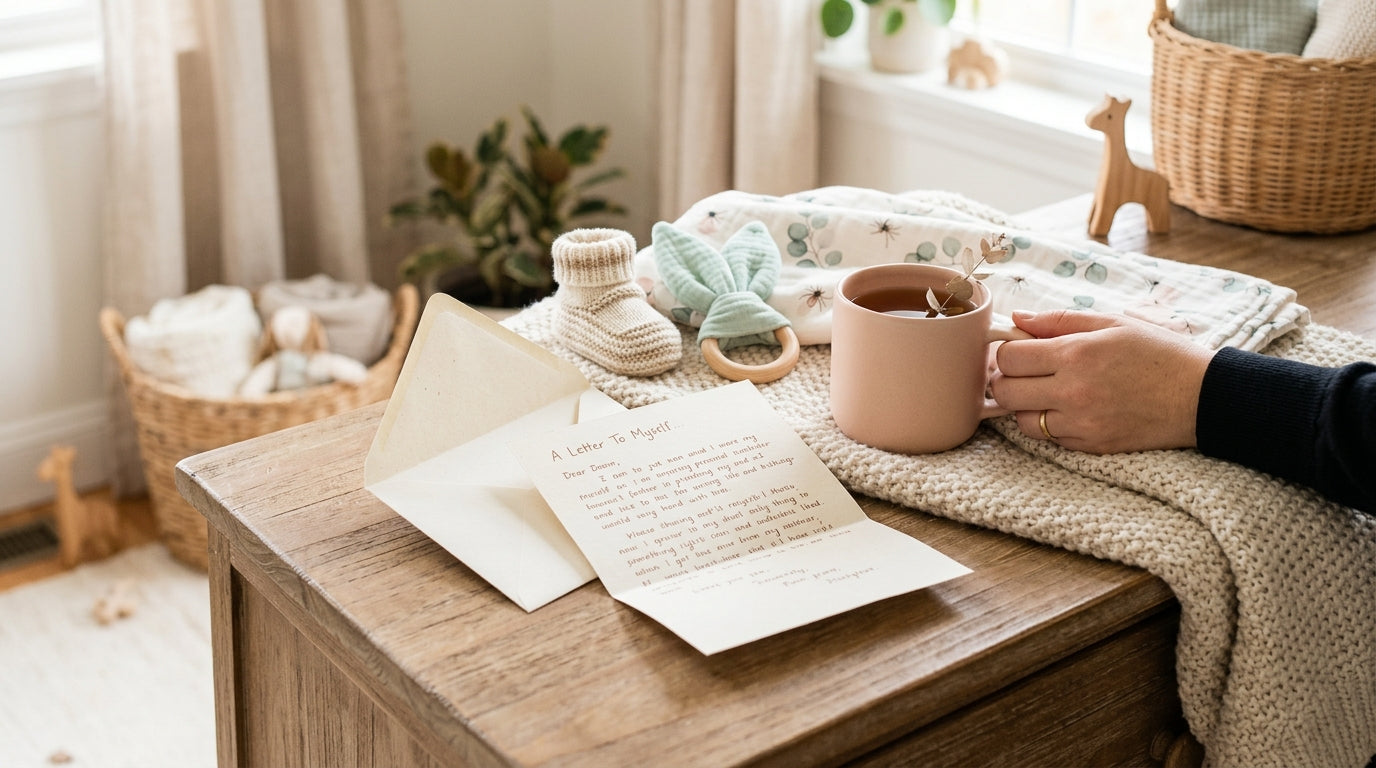
Dear Priya from six months ago. You're currently standing in the doorway of the nursery at two in the morning, holding the Dyson stick vacuum like it's a loaded weapon. You're wearing a milk-stained nursing bra from yesterday, your eyes are burning, and you're staring at a translucent cluster of microscopic legs on the baseboard near the crib. I know exactly how your heart is hammering against your ribs right now. I know you're calculating the distance from the baseboard to the crib mattress and wondering if tiny arachnids can parachute through the air. Breathe for a second, yaar. Put the vacuum down.
I'm writing this because I know what you're about to do. You're going to spiral. You're going to mentally pack a suitcase, list the Chicago apartment on Zillow, and debate moving back in with your parents in the suburbs. As a former pediatric ER nurse, you'd think we would be immune to this specific brand of first-time mom hysteria, but knowing too much is actually a curse. You've seen the absolute worst-case scenarios walk through triage doors, so your brain naturally assumes that the tiny speck on the wall is an apex predator waiting to strike. I promise you, it isn't.
The midnight search history regret
Listen, before you do anything else, step away from the internet. I know you're sitting there with one thumb frantically typing fragmented queries into the dark void of your phone screen, but it's a trap. Whatever you do, don't go down the rabbit hole of searching for spider baby isaac. I spent twenty minutes the other night reading a deeply disturbing wiki about demonic basement monsters that shoot webs before I realized it was just lore for a weird video game. It's exactly the kind of sleep-deprived detour that makes you question your grip on reality when you've only had three hours of broken sleep.
The internet wasn't built for anxious mothers at three in the morning. The algorithms feed on our biological imperative to protect our young, serving up hyper-rare medical anomalies and forums full of people claiming a daddy longlegs took out their cousin. You end up reading absolute garbage masquerading as medical advice, written by someone who probably uses important oils to cure strep throat. Just close the browser. You don't need a deep dive into the reproductive cycle of the common house spider when you've a baby who still hasn't figured out how to link sleep cycles.
What actually happens if they eat one
Here's the reality check you need right now. You're terrified he's going to find one on the playmat and put it in his mouth. Let's talk about the ingestion factor, because I've seen a thousand of these cases in the emergency room. A frantic parent rushes in, carrying a ziploc bag with the squished remains of some unidentifiable bug, swearing their kid swallowed its twin. We always had to keep a straight face while taking their vitals, because the medical truth is deeply anticlimactic.
My pediatrician, Dr. Gupta, gave me the exact same exasperated look I used to give those parents when I brought this up at his four-month well visit. She kind of shrugged and muttered something about stomach acid neutralizing whatever proteins are involved. Basically, if your kid eats a standard house spider, it's just extra protein. They can't be poisoned by eating something venomous because venom has to be injected into the bloodstream to do anything. The human digestive tract is essentially a vat of acid that destroys the spider long before it could ever cause an issue. I think the science gets a bit more complicated with specific toxins, but honestly, she wasn't worried in the slightest, so neither should we be.
If you're still obsessing over every dust bunny looking like a threat, you just need a better distraction for him on the floor. When I was in the thick of this paranoia, I bought the Panda Teether and it became my absolute favorite tool for keeping his mouth occupied. I've a very vivid memory of shoving this exact teether into his hands while I got on my hands and knees with a flashlight to inspect a completely harmless shadow under the sofa. It's brilliant because it has this textured bamboo-looking part that he prefers over literally everything else we own. It's survived being dropped in parking lots, chewed relentlessly, and boiled in water, and it still looks new. Having something safe and familiar for him to chew on drastically reduced my anxiety about him sampling the local insect population.
The toxic chemical rant
Now we need to talk about your instinct to call an exterminator and carpet-bomb the apartment with chemicals. Don't you dare pick up the phone. The pest control industry preys on new parents. They show up with their heavy-duty sprayers and glossy brochures, promising a protective barrier that will keep your home pest-free, while completely glossing over what they're actually spraying on your baseboards.

I spent years in the hospital watching kids come in with respiratory distress. I've seen the nebulizer treatments, the chest retractions, the sheer panic in a mother's eyes when her baby can't catch a full breath. A developing respiratory system is incredibly fragile. The alveoli in their tiny lungs are still forming. When you spray commercial insecticides indoors, those chemical compounds don't just vanish once they dry. They settle into the dust. They linger in the carpet fibers. They off-gas into the ambient air of a room where a tiny human is taking twice as many breaths per minute as an adult.
It's absolute madness to me that we accept this trade-off. We panic over a harmless bug that might cause a tiny localized red bump, but we willingly spray neurotoxins in the exact same spaces where our babies do tummy time and learn to crawl. The chemical exposure from commercial bug sprays is objectively a thousand times more dangerous to a developing infant than the common house spider. I don't care if the company claims it's safe once dry. It's a risk I'm simply not willing to take, and neither should you.
Just mix some white vinegar and water in a spray bottle, wipe down the windowsills, and accept that nature occasionally finds its way indoors.
Evaluating the phantom bites
You're going to find a red spot on his leg tomorrow morning and immediately assume it's a bite from a brown recluse. Let me save you the copay and the embarrassing trip to the clinic. I've triaged enough infant rashes to know that 99 percent of suspected spider bites are just regular baby acne, an ingrown hair, or a reaction to laundry detergent. The fangs on most house spiders are literally too weak and short to penetrate human skin.
Even if it's a bite, the protocol is incredibly boring. You just end up scrubbing the microscopic red dot with soap and slapping a wet washcloth on it before deciding if it's worth bothering the on-call doctor. If there's no severe swelling, blistering, or weird muscle cramping, they're fine. Their skin is just hyper-reactive to everything right now.
Speaking of skin reactions, we really need to stick to natural fibers. I noticed a huge drop in phantom red marks when we switched him almost entirely to organic cotton. We've been using this Organic Cotton Sleeveless Bodysuit a lot lately. It's fine. It does the job. The fabric is decent and the snaps hold up well enough when he's doing his little alligator death rolls on the changing table. It's not going to change your life, but it prevents the sweat-induced heat rashes that look suspiciously like bug bites when you're viewing them through the lens of extreme paranoia.
Take a break from the panic and maybe look at something nicer. You can browse the organic baby clothes collection if you need a distraction from staring at the walls.
Houseplants as a coping mechanism
Here's the funniest part about this whole ordeal. In your desperate attempt to purify the air and create a perfect, safe environment for the baby, you're going to get really into houseplants. And the plant you're going to obsess over is the spider plant. Yes, the irony is thick. The millennials' urge to cope with anxiety by purchasing foliage is a real phenomenon.

You'll learn all about how spider plants are entirely non-toxic to kids and pets. You'll read articles about their air-purifying qualities and convince yourself that having three of them in the nursery is the equivalent of a hospital-grade HEPA filter. And then you'll discover propagation. You'll start snipping off the little offshoots, the spiderettes, which the plant community literally calls spider plant babies. You'll have jars of water lining the windowsill, rooting these little green spider babies, completely forgetting that just weeks prior, the mere concept of the word made you want to move out of the state.
When you're trying to set up a calm nursery vibe, you need things that ground you. Instead of stressing about bugs, focus on creating a space that feels intentional. While I was arranging my twenty new plant babies, I set up the Gentle Baby Building Block Set on the rug for him. They're these soft rubber blocks that don't make a horrific noise when he inevitably knocks them over. They've been great for his motor skills, and honestly, building a little tower and knocking it down is mildly therapeutic for me too.
Letting go of the hyper-vigilance
So, past Priya, here's the harsh truth. You can't control the environment completely. You can't seal the apartment in bubble wrap. Bugs exist. Dust exists. The baby is going to put things in his mouth that will make your stomach turn. Your job isn't to prevent him from ever encountering the natural world. Your job is to keep him safe from the big things and let the little things slide.
Put the vacuum away. Go to sleep. Tomorrow, you'll vacuum the baseboards normally, without the manic energy. You'll check the corners, not because you're afraid, but because keeping a clean house is just part of the routine now. You'll realize that the baby is resilient. His immune system is learning. His body is adapting to the world around him, and so is your mind.
You're doing fine, beta. The anxiety feels permanent right now, but it fades into a dull hum in the background eventually. You trade the fear of spiders for the fear of choking on grapes, and then you trade that for the fear of them climbing the bookshelf. It's just a rotating carousel of hazards, and you eventually learn to ride it without getting dizzy.
If you're looking to update the nursery with things that really matter for their development rather than worrying about the baseboards, you should check out the wooden toys collection before you head to bed.
The messy questions I kept asking myself
- How do you really know if a bug bite is dangerous? I spent hours obsessing over this. Honestly, unless you see the spider seriously bite them, you're just guessing. I look for the big warning signs: is the redness spreading rapidly, does he feel hot to the touch, is he unusually lethargic, or is there a hard, painful blister forming? If he's just acting like his normal, chaotic self with a red dot on his arm, I put a little breastmilk on it because I'm a cliché, and I just watch it.
- Should I use those plug-in ultrasonic pest repellents? My pediatrician basically laughed when I brought these up. The science on them is incredibly murky, and honestly, I don't love the idea of broadcasting high-frequency sound waves in the same room where my infant is developing his hearing pathways. I'd rather vacuum a web than risk messing with his auditory processing with some cheap gadget from Amazon.
- What's the best way to clean corners without using harsh chemicals? I bought an attachment for the vacuum that has a stiff brush on the end. Once a week, I just run it aggressively along the baseboards and ceiling corners. If I find a spot that looks like an egg sac, I suck it up and immediately empty the canister into the outside trash bin. No sprays, no fumes, no lingering anxiety about what he's breathing in.
- Are all houseplants safe for the nursery? Absolutely not. This is a mistake a lot of parents make. They buy beautiful, trendy plants without checking the toxicity. Pothos and snake plants are mildly toxic if chewed. Spider plants are my holy grail because they're 100 percent safe. If he manages to pull a leaf off and chew it, all he gets is some extra fiber.
- Why does it feel like the anxiety is worse at night? Because the rest of the world is asleep and your brain has zero distractions. When the sun is up, you've laundry and feeding schedules to keep you grounded. At 2 AM, the silence is deafening, and evolutionary biology kicks in, telling you to stand guard. It's completely normal, but you've to force yourself to recognize it as a hormonal response rather than an actual emergency.




Share:
What the Sparkle Meghan Baby Drama Taught Me About Newborns
Debugging Stage 1 Baby Food: A Dad's First Bites Protocol