

I'm standing in the blindingly bright, pristine bathroom of a Buc-ee’s somewhere off Interstate 35, and my eighteen-month-old son is screaming like I’m trying to exorcise a demon from his body. It’s August in Texas, which means the air outside feels like a wet wool blanket, and I had dressed Tucker in a pair of neon green, super-stretchy "performance" leggings I’d grabbed from a discount bin for three dollars. I thought I was being a frugal, smart mom. I thought I was winning.
But as I wrestled those sweat-soaked, synthetic plastic tubes off his chubby toddler legs to change his diaper, I physically recoiled. From his diaper line down to his ankles, Tucker’s skin was a landscape of angry, scarlet, raised hives. It was hot to the touch. He was frantically clawing at his knees, and I was standing there holding a pair of cheap, petroleum-based pants, suddenly realizing I had essentially wrapped my child in Saran Wrap and baked him in the Texas heat.
That day was the absolute end of my bargain-bin clothing phase. It’s also the day I learned a very expensive, very stressful lesson about why the materials we put right against our babies' skin actually matter, and why I eventually became that annoying mom who reads clothing tags and mumbles about organic certification.
My doctor's completely unhelpful (but accurate) diagnosis
I dragged a miserable, half-naked Tucker to Dr. Evans the very next morning. Dr. Evans is a lovely man who has seen me at my most unhinged, usually when I'm convinced a weird freckle is terminal. He took one look at Tucker’s legs, sighed, and asked me what kind of fabric he'd been wearing. When I muttered "polyester-spandex blend," he gave me the kind of disappointed look I usually reserve for my husband when he puts empty milk cartons back in the fridge.
Here’s what he explained, filtered through my sleep-deprived, barely-passed-high-school-chemistry brain: A baby’s skin isn't just a waterproof wrapper. It’s their largest organ, and it’s basically a giant sponge. When kids run around and get hot, their pores open up to sweat. If they're wearing synthetic fabrics like polyester or nylon—which are literally made from the same petroleum plastics as water bottles—that sweat has nowhere to go. It just pools there, creating this nasty, humid microclimate where yeast and bacteria throw a massive frat party on your kid's skin.
But it gets worse, because apparently to make those cheap synthetic leggings stretchy, colorful, and stain-resistant, the factories soak them in a cocktail of chemicals. We're talking about PFAS (those "forever chemicals" everyone is freaking out about, which I guess just live in your body until the end of time?), BPA, phthalates, and heavy metal dyes. Dr. Evans started talking about endocrine disruptors and how these chemicals seep through open pores into a developing baby's bloodstream to mess with their hormones, and honestly, I just kind of blacked out from the mom-guilt. I was just trying to save five bucks on pants, y'all. (Don't even get me started on the flame retardants they spray on kids' pajamas—just throw those straight in the outdoor trash can and walk away.)
Grandma's advice meets modern agricultural nightmares
So I called my mom, crying in the driveway, because that's what you do when you accidentally marinate your firstborn in toxic plastic. Her response was classic, no-nonsense Southern grand-parenting: "Bless your heart, Jess. Just put the boy in cotton like we did with you."
Which sounds great, right? Except I run a small Etsy shop where I work with a lot of textiles, and I knew that conventional cotton is not the innocent, fluffy cloud my mom thinks it's. Regular cotton is one of the most heavily pesticide-sprayed crops on the planet. They blast it with herbicides, harvest it, and then treat it with formaldehyde just to keep it from wrinkling in the shipping containers. If you’ve ever opened a cheap pack of baby onesies and smelled that weird, fishy, chemical odor? Yeah, that’s formaldehyde. The same stuff we used to preserve frogs in biology class is hanging out in the baby clothing aisle.
This is when I fell down the late-night rabbit hole of European baby wear and discovered their obsession with controlled organic cultivation. Over there, they don't mess around with baby skin. They grow pure organic cotton without the synthetic pesticides, toxic fertilizers, or genetically modified seeds. The fibers are naturally longer, softer, and they actually let air circulate. It was exactly what Tucker’s raw little legs needed to heal.
What actually happens when you switch out the closet
I’m just gonna be real with you: tossing a drawer full of cheap leggings and replacing them with premium organic ones hurts the wallet. I'm deeply budget-conscious. But after I slathered Tucker in prescription cream and bought him his first few pairs of real organic cotton pants, the difference was undeniable. His eczema flare-ups virtually disappeared within a month. He stopped scratching his thighs in his car seat. He wasn't waking up from naps in a pool of his own trapped sweat.

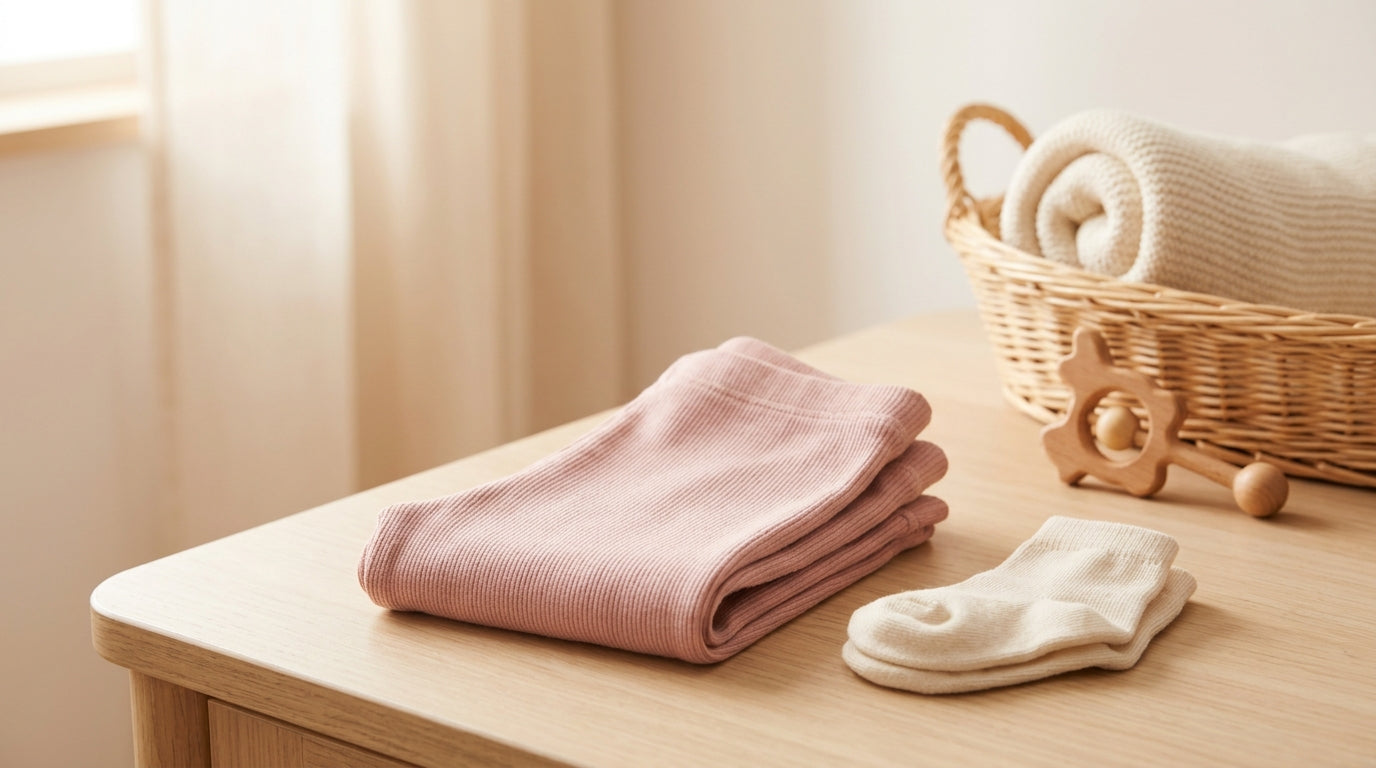
My absolute go-to now are the Baby Leggings Organic Cotton from Kianao. Let me tell you why these specifically saved my sanity. One hundred percent organic cotton is amazing for skin, but if there’s zero stretch, the pants bag out at the knees after twenty minutes and your kid looks like they're wearing a droopy diaper. These have a brilliant ribbed texture that provides natural stretch and recovery without relying on a ton of synthetic spandex.
The waistband really sits flat against the tummy instead of cutting off their circulation, and they've extra room in the gusset so they fit easily over bulky diapers (even the massive overnight cloth ones I briefly tried to use before giving up). Tucker wore them to death, then I packed them away, and now my youngest, Sadie, is wearing the exact same pairs. They don't pill up into little scratchy balls like cheap polyester does. They just get softer every time you wash them. When you realize one pair is going to last through three kids without turning into transparent rags, the price tag suddenly makes a whole lot of sense.
Let's talk about the washing machine graveyard
If you're going to invest in good organic baby clothes, you've to unlearn everything the detergent commercials taught you. My mom used to wash my clothes in scalding hot water with a cup of bleach and enough scented fabric softener to choke a horse. You can't do that with organic cotton.
Fabric softeners are basically liquid chemical wax. They coat the natural fibers, destroying the breathability that you just paid good money for, while locking in odors. Instead, just wash them on cold with a boring, unscented eco-friendly detergent. And for the love of everything holy, keep them out of the dryer if you can. The intense heat of a modern tumble dryer literally bakes the natural elasticity right out of the ribbed fabric and breaks the fibers down. If you want to stop setting your money on fire, just buy three good pairs of pants, wash them gently, and hang them over your dining room chairs to dry while you watch Netflix, completely ignoring the massive pile of dishes in the sink.
If you're ready to ditch the plastics and really let your kid's skin breathe, you can browse through a whole collection of organic baby clothes that won't give you a panic attack in a gas station bathroom.
Beyond the pants: Fixing the rest of the toxic nursery
Once you realize how much garbage is hiding in baby fabrics, you kind of start side-eying everything else in their room. I started small, because throwing out an entire nursery is unhinged behavior.

The first thing I swapped was their sleep gear, because they spend (hopefully) half their lives wrapped in it. I grabbed the Woodland Fox Organic Cotton Baby Blanket for Sadie. Honestly, it's fantastic. The weight is perfect—not too heavy for southern winters, but not so thin that it feels cheap. Plus, she's currently teething and tries to eat the corners of everything she touches. Since it's organic and uses eco-friendly dyes, I don't have to spiral into a panic when I catch her chewing on the little orange foxes.
I also tried to upgrade our play space with the Wooden Baby Gym with the botanical elements. I'm going to shoot straight with you: it's fine. It’s absolutely gorgeous, the wood is smooth and non-toxic, and it looks incredibly chic in my living room instead of looking like a plastic neon spaceship crashed onto my rug. But babies are gonna baby. Sadie stared at the little hanging leaves for about twelve minutes before she decided she'd rather aggressively roll around on the floor and try to eat a stray Cheerio she found under the sofa. If you want a beautiful, safe, aesthetic piece for the early newborn days, it's great, but don't expect it to magically entertain a mobile infant for hours.
Now, the feeding gear? That's a different story. I'm deeply obsessed with the Bamboo Baby Spoon and Fork Set. When Tucker started solids, I used those cheap, hard plastic spoons. He would inevitably jam them into the roof of his mouth, cry, and then throw them across the kitchen where they’d splinter. These bamboo ones have a soft, food-grade silicone tip that bends when Sadie inevitably misses her mouth and stabs her own cheek. Plus, bamboo is naturally antimicrobial, which is a lifesaver because I absolutely find these wedged between the couch cushions three days after mealtime, covered in petrified oatmeal.
The reality of the situation
Look, motherhood is basically just a series of endless, exhausting micro-decisions. We're all just out here trying to keep tiny humans alive while folding a never-ending mountain of laundry and surviving on reheated coffee. You can't protect them from every single chemical in the modern world, and making yourself crazy trying to do so isn't healthy for anyone.
But clothing is the one thing sitting directly against their skin, twenty-four hours a day. Making the switch away from cheap, chemical-soaked petroleum pants was one of the few parenting decisions I’ve made that yielded an immediate, visible result. Tucker's skin cleared up. Sadie has never had a single heat rash. I stopped feeling that low-level guilt every time I dressed them.
If you're tired of mysterious rashes, saggy knees, and pants that pill after two washes, do yourself a favor and grab a pair of these organic ribbed leggings before they sell out of the decent neutral colors.
The messy questions everyone asks me about organic fabrics
Why do my kid's organic pants always end up looking like saggy elephant knees?
Because true, 100% organic cotton has zero elastic memory. Once it stretches out to accommodate your toddler aggressively squatting to look at a bug, it stays stretched. That's why you've to look for ribbed weaves or a tiny percentage of elastane blended in, otherwise you’ll be pulling their pants up all day long.
Do I really have to buy special expensive detergent for this stuff?
Not really, but you can't use the blue radioactive-looking sludge from the grocery store either. Those conventional detergents are packed with optical brighteners, which are literally chemicals designed to stay on the fabric to reflect light and make it look "cleaner." Just grab a basic, unscented, plant-based detergent. Your baby smells good enough on their own.
What the heck does GOTS certified seriously mean?
From my basic, bleary-eyed research, it stands for Global Organic Textile Standard. Basically, it's a strict third-party bouncer for the clothing industry. If a tag has it, it means the cotton wasn't sprayed with toxic pesticides, and the factory didn't use heavy metals or child labor to sew it together. It's the only label I genuinely trust anymore because brands love to slap the word "green" on a plastic bag and call it a day.
Are organic cotton leggings warm enough for the winter?
If you live in Texas like me, yes, absolutely. If you live somewhere it honestly snows, they make an incredible breathable base layer. Because they don't trap sweat like polyester, your kid won't get clammy and freeze when they go outside. You just layer snow pants right over them.
Is it really worth upgrading if my baby doesn't have eczema or rashes?
Honestly, I think so. Even if you can't see a rash on the outside, their little bodies are still absorbing whatever is in those fabrics. Endocrine disruptors do their damage quietly over time. Plus, organic cotton is just softer and lasts way longer, so you're saving money in the long run by not having to replace cheap, ruined clothes every three weeks.




Share:
The Ugly Truth About My Switch to Bio Baumwoll Leggings
Kinderwagen Lammfell Winter: Why I Stopped Panicking