

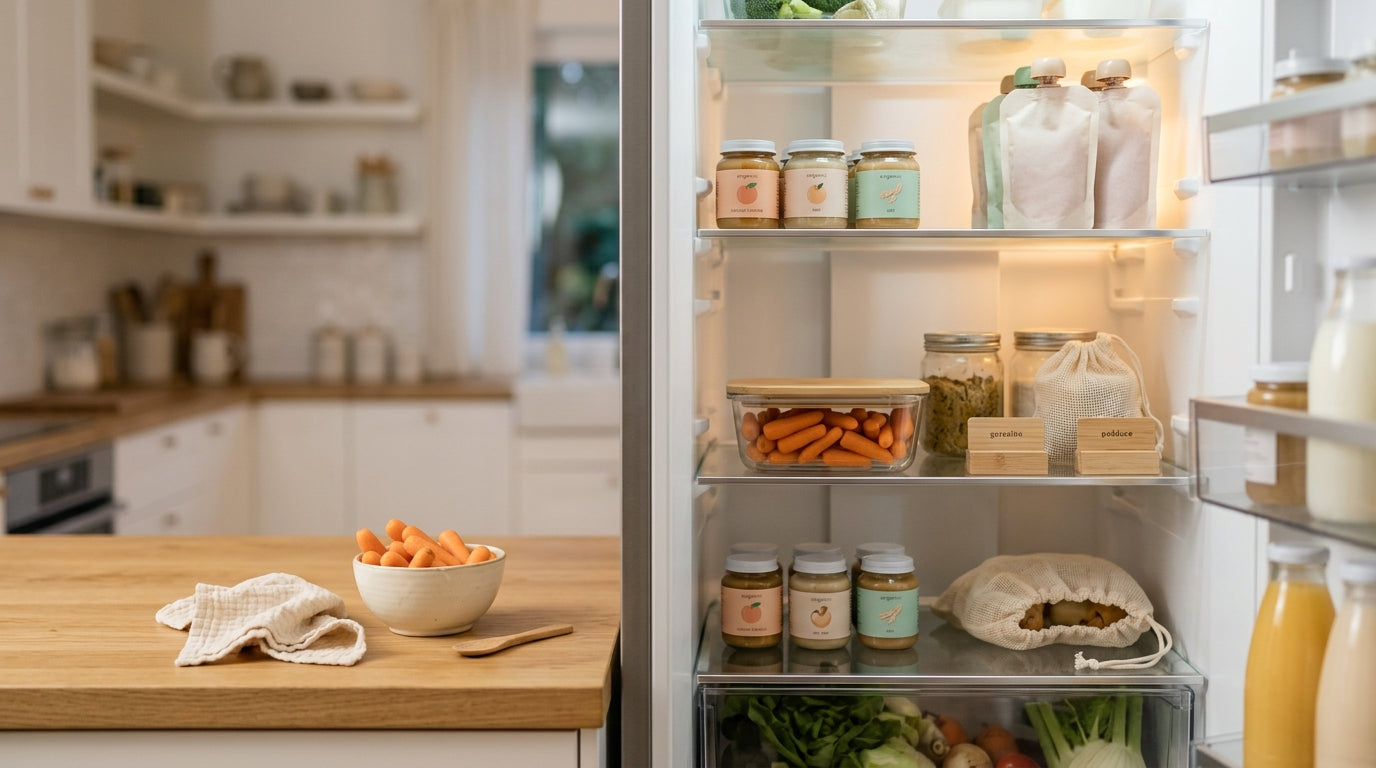
It was exactly 11:42 PM on a Tuesday when I found myself knee-deep in the bottom drawer of the fridge, clutching a flashlight between my teeth like a cat burglar who specialises exclusively in stealing root vegetables. The twins were finally asleep upstairs, presumably dreaming about whatever two-year-olds dream about (probably destroying my sanity), but I was wide awake in the dark. My phone had just helpfully illuminated my bedside table with a terrifying news alert about a massive baby carrots recall, prompting me to sprint downstairs in my boxers to interrogate the crisper drawer.
There's a very specific type of dread that washes over a parent when they realise the "healthy snack" they’ve been aggressively forcing upon their children for the past week might actually be a vector for a horrific gastrointestinal illness. You spend three years meticulously cutting grapes into microscopic quarters to prevent choking, only to voluntarily hand them a bright orange stick of impending doom.
I stood there shivering in the light of the refrigerator bulb, staring at a handful of suspicious vegetables, desperately trying to remember if I had purchased these before or after the mid-August cutoff date. My sleep-deprived brain was performing complex, panic-induced calculus, trying to weigh the probability of bacterial contamination against the absolute certainty that I'd hate myself if I didn't throw them all in the bin immediately.
The absolute hubris of decanting groceries
Here's the part where I admit to being a victim of modern parenting aesthetics. If I had just kept the bloody plastic bag the carrots came in, I'd have easily been able to check the brand and the best-by date to see if they matched the Grimmway Farms recall list. But no. Sometime last year, I fell down a social media rabbit hole and convinced myself that good parents decant their groceries.
So, instead of a helpful barcode, I was staring at a minimalist, reusable silicone pouch filled with anonymous orange cylinders. They could have been the highly dangerous organic ones from the affected farms, or they could have been perfectly safe standard carrots from the local shop down the road. Without the packaging, every single baby carrot in my house was suddenly a suspect in a high-stakes true crime documentary.
I spent twenty minutes cursing my own desperate need for an aesthetically pleasing fridge interior. I was violently tossing the contents of the vegetable drawer into a black bin liner, discovering horrors I hadn't seen since the summer. I even found a plastic toy baby car wedged behind a limp stalk of celery, presumably placed there by one of the twins during a covert kitchen operation I had entirely failed to notice. I binned that too, just in case E. coli had learned to drive.
By the time I was finished, I had thrown away roughly twenty quid worth of organic produce, purely because I could no longer trust anything that lacked a branded plastic wrapper. It’s essentially every major brand anyway—from Whole Foods to Target—so the safest bet was to just purge the entire drawer and start a new life as a family that only eats things sealed in foil.
Why running them under the tap is a spectacular waste of time
The next morning, functioning on three hours of sleep and an unhealthy amount of instant coffee, I started Googling. This is always a mistake. Page after page of public health warnings informed me that simply washing the recalled produce wouldn't save us.

This completely shattered my worldview. For years, I've operated under the assumption that if I aggressively rub a piece of fruit under the cold tap for three seconds, I'm performing the equivalent of medical-grade sterilisation. Apparently, this specific strain of E. coli (O121:H19, which sounds like a terrible password) laughs in the face of my tap water. From what I can gather through my highly unscientific, panic-driven reading, the bacteria isn't just sitting politely on the surface waiting to be rinsed away like a bit of garden mud. It bonds to the vegetable. It becomes one with the vegetable.
Some deeply unhelpful articles suggested that if you cook the carrots to an internal temperature of 160 degrees Fahrenheit, the bacteria dies. I don't know what kind of Michelin-star culinary operation these people think I'm running, but I'm absolutely not inserting a meat thermometer into the centre of a baby carrot to check if it’s safe for a toddler's lunchbox. If a vegetable requires precision temperature control just to prevent renal failure, it goes directly into the outside bin.
When I finally cracked and rang the doctor
By midday, one of the twins felt slightly warm to the touch. It was probably because she had been running laps around the living room while wearing a winter hat, but my anxiety had already taken the wheel. I rang our GP, Dr. Patel, who possesses the endless patience required to deal with neurotic first-time fathers of twins.
I explained the carrot situation in a breathless rush. He sighed—a deep, resonant sound that carried the weight of the entire NHS—and gently talked me off the ledge. He explained that while my wife and I'd probably just experience a miserable, bathroom-bound week if we ate contaminated veg, the real danger is for the little ones. Toddlers are highly susceptible to developing Hemolytic Uremic Syndrome (HUS) from this bug, which is a genuinely terrifying kidney complication that made my stomach drop into my shoes.
But then he gave me the timeline, which was arguably worse than the diagnosis. He told me that even if they had eaten the bad carrots, we wouldn't know immediately. The bug likes to sit there and incubate for an agonising three to four days before producing the severe stomach cramps or the kind of horrifying bloody nappies that necessitate an immediate, screaming drive to A&E. We were basically on a 96-hour symptom watch.
Every time I changed a nappy for the next four days, I felt like a bomb disposal expert cutting the red wire. I was stripping them out of their Organic Cotton Baby Bodysuits constantly just to check for fevers. I'll say, the only silver lining of this entire stressful week was realising how brilliant those bodysuits actually are. When you're frantically pulling clothes over a toddler's head for the fifth time in a day to check their temperature, you really appreciate the stretchy envelope shoulders. Plus, they somehow survived my paranoid, boiling-hot 60-degree laundry cycles without shrinking into doll clothes, which is more than I can say for the synthetic rubbish my aunt bought us.
The great sanitisation ritual
While we waited out the symptom window, I had to deal with the fridge. The health warnings made it clear that you can't just throw the carrots away; you've to eradicate any trace of where they used to be, lest the bacteria jump onto a nearby block of cheddar.

Trying to clean a fridge while keeping two hyperactive toddlers out of the chemical spray is an extreme sport. I dumped a massive pile of toys on the living room rug, praying for a few minutes of peace. I highly think the Gentle Baby Building Block Set for moments of parental desperation like this. I genuinely love these blocks. Not because of their purported educational value or whatever, but because they're soft. When you're frantically carrying drawers of boiling water back and forth from the sink and you inevitably step on one of these blocks barefoot, it doesn't send a shockwave of agony up your spine. They kept the girls quietly distracted for an astonishing fourteen minutes, which is a new household record.
Of course, one twin eventually lost interest and started trying to chew on the edge of the coffee table. I shoved her Panda Teether into her hand to redirect the destruction. Look, it’s just fine. It's a piece of food-grade silicone shaped like a panda. It’s not going to teach her Mandarin or solve the cost of living crisis, but it gave her something safe to gnaw on that wasn't a potentially lethal vegetable or a piece of varnished wood, so I consider it a win.
The actual cleaning of the fridge was a mess. Instead of following the CDC's clinical, multi-step hygiene protocol, you essentially just have to rip every plastic shelf out of the machine, submerge them in water so hot it removes the top layer of your skin, and aggressively scrub the empty white void of the fridge interior with whatever food-safe sanitiser you can find under the sink while aggressively hoping you didn't miss a spot.
If you're currently in the middle of a kitchen panic and looking to upgrade the things your baby actually puts in their mouth, take a deep breath and browse our collection of easily washable, highly durable baby toys that will never be recalled for E. coli.
The aftermath of the orange menace
We made it through the four-day window without any bloody nappies or midnight trips to the hospital. The girls were completely fine, blissfully unaware that their father had spent the better part of a week treating their snack times like a hazardous materials operation.
I, on the other hand, am permanently scarred. I don't think I'll ever look at a baby carrot the same way again. They look so innocent, so convenient, so perfectly engineered for a toddler's fist. But the trust is gone. We're a cucumber family now. At least until the next inevitable agricultural crisis.
Parenting is exhausting enough without having to cross-reference your grocery receipts with federal health databases. But if this recall taught me anything, it's that my anxiety is alive and well, my fridge has never been cleaner, and I'm never, ever decanting my produce again. Give me the ugly branded plastic bags, or give me death.
Ready to swap the snack-time stress for something that honestly brings you peace of mind? Explore our full range of organic, non-toxic baby essentials that are designed to make your chaotic life just a tiny bit easier.
Questions I frantically Googled at 2 AM
Do I really have to throw them all away if they look fine?
Yes. I know it hurts to throw perfectly crisp, expensive organic food straight into the bin, but E. coli doesn't come with a helpful visual indicator. They won't look fuzzy or smell weird. They will look exactly like the healthy snack you bought, right up until they put your kid in the hospital. Bin them.
Can I just peel the baby carrots to make them safe?
I genuinely considered taking a vegetable peeler to these tiny things, which shows you how sleep-deprived I was. The bacteria isn't just a layer of dust you can shave off. It can penetrate the surface. Peeling them just guarantees you'll get the bacteria all over your hands, the peeler, and your kitchen counter.
What if I cooked them in a stew last week?
According to my paediatrician's heavy sighs, if you boiled them to death in a stew or roasted them at high heat for a long time, the bacteria is dead and you're likely fine. The real panic is for the raw ones we endlessly hand to our toddlers in little plastic bowls to keep them quiet while we make dinner.
How long do I need to worry after they ate them?
This is the worst part. Dr. Patel warned me that things to watch for usually take between three and four days to show up, though the window can technically stretch up to ten days. You basically have to spend a week performing intense visual inspections of every nappy you change. If you see blood, or if they've severe stomach cramps, stop Googling and go to the doctor.
Should I avoid all carrots now?
I mean, I'm currently boycotting them purely out of spite, but practically speaking, no. The recall was very specific to Grimmway Farms and the brands they supply during a specific window. Standard whole carrots with their leafy green tops from your local farmers market are fine. But honestly, if you want to take a month off from carrots just to give your nerves a rest, I completely support you.




Share:
Surviving the 2024 Baby Carrots Recall in a Jetlagged Haze
That 3AM Moment We Met a Baby Centipede (And Panicked)