

Standing in a stranger’s soggy driveway in southeast Portland at 9:15 PM, rain soaking through my fleece, trying to fold a secondhand stroller that smelled faintly of old milk and despair. This was my absolute breaking point. My wife, Sarah, had sent me the listing link three hours earlier with a hopeful text about finding a great deal. I had driven across town in the dark thinking I was hacking the system. Instead, I spent twenty minutes wrestling with a rusted folding mechanism while the seller’s cat watched me judgefully from the front porch. The suspension was totally shot, the wheels squealed like a dying hard drive every time I pushed it, and the fabric was highly questionable. I'm pretty sure the plastic frame was older than my first laptop. I bought it anyway because I'm completely terrible at social confrontation, shoved it into the back of my Subaru, and it immediately went into our garage where it hasn't moved since.
Parenthood is basically one long, terrifying hardware troubleshooting session where the stakes are astronomical. Raising a child to version 18.0 apparently costs around $300,000, which is roughly the GDP of a small island. So when our 11-month-old daughter arrived (I just refer to her online as baby g to protect her digital footprint from future AI overlords), I assumed we would just source everything secondhand. I'm a software engineer, so I like to optimize my overhead. I figured grabbing previously owned baby gear online would be a massive efficiency hack to keep our budget out of the red while keeping textile waste out of the local landfills. I typed "used baby gear near me" into a search engine one night and immediately descended into an absolute matrix of recalls, outdated safety specs, and neighborhood drama.
Things my pediatrician made me promise never to buy secondhand
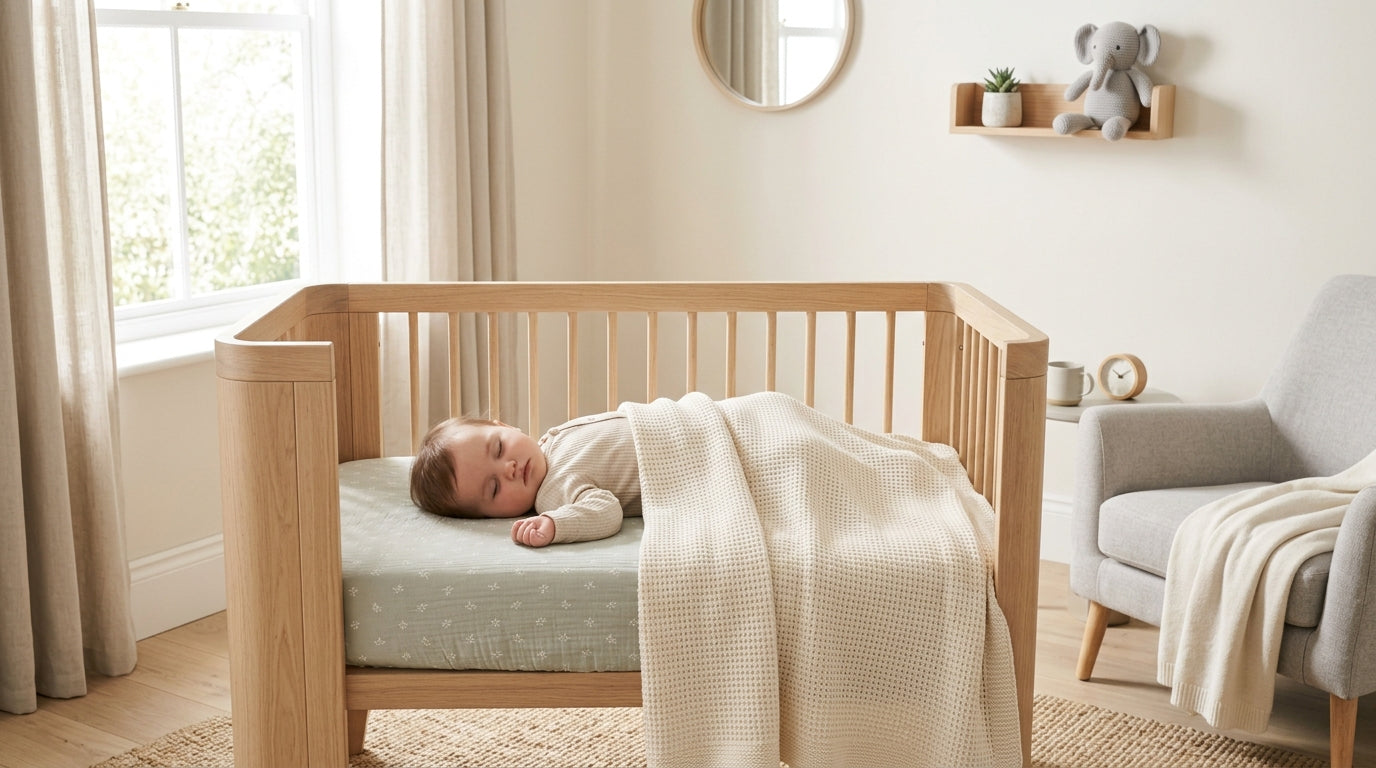
I went into our four-month checkup bragging to Dr. Lin about a local marketplace crib mattress I almost bought for twenty bucks. She looked at me over her glasses with a mix of pity and medical horror. Apparently, secondhand mattresses are giant, porous sponges for dust mites, invisible mold colonies, and whatever biological events the previous infant unleashed on it. But the part that actually made my stomach drop was the structural wear. She explained that previous usage can create hidden microscopic depressions in the foam, which poses a massive suffocation risk to newborns who just don't have the neck firmware installed to lift their heavy little heads yet. I immediately deleted all marketplace apps from my phone for three entire days.
And car seats? Don't even get me started on the car seat black market. It absolutely blows my mind that people casually sell these things at weekend garage sales next to old VHS tapes. A car seat is a one-use crash helmet for your kid’s entire body. If that seat was in a fender bender at five miles an hour, the internal plastic structural integrity is compromised forever. You can't see the micro-fractures with the naked eye. Plus, sitting in a hot car for five years literally bakes the polymer plastics until they're dangerously brittle. The safety expiration dates on those things exist for a reason. Buy it new, rip the tags off, and destroy the plastic shell with a sledgehammer when you're done so nobody else tries to salvage it.
The same logic applies to anything that goes in the mouth or handles bodily fluids. Single-user breast pumps can't be fully sanitized because infectious moisture particles sneak past the basic shields and get right into the main motor block, which you can't clean no matter how hard you try. The motor suction also dies slowly over time, so you'll just end up with lower milk yields and a very frustrated partner. I ranted about this exact mechanical failure to Sarah for forty-five minutes while furiously washing bottle nipples. If it goes in a mouth or protects a skull, the secondhand market is dead to me.
Because I was so thoroughly traumatized by the used mattress conversation with my doctor, I panic-bought brand new bedding that same afternoon. Bedding is one of those categories where the wear-and-tear of a previous baby is just too biologically suspicious to think about. Blowouts are real, and I log her temperature variations, her diaper output, and her sleep cycles in a massive spreadsheet to prove it. We picked up the Organic Cotton Baby Blanket with Polar Bear Print from Kianao. It's easily my favorite piece of cloth in her room. The material is 100% GOTS-certified organic cotton, which means it hasn't been blasted with cheap agricultural chemicals, and it keeps stable temperature way better than the weird synthetic fleece blanket my aunt sent us. Sarah loves the cute little white bears on the blue background, but I just love that it survives our brutal, daily hot-water wash cycles without turning into a pilled, scratchy mess. We use the smaller square version in the car seat every single morning, and it feels like a tiny, clean sanctuary in a very messy world.
The safe zones for previously owned stuff
Once I recovered from the paralyzing realization that almost everything in the world is a potential hazard to my child, I realized some specific categories are perfectly fine to inherit. Hard plastic toys and bathtubs are the easy wins. You wipe them down with a heavy bleach solution, run the smaller pieces through the high-heat sanitize cycle on the dishwasher, and they're basically factory reset to brand new.

Strollers are the actual goldmine, assuming you don't buy rusted garbage in the rain like I did on week two. Premium stroller brands are built like tanks and hold up forever. But there's a massive data caveat that I spent way too long researching in the dark: you really need to check the manufacture date. You generally want to avoid strollers made before late 2015, because apparently that's when a whole bunch of new structural safety standards were enacted by the powers that be. I check the hinges, test the brake mechanisms, and inspect the wheel bearings like I'm buying a used Honda Civic.
Clothing is the other safe zone, mostly because babies grow out of sizes in roughly fourteen seconds. I track her growth percentiles meticulously, and the data velocity is staggering. My research rabbit holes told me we should buy used clothes to combat the fact that eighty-five percent of all textiles end up in landfills, which makes logical sense to me. We just stick to natural fibers because they hold up better, and we wash everything twice in baby-safe detergent before it ever touches her skin.
I actually tried to build my own wooden play gym once to save some cash. I bought thick dowels at the hardware store, realized I had zero idea how to make the joints structurally sound without using highly toxic wood glue, and immediately abandoned the project in the garage. Instead, we got the Basic Play Gym Frame. I'll be completely honest with you here—it's just okay. Don't get me wrong, the construction is solid hardwood, it's sanded perfectly smooth so there are zero splinters, and I love the minimalist A-frame design. You can tie your own hanging toys to it instead of being trapped with some loud, plastic, battery-operated monstrosity that flashes strobe lights in your living room. But for the first solid week we had it, baby g just stared at the empty wooden rings blankly and then aggressively rolled over to chew on an empty cardboard box. It took her quite a while to care about whatever we hung from it. It's a beautifully made framework, but you've to put in the trial-and-error work to figure out which specific hanging toys actually keep your unique baby entertained.
If you're entirely exhausted by cross-referencing safety databases every time you open a thrift store app, sometimes it just makes sense to start fresh. Browse our curated organic baby collections and save yourself the midnight internet doom-scrolling.
Speaking of things they aggressively chew on, don't buy used pacifiers under any circumstances. Just don't do it. But you also shouldn't let the brand new ones hit the dirty floor of a coffee shop, because then you've to scald them with boiling water in a panic while your baby screams at maximum volume. We run the Wood & Silicone Pacifier Clips to prevent this exact system failure. They feature food-grade silicone beads and smooth beechwood components that are entirely BPA-free. They latch onto her little outfits tightly enough that she can't rip them off with her surprisingly strong baby grip, but they don't destroy the delicate fabric fibers. It's a very simple mechanical fix to a highly annoying daily bug: the missing pacifier. Plus, she ends up chewing on the wooden cookie charm half the time anyway, which totally distracts her while her upper teeth are painfully coming in.
My personal checklist for marketplace finds
I've a very strict protocol now whenever Sarah finds someone selling baby equipment locally. Instead of just handing over a twenty dollar bill and hoping for the best, I demand the exact model number to query against the government recall database online, physically rip apart the padding to check for invisible milk-mold, and aggressively enforce a two-week waiting period just to make sure we honestly need the thing.

I swear, half the things people try to sell casually were recalled years ago for randomly collapsing or trapping tiny fingers. If the seller won't give me the model number or says the sticker wore off, the deal is instantly dead.
The padding inspection is non-negotiable for me now. Babies leak unpredictable fluids from every conceivable orifice on an hourly basis. Spilled milk seeps deep into non-removable high chair foam and grows invisible fungal colonies that you'll never see but your kid will absolutely breathe in. It's a biological nightmare. If the fabric layer doesn't come completely off the frame to go into our washing machine, I walk away immediately.
The forced waiting period is the biggest lesson I've learned as a tired dad. Chronic sleep-deprivation makes you incredibly vulnerable to targeted marketing. You think some ridiculously expensive vibrating bassinet is going to magically fix your ruined sleep schedule. But if you wait a week to see if one pops up on a local secondhand market, your baby will usually decide they seriously sleep fine or they'll just move on to a completely new, equally frustrating developmental phase. Waiting is the ultimate cost-saving algorithm.
Ready to skip the sketchy driveway meetups and invest in items that really survive through multiple kids safely? Grab something reliable from our shop today.
Questions I frantically typed into my phone at 3 AM
Are secondhand car seats ever a good idea?
Absolutely not. My pediatrician gave me a very stern lecture about this. You have no idea if that seat was in a minor crash that compromised the internal plastic structure. Plus, the plastics bake in hot cars over the years and become super brittle. The safety expiration dates are printed on the bottom for a very good reason. Just buy a new one.
How do I clean random plastic toys from a thrift store?
I treat them like biohazards until proven otherwise. If it's solid, hard plastic with no battery compartments or hidden squeaker holes, I scrub it down in the sink with a heavy bleach-water solution. If it fits, I throw it on the top rack of our dishwasher and run the highest heat sanitize cycle available.
Should I worry about vintage wood cribs?
Yes, you should worry constantly. Anything built before the drop-side crib ban in 2011 is inherently dangerous due to fatal entrapment risks. And if you go even further back for that cool vintage aesthetic, you're probably dealing with illegal lead paint and hardware that has weakened from being assembled and disassembled three dozen times.
Do baby clothes expire or degrade over time?
The clothes themselves don't expire, but the elastic definitely degrades and synthetic fabrics can get really weird and scratchy after a hundred wash cycles. I stick to buying used clothes that are made of natural fibers like one hundred percent cotton, and I always wash them twice in baby-safe detergent before letting them touch my daughter's skin.
What's the rule for buying used breast pumps?
If it's a single-user pump, skip it entirely. Infectious particles can sneak past the basic shields and get right into the main motor block, which you can't clean no matter how hard you try. The motor suction also dies slowly over time, so you'll just end up with lower milk yields and a very frustrated partner.




Share:
Is the Job of a Brand Ambassador Actually Worth the Stress?
The Big Lie About Finding the Best Car Seat (And Surviving the Drive)