

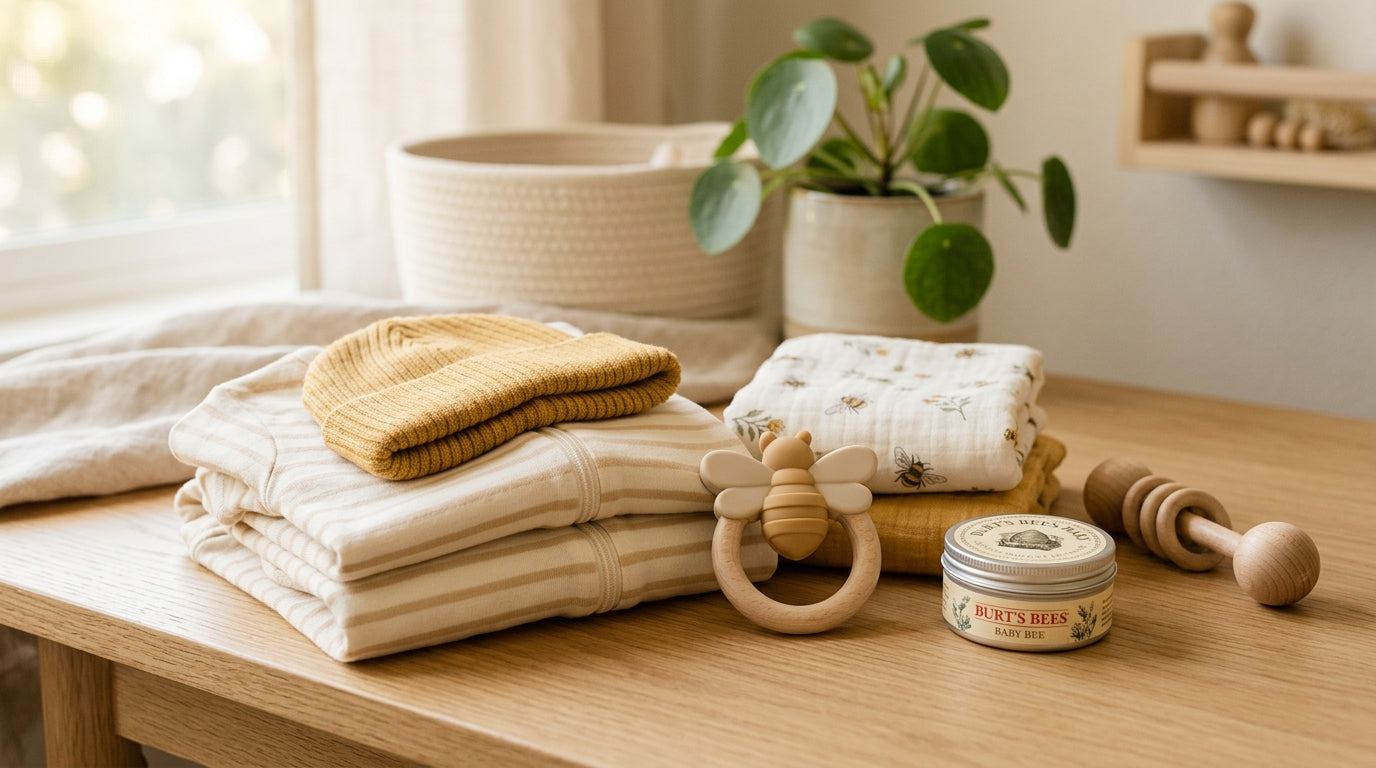
At approximately 3:14 am last Tuesday, I found myself trying to locate my daughter Alice’s foot inside a yellow sleepsuit that appeared to have been tailored for a medium-sized golden retriever. I was sweating, the baby was screaming, and the excess fabric was pooling around her ankles like deflated bagpipes. This was my grand introduction to the unique sizing parameters of Burt’s bees baby apparel, a brand I had previously only linked to lip balm and a heavily bearded man on a yellow tin.
Before Alice and Bea arrived, my understanding of infant care was largely theoretical. I operated under a series of wildly optimistic assumptions that have since been dismantled piece by piece. Framing this as a "before and after" feels appropriate, mostly because the man I was before twins would be utterly horrified by the man I'm after them (currently typing this with an unidentifiable sticky substance on my left elbow).
Here's a brief list of what I used to believe versus the cold, hard reality:
- Before: A "0-3 months" clothing tag is an internationally recognized standard of measurement governed by the laws of physics.
- After: Sizing is a myth, an inside joke played on sleep-deprived parents by textile manufacturers who have clearly never met a human infant.
- Before: "Natural" products are universally perfect and will turn my babies into glowing, forest-dwelling cherubs.
- After: "Natural" just means the rash they develop will smell pleasantly of botanicals instead of chemicals.
- Before: Changing a bedsheet is a thirty-second chore.
- After: Changing a crib sheet is an Olympic wrestling event that requires the grip strength of a rock climber.
The great sizing deception
Let's talk about the clothes. When the girls were born, a well-meaning relative gifted us a mountain of organic cotton things. The fabric is, I must admit, spectacularly soft. It holds up brilliantly to the kind of high-heat washing required after a biological incident, which is essentially the only metric I truly care about anymore.
But the dimensions are absolutely baffling. Across the board, these onesies run so large and so long that I genuinely thought I had shrunk my children in the wash. If you happen to have birthed an absolute unit of a child—a baby in the 99th percentile who looks like they could hold their own in a pub brawl—this brand will be your greatest ally. For my perfectly average-sized twins, however, they spent their first two months looking like they were wearing very comfortable potato sacks.
And then there's the zipper situation. I'm going to dedicate an unreasonable amount of time to this because it haunts me. They have a lovely little protective flap at the top so you don’t catch the baby's neck skin (a terrifying prospect), but they lack a two-way zipper.
I can't overstate the psychological damage of a one-way zipper at 3 am in a drafty London flat. Because the zipper only goes from top to bottom, changing a nappy means you've to unzip the entire child. You must expose their chest, their stomach, and their fragile little arms to the freezing winter air just to access their bum. The baby wakes up completely. They scream. You scream internally. The cat leaves the room in disgust. It's an entirely avoidable tragedy that could be solved by simply adding a second zipper head, but apparently, we're still living in the dark ages of garment design.
It’s exactly this sort of late-night frustration that led us to abandon ship and seek out basics that actually fit the human form. If you want something that stretches without sagging and doesn't require a map to figure out, I can't think the Organic Cotton Baby Bodysuit enough. It's my absolute favorite. It’s sleeveless, which is brilliant for layering under things or just letting them roam free in the summer, and it has an envelope shoulder design that lets you pull the whole thing down over their body during a blowout rather than up over their head. Trust me, dragging a soiled garment over a baby’s face is a mistake you only make once. It has just enough elastane (5%) so it actually conforms to the baby rather than draping them like a curtain.
Navigating the botanical bath time minefield
Let’s pivot to the bathroom, which currently resembles a very messy apothecary. In our gift hamper was a massive bottle of Burt’s bees baby shampoo and wash. I loved the idea of it. The marketing tells you it's entirely free of parabens, phthalates, petrolatum, and SLS. I read that and nodded solemnly, despite having only a very tenuous grasp on what a phthalate actually is. Our health visitor muttered something about endocrine disruptors and hormones, which I vaguely understood to mean "chemical bad, honey good," so we enthusiastically lathered up both girls.

Here's where the twin experiment yields fascinating data. Alice has skin like a rhino. You could wash her with dish soap and she’d be fine (I haven't, please don't report me). The shampoo worked beautifully for her; it genuinely is tear-free, and it leaves her smelling like a lightly toasted waffle.
Bea, however, is delicate. Bea looks at a woolen blanket and develops a rash. After three days of the "natural" body wash, her cheeks turned an angry, sandpaper red. Our GP—a delightfully blunt woman who looks perpetually exhausted by my panicked questions—took one look and sighed. She explained that "natural" botanical fragrances and key oils are still fragrances. To a baby with sensitive, eczema-prone skin, a natural honey extract is just as irritating as a synthetic perfume.
So, the shampoo was banished to Alice’s side of the bath. But I'll give credit where it's due: their Multipurpose Ointment is borderline miraculous. It's essentially a natural barrier cream that looks like solid earwax but melts into a heavy oil. We slap it on nappy rashes, dry winter cheeks, and whatever that weird crusty stuff on their scalp was, and it clears things up overnight.
If you're dealing with a baby who gnaws on everything and constantly has a wet, rashy chin from drool, you really need to look at what they're putting in their mouths, too. We eventually swapped out all the weird plastic teething rings for the Panda Teether. It’s made of food-grade silicone and you can chuck it in the fridge. I won't say it cured the teething, because teething is a medieval torture device invented by nature, but the cold silicone seemed to numb Bea's gums enough that she stopped trying to bite my nose off.
While we're talking about toys, we also ended up with the Gentle Baby Building Block Set. They’re... fine. Look, I’m being honest here. They're squishy, they've nice muted macaron colors instead of that aggressive plastic primary red that gives me a migraine, and the girls occasionally stack them before throwing them at each other. They exist in our living room and they don't hurt when I inevitably step on them barefoot in the dark. That’s a win, I suppose, but they aren't exactly changing our lives.
If you want something that genuinely holds their attention while looking aesthetically pleasing enough that you don't feel like you live in a primary school, checking out Kianao's wooden nursery items is a vastly better use of your time. (You can softly explore their organic collections here if you're trying to purge the plastic from your home).
Wrestling the mattress at midnight
Let's talk about sleep, or rather, the desperate pursuit of it. The bedding situation provided another massive reality check.

I bought the matching organic crib sheets because I'm a sucker for coordinated nursery aesthetics. When I first tried to put one on the mattress, I was convinced I had bought the wrong size. It was so impossibly tight that it required me to bend the mattress entirely in half, sweating profusely, utilizing use techniques I learned playing rugby in university. I cursed the manufacturer to the heavens.
But then our health visitor came round for a check-in. She took one look at the drum-tight sheet, patted the mattress approvingly, and told me that’s exactly how it’s supposed to be. Apparently, the NHS guidelines are absolutely terrified of loose bedding. A sheet that requires Herculean effort to put on is a sheet that an endlessly rolling, thrashing infant can't accidentally pull up over their own face.
It’s annoying to change at 2 am after a sick-up incident? Yes, profoundly. But does it ease that low-level hum of anxiety that keeps you staring at the baby monitor for hours? Also yes. Embrace the struggle-snug.
Oh, and the wearable sleep sacks they sell? They're essentially tiny sleeping bags with armholes. They do the job perfectly well. You zip them in, they look like little organic cotton caterpillars, and you don't have to worry about loose blankets. Done.
The reality of the aesthetic nursery
The overarching lesson here's that the aesthetic, perfectly coordinated, natural-everything baby phase is largely a fantasy. You buy the giant sleepsuits, you learn to size down (or wait for the kid to hit a growth spurt), you figure out which "natural" smells make your kid break out in hives, and you eventually realize that functionality trumps branding every single time.
If you're going to invest in pieces that touch their skin all day, skip the oversized trendy stuff and get things that seriously function for a tired parent. I'm endlessly grateful for our Wooden Baby Gym, for instance. Unlike the plastic, light-up monstrosities that sing off-key songs and overstimulate the babies until they melt down, the wooden gym is just... quiet. The girls lie under it, bat at the little wooden elephant, and figure out cause and effect without flashing strobe lights. It's calming. And heaven knows, we need more calm in this house.
Parenting is basically a series of expensive guesses. Some things work beautifully, some things are a disaster, and most things end up covered in mashed banana anyway. You adjust, you pivot, and you try not to zip their little chins into their onesies.
Ready to upgrade your nursery with things that really fit, soothe, and look beautiful without the fuss? Take a look at our curated essentials before the next 3 am crisis hits.
Frequently Asked Questions (Because the manuals are useless)
Should I buy my baby's actual age size in Burt's Bees clothing?
Unless your health visitor is constantly commenting on how remarkably long your infant is, absolutely not. Buy a size down. If you buy the 3-6 month size for a 3-month-old, be prepared to roll the sleeves up to their elbows and watch them trip over the footies. They run massive, which is great for longevity but terrible for immediate wear.
Is natural baby wash always safe for eczema?
I learned this the hard way with Bea: absolutely not. "Natural" usually means they use botanical extracts or key oils for scent instead of synthetic perfumes. A honey or lavender extract smells lovely to us, but to a baby with an angry red eczema flare-up, it’s highly irritating. If your kid has sensitive skin, skip the nice-smelling stuff entirely and go for something relentlessly boring and fragrance-free.
Why are organic crib sheets so incredibly difficult to put on?
Because safety standards dictate they must be. I used to think the brand just skimped on fabric, but a loose sheet is a major suffocation hazard for a baby who's learning to roll. The tight, drum-like fit is intentional. It’s a massive pain to stretch over the mattress corners in the dark, but it means the baby can’t pull the fabric loose during the night.
Are wooden toys honestly better, or just prettier for the parents?
Honestly, it's a bit of both, but I lean heavily towards better. Before we had the wooden play gym, we had a plastic one that blinked and sang. It drove the twins into a frenzy of overstimulation, and they’d inevitably crash and cry. The natural wood gives them varying weights and textures to figure out, it doesn't break, and yes, it doesn't make my living room look like a primary-colored explosion. It’s a win for their sensory development and a win for my sanity.




Share:
The Burberry Baby Paradox: When Designer Threads Meet Reality
Dear Priya: The messy truth about feeding a buttermilk baby