

When we started weaning the twins, I received three distinct, entirely contradictory pieces of advice within a single twenty-four-hour period. My mother, dispensing wisdom from the 1990s, called to say, "Whatever you do, Tommy, don't give them carrots yet, they'll turn blue and suffocate." Later that afternoon, a woman in our local NCT group named Cressida (who brings her own kombucha to soft play) confidently announced that she was exclusively feeding her four-month-old raw, earth-foraged spinach purees because "the soil knows best." Finally, a bloke I vaguely recognize from the playground suggested that I should be boiling our London tap water three times over just to be safe, though to be safe from what, exactly, he couldn't articulate.
I'm not a medical professional. I'm a man who once called the NHS 111 non-emergency line because Lily's nappy contents looked, in my professional journalistic opinion, "suspiciously autumnal." So when you hear the phrase "blue baby syndrome," your brain immediately imagines the absolute worst-case scenario. You picture your perfectly pink infant suddenly morphing into a Smurf while you stand there helplessly holding a plastic spoon full of organic parsnip mash. My mum even frantically texted to ask if Maya was an "e baby" (I can only assume she meant blue baby, unless she thought my fiercely uncoordinated two-year-old was launching an e-commerce startup from her highchair).
But because I'm cursed with an anxious disposition and a Wi-Fi connection, I went down the rabbit hole. And then I went to our actual GP, who looked at me with the deep, deep pity usually reserved for people who try to board the Tube before letting others off.
The great spinach and carrot panic
As far as my sleep-addled brain can understand it, blue baby syndrome (which actual doctors call methemoglobinemia, a word I refuse to try and pronounce at 3am) is essentially an oxygen transport problem. Your baby breathes in oxygen, but something in their blood stubbornly refuses to carry that oxygen to their tissues. And one of the bizarre, seemingly fictional things that can trigger this in very young babies is... vegetables.
I know. We spend our entire adult lives being told to eat more leafy greens, and the minute we try to pass this healthy habit onto our offspring, science pulls the rug out from under us. From what my doctor explained while actively trying to usher me out of her office, root vegetables (like carrots and beets) and leafy greens (like spinach) pull heavy amounts of nitrates from the soil. Adults process nitrates fine. We eat a spinach salad, our bodies deal with it, we go about our day. But infants under six months have these incredibly delicate, highly alkaline digestive tracts that take those nitrates and convert them into nitrites, which then mess with their hemoglobin until they quite literally turn blue.
I spent roughly three days terrified of the vegetable crisper. Every time I looked at a carrot, I felt like I was holding a tiny, orange weapon. But here's the wildly frustrating part about parenting advice: it lacks all nuance. It turns out this is incredibly rare, and almost exclusively an issue if you're making your own homemade purees from scratch for a baby who's practically newborn (which you shouldn't be doing anyway, since they should just be on milk). Once they hit six or seven months and their stomach acid levels out, they can eat all the spinach they want and simply spit it directly onto your freshly washed jumper like a normal baby.
When the tap water is out to get you
If you live in a city, your water is probably fine. We live in London, which means our tap water has likely passed through six other people before it reaches our kettle, but it's heavily regulated for nitrates. However, if you live in the idyllic countryside and get your water from a private well—the kind of rustic setup that looks brilliant on Instagram—you might actually have a nitrate problem due to agricultural fertilizer runoff.

This brings me to the absolute most infuriating piece of advice I received: boiling the water. In every other aspect of human existence, boiling water makes it safer. You drop a dummy on the floor of a cafe? You boil it. You want to make formula? You use boiled water. But according to the medical literature I squinted at on my phone while pinned under a sleeping twin, boiling nitrate-heavy well water actually evaporates the water and concentrates the nitrates, essentially brewing a toxic nitrate espresso for your infant.
So, instead of throwing out all your root vegetables, installing an industrial reverse osmosis plant in your kitchen, attempting to boil water into a state of absolute purity until the minerals scream, and hovering over the cot with a medical-grade flashlight, you might just want to wait until they're six months old to introduce the heavy greens and use bottled or safely filtered water if you happen to live on a farm.
Staring at lips in the dark
There's a second, much scarier cause for a baby turning blue, and it has absolutely nothing to do with whether you bought organic beets. It’s structural heart defects. The GP mentioned something called Tetralogy of Fallot, which sounds like an overly complicated 1980s French board game but is actually a congenital heart condition where oxygen-poor blood mixes with the good stuff.
When the twins were first born, I spent hours staring at them in the dark. I'd watch their little chests rise and fall, entirely convinced that the faint blue shadow under their nose was a medical emergency, only to realize it was just the glow from the streetlamp outside. My health visitor told me that if it’s a heart issue, you don’t just get a subtly blue baby—you get serious, unignorable signs. They call them "Tet spells," where the baby might go deeply blue during a crying fit or feeding, accompanied by serious lethargy. It’s not a "maybe it's the lighting" situation; it’s an "ambulance now" situation. And frankly, the hospital checks for heart murmurs before they even let you leave the maternity ward, so you can probably stop staring at their fingernails under the harsh bathroom fluorescents.
The aesthetic danger of blue things
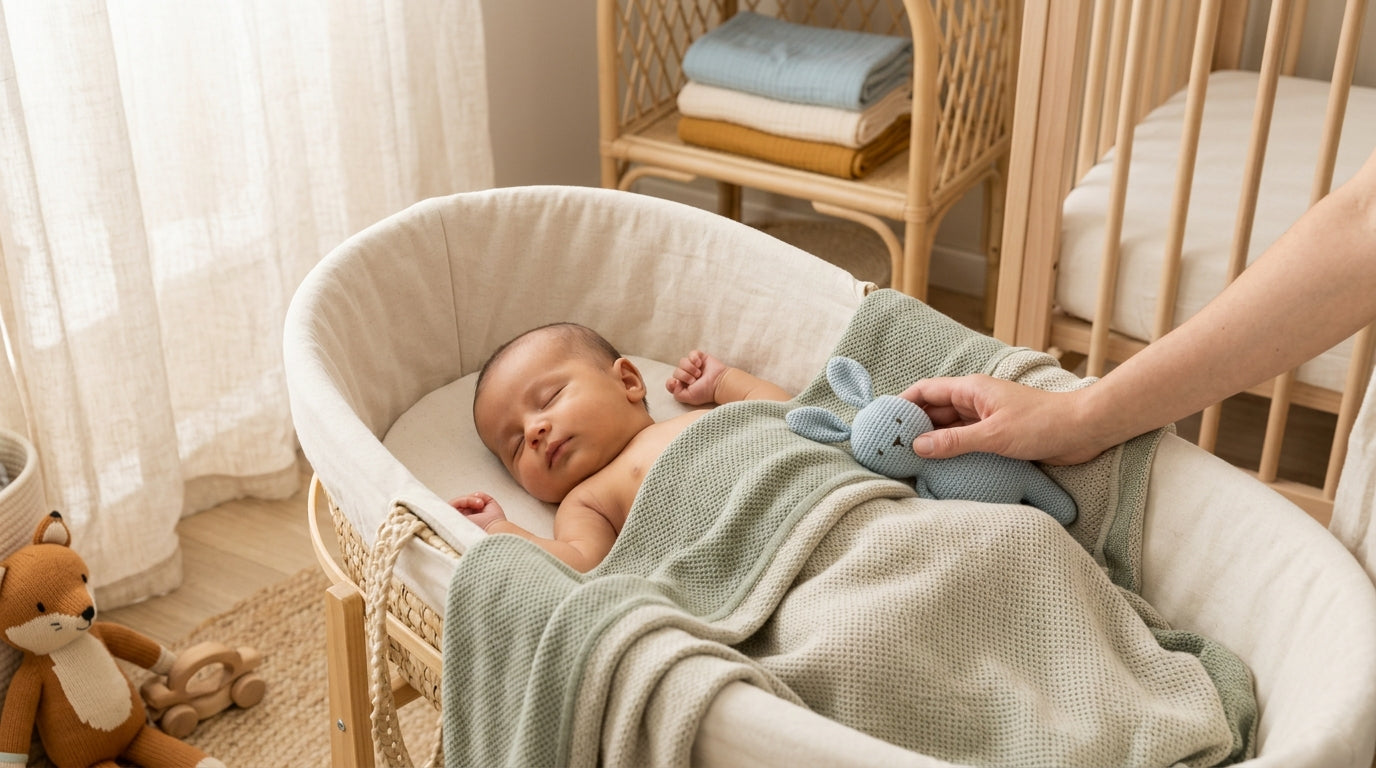
My paranoia reached such a fever pitch during the weaning phase that I started second-guessing the color of everything in the nursery. One evening, I spent three hours convinced Maya was turning a cyanotic shade of purple. I had my phone out, thumb hovering over 999, sweating through my t-shirt. It turned out she was just perfectly healthy but reflecting the light from the television while swaddled in her Blue Fox Bamboo Baby Blanket.

Honestly, despite nearly giving me a heart attack via color-theory optical illusions, that blanket is my absolute favorite thing we own. It’s a bamboo and organic cotton blend, which means it’s incredibly soft and doesn't make her sweat like a tiny marathon runner the way fleece does. The Scandinavian fox print is genuinely gorgeous and makes our chaotic living room look momentarily stylish. But I do highly suggest examining your child's complexion in natural daylight rather than while they're wrapped in a blue woodland landscape.
During this same manic phase, I also panic-bought the Bunny Teething Rattle because it had a blue bow tie and I was in some sort of thematic, sleep-deprived trance. It's perfectly fine. It has a smooth wooden ring and the cotton yarn is totally safe and organic, which is great because it spends 90% of its life covered in drool on our rug. Maya chewed it for exactly four minutes before deciding she vastly preferred the metallic, highly unhygienic taste of my house keys. It’s a solid teething distraction if your kid happens to be into bunnies, but it didn't magically cure the agony of molars coming in. Seriously, Lily much prefers the Bear Teething Rattle, possibly because the bear has a slightly more judgmental, sleepy expression that matches my own at 5am.
If you're looking for things that are intentionally, beautifully blue (and not just your child's lips), I highly suggest browsing Kianao's organic baby blankets collection. It's far less stressful than Googling infant hematology.
The reality of the blue baby panic
Parenting books are largely useless for this kind of anxiety. Page 47 of the one my mother-in-law gifted us suggests you "remain calm and assess the situation objectively," which I found deeply unhelpful when I was trying to figure out if my daughter was cyanotic or just very pale and British.
The truth is, your baby's circulatory system is just figuring itself out. Sometimes their hands and feet get a bit blue and mottled only because they're cold, and their tiny bodies are prioritizing keeping their vital organs warm rather than their toes. This is normal. Put some socks on them. If their lips, tongue, or the trunk of their body turn blue, that's when you panic and call the professionals.
But as for the vegetables? I eventually found a middle ground between my mother's absolute ban and Cressida's raw foraging. We waited until the twins were a solid seven months old before introducing spinach, we steamed it thoroughly, and we used tap water. They survived. They didn't turn blue. Though they did immediately smear it into my eyebrows, which is a different kind of syndrome altogether.
Before you spiral into an internet search hole about water filtration systems, check out our collection of organic, highly breathable essentials that will genuinely help you sleep at night. Browse the Polar Bear Organic Cotton Blanket and other genuinely useful gear.
The Messy, Unofficial FAQ
Can I give my 5-month-old spinach if it's organic?
According to my deeply exasperated GP, no. The organic label just means it was grown without certain pesticides; it doesn't change how the plant absorbs nitrates from the earth. Just wait a few more weeks until their digestive system isn't quite so fragile. Give them sweet potato instead, it causes far less anxiety and the stains are slightly easier to get out of white cotton.
What do I honestly do if their lips look blue?
If the lips, tongue, or the skin around their mouth is really blue (and they haven't just eaten a blueberry puree), call the emergency services. Don't faff about on Google, don't ask your WhatsApp group, just get medical help. Better to be the overreacting parent in the A&E waiting room than the alternative.
Are there nitrates in breastmilk or formula?
Breastmilk is apparently magic and doesn't pass harmful levels of nitrates to the baby, even if you've been mainlining kale smoothies. Formula itself is fine, the risk entirely comes from the water you mix it with. If you're on municipal city tap water, you're fine. If you're on a well, get it tested or buy the big jugs of purified water.
Why can't I just boil the well water to make it safe?
Because physics is cruel. Boiling kills bacteria, but nitrates are minerals/chemicals. When you boil the water, the water turns to steam and leaves the pan, but the nitrates stay behind. So you just end up with less water and a more concentrated dose of nitrates. It’s exactly the opposite of what you want to achieve.
Will a teething toy help with oxygen levels?
No, obviously not, but when you're running on three hours of sleep, your brain makes weird connections. A good wooden teether will keep them mildly entertained so you can sit down and drink a lukewarm cup of coffee without actively hallucinating that your child is changing colors.




Share:
The Search Query That Completely Ruined My Tuesday Night
Is Boss Baby 3 Real? The Truth About Corporate Cartoons