

My thumb was hovering over the backspace key at 3:14 AM, the harsh blue light of my phone screen illuminating the spit-up crusted on my shoulder. I had managed to type exactly six letters into the search bar with my non-dominant hand while balancing a rapidly vibrating eleven-pound infant against my collarbone: j baby. I don't know what I was trying to search for. Just baby? Jumpy baby? Java syntax error baby? My brain was completely out of RAM, running on two hours of fragmented sleep, and the baby was currently emitting a high-pitched frequency that I’m pretty sure was disrupting the neighborhood dogs' sleep cycles.
This is the reality of the midnight troubleshooting shift. Before this kid arrived, I thought of parenting as a linear progression of learned skills, something you could master by reading the documentation and applying logical solutions to predictable inputs. I'm an engineer. I track data. I thought I had this handled. Apparently, human infants don't ship with an API, and their operating system is fundamentally hostile to logic.
Filtering out the internet noise
If you try to seek help online when you're completely sleep-deprived, the algorithm just throws garbage at you. My younger sister keeps texting me links to some dj baby face meme or laughing about the latest dj baby benz audio trend circulating on TikTok, and I just stare at the messages blankly because I physically don't have the bandwidth for internet culture when I'm trying to figure out why my child's digestion sounds like a malfunctioning espresso machine. I don't care about viral audio trends when I'm actively trying to keep a tiny, incredibly fragile human alive until morning.
The internet is full of people who seem to have perfectly curated nurseries and babies who sleep through the night at six weeks, but my reality is me standing in the hallway in my boxer briefs, swaying back and forth like a metronome, praying the floorboards don't creak and trigger a system reboot.
Initiating "pj baby" mode and the terror of sleep safety
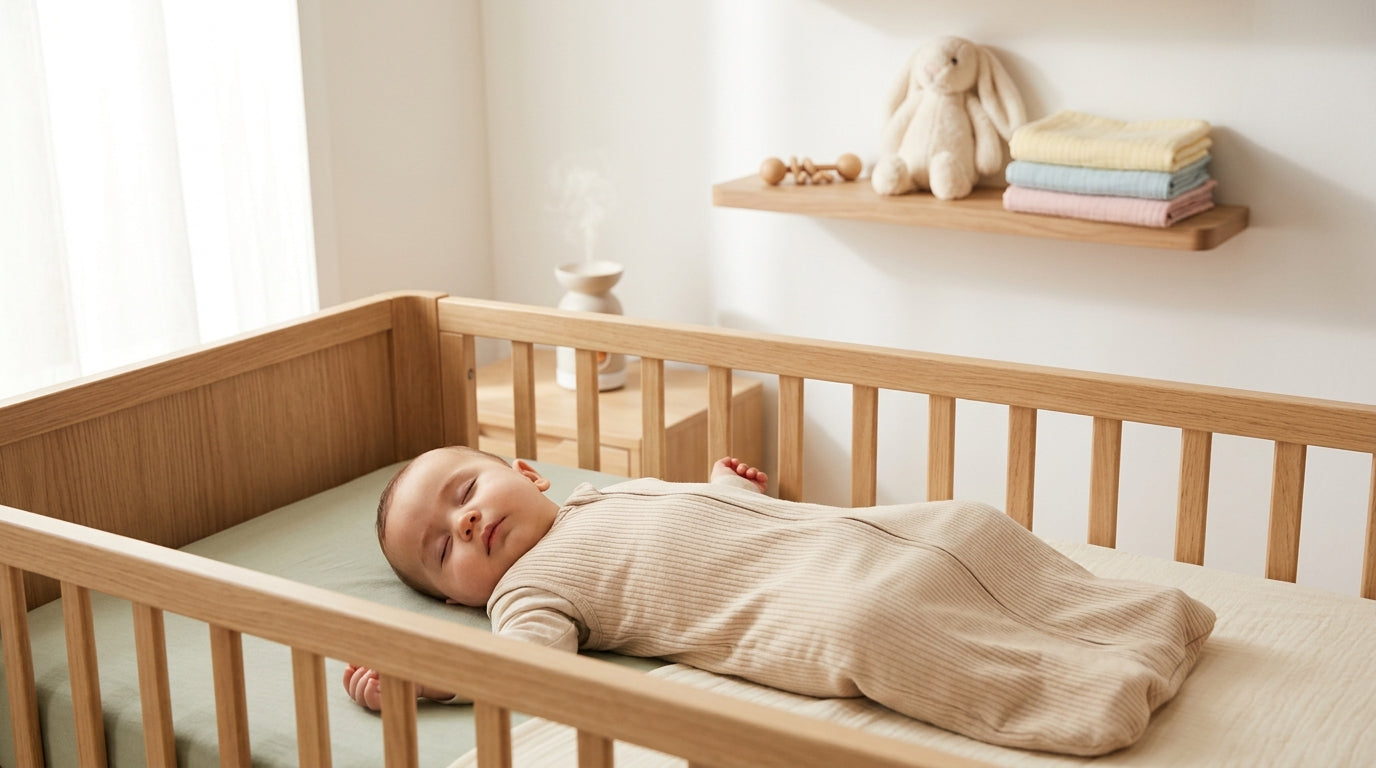
The transition from day to night is a highly orchestrated protocol in our house now. My wife calls this configuration "pj baby" mode, which is a cute way of describing the absolutely terrifying process of preparing an infant for safe sleep. Our doctor, Dr. Chen, casually dropped some devastating logic on us at our first appointment, noting that a baby's neck muscles are entirely nonexistent and that putting them in a crib with literally anything other than a fitted sheet is a massive hazard.

You hear about SIDS, but you don't really understand the visceral panic of it until you're staring at your child sleeping on their back in a completely barren bassinet, wondering if they're breathing. I spent the first month waking up in a cold sweat every forty-five minutes just to put my hand on her chest to verify uptime.
Because blankets are only forbidden—apparently, loose fabric is basically a trap for a flailing newborn—we had to figure out how to keep her from freezing in Portland's damp autumn weather. You can't just crank the thermostat to 75 degrees because overheating is also a massive risk factor, so I keep the nursery locked at exactly 69.4 degrees and we rely heavily on strategic layering.
My wife, who's far better at the textile selection than I'm, found the Sleeveless Organic Cotton Baby Bodysuit from Kianao, and it has become the foundational base layer of our sleep infrastructure. We put her in that first, because the organic cotton actually lets her skin breathe instead of trapping sweat like those cheap synthetic onesies we were gifted at the shower. It sits flat against her skin without any weird bunching, and then we put her in a wearable sleep sack over it. It’s a very specific equation of thermal regulation, and if we get it wrong, she either wakes up shivering or sweating, both of which result in immediate, unsoothable screaming.
The witching hour is basically a server outage
Let’s talk about the crying, because nobody adequately warned me about the volume or the duration. There's a phase that begins around 5:00 PM and lasts until roughly 11:00 PM, which the medical community playfully calls "the witching hour," though it's neither an hour nor remotely magical. It's just a daily, catastrophic server outage where the baby realizes she exists in the world and is furious about it.
I started tracking the crying data in a spreadsheet because it gave me the illusion of control, logging the exact start and stop times, the pitch of the wail, and the intervention methods attempted. Dr. Chen told us that you physically can't spoil a newborn, and that responding immediately during the "fourth trimester" is how they build psychological security, which sounds great in theory but in practice means I've walked approximately 400 miles back and forth across our living room rug while doing deep squats and shushing aggressively.
Apparently, taking them outside resets their sensory input, so my neighbors have gotten very used to seeing me on the front porch at 9:00 PM in the pouring rain, holding a crying baby and explaining the concept of municipal street lighting to her in a desperate attempt to break the crying loop. If you're currently in the middle of this phase and considering walking into the ocean, just take a breath and maybe browse Kianao's organic baby clothes on your phone with one hand to distract yourself from the noise, because I promise the crying peak eventually tapers off around month three or four.
Hardware solutions for a teething motherboard
Right when we finally got the sleep firmware mostly stabilized around month six, a new bug introduced itself: teething. It started with the drool. I didn't know a human body so small could produce such a staggering volume of liquid. She was soaking through three bibs a day, and her tiny fists were constantly jammed into her mouth as if she was trying to manually extract the teeth from her own skull.

She was furious, feverish, and chewing on my shoulder, the dog's tail, and the edges of the coffee table. We bought a bunch of generic plastic teethers from a big box store, but my wife read an article about phthalates and microplastics and promptly threw them all in the recycling bin, gently reminding me that our kid's highly permeable skin and mouth shouldn't be exposed to industrial chemical runoff.
So, we upgraded to the Panda Teether Silicone Baby Bamboo Chew Toy. I'm generally skeptical of baby products that claim to be miracle workers, but this thing actually functions exactly as designed. It’s made of food-grade silicone, which means I don't panic when she gnaws on it for an hour straight. More importantly, the flat shape is mathematically perfect for her little hands to grip. I found it wedged under the sofa last week, covered in dog hair, and because it’s a single solid piece of silicone with no weird hollow parts where mold can grow, I just tossed it in the dishwasher and it came out perfectly sterile. We keep one in the fridge now because the cold silicone seems to temporarily numb whatever catastrophic pain is happening in her gums.
The daytime stimulation paradox
When she’s not sleeping or crying or trying to chew through solid wood, I'm apparently supposed to be optimizing her brain development. I read a study that claimed babies need to hear around 21,000 words a day to properly develop their language centers. That's an exhausting amount of talking for an introvert who works from home. By 2:00 PM, I run out of conversational material and just start narrating my code debugging process to her or explaining the complex geopolitical landscape of the neighborhood squirrel population.
You also get pressured into buying highly stimulating electronic toys that flash lights and play aggressive, tinny music. Dr. Chen suggested avoiding all screen time and electronic toys until 18 months, which means we've a very analog play space.
We picked up the Wooden Baby Gym | Rainbow Play Gym Set because it fits the sustainable, non-toxic mandate my wife established. I'll be completely honest here—it's visually very pleasing and the wood is high quality, but for the first month, she literally just laid there staring at the wooden elephant like it owed her money. It didn’t magically make her roll over or reach out. It’s just okay. But as she got closer to four months, she finally started batting at the little hanging rings, and it bought me exactly seven minutes of uninterrupted time to drink a cup of coffee while it was still hot, which in dad-time is an absolute eternity.
Parenting so far is just a continuous cycle of identifying a problem, researching conflicting solutions, throwing out half the advice, and desperately trying to keep the tiny human's core systems online. It's messy, it defies all logic, and there's no user manual that actually applies to your specific model. But when she finally crashes out in her safe little sleep sack, entirely dependent on the protocols we've built for her, the system feels like it's running exactly as it should.
If you're also trying to patch your way through the first year without short-circuiting, check out the rest of Kianao's sustainable essentials to upgrade your daily hardware.
Messy questions from the 3 AM shift (FAQ)
Do you really track the baby's crying time?
Yes, down to the minute, because my brain requires data to function. When the witching hour hits and it feels like she's been screaming for four days, I can look at the spreadsheet and see it's only been 42 minutes. It doesn't stop the crying, but it prevents me from fully losing my grip on reality and assuming time has stopped entirely.
Are sleep sacks and special bodysuits really necessary?
Dr. Chen made it aggressively clear to us that loose blankets are a massive SIDS hazard. So yes, you've to transition entirely to wearable sleep garments. I prefer the organic cotton bodysuits underneath because synthetic fabrics seem to trap her body heat and cause weird skin flare-ups, and troubleshooting a baby rash at midnight is not on my itinerary.
When does the witching hour stop?
Apparently, there's no exact date, which infuriates the engineering side of my brain. For us, the intense, unsoothable 5-to-11 PM screaming peaked around week six and slowly started tapering off into normal fussiness by month three. You just have to survive it. Put on noise-canceling headphones, hold the baby, and walk in circles.
Do babies need the light-up electronic toys to learn?
Every doctor I've asked, and every panicked Google search I've done, points to no. They just need you to talk to them, narrate your day, and let them look at high-contrast, simple things. The wooden play gym we've doesn't do anything on its own—it forces her to really use her own motor skills to make the rings clack together, which is apparently the whole point.
Is silicone really better for teething?
My wife did the deep dive on this, and yes, food-grade silicone doesn't leach the weird endocrine-disrupting chemicals that cheap plastics do. Plus, from a pure utility standpoint, the panda teether we use doesn't degrade when she aggressively chews on it and I can throw it in the dishwasher, which is the only cleaning method I've the energy for right now.




Share:
The real truth about ivf babies disadvantages and infant health
The jason lee and tiffany haddish baby rumour broke my brain