

It was 2:14 in the morning, and I was staring at my four-month-old daughter's ribcage in the glow of a turtle-shaped nightlight, convinced I was losing my mind.
Maya is seven now, but I still get full-body hives when I think about that specific November night. I was wearing these gray maternity sweatpants with a bleach stain on the knee, operating on maybe forty minutes of broken sleep, holding a mug of coffee from yesterday that I was just drinking cold because the microwave felt too far away. Dave, my husband, was snoring softly in the other room. Which, honestly, enraged me. How do they sleep through it? How do they just close their eyes when their tiny human is making a sound like a tiny, wet seal barking in a cave?
I had been sitting there in the glider for two hours, watching her chest. It was doing this weird caving-in thing right under her ribs every time she took a breath. I kept frantically typing absolute gibberish into my phone with one thumb while balancing her on my shoulder, searching for things like "respiratory syncytial virus infants" and "sick babi" and "rsv in babie" because my brain had completely short-circuited and I couldn't even spell anymore. Panic typing. We've all been there.
Spoiler alert: We ended up in the emergency room.
The daycare germ exchange program
The whole nightmare started because of Leo. He was three at the time, deep in his preschool era, which basically meant he was a walking petri dish who brought home every microscopic terror the county had to offer. He came home on a Tuesday with a runny nose. By Thursday, he was bouncing off the walls, totally fine, asking for dinosaur chicken nuggets.
But then Maya started coughing.
At first, Dave was like, "It's just a cold, Sarah, babies get colds." And I wanted to believe him. I really did. I thought maybe she was just teething early? Because she was drooling a lot and super fussy. So I handed her this Squirrel Silicone Baby Teether that we had bought for her. Honestly, it's a perfectly fine toy—it's got this cute little mint green acorn detail and it's super easy to clean. Leo used to love his when he was a baby. But Maya? Oh god, she looked at me like I had deeply insulted her ancestors, batted it out of my hand so hard it bounced off the dog's head, and just kept screaming. She didn't want to chew. She couldn't even breathe through her nose.
Anyway, the point is, I knew it wasn't teething when she stopped drinking her bottles. That was the red flag. She would latch, take one suck, and then pull off crying because she couldn't breathe and swallow at the same time.
My doctor draws a very scary noodle
When we got to Dr. Sharma's office the next morning—after the terrifying 2 AM ribcage incident—I was a wreck. I hadn't showered. I smelled like sour milk and sheer panic.

Dr. Sharma took one look at Maya, listened to her chest with his little stethoscope, and immediately sent us to the pediatric hospital down the street. He didn't even hesitate. Which is exactly what you don't want your doctor to do.
While we were waiting for the discharge papers, he sat down and tried to explain what was happening. From what I gathered through my thick fog of sleep deprivation, this virus is basically just a normal, annoying cold for older kids and adults. But for infants? It's a whole different beast.
He held up his pen and said something like, imagine an older child's airway is the size of a garden hose. If a bunch of sticky, thick mucus gets in there, the water can still get through. But a newborn's airway? He drew a little circle on the exam paper. It's the size of a piece of dry spaghetti. If that same mucus gets into the spaghetti noodle, it completely blocks the whole thing. The soreness just shuts it down.
Science is terrifying.
He told me there were specific things I was supposed to be looking out for, which I vaguely remember as a blur of medical terms, but it boiled down to a few major red flags:
- The belly breathing thing: This is what I saw at 2 AM. Her stomach and ribs were pulling inward violently every time she tried to inhale, like she was working incredibly hard just to get oxygen.
- Nostril flaring: Her tiny little nose was spreading out super wide with every breath.
- The grunting: It sounded like a tiny, exhausted "ugh" at the end of every exhale.
- Blue lips: Thank god we didn't get to this point, but he said if the lips or fingernails ever look gray or blue, you don't call the office, you just call 911.
We ended up spending two nights in the pediatric ward. They didn't even give her any medication to cure it because it's a virus, and Dave had to be told three times by the nurses that antibiotics do literally nothing for viruses. VIRUS, Dave. They just gave her oxygen and suctioned her nose with this terrifying machine that sounded like a shop vac.
By day three of the illness—which the nurses warned me is almost always the absolute worst day, peaking around day four or five—she looked so small and fragile hooked up to those monitors.
Endless laundry and the snot sucker trauma
When they finally discharged us, the real work began. Because now I had to be the one operating the snot sucker at home.

Have you ever tried to pin down a screaming, congested infant while simultaneously spraying saline up their nose and then sucking the mucus out with a little tube using your own mouth suction? It feels like a medieval torture method. But it was the only way she could eat. You just end up running the cool-mist humidifier on full blast, sitting in a damp, tropical-feeling nursery, wrestling your baby every three hours.
And the poop. Oh my god, the poop.
Nobody warns you that when babies swallow all that nasal drainage because they can't blow their noses, it goes straight to their digestive tract and creates the most apocalyptic diaper blowouts known to mankind.
I must have washed her clothes ten times in three days. I was so grateful I had her wearing this Organic Cotton Baby Bodysuit. I'm not even exaggerating, this thing was a lifesaver. It has this envelope-style shoulder design that stretches incredibly wide. When a blowout happens—and it'll happen, usually at 4 AM—you don't have to pull the soiled shirt over their face. You just pull it straight down over their shoulders and legs. Plus, the fabric is ridiculously soft, and since Maya's skin was already breaking out in a weird viral rash (because of course it was), the organic cotton didn't irritate her further.
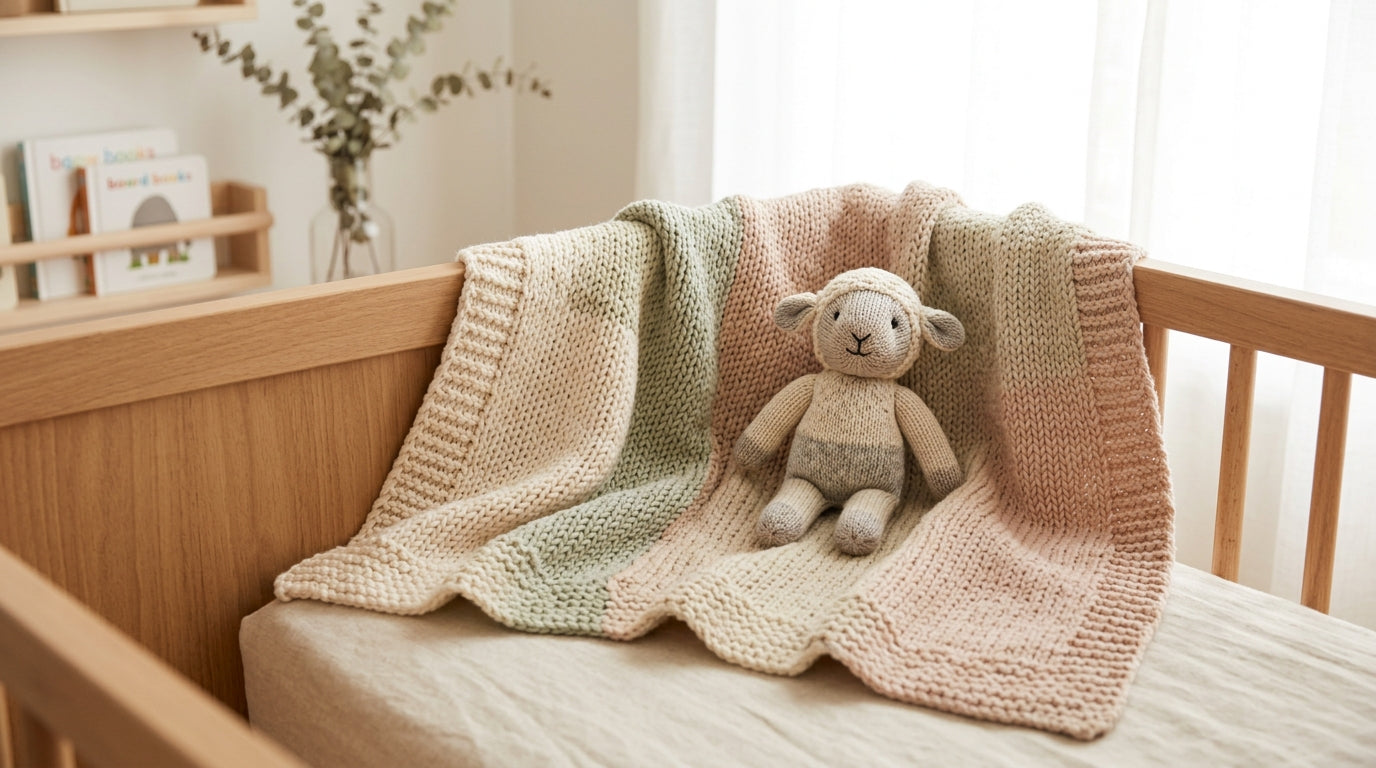
I basically kept her in that bodysuit and swaddled her tightly in a Bamboo Baby Blanket. I loved that specific blanket because it was breathable enough that she didn't overheat while she had a low-grade fever, but mostly I loved it because in my exhausted state, I definitely used the corners of it to wipe snot off my own arm more than once. The watercolor leaves pattern hides a lot of gross stuff, let me tell you.
If you're currently in the trenches of sick season and realizing your baby's wardrobe isn't cut out for multiple daily changes, you might want to look into grabbing some soft, practical layers from our organic baby clothes collection. Trust me on the envelope shoulders.
The long, slow climb back to normal
I think the hardest part of the whole ordeal wasn't even the hospital stay. It was the lingering anxiety afterward.
For weeks after her breathing normalized, every time she made a noise in her sleep, my heart rate would spike. I'd stand over her crib in the dark, holding my own breath so I could hear hers. The cough hung on for what felt like a decade. The doctor had warned us that the lingering wet cough could last for three to four weeks, but hearing it rattle in her chest day after day was just exhausting.
I spent an embarrassing amount of money on random remedies that did absolutely nothing. I bought baby chest rubs that made her smell like a pine tree. I bought expensive wedges to elevate her mattress (which I then found out you aren't supposed to do anyway for safe sleep reasons, so that went in the garbage).
Nothing really fixes it but time. Time, and keeping them hydrated, and sucking out the snot. That's the frustrating truth.
Eventually, on day six or seven, Maya looked up at me while I was holding her in the steam of a hot shower, and she gave me this tiny, gummy smile. It was the first time she had smiled in a week. Dave walked in right at that moment, saw her smile, and said, "See? I told you she was fine."
I nearly threw a wet washcloth at his head.
Look, if you're reading this at 2 AM with a sick baby on your chest, I see you. It's terrifying, it's messy, and it's so unbelievably hard. Trust your gut. If their breathing looks weird, don't wait for your partner to agree with you. Just pack the diaper bag and go to the doctor. You will never, ever regret getting them checked out.
And if you just need to stock up on the gentle, soft things that make these miserable sick days slightly more bearable, check out our full line of sustainable baby care items to build your own survival kit.
The messy questions (FAQs)
Do antibiotics actually help with this?
Nope. Not even a little bit. Dr. Sharma was very blunt with me about this. Because it's a viral infection, antibiotics are completely useless. They only work on bacterial infections. You just have to ride it out with supportive care, which is a fancy medical term for "sucking snot and not sleeping."
How long is a baby contagious?
From what the nurses told me, they can spread the virus for anywhere from 3 to 8 days. But honestly, babies with weakened immune systems can apparently spread it for weeks. We kept Leo and Maya separated for a solid week, which in a small house basically meant Dave and I lived in separate rooms like angry roommates. Wash your hands. Wash them again.
Can I give my infant cough medicine?
Absolutely not. Please don't do this. I was so desperate I almost bought some over-the-counter stuff at the pharmacy, but the pharmacist literally stopped me. You can't give cold or cough medicine to babies. Their tiny bodies can't handle the ingredients and it's super dangerous. Saline drops and a humidifier are your only legal weapons here.
Will a humidifier actually make a difference?
Yes, but you've to use a cool-mist one. I thought steam would be better to break up the congestion, but my doctor said hot steam vaporizers are a huge burn hazard for babies. The cool mist just puts moisture back into the dry winter air so that the thick, glue-like mucus in their tiny spaghetti-noodle airways can loosen up a bit.
Is the belly breathing thing always an emergency?
In my experience, yes. If your baby's chest is caving in under their ribs (retractions) or their nostrils are flaring wide with every breath, don't wait for the morning. Don't post a video of it in a Facebook mom group asking for advice. Just go to the ER or urgent care. Maya needed oxygen, and I'm so glad I didn't try to just tough it out at home.




Share:
What Is Shaken Baby Syndrome (And The Truth About Burnout)
Debugging The Farm Book: What Do We Actually Call A Baby Goat?