

Yesterday at 6:15 AM, I found myself holding a dollop of peanut butter on a baby spoon, staring at my daughter Florence like I was defusing a bomb, while her sister Matilda was busy trying to lick the skirting board. My mother-in-law had recently informed me that giving peanuts to a baby was tantamount to attempting an assassination, yet the NHS leaflet in my shaking hand insisted it was the only way to save her life. Welcome to the modern era of parenting, where the medical advice you received three years ago is already considered primitive and dangerous.
When you cross the threshold of the hospital with a newborn (or in my case, two alarmingly fragile newborns), you're suddenly thrust into the "baby 5"—those first five years where the rules of keeping a human alive seem to change hourly. Aunt Susan will tell you to rub whiskey on their gums. Your algorithm will tell you that if you don't buy a £1,200 bassinet, your child will never go to university. The reality, as I've discovered while desperately mainlining lukewarm instant coffee, is a lot messier, deeply contradictory, and mostly involves trying to keep them from accidentally ending their own lives while you search for the TV remote.
I've spent the last two years navigating this bizarre landscape of shifting guidelines. Rather than sitting you down and giving you a clinical list of things to panic about, let me just tell you how these newly updated rules actually look when applied to two feral toddlers in a damp London flat.
The great peanut butter standoff
Let's start with the food thing, because this one nearly gave me an ulcer. When we were kids, the rule was to keep nuts away from children until they were old enough to ask for a pint at the pub. Now? Our GP, Dr. Patel, looked at me with immense weariness and said we needed to shove allergens into their mouths around six months. Apparently, if you wait, their little immune systems get bored and decide that eggs and peanuts are the enemy, though honestly, I'm just blindly trusting my vague interpretation of how antibodies work here.
So, instead of carefully avoiding triggers, you're supposed to just confidently smear common allergens on their faces at breakfast and watch them like a hawk for hives while trying not to visibly hyperventilate. Florence ate her first peanut butter and sneezed, and I nearly called an ambulance. It was just dust. The stress of early introduction is monumental, but I'm told it's better than hoarding EpiPens for the rest of their adolescence.
The burnt cocktail sausage situation
If you haven't had a baby yet, nobody adequately prepares you for the umbilical cord stump. It looks exactly like a piece of overcooked meat dangling from their belly, and it smells like a butcher's bin in mid-July. I was entirely convinced I was going to rip it off every time I changed a nappy.
The old advice was to aggressively swab the thing with surgical spirit, which sounds painful and archaic. Now, the pediatric consensus is "dry care," which translates to: leave it the hell alone. You just let it sit there, crusty and horrifying, until it falls off on its own. The problem is that babies wear clothes, and clothes have waistbands that love to catch on drying umbilical stumps.
This is where your wardrobe strategy becomes life or death (or at least, comfort or screaming). If you're building a wardrobe for the early days, you'll quickly realize the absolute MVP is the baby 5 one piece—a garment that covers them, snaps at the bottom, and doesn't feature a harsh elastic waistband to sever the cocktail sausage.
I went through dozens of these before landing on a favorite. The Organic Cotton Baby Bodysuit Sleeveless Infant Onesie from Kianao basically saved my sanity. It's stretchy enough that you don't feel like you're dislocating their tiny shoulders trying to get it on, and it somehow survived Matilda's notorious three-day blowout streak. The organic cotton actually feels like a cloud, which is brilliant because babies have skin that flares up into an angry red rash if you even look at it wrong. When you're searching for a one piece baby 5 months into this journey, you need something that stretches, washes at high temperatures without turning into a doll's outfit, and doesn't irritate eczema. This one actually does the job.
On the flip side, we also acquired the Flutter Sleeve Organic Cotton Baby Bodysuit. Look, it's objectively beautiful. If you've a single, very calm baby who sits quietly on a velvet cushion for photographs, buy it. But for my twin gremlins who spend their days wrestling in oatmeal, ruffled flutter sleeves are just extra fabric for them to wipe their noses on. It's lovely, but entirely impractical for the trenches.
Sleep as a weaponized concept
Before having kids, I thought "sleep deprivation" meant feeling a bit groggy after a late night out in Soho. Now I know it's an interrogation tactic used by tiny dictators. The guidelines for safe sleep are intense, and for good reason—the "Back to Sleep" campaign drastically reduced infant mortality, which is genuinely brilliant.

But executing safe sleep is terrifying. The cot must be entirely empty. No blankets. No bumpers. No stuffed animals. Just a firm mattress and a baby lying flat on their back like a tiny, stiff board. It's basically sensory deprivation. For the first few months, we relied heavily on swaddling, which works like absolute magic right up until the exact second they learn to roll over. Once they can roll, a swaddle turns into a straightjacket, and you've to transition them to sleep sacks. Watching a formerly swaddled baby try to sleep with their arms free for the first time is like watching a man try to swat invisible bats.
Oh, and vaccines have evolved beautifully. Maternal RSV vaccines mean they don't get the terrifying chest infections quite as badly. That's a medical marvel I won't pretend to understand, but I'm deeply grateful for it.
Teething and the plastic paradox
There's a phase around six months where your baby's jaw turns into a buzzsaw and they start gnawing on the coffee table. Teething is nature's way of punishing you for finally getting them on a sleep schedule. Matilda and Florence synced up their teething cycles, which meant our flat echoed with a stereo chorus of misery from roughly 11 PM to 4 AM.
You can only use so much Calpol before you start worrying about their tiny livers, so we turned to teethers. I was violently opposed to buying garish, toxic-looking plastic things that look like they were manufactured in a chemical plant. My saving grace was the Panda Teether Silicone Baby Bamboo Chew Toy. I don't know what kind of dark magic is in this thing, but tossing it in the fridge for twenty minutes and then handing it to a screaming Florence instantly muted her. The little textured bits seemed to hit the exact spot on her gums, and it's easy enough to clean that I didn't mind when she inevitably dropped it onto the floor of the District Line.
(If you're looking to save your own sanity and maybe buy yourself ten minutes of quiet, you can explore more survival tools in Kianao's teething toys collection.)
Accepting absolute mediocrity
Perhaps the most liberating update to pediatric advice I've received came during our one-year checkup. I was essentially vibrating with anxiety, confessing to Dr. Patel that I let them watch twenty minutes of a singing cartoon dog so I could eat a piece of toast, and that I occasionally hid in the kitchen to look at my phone.

He told me about the concept of "good enough" parenting and preventing toxic stress. The medical consensus now is that you don't need to be constantly narrating their existence or performing interpretive dance to stimulate their neurons. You just need to be emotionally present, generally safe, and not a terrible person. You don't have to be perfect; you just have to repair things when you mess up. Knowing that my slightly burnt toast and occasional sighs of exhaustion weren't causing permanent brain damage was the best medical news I've ever received.
Floor time and wooden things
Because you're not supposed to use screens (page 47 of the parenting manual suggests you remain engaged 24/7, which I found deeply unhelpful at 3 AM), you spend a lot of time on the floor. Tummy time is mandatory. It's also universally despised by all babies.
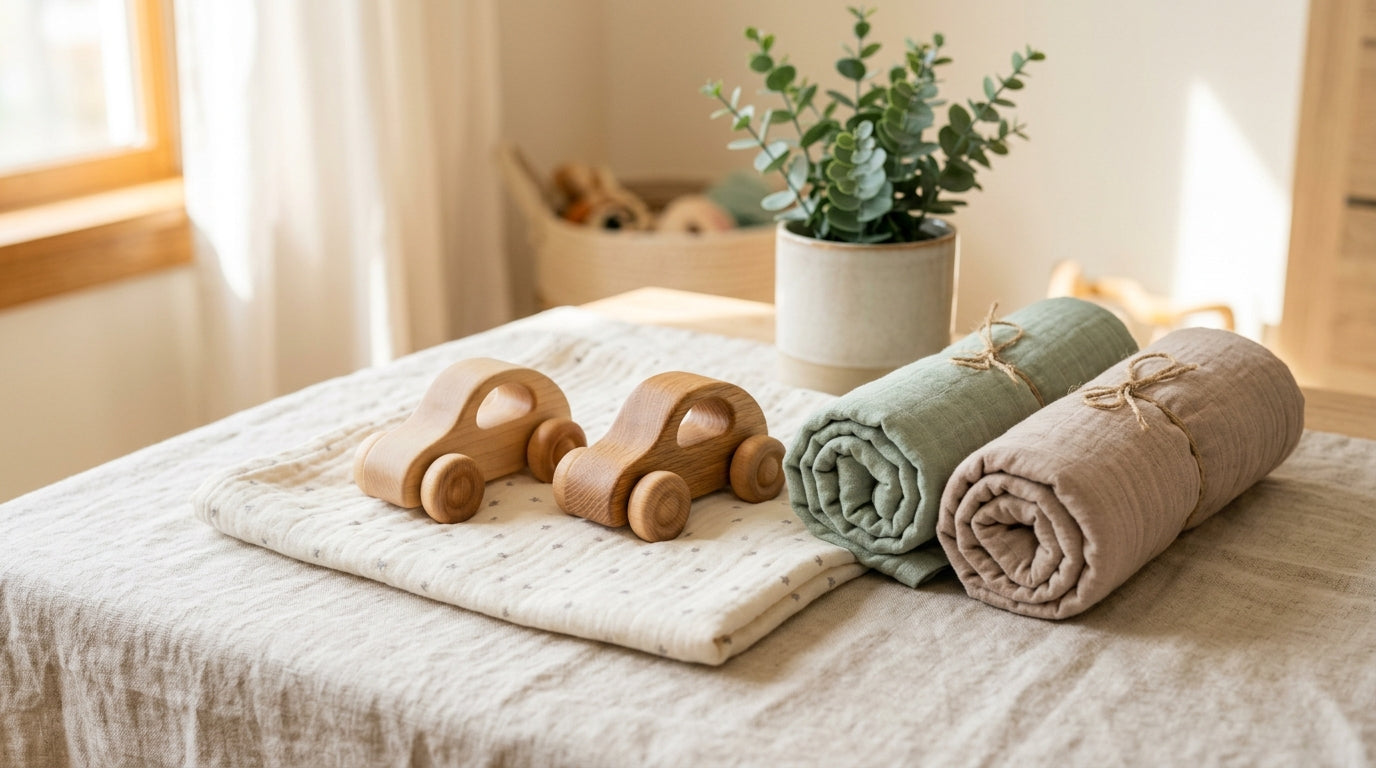
To make floor time less miserable, you need distractions. We had an enormous, flashing, battery-operated plastic monstrosity gifted to us by a well-meaning relative, and it overstimulated the girls so much they just screamed at it. We eventually swapped it out for the Wooden Baby Gym | Rainbow Play Gym Set. It's beautifully simple. Just some natural wood, muted colors, and little hanging animals. It didn't flash, it didn't play a tinny version of "Fur Elise," and most importantly, it honestly encouraged them to reach up and grab things at their own pace rather than having strobe lights fired into their retinas.
It's funny how we overcomplicate this whole parenting gig. We buy the gadgets that monitor oxygen levels via bluetooth, we stress about organic purees, we read the books. But honestly, keeping them warm, giving them something safe to chew on, and loving them enough to panic about peanut butter is really all that matters.
If you're currently in the trenches of the first five years, dealing with blowout nappies, unexplained rashes, and the sheer existential dread of keeping a small person alive, solidarity. It doesn't get easier, but you do get significantly better at operating on three hours of sleep. Ready to upgrade your baby's wardrobe to something that honestly survives the chaos? Check out Kianao's organic baby clothing collection and find the bodysuits that will really make your life easier.
FAQ: Surviving the early years
When does the umbilical cord stump finally fall off?
Usually somewhere between 10 and 21 days, though those days will feel like a decade. You'll wake up one morning, unbutton their sleepsuit, and find a dried-up little nugget sitting in their nappy. It's repulsive, but you'll feel an overwhelming sense of relief that you don't have to worry about snagging it anymore.
Is swaddling really necessary?
If you want to sleep, yes. Newborns have this delightful thing called the Moro reflex, where they throw their arms out like they're falling from a great height, waking themselves up instantly. Swaddling pins their arms down so they can't punch themselves in the face. Just remember to stop the second they show signs of rolling over, or you're asking for trouble.
How do I introduce allergens without having a panic attack?
You don't. You'll be terrified the first time. Our GP told us to mix a tiny bit of smooth peanut butter into some fruit puree when we were both home, ideally in the morning so we could watch them all day. Don't do it right before bed, and definitely don't do it while you're isolated in a cabin in the woods.
Why are organic cotton clothes seriously worth it?
Because standard cotton is often treated with chemicals that make a baby's skin go absolutely mental. When we switched to organic, Florence's mystery red patches cleared up in a few days. Plus, they stretch better over giant baby heads without losing their shape, which means you don't have to throw them away after three washes.
My baby hates tummy time. Can I just skip it?
I asked my doctor this exact question while Matila was face-planting into the rug and screaming. The answer is no, unfortunately. They need it to build neck and shoulder muscles so they don't have a wobbly bobble-head forever. You just have to endure the crying. Getting down on the floor with them and making ridiculous faces sometimes buys you an extra two minutes of tolerance.




Share:
Why Searching "Babies R Us Near Me" Won't Save Your Sanity
Real Talk on Baby Acne Treatments (What Actually Saved My Newborn)