

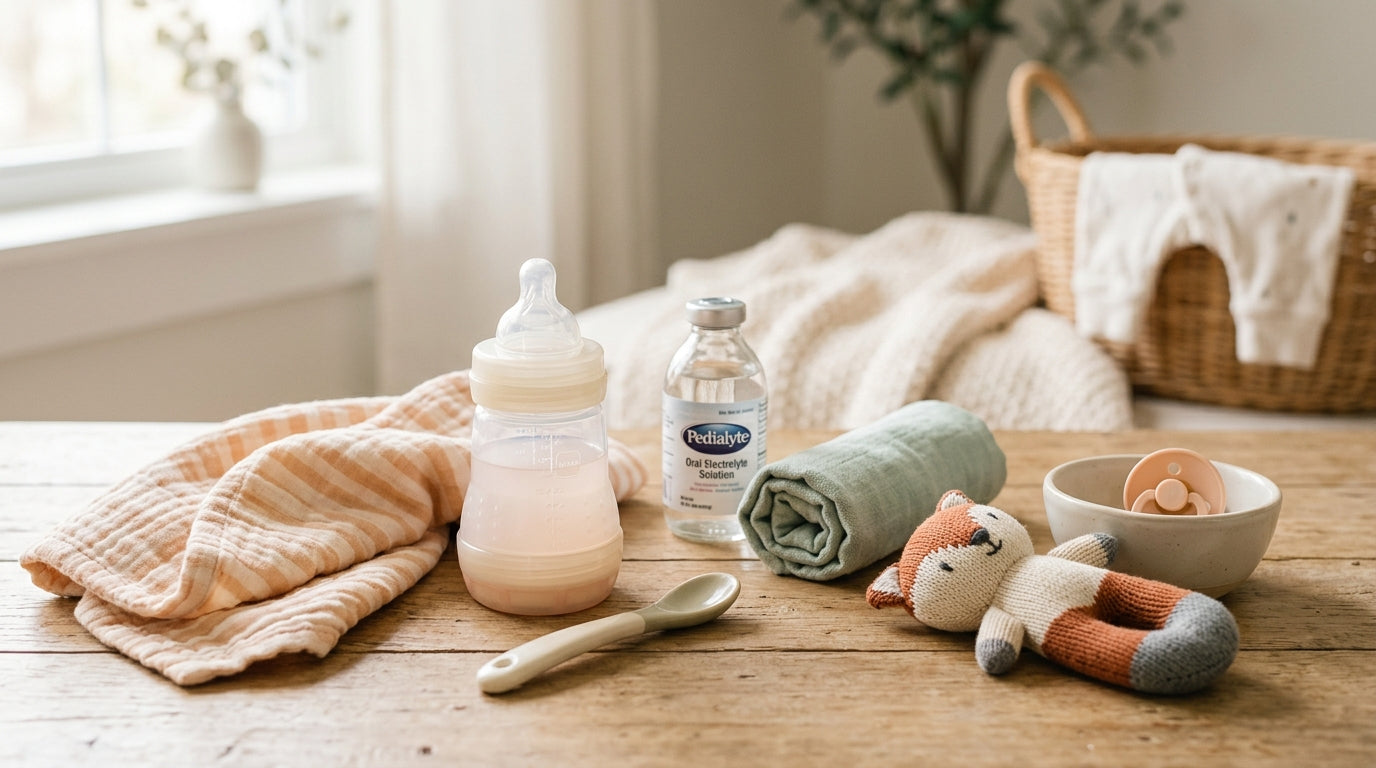
It was 2:14 in the morning and I was standing in the middle of the nursery covered in what used to be breastmilk and cherry-flavored fluid, wondering if I needed to call an ambulance or just burn the rug. My oldest son, Carter, was right around nine months old and had caught his very first stomach bug from the church nursery. I had made the ultimate rookie parenting mistake. I gave a thirsty, vomiting baby a full eight-ounce bottle of cold electrolyte drink because my sleep-deprived, panicked brain thought more fluids equaled better hydration, which resulted in all of it coming back up like a colorful geyser right down the front of my shirt.
I'm just gonna be real with you, seeing your baby violently ill for the first time breaks something in your brain. You completely lose your grip on logic. My mom had been on the phone earlier that evening telling me to just rub some peppermint oil on his feet and give him a bottle of watered-down Sprite, which is exactly the kind of advice that makes modern pediatricians visibly twitch. But honestly, the medical pamphlets they hand you at the doctor's office aren't much better when you're operating on zero sleep and wiping down a crib mattress for the third time in two hours.
You find yourself standing under the harsh fluorescent lights of the pharmacy at midnight, staring at a massive wall of brightly colored bottles. There's advanced care, immune support, unflavored, freezer pops, and organic powders. It's wildly overwhelming when all you want is for your kid to stop throwing up. At nearly nine dollars for a single plastic bottle, the stuff isn't cheap either, so figuring out exactly how to get it into your kid without it immediately coming back up becomes an extreme sport.
The tiny plastic syringe method that saved my sanity
When I finally broke down and called the on-call nurse line at 3 AM crying, my pediatrician told me exactly what I was doing wrong. You can't just hand a sick baby a bottle of hydration fluid and let them go to town because their little stomachs are basically inflamed, angry water balloons that will reject any large volume of liquid you drop into them.
The actual secret is absolute, agonizing patience. I had to let his stomach completely rest for a full hour after he threw up, which felt like pure torture because he was crying and smacking his dry lips, but if you cave and give them a drink too soon, the cycle just starts all over again. After that terrible hour passed, my doctor told me to use one of those plastic medicine syringes to squirt just one single teaspoon of the unflavored fluid into the side of his cheek every five minutes.
Do you know how maddening it's to watch the clock and dole out five milliliters of liquid over and over while your baby screams at you for more? It's the longest hour of your life. But it's literally the only way to bypass their gag reflex and let their stomach absorb the salt and sugar dust that makes those drinks work. I spent the rest of that night sitting on the rocking chair in the dark, setting a timer on my phone, and squirting tiny drops of clear liquid into his mouth while humming to keep us both from crying.
Oh, and don't even think about pouring blue sports drinks into a baby bottle or mixing up some random saltwater recipe you found on Pinterest because getting the sodium ratio wrong can seriously mess up a baby's blood chemistry.
The dehydration signs that keep me awake at night
If you look up the signs of infant dehydration online, you'll immediately think your child is in organ failure because the medical websites always list things in the most terrifying way possible. Instead of reading a textbook, you basically just have to obsessively poke their soft spot while praying for a heavy diaper and watching their face to see if they actually make real tears when they scream at you.

My pediatrician told me that the diaper output is the golden rule. If I'm changing fewer than four wet diapers in a whole day, or if it's been like eight hours and the diaper is bone dry, it's time to put on real pants and head to the clinic. I remember staring at Carter's head, trying to figure out if his fontanelle looked sunken or if the shadows in the room were just playing tricks on my exhausted eyes. Your anxiety will absolutely lie to you when you're tired.
The weirdest sign nobody warned me about was the lethargy. A sick baby is fussy, but a dehydrated baby gets alarmingly quiet and floppy. When they lose that spark of annoyance and just sort of lay on your chest staring at the wall, it's the scariest feeling in the world. That's usually the moment I realize the tiny syringe drops aren't cutting it and we need to let a professional look at them.
Dressing and distracting a kid who feels terrible
When you're dealing with a stomach bug, you're going to go through a minimum of six outfits a day, and peeling a tight, vomit-covered onesie off a feverish baby is a special kind of hell. I used to buy those cheap bulk packs of clothes, but they always shrank in the hot wash cycle and felt like scratchy sandpaper against my kids' sensitive skin when they were sick.
Now I just keep a rotation of the Organic Cotton Baby Bodysuit from Kianao on hand for the messy days. I'll be honest, at around twenty bucks it's not the cheapest thing in the drawer, but it's the only one I actually reach for when we're in the trenches. They're stupidly soft, they actually stretch over a screaming child's head without getting stuck, and because they're sleeveless, you don't have to wrestle sweaty little arms into tight armholes while they're actively fighting you. Plus, the organic cotton is breathable so it doesn't trap their body heat when they're running a fever, and it holds up to the aggressive sanitizing wash cycle without disintegrating.
Trying to keep a sick baby entertained while you're trapped on a towel on the living room floor is another challenge. I usually pull out our Gentle Baby Building Block Set because they're made of soft rubber and, crucially, I can just throw them in a bucket of hot soapy water after they inevitably get gross. I'll be completely upfront with you, they're just okay for a sick day distraction. My toddler usually loves stacking the little animal shapes when he's feeling good, but when he's under the weather, he just sort of aggressively chews on the number four block and throws it at the dog. They're great for normal playtime and the fact that they're non-toxic rubber is a win for my anxiety, but don't expect them to magically cure a cranky sick kid who just wants to be held.
To make matters worse, during our last bout with a stomach bug, my middle child decided to cut her top two teeth at the exact same time, bless her heart. I ended up grabbing her Panda Teether straight out of the fridge to give her something else to focus on. The cold silicone numbed her gums just enough to stop the whining for ten minutes, and the flat shape meant she could genuinely hold it herself while she laid like a sad little potato on my chest. When everything is going wrong, a ten-minute break from crying feels like a luxury vacation.
If you're currently surviving the stomach bug trenches and need some soft, breathable basics that can survive a hot wash, check out Kianao's organic cotton collection. You're going to need the backups, trust me.
Mixing things with milk or formula is a terrible idea
One of the biggest arguments my husband and I had at 4 AM was whether we should just dump the electrolyte powder straight into a bottle of formula so the baby would genuinely drink it. Logically, it makes sense to hide the medicine in the milk, but scientifically, it's a disaster.

My pediatrician was very clear that infant formula is already a perfectly balanced chemical equation of salts, proteins, and water. If you dump extra sodium into that bottle, you throw the whole balance off and it can seriously pull water out of your baby's system, making the dehydration much worse. It also makes the milk taste incredibly weird, and the last thing you want is for your sick kid to develop an aversion to their main source of food because you tried to trick them.
Breastfeeding moms have it a little different, and honestly, this is where my mom's old advice totally clashed with my doctor's. My grandma swore you had to stop nursing a sick baby because dairy upsets the stomach. My doctor said absolutely don't stop nursing, because breastmilk is essentially packed with magic antibodies that help fight the bug. I just had to change how I fed him, nursing for only five minutes at a time so his stomach wouldn't get too full, and offering the unflavored hydration drops in between sessions if he was still losing fluids.
The annoying 48-hour rule that wastes my money
Here's the part of the whole sickness routine that deeply offends my budget-conscious soul. Once you pop the seal on that expensive plastic bottle of baby hydration fluid, the clock starts ticking. You have exactly 48 hours to use it before you've to pour it down the drain.
I used to think that was just a scam by the big pharmaceutical companies to make you buy more, but apparently, it's because once a baby's germy mouth touches the bottle or a syringe goes from their mouth back to the container, bacteria starts throwing a party in the liquid. Even if you keep it in the fridge, those germs multiply, and giving a baby day-old bacteria water while they're already fighting a stomach bug is a recipe for a secondary infection. So yes, it hurts my feelings to dump half a bottle of nine-dollar liquid into the sink, but it hurts worse to end up back in the doctor's office.
If you're staring down a long night with a sick baby, take a deep breath. Keep the syringe handy, wash your hands until they bleed, and remember that this phase is temporary. And if you need to restock your nursery with things that honestly make life easier when the chaos hits, take a minute to browse Kianao's gentle baby essentials before you tackle that next load of laundry.
The messy questions we all ask at 3 AM
Can I just water down juice if I don't have the electrolyte stuff?
Lord have mercy, please don't do this with a baby under a year old. Fruit juice has way too much sugar and almost no sodium, and sugar honestly pulls water out of their body and into their intestines. I learned the hard way that giving a baby apple juice during a stomach bug just turns their diaper into an absolute disaster zone.
What flavor is best for a sick infant?
My pediatrician aggressively told me to only buy the unflavored kind for babies under one. The cherry and grape flavors taste better to us, but they're full of artificial dyes and junk that an infant's stomach doesn't need. Plus, if they throw up the unflavored kind, it doesn't leave a bright red stain on your favorite rug.
How do I get the smell of sick baby out of my clothes?
I swear by a heavy sprinkle of baking soda and a splash of white vinegar in the wash cycle. Don't use heavy perfumes or regular fabric softeners because it just masks the gross smell with a floral scent, which makes a horrifying combination. Wash everything in the hottest water the fabric can stand.
Is it normal for them to sleep all day when they've a stomach bug?
Sick babies are incredibly sleepy, and honestly, rest is how their little bodies heal. But there's a huge difference between a baby who's peacefully sleeping off a fever and a baby who's lethargic and won't wake up to take small sips from a syringe. If they feel like a ragdoll and you can't rouse them, call your doctor immediately.
Do I wake my baby up to give them the hydration drops?
If my kid is finally sleeping peacefully and holding down what little I managed to get in them, I don't poke the bear. Sleep is medicine. My doctor told me to focus on the active awake hours for the syringe drops, unless they haven't had a wet diaper in forever, in which case I'm waking them up and probably driving to the clinic anyway.




Share:
Late Night Wikipedia Dives and Debugging My Parental Anxiety
Why Peppa Pig is Banned (and Unbanned) in My House