

I was standing in my laundry room at eleven o'clock on a Tuesday night, aggressively peeling a pair of toddler pants out of the dryer lint trap, when it actually hit me. The pants were crackling. Literally throwing off visible blue sparks of static electricity as I pried them away from a fleece blanket, smelling vaguely of burnt plastic and whatever artificial spring meadow scent my detergent company was pushing that month. I held up these tiny, pill-covered, neon pink synthetic leggings and thought about the red, angry rash currently spreading across my oldest daughter’s thighs.
I used to think leggings were just disposable knee-covers. When you've three kids under five, your brain just sort of categorizes clothing as "things to catch the spaghetti sauce before it hits the rug." You buy the cheap five-packs of mystery-fabric stretch pants because they're six dollars and your kid is just going to drag their butt across the driveway anyway. My mom, bless her heart, always told me to just buy the cheap stuff and rub some Vaseline on whatever skin irritation popped up because "kids are just sensitive."
But my oldest is my walking cautionary tale for pretty much everything, and her skin was staging a full-blown, undeniable rebellion against my budget-friendly fast fashion habits.
That time I accidentally baked my kid in a polyester sauna
I took Harper to our pediatrician because she was scratching the backs of her knees until they bled, and I was convinced we were dealing with some rare Texas tick-borne allergy. I'm just gonna be real with you—sitting in that sterile little room while Dr. Miller asked me to read the tag on the inside of her pants was one of my lower parenting moments.
The tag said something like 85% polyester, 10% nylon, and 5% spandex.
According to our doctor, I hadn't dressed my child in clothing so much as I had vacuum-sealed her in a wearable plastic bag. From what I understand of the science—and I'm an Etsy shop owner, not a dermatologist—these synthetic fabrics are essentially petroleum products that trap every single ounce of body heat and sweat right against a baby's incredibly thin skin. When a toddler is running around like a feral barn cat in the Texas heat, the friction from those synthetic fibers basically forces their pores wide open, allowing whatever chemical dyes and stain-resistant treatments are on the fabric to soak right into their little bodies.
Dr. Miller tossed around terrifying acronyms like PFAS and mentioned formaldehyde, which I thought was only used for preserving dead frogs in high school biology, but apparently is sprayed on cheap clothes to keep them from wrinkling in the shipping containers. I felt physically ill realizing I was saving five bucks to wrap my baby in toxic, non-stick pan chemicals that were destroying her skin barrier.
Going down the organic rabbit hole
So, I went home and threw away an embarrassing amount of crackling, static-clingy plastic pants. And then I had to figure out what they were actually supposed to wear. This is when I stumbled into the world of organic cotton, or as the Kianao folks call them, baumwoll leggings.
At first, I had massive sticker shock. When you're used to buying a pair of pants for the price of a fancy coffee, paying for actual, ethically produced organic cotton feels like a punch to the gut. But thing is nobody tells you about the cheap stuff: you've to replace it every three weeks because the knees blow out or it shrinks into a weird, stiff tube that cuts off your kid's circulation.
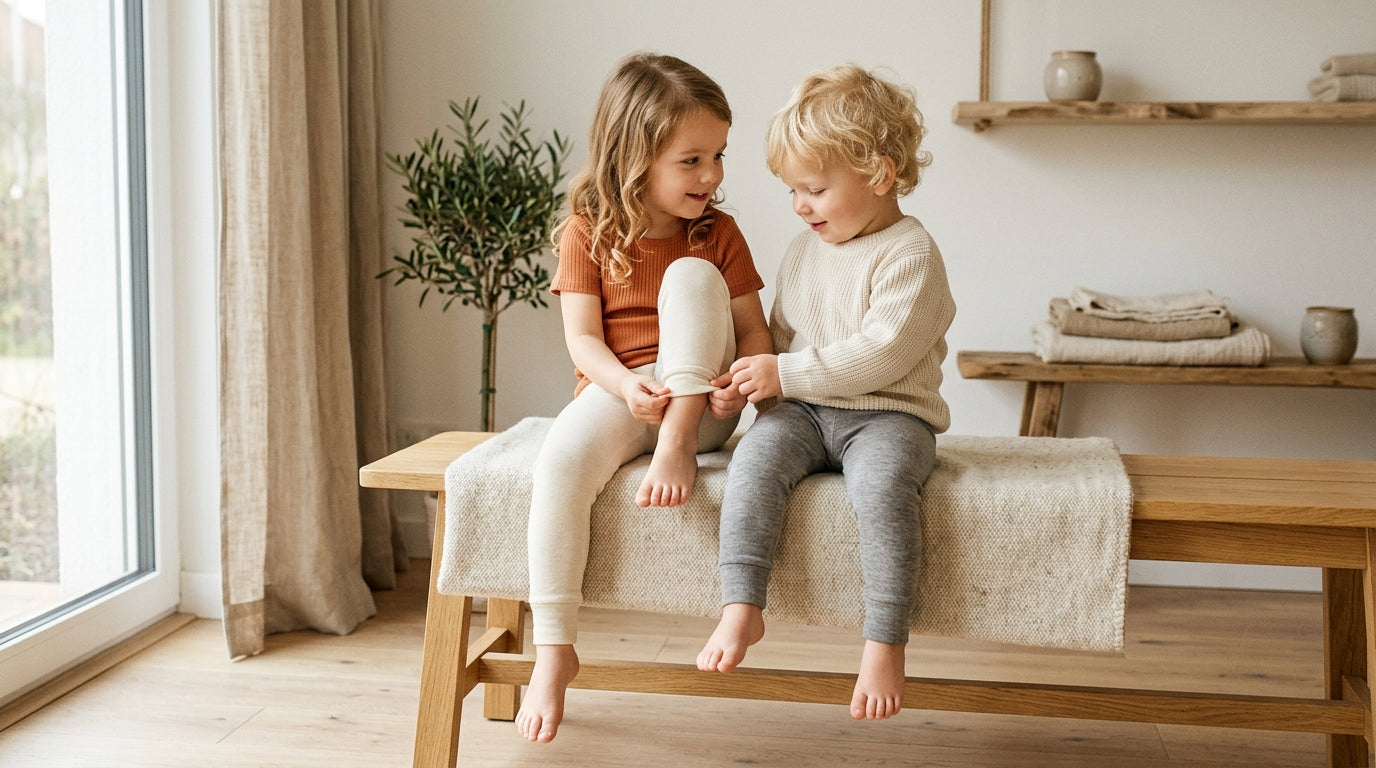
I finally bought a few pairs of the Baby Leggings in Organic Cotton from Kianao, mostly because I was desperate and sleep-deprived. And y'all, the difference was immediate and slightly infuriating, because it meant I could never go back to the cheap stuff.
These specific leggings are ribbed, which is actually super important. I bought a 100% pure organic cotton pair from a different crunchy brand once, and by noon my middle child looked like he was wearing a loaded diaper down to his ankles because pure cotton just stretches out and gives up on life. The Kianao ones have a tiny bit of elastane woven in, which means they really bounce back. You get the breathable, chemical-free safety of the organic cotton right against their skin, but enough stretch that they can still do toddler yoga in the grocery store aisle without the pants falling down. My middle kid lived in these during his aggressive commando-crawling phase, and the knees really held up.
Plus, Harper's leg rash completely cleared up in about four days once her skin could finally breathe. Four days. After months of me slathering her in expensive hydrocortisone creams that stained my couch.
The microplastic rant I force upon all my mom friends
Once you start paying attention to what happens in your washing machine, it'll ruin you. Every time I used to wash those cheap polyester leggings, they were shedding thousands of invisible microplastics straight into our local water system. I try not to be super doom-and-gloom about the environment because I already have enough anxiety trying to keep three tiny humans alive before dinnertime, but thinking about my kids drinking water laced with the fuzzy remnants of their own neon activewear is just too much for me.

Organic cotton just degrades back into the earth, which is where it came from. It doesn't leave a toxic legacy just because my toddler decided to wipe a handful of mashed bananas on her thigh.
I also don't really understand azo dyes, but I know they've heavy metals in them, so we're just aggressively skipping anything that uses them.
What I genuinely look for in a stretchy pant now
I've become incredibly ruthless about what makes it into my kids' dressers. I don't care how cute the pattern is; if the fabric feels slippery or makes that weird swishing sound when you rub it together, it's a hard pass.
- The fabric blend: It needs to be mostly organic cotton with just a tiny bit (like 5-8%) of something stretchy like elastane so the pants don't turn into a sad, saggy potato sack by 3 PM.
- The waist situation: If the elastic band is sewn in a way that leaves a deep red indent on a squishy baby tummy, I'm throwing it straight in the donation pile.
- The certifications: Look, I don't have time to personally inspect a cotton farm, so I rely on things like GOTS or OEKO-TEX certifications because it means someone smarter than me already tested the fabric for arsenic and bleach.
- The washability: If a baby item requires hand-washing in the tears of a unicorn, I'm not buying it.
Speaking of washing, you do have to treat organic cotton a little differently if you want it to last through multiple kids. You have to wash these things in cold water and preferably air dry them if you can find the space, keeping that chemical-laden fabric softener far away so you don't coat the breathable fibers in a layer of artificial gunk. I honestly missed the smell of my old fabric softener for a solid month, but I don't miss paying for eczema cream, so it's a fair trade.
When you're dealing with babies, everything is messy. Feeding time is a disaster area. We use the Bamboo Baby Spoon and Fork Set now because, much like the clothing situation, I realized I was shoving heated plastic directly into my baby's mouth three times a day. The bamboo is naturally antimicrobial and the silicone tips don't make me worry about BPA leaching into warm oatmeal. Are they going to drop them on the dog? Yes. But at least the spoon itself isn't a toxic hazard.
If you're browsing around to upgrade your kid's daily wear, Kianao has some genuinely great pieces in their organic clothing collection that won't make your kid break out in hives.
Are the fancy wooden toys worth it too?
Since we're on the topic of tossing plastic, people always ask me if I upgraded all our toys too. I’ll be honest, I bought the Kianao Nature Play Gym when I was heavily pregnant with my third, partly because it looked aesthetically pleasing for the five minutes my house is seriously clean. The wooden leaves and crochet elements are genuinely beautiful, and it's built like a tank without any flashing electronic lights to overstimulate everyone. She does bat at the little wooden rings and seems to like the texture. But between you and me, sometimes she’d still rather lie there in her soft organic pants and just kick her little legs at the ceiling fan, bless her heart. Still, it looks gorgeous in the corner and I don't have to listen to a robotic dog barking a computerized song on loop, so I consider it a win for maternal mental health.

The reality of the budget
I know I'm sitting here telling you to spend more money on baby clothes, and I know how annoying that sounds when diapers cost what they do. I really do.
But my philosophy now is just buying less stuff, but making sure the stuff I do buy isn't actively working against us. I'd rather have four pairs of really solid, stretchy baumwoll leggings that I wash constantly than a drawer crammed full of twenty synthetic pairs that give my kid contact dermatitis. The organic cotton genuinely gets softer the more you wash it, whereas the plastic pants just pill up and look like trash after a month anyway.
You don't have to throw away everything you own today. But the next time your kid outgrows their current size, maybe just check the tags before you buy the replacements.
Before we get into the messy details of caring for these things in the FAQ, check out the baby apparel section to find some reliable pieces for your own kid's wardrobe.
The Messy Details: Your Questions Answered
Do organic cotton leggings shrink? I can't deal with baby clothes getting even smaller.
Yeah, I'm going to be completely honest with you, untreated organic cotton has a natural shrinkage rate of about 5% on that very first wash. My pediatrician warned me about this when I was complaining about clothes fitting weirdly. Good brands usually cut the leggings just a tiny bit long to account for this. But whatever you do, don't blast them in your dryer on high heat unless you're trying to turn them into clothes for your kid's stuffed bear. Wash them on cold, lay them over the back of a dining chair to dry, and they’ll stay the right size.
Are they warm enough for winter if they're so "breathable"?
This tripped me up too because I associated "breathable" with "freezing." But organic cotton genuinely thermoregulates better than plastic fabrics. Think about it—when you sweat in polyester, you get clammy and cold. Cotton absorbs the moisture and keeps the skin dry while trapping natural body heat. For real Texas winters (which, let's face it, is just a chilly week in February), they're perfect. If you live somewhere seriously freezing, they make the ultimate non-bulky base layer under a snowsuit because they won't make your kid sweat to death when they finally come back inside.
Can I still use stain remover on organic cotton? My kid lives in dirt.
You can, but you've to drop the nuclear chemical bleaches. My grandma used to just lay stained clothes out in the direct sunshine, and I thought she was crazy until I tried it. The sun naturally bleaches out most organic stains like tomato sauce or blowout disasters. For the really stubborn stuff, I make a messy paste out of baking soda and a gentle dish soap, scrub it in with an old toothbrush, and let it sit before washing. It doesn't ruin the organic fibers and it saves the pants.
Why are my organic leggings stiff after they air dry?
This drove me nuts at first! Without that toxic fabric softener coating the fibers, cotton can feel a little stiff right off the drying rack, especially if you've hard water like we do out here in the country. Just grab them and kind of scrunch them aggressively in your hands for a few seconds before you put them on your baby. As soon as your kid starts moving around, their natural body heat softens the fibers right back up in about two minutes.
Is it really worth paying for GOTS certification?
Look, the internet is full of companies lying about what's in their products, slapping a green leaf sticker on a plastic bag, and calling it "eco-friendly." GOTS (Global Organic Textile Standard) is basically the only reason I trust that I'm seriously getting what I paid for. It means some strict European inspector verified that the cotton was grown without pesticides, the workers were treated decently, and there are no heavy metals in the dye. If I'm paying a premium to protect my kid's skin, I want the receipts, and that certification is the receipt.




Share:
Bedruckte Baby Strampler: Troubleshooting the Custom Romper
The Buc-ee's pants disaster and why I only buy leggings baumwolle bio