

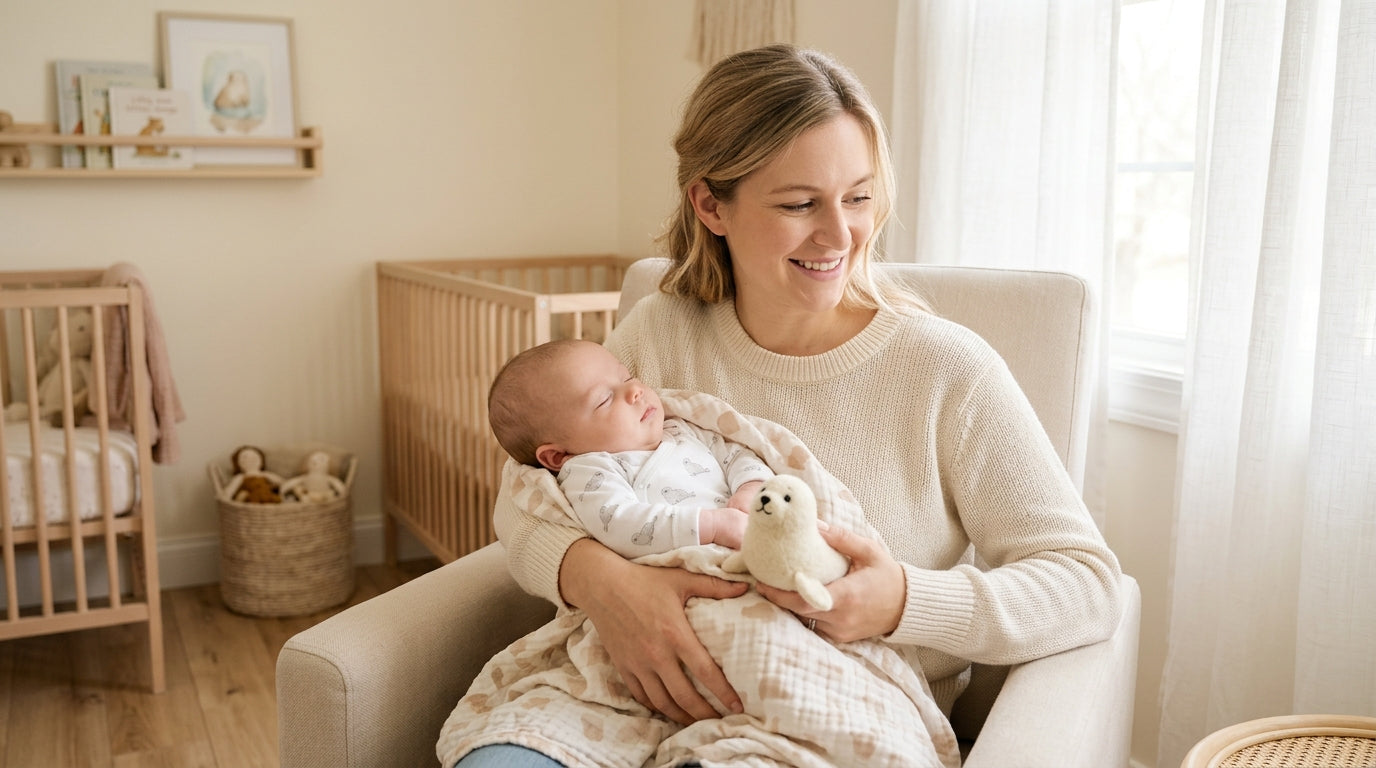
The rhythmic, mechanical wheezing of my breast pump at 3:17 AM is the soundtrack to my biggest parenting epiphanies. There I was with my oldest kid, Liam, about four years ago. I was exhausted, leaking milk onto a pile of unpaid bills on the coffee table, and spiraling into a deep pit of guilt because my milk supply was dropping at eleven months. I had convinced myself that I was failing at the most basic, natural task on earth. I grabbed the remote to drown out the noise of the pump and flipped on some nature documentary, expecting to see a calm forest. Instead, I found myself staring bleary-eyed at a segment about the baby harp seal, and honestly, it completely shattered my illusion that Mother Nature has her act together.
Instagram makes us think that animal moms are these majestic, perfectly attuned creatures who naturally bond with their young in a state of pure organic bliss. We look at them and think we're somehow doing it wrong because we need nipple shields and coffee to survive the day. But I'm here to tell you that nature is absolutely unhinged, and we all need to give ourselves a massive break.
Mother Nature is actually a deadbeat
So the guy narrating this documentary with a very serious British accent starts dropping facts about how these seals raise their young. You want to know how long a harp seal mom nurses her pup? Twelve days. That's not a typo. I was over here crying because I couldn't make it to a full twelve months, and this giant sea dog just feeds her kid for less than two weeks and then straight up abandons it on a chunk of floating ice to go back to her own life.
Apparently, they can get away with this because their milk is basically pure butter. The science guy on the TV said it's something crazy like fifty percent fat, though I might be misremembering the exact number because I was operating on three hours of sleep and a stale Pop-Tart. But the point is, the pup goes from weighing twenty pounds at birth to a massive eighty pounds in less than two weeks. It gains like five pounds a day. Imagine if human babies did that. We would constantly be buying new clothes, and our backs would snap in half by week three.
When Liam was a baby, he was a string bean. I tracked every single ounce he drank in this complicated app that sent me aggressive push notifications if I missed a log. I'd cry at the doctor's office because he dropped a percentile. Dr. Miller, who has been delivering babies in our small Texas town since the eighties, finally took my phone away during an appointment. She told me that babies just grow on their own weird curves and that unless he was actively losing weight, I needed to delete the app and go eat a cheeseburger. I didn't believe her then, but seeing that seal pup balloon up on its weird fat-milk made me realize that biology just does whatever it wants, regardless of our spreadsheets.
The throwing phase and my favorite walrus
By the time we got to solid foods with my middle kid, I had given up on the apps. But then we entered the throwing phase. If you've a toddler, you know exactly what I'm talking about. They look you dead in the eye, smile, and launch a bowl of spaghetti across the kitchen like they're trying out for the major leagues. I tried every suction plate on the market. Most of them claim to have industrial strength, but my kid would just peel them off the high chair tray like a wet Post-it note.

I finally got the Walrus Silicone Plate from Kianao because I thought the animal shape was cute and, honestly, I was desperate. I'm just gonna be real with you—this thing actually stays on the table. It has this massive suction base that requires you to push down on the center to seal it, and once it's stuck to my cheap laminate dining table, it takes a serious adult effort to pull it off. I serve him his completely average, non-fifty-percent-fat meals in the little divided sections, and the raised edges keep him from shoving peas onto the floor. Plus, it's a walrus, which is close enough to a seal for my kids to be thrilled about it.
I also bought one of their Wood & Silicone Pacifier Clips while I was checking out. It's fine. It looks really pretty with the wooden beads, and it holds the pacifier like it's supposed to. But my youngest daughter is a menace and still manages to drag it across the floor until it's completely coated in golden retriever hair. It hasn't broken yet, which is more than I can say for the plastic ones from the grocery store that snap if you look at them wrong, but you still have to clean it constantly.
The truth about that fluffy white coat
Back to the seals. When they're first born, they're actually kind of a gross yellow color, and then after a few days, they turn into those bright white, fluffy snowballs you see on calendars. That white coat is supposed to camouflage them on the snow and keep them warm while their mom is off doing whatever seal moms do when they abandon their kids.
This whole insulation thing reminds me of my Grandma Betty. Bless her heart, but the woman was convinced that any temperature below seventy-five degrees was an arctic freeze that would instantly give my children pneumonia. We live in rural Texas. It's hot almost all year round. But she would show up in late May with thick, scratchy, neon-yellow crocheted blankets and insist I bundle up a sweating infant. I used to fight her on it constantly.
Now that I run a small Etsy shop making nursery signs, I spend a lot of time looking at materials and fabrics, and I realize Grandma was right about the concept of keeping babies cozy, even if her execution was totally wrong for our climate. You want breathable stuff. Kianao has this whole line of sustainable baby gear that focuses on natural fibers that genuinely let a kid's skin breathe instead of trapping them in a polyester sweat lodge.
If you're looking for something that really helps soothe a cranky baby without suffocating them, check out the Silicone Cactus Teether from their collection. It's soft, made of food-grade silicone, and you can just throw it in the dishwasher when it gets crusty. It won't keep them warm on an iceberg, but it'll stop them from gnawing on your collarbone when those first teeth come in.
Stop terrifying your children about the weather
We need to have a very serious conversation about how we talk to kids about the environment. I'm all for saving the planet. I recycle. I buy sustainable baby plates. But the way we're teaching toddlers about climate change is practically child abuse. People keep gifting Liam these beautifully illustrated, incredibly depressing children's books about starving polar bears and melting ice caps. Who's writing this stuff for three-year-olds?

Because of these books, Liam went through a solid six-month phase where he was completely paralyzed by eco-anxiety. He would stand frozen by the open refrigerator, crying hysterically because he thought leaving the door open for ten seconds to grab a cheese stick was going to personally melt a baby seal's house. He asked me if driving our SUV to the grocery store meant the ocean was going to swallow our town. I'm already saving up for his college; I don't have the funds to pay for the massive amount of therapy this kid is going to need just to cope with existing on earth.
I was reading an article by some marine ecologist guy named Dr. James Grecian, and he basically said we're doing it all wrong. Young kids can't grasp abstract global catastrophes. They just internalize the terror. Instead of telling them the world is burning, we just need to teach them empathy for animals and give them tiny, tangible things they can control in their own house. I finally had to sit Liam down and tell him that his only job right now is to put his juice boxes in the blue bin, and the grown-ups will handle the icebergs.
If they just remember to turn off the bathroom light when they leave the room, you're doing a phenomenal job as a parent.
Rules for looking at wild animals
Since we live in Texas, we aren't exactly tripping over wild seals on our morning walk to the mailbox. But we do drive down to the Gulf Coast sometimes, and the rules for beach wildlife are pretty universal. It turns out that if you ever do see a seal pup on a beach, you're supposed to stay at least a hundred and sixty feet away from it. I'm pretty sure that's half a football field.
People see these fluffy white animals and their brains short-circuit. They think they're in a Disney movie and want to go up and take a selfie for their grid. But the mom is usually swimming right offshore, keeping an eye on her kid. If she sees a bunch of humans crowding her baby in their matching vacation t-shirts, she will just leave. She will straight up abandon the pup because she assumes it's lost to the predators now. So when we go to the beach, I just tell my kids to pretend every animal they see is made of lava.
Parenting is hard enough without comparing ourselves to wild animals or stressing over every single ounce of milk or piece of plastic. We're all just trying to keep our kids fed, clothed, and somewhat sane. So grab a coffee, stop looking at the feeding tracking app, and remember that at least you didn't leave your kid on an iceberg after twelve days.
Take a breath, give yourself some grace, and if you want to make your life a tiny bit easier, go grab some of those suction plates from the Kianao feeding collection before your toddler decides to launch tonight's dinner at the ceiling.
Questions you probably still have
Are baby harp seals genuinely born white?
No, they really aren't. They come out looking kind of yellowish and gross, like they've been stained, which honestly made me feel better about how weird human newborns look when they first arrive. It takes a few days for their fur to turn into that bright, fluffy white coat everyone thinks is so cute. So don't worry if your baby looks a little like a mashed potato for the first week—it's totally natural.
How long do they really nurse?
Twelve days. Seriously. I still can't get over it. The mom just pumps them full of that crazy high-fat milk for less than two weeks, watches them get incredibly fat, and then leaves them to figure out the rest of their lives on the ice. Whenever I feel guilty about cutting a nursing session short because my back hurts, I just think about the seal mom already swimming away to Mexico or wherever they go.
Why does my doctor care so much about weight percentiles?
Because they've to have some sort of baseline to make sure kids are growing, but honestly, my doctor told me it's more about following their own curve than being at the top of the chart. If your kid is on the 15th percentile and stays on the 15th percentile, they're probably fine. Just stop weighing them on the kitchen food scale. I drove myself crazy doing that, and it didn't change a single thing about how Liam grew.
Do those silicone plates genuinely stick to the table?
The walrus one does, yes. You have to make sure the bottom of the plate and the table are both relatively clean, and then you press down right in the middle to squish the air out. Once it's suctioned down, my two-year-old can't yank it off, which means I don't have to mop the floor quite as often. I just toss it in the bottom rack of the dishwasher afterward, even though you might be supposed to put it on the top rack. It hasn't melted yet.
How do you talk to a little kid about climate change without terrifying them?
You don't talk to them about the giant, scary stuff. You just don't. You tell them that we love animals and we love outside, so we clean up our trash and we turn off the water while we brush our teeth. That's it. Keep it to things they can honestly physically do in their own house. Save the heavy scientific panic for when they're in high school and can honestly process it without thinking a polar bear is going to break into their bedroom.




Share:
The Truth About Baby Gravy: Why Sunday Roasts Need a Rewrite
How To Handle It When Your Kids Find A Wild Raptor In The Yard