

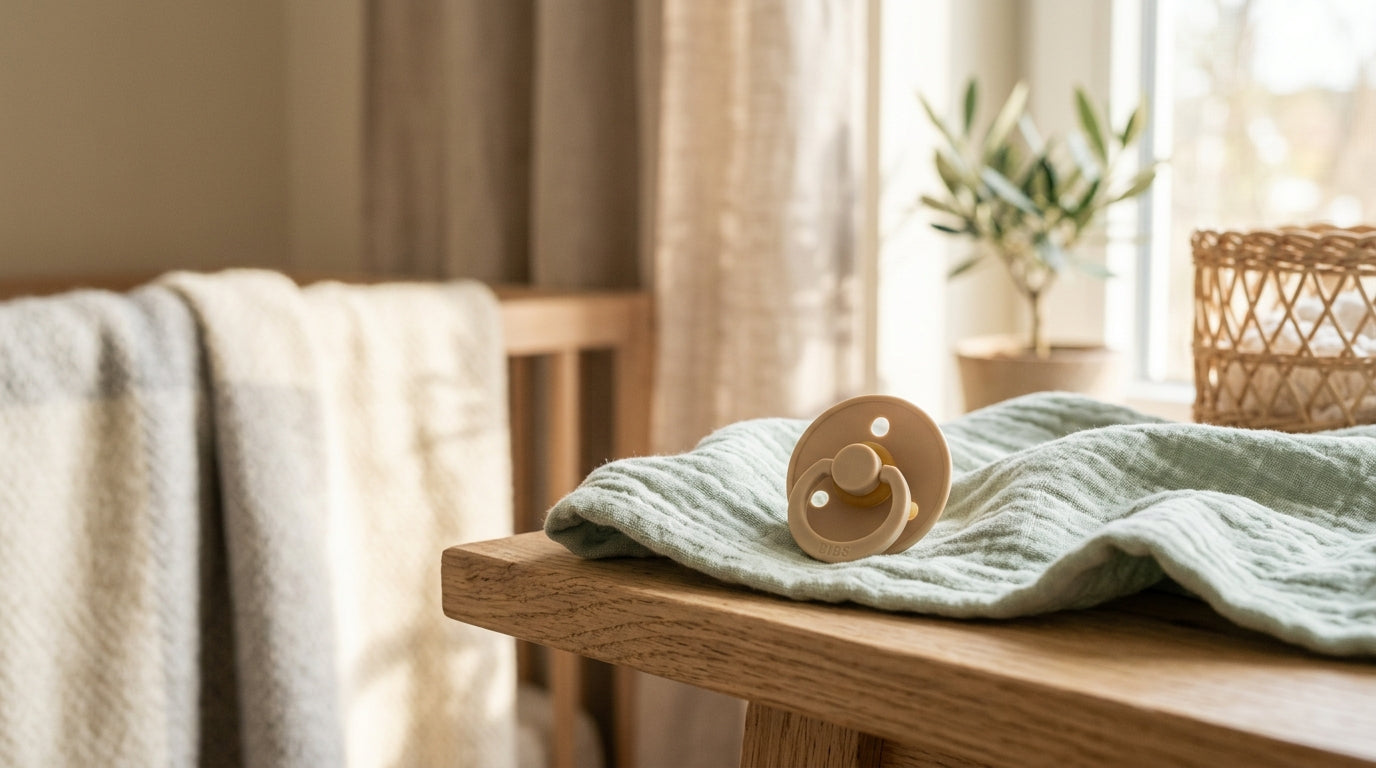
The nurse lactation consultant at the hospital looked at me like I had just suggested feeding my newborn a shot of espresso. It was 3 a.m. on my second night postpartum, I was bleeding through my mesh underwear, and my daughter had been screaming for forty-five straight minutes. I asked for a binky. The consultant gave me a tired speech about nipple confusion, failing at breastfeeding, and the organic necessity of letting a baby find her own fingers. I nodded politely, waited for her to leave the room, and then dug into my hospital bag for the sterilized piece of silicone I smuggled in. Three minutes later, the room was completely silent.
There's this massive, pervasive myth in modern parenting that relying on a pacifier makes you a weak parent. You log onto social media and see perfectly beige moms talking about how their infants simply breathe through their emotions and self-soothe with natural linen blankets. It's all a lie. When I worked the pediatric floor, we handed these things out like candy because they work. Raising a pacifier baby doesn't mean you failed at reading hunger cues. It means you understand triage.
Listen, before you let your mother-in-law guilt trip you for plugging the baby up, you need to understand what's actually happening in their tiny brains. Babies are born with a primal neurological drive to suck. It isn't just about food. The physical act of sucking releases beta-endorphins, which are basically nature's painkillers. But the way we talk about it, you'd think handing over a piece of rubber is child endangerment.
The hospital secrets they forget to tell you
If you've ever watched a nurse do a heel prick or start an IV on an infant, you know we don't just hold them down and hope for the best. We dip a binky in sugar water and let them go to town. The pain relief is almost instant. But the real reason my pediatrician casually told me to keep the binky around has nothing to do with crying.
Apparently, throwing a pacifier in the crib at night actually keeps them breathing. My doctor explained that it dramatically reduces the risk of Sudden Infant Death Syndrome. The science is fuzzy, but the theory is that having that bulky thing in their mouth keeps the airway pushed open just enough, and the constant sucking keeps them from falling into a dangerously deep sleep. They stay hovering in a lighter sleep state, which is exhausting for them but keeps their tiny respiratory systems ticking. When she told me that, I bought ten of them and scattered them around my house like landmines.
Of course, there's a catch with breastfeeding. I waited three weeks before introducing one regularly just to make sure my daughter actually knew how to latch onto me instead of a perfect cylinder of plastic. If you're using formula from day one, you don't even have to wait. Just wash the thing and hand it over.
The ear infection reality check
Here's where I've to be completely honest about the medical stuff, because I learned this the hard way. Around nine months, my daughter was basically chain-smoking her binky. She had it in the stroller, in the high chair, at the grocery store. I thought I was winning at parenting because she was so quiet.
Then came the fevers, the pulling at the ears, and the midnight screaming that sounded like she was being tortured. My pediatrician took one look in her ear canal and sighed. She told me that constant pacifier use between six and twelve months is a massive trigger for otitis media. That's just the clinical term for middle ear fluid, but apparently, the constant sucking motion changes the pressure in their eustachian tubes. It creates a vacuum that pulls fluid from the throat right into the middle ear, creating a perfect dark little swimming pool for bacteria.
I felt like the worst mother on earth. Nobody warns you about the pressure changes in the skull, yaar. We were basically forced to restrict the binky to the crib only. It was a miserable two weeks of screaming, but the ear infections stopped completely. If your kid is constantly getting sick, look at how many hours a day they've a piece of plastic shoved in their face.
The teeth situation
They might get a crossbite if they suck on it aggressively until they're four years old, so just take it away by their third birthday and their palate will probably sort itself out.

The truth about plastic garbage
Buying baby gear is a nightmare because half the things sold online are actual death traps. The Consumer Product Safety Commission has rules, but third-party sellers on the internet don't care about your child's airway. I've seen too many terrifying things in the ER to ever buy a cheap, two-piece pacifier.
You have to look for one-piece construction. That means the nipple and the shield are molded from a single piece of medical-grade silicone. If the nipple is just glued into a hard plastic shield, your baby can and will bite it off eventually. It becomes a perfect throat-sized plug. You also want to make sure the shield has giant ventilation holes so they don't suffocate if they manage to shove the whole thing in their mouth.
And please, for the love of everything, stop buying vintage pacifiers or those terrifying ones covered in rhinestone crystals. A baby doesn't need to look wealthy. If one of those fake diamonds pops off and they inhale it, you're buying a one-way ticket to the pediatric ICU. Keep it boring, keep it one piece, and throw it in the trash the second it gets sticky or cloudy.
You also need a way to keep the thing off the dirty floor. I eventually caved and bought the Pacifier Clips Wood & Silicone Beads from Kianao. I'll be honest with you here. They're objectively gorgeous. The beechwood and silicone look great in photos, and the metal clip doesn't ruin my kid's clothes. But sometimes, you're just tired and the clip is across the room, so you let the binky fall on the dog hair-covered rug and just wipe it on your jeans anyway. Still, when we go out in public and I've to pretend I've my life together, I use the clip. The varied bead sizes are nice because when she gets bored of the binky, she just chews on the silicone beads instead.
If you're trying to upgrade your entire soothing strategy without buying toxic junk, check out the full collection of organic and sustainable baby gear at Kianao to see what really fits your real life.
How we survived the weaning phase
Taking the pacifier away is an exercise in psychological warfare. You're removing their primary coping mechanism. Experts say you should start pulling back around twelve to eighteen months. I decided to do it right at twelve months because I was terrified of paying for another round of antibiotics for her ears.

We started by doing a clean swap. Every time she whined for the binky during the day, I handed her something else to chew on. This is when I found the Panda Teether Silicone Baby Bamboo Chew Toy. I'm not exaggerating when I say this tiny silicone bear saved my sanity. When she realized I wasn't giving her the binky, she lost her mind. I handed her the panda, and she grabbed it and chewed its ears like it owed her money.
It worked because the flat shape was easy for her chubby little hands to grip, and the textured back gave her gums the heavy pressure she was craving from the pacifier. I used to throw it in the fridge for ten minutes while she had a meltdown, and the cold silicone would snap her right out of it. It's entirely food-grade and doesn't have any hidden crevices where mold can grow, which is a massive relief because I'm terrible at hand-washing dishes.
We also rotated in the Squirrel Teether Silicone Gum Soother just to keep her distracted. It has a ring shape that she liked hooking her thumb through, and she spent hours just gnawing on the little acorn detail. Distraction is your best friend when you're weaning. You just have to give them an alternative that feels good on their gums but doesn't create that terrible ear-vacuum effect.
The final goodbye
Eventually, you've to cut the cord completely. I know people who use the "Paci Fairy" method where they put them all in a box and leave them on the porch for the fairy to take to new babies. That sounds lovely, but my daughter beta was way too smart for that. She would have just walked onto the porch and taken the box back.
We did it cold turkey one random Tuesday. I gathered every single pacifier in the house, threw them in the outside garbage can, and braced myself. The first night was brutal. She cried for two hours, I cried in the hallway, and my husband suggested we go buy more. I refused. By night three, she rolled over, shoved her thumb in her mouth, and went to sleep. It was over just like that.
Motherhood is mostly just making a series of questionable choices and hoping your kid turns out okay. Using a pacifier isn't a moral failure, and taking it away isn't torture. It's just another phase of keeping a tiny human alive. Do what works for your family, buy safe materials, and forgive yourself when things get messy.
Ready to stock up on safe, durable alternatives for your little one's teething phase? Grab one of our food-grade silicone teethers and make the transition a little less painful for everyone.
Questions you're probably too tired to google
Will my kid need braces if they use a binky?
Probably not if you take it away before they start preschool. My dentist said the front teeth might flare out a bit while they're actively using it, but the jaw usually shifts back to normal if they stop by age three. If your kid is four and still aggressively sucking on one all day, you might want to start saving for orthodontics.
Do I really need to sterilize this thing every day?
When they're tiny newborns with weak immune systems, yes, you should probably boil it or run it through the dishwasher daily. Once they start crawling and literally licking the bottom of your shoes, daily sterilization is pointless. Just wash it with warm soap and water when it looks gross.
What if they spit it out and cry in the middle of the night?
This is the worst phase. It's called the pacifier game, and it peaks around four months before they've the motor skills to put it back in themselves. You will be playing fetch at 2 a.m. a lot. Eventually, you can scatter four or five of them in the crib so they can easily find one in the dark, but until then, you just have to suffer through the retrievals.
Is cleaning a dropped pacifier in my own mouth safe?
I see moms do this all the time at the park, and as a nurse, it makes my eye twitch. Adult mouths are filled with cavity-causing bacteria. When you suck on their binky to "clean" it, you're just planting your adult dental bacteria straight into their fresh little gums. Keep baby wipes in your bag or find a water fountain instead.
Are those cute stuffed animal pacifiers worth the money?
They're great for the first few months because the weight of the little stuffed animal keeps the pacifier resting on their chest, so it doesn't roll away as easily. But they're a nightmare to wash, and once the baby learns to roll over, having a plush toy attached to their face while they sleep is a suffocation risk. I ditched ours by month three.




Share:
Why OPI Baby Take A Vow Is The Only Polish Surviving My Chaos
Palace Confirms Baby Number 4 Rumors: The Reality of Four Kids