

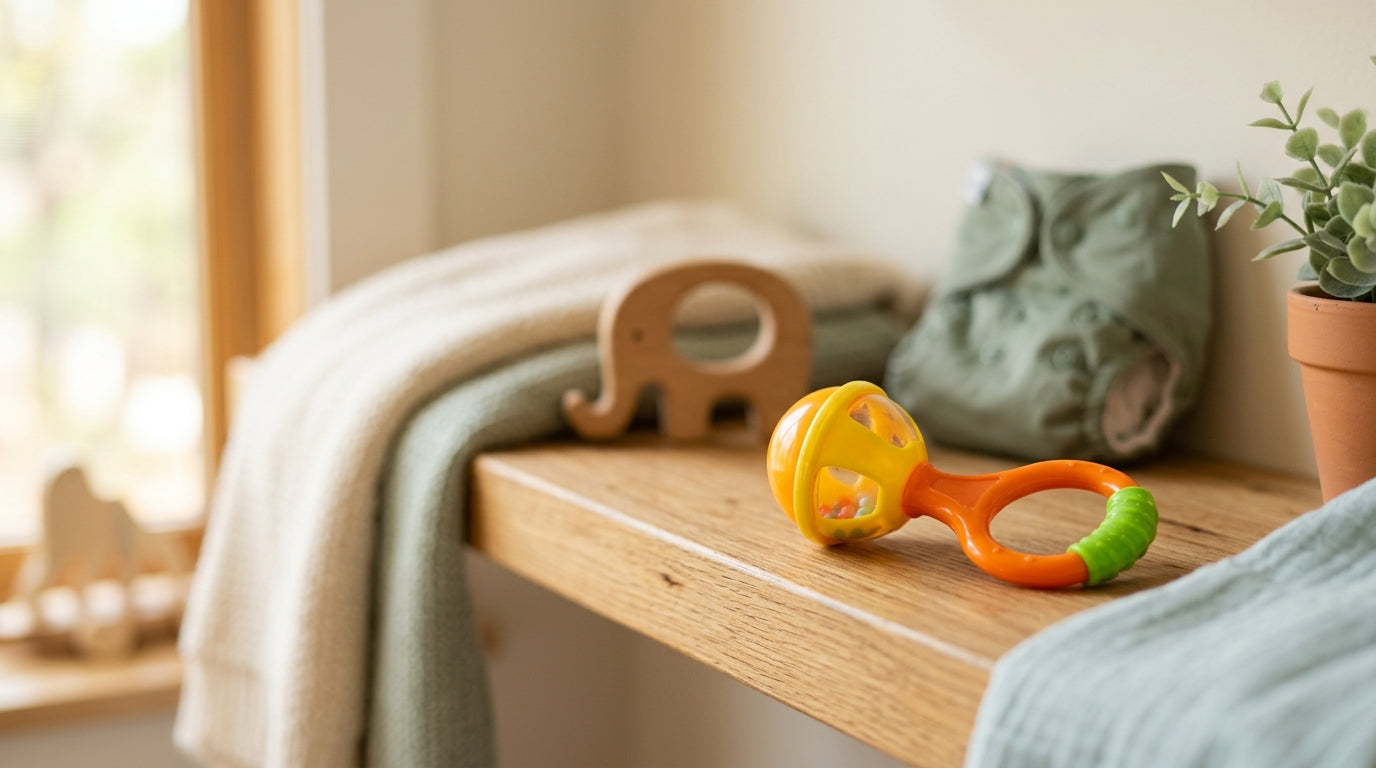
My mother-in-law brought over a solid silver shaker straight from a jeweler in Delhi. A woman in my mom group swore by a terrifying plastic monstrosity that flashed strobe lights and played generic techno beats. My doctor looked at both of them, shrugged, and muttered that I'd be better off handing my kid a wooden spoon from the kitchen.
That was my introduction to the surprisingly aggressive world of baby toys. You think you're just buying something to distract a crying infant for three minutes so you can drink lukewarm coffee, but it's actually a minefield of conflicting advice, questionable materials, and extreme noise pollution.
When you work in a pediatric clinic, you start looking at everything through the lens of triage. You see a thousand of these plastic gadgets come through the waiting room, mostly covered in a questionable layer of drool and graham cracker dust. I used to think parents were just overthinking the whole baby rattle de facto standard of having twenty different noisy toys in the diaper bag. Then I had my own kid.
Suddenly, the stakes felt different. But the reality is that most of what we buy is just junk designed to appeal to our adult eyes, not what a developing brain actually needs to figure out how hands work.
What the brain doctors actually say
Listen, the first few months are basically just survival. Your newborn is mostly a potato that cries. They don't have the motor skills to hold anything, let alone shake it rhythmically.
My doctor explained that in those early weeks, we're just working on visual tracking. You hold a toy about ten inches from their face and move it incredibly slowly. If they follow it with their eyes, congratulations, their neurological system is doing what it's supposed to do. You don't need a heavy piece of plastic for this. At the clinic, I've seen doctors do this exact same reflex test with a plastic medicine cup holding a few paperclips.
Around three or four months, things get messy. They develop what the medical charts call a palmar grasp. It means they realize they've hands and they want to grab things, but they've absolutely zero finesse about it. This is when the type of toy you hand them starts to matter.
By six months, they start moving objects from one hand to the other. I think my nursing instructor called it bilateral coordination or cross-hemisphere communication, but honestly my brain is too fuzzy these days to remember the exact textbook definition. It basically just means the left side of their brain is finally talking to the right side. They need something lightweight to practice this transfer, otherwise they just drop it on their own forehead and scream.
The heavy plastic assault weapon problem
Here's something nobody warns you about when you register for baby rattle toys. An infant has the motor control of a drunken sailor. They will grab a toy, swing their arm wildly, and smash it directly into their own face.
I can't tell you how many panicked parents have brought their six-month-olds into the clinic with a bruised cheekbone or a red welt on their forehead. We always ask what happened, and ninety percent of the time, the kid punched themselves with a heavy wooden maraca or a dense plastic block.
These traditional heavy toys are basically blunt force instruments in the hands of a baby. They don't mean to do it, their nervous system just misfires and suddenly they're crying and you feel like the worst parent on earth for giving them a tiny weapon.
Also, don't buy anything with ribbons or strings longer than a pencil unless you want to spend your evening worrying about strangulation hazards.
When they start putting everything in their mouth
Around the time you finally get used to the sleep deprivation, teething starts. Every single object they manage to hold will go straight into their mouth. This is when a standard noisemaker needs to double as a baby rattle teether.

My doctor gave me a very casual lecture about the choke tube test once. She held up this little plastic cylinder and said if a toy fits inside, it belongs in the trash. The official rule is that parts need to be larger than an inch and a quarter across, but for infants, she said we should aim for at least two inches because they'll literally try to swallow anything that fits past their lips.
This is where I get incredibly picky about materials. Hand-me-down plastic toys from your cousin might seem like a great way to save money, but old plastics degrade. They get micro-fissures that trap bacteria, and older paints can chip off. You don't want your kid digesting vintage plastic chips.
When my son's first tooth was trying to cut through, the only thing that kept him from gnawing on my collarbone was the Bear Teething Rattle. It has a smooth beechwood ring that provided just enough hard counter-pressure for his sore gums, and the little crochet bear on top meant that when he inevitably smacked himself in the face with it, it didn't leave a mark. It's just cotton yarn and untreated wood. No mystery chemicals, no batteries to leak, and no aggressive flashing lights to overstimulate him before nap time.
We also had the Bunny Teething Rattle from the same line. It's perfectly fine and does the exact same job. The blue bow tie is cute, but honestly, the long bunny ears just got soggy faster when he chewed on them, so I always found myself reaching for the bear instead. They're both safe, which is all I really care about honestly.
If you're tired of looking at neon plastic taking over your living room, you can browse through some quietly beautiful wooden play setups and sensory gear in our full toys collection.
The floor potato phase
Before they can sit up, babies spend an unreasonable amount of time just lying on their backs staring at the ceiling. This is when you realize you need a containment strategy that also counts as an activity.
We used the Leaf & Rattle Play Gym Set for this. You just lay them on a blanket and slide the wooden A-frame over them. It has these little wooden pendants that make a very soft, organic clacking noise when the baby bats at them.
It was fascinating to watch. At first, he would just stare at the pastel colors. Then a few weeks later, he would accidentally hit a wooden ring, hear the noise, and look surprised. Eventually, he figured out cause and effect and would just lie there aggressively kicking the pendants to make his own little acoustic concert. It bought me exactly enough time to load the dishwasher, which is all you can really ask for from a baby rattle toy.
The reality of keeping things clean
People get weirdly neurotic about sanitizing baby gear. I blame social media for making us think everything needs to be boiled and bleached.

Listen, your kid is going to lick the floor of a waiting room someday. You don't need to stress yourself out sterilizing a crochet baby rattle every time it touches the carpet.
Instead of buying expensive harsh chemical wipes and hovering over them while they play to catch every drop of spit-up, just wipe the wooden rings down with a damp cloth and a little mild soap and let the crochet parts air dry completely before handing it back to your screaming child.
Wood genuinely has some natural antibacterial properties anyway. Just don't submerge the wooden rings in the sink or put them in the dishwasher, unless you want the wood to crack and splinter, which creates a whole new hazard.
Just pick something quiet
The best piece of advice my clinic mentor ever gave me was to buy toys that don't require batteries. The noise of a gentle wooden clack or a soft little bell inside a crochet animal is enough for a baby's sensitive ears.
They don't need a toy that speaks three languages and flashes primary colors. That's just overstimulation disguised as education. It makes them cranky, and more importantly, it makes you cranky.
Before we get into the questions everyone always asks me at the playground, take a second to look at our organic teething collection so you can finally throw away that handed-down plastic thing your aunt gave you.
The questions I always get asked
How do I clean a crochet toy without ruining it?
You spot clean it. I just take a little warm water and mild dish soap on a washcloth and dab at whatever mystery stain has appeared on the cotton yarn. You let it sit on the counter to air dry overnight. Don't throw it in the dryer unless you want it to shrink into a weird, dense little lump.
Are wooden rings really safe for sore gums?
Yeah, as long as it's untreated hardwood like beech. Babies honestly prefer hard surfaces when their teeth are cutting because it provides deep counter-pressure that soft silicone just can't match. Just check it every few weeks to make sure the wood isn't splintering from them gnawing on it like a little beaver.
Why does my baby keep hitting their face with their toys?
Because their nervous system is still under construction. They lack spatial awareness and fine motor control. They tell their arm to move slightly to the left, and their brain translates that as a violent swing toward their own nose. It's totally normal, which is why I aggressively push soft, lightweight toys for the first six months.
When do they genuinely start caring about the noise?
Around three to four months, they start connecting the physical action of shaking their hand with the sound the toy makes. Before that, you're the one who has to shake it for them. Once they figure out cause and effect, they'll shake it relentlessly until you want to hide in the closet.
Can I put these teethers in the freezer?
Please don't. A lot of old-school advice says to freeze toys, but freezing makes things too hard and can honestly cause minor frostbite on delicate infant gums. If you've a silicone toy, put it in the regular refrigerator for twenty minutes. If it's wood and crochet, just leave it at room temperature, it does the job fine without the ice burn.




Share:
The newborn rattle timeline from potato stage to blunt force trauma
Surviving cold nights: winter sleeping bag for newborn babies