

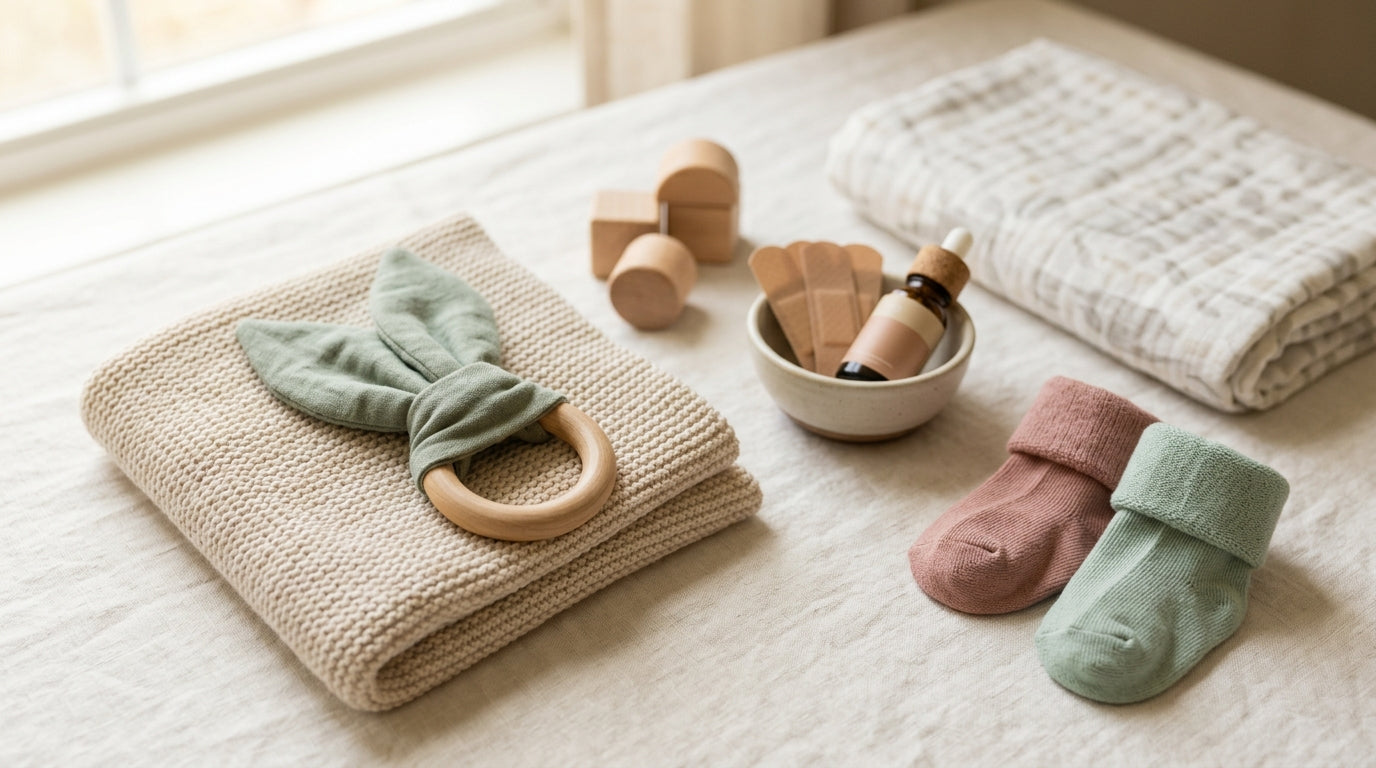
DO NOT ask Siri to calculate the total blood volume of an 11-month-old while said infant is actively bleeding onto your only decent living room rug. That's my primary takeaway from last Tuesday. I was trying to run the math on how many milliliters of blood loss constitute a critical system failure, whereas my wife just grabbed a clean dish towel, applied direct pressure to our son's forehead, and told me to grab the diaper bag and the car keys. The corner of our mid-century modern coffee table had won the battle against his face. I honestly thought we were going to need a full surgical trauma team, but apparently, head wounds just bleed like a ruptured coolant line even when they're relatively minor.
Driving through Portland traffic in the rain while your baby screams in the backseat is a unique kind of psychological stress test. Every time he wailed, my Apple Watch tapped my wrist to notify me that my heart rate had spiked into the cardio zone. I was frantically trying to troubleshoot the situation from the driver's seat, mentally scrolling through every terrifying Reddit thread I'd ever read about infant head trauma, while my wife calmly maintained pressure on the wound and reminded me to stop tailgating a Prius.
The urgent care algorithm
I approach parenting the same way I approach debugging legacy code—I need hard parameters and clear documentation. Our pediatrician, who has definitely flagged my digital chart as "highly anxious tech bro," told us later that you don't always need literal thread to close a gap in human skin. But in the moment, I had no idea what the threshold was.
When we finally got to the examination room, I actually pulled out the digital calipers I use for my 3D printing projects to measure the cut because I couldn't find a ruler in the diaper bag. The nurse looked at me like I was insane. The cut was exactly 0.42 inches long. Apparently, if a cut is deeper than a quarter inch, or gaping wide open, you need a professional to look at it. This is especially true on the face, where the skin is taut and pulls apart every time they smile or cry, which basically means you're racing against the clock to prevent a massive permanent gap.
There's also a strict server timeout protocol for this kind of injury. You apparently have a golden window of about 6 to 8 hours to get the wound evaluated and closed before the baseline infection risk spikes so high that doctors will flat-out refuse to seal it. If you wait until the next morning to see how it looks, you might be out of luck, and they just have to let it heal open. We made it from our living room to the urgent care triage desk in 42 minutes, which is a new personal best for our household deployment time.
Firmware updates for human skin
I fully assumed the doctor was going to pull out a tiny needle and thread and start sewing my kid's face back together while I passed out in the corner. But medicine has leveled up quite a bit. Instead of traditional sutures, our doctor opted for a chemical solution. He pulled out a little vial of surgical skin glue.

He called it Dermabond; I call it a hotfix patch. They literally just superglued my son's forehead together. It was completely painless to apply, which was a massive relief because restraining an 11-month-old who already feels betrayed by the universe is not something I wanted to do for very long. With physical thread, you've to go back to the clinic a week later to have a professional snip them out so the skin doesn't grow over the plastic, but this glue just flakes off on its own in a week or two once the underlying hardware repairs itself. Sometimes, for shallower bugs in the skin, they use these little adhesive butterfly bandages called Steri-Strips, but our guy definitely needed the heavy-duty adhesive.
The impossible physics of baby bath time
The hardest part of this entire ordeal wasn't the blood on the rug or the terrifying drive to the clinic. It's the absolute logistical nightmare of keeping a baby's head perfectly dry. The doctor casually told us not to get the glued area wet for a few days so the compound could fully set.
Have you ever tried to wash a squirming, slippery, furious 11-month-old without letting a single drop of water touch the top half of their body? It defies all known laws of physics. Water is a liquid; it seeks the lowest point, and my baby is a chaotic gyroscope of flailing limbs who views bath time as an extreme water sport. I spent three consecutive nights trying to strategically sponge-bath his lower half while holding him at a precise 45-degree angle over the bathroom sink, sweating profusely, while he screamed because he wanted his plastic boat. I measured exactly three inches of water in the bottom of the basin, and he still managed to splash the ceiling. It's an impossible user experience. I hate sponge baths. I hate everything about them.
Oh, and if your kid ends up getting actual physical thread on their body, the doctor said those have to stay completely dry for a day or two and then sit in the skin for anywhere from 4 to 14 days depending on what joint they're near, but I honestly tuned that part out once I realized we were getting the glue.
Post-crash recovery and scar mitigation
Once the initial panic subsides and the wound is sealed, the next phase of the project is preventing the dreaded "railroad track" scarring. Before this, I thought scabs were a good thing. I thought a dry, crusty scab was a sign of healing. I was incredibly wrong.

Our pediatrician seemed to think the absolute best approach for long-term healing is keeping the area constantly moist once it's officially closed, because hard scabs actually pull at the fresh cells and make the eventual scar much wider and more prominent. You basically just have to smear a plant-based healing balm on their forehead every few hours and pray they don't immediately wipe it off on the couch cushions while doing a barrel roll across the living room. (Note: The doctor told us *not* to put ointment directly on the surgical glue while it's still attached, because the oils will dissolve the adhesive prematurely, which makes sense but is highly annoying to track).
When we finally got home from the urgent care clinic that first night, Leo was completely exhausted and shivering from the massive adrenaline crash. We needed to get him warm and calm him down immediately. I grabbed our Organic Cotton Baby Blanket Calming Gray Whale Pattern and wrapped him into a tight little burrito. I'm weirdly emotionally attached to this specific blanket now. The gray ocean vibe is genuinely soothing when your nerves are fried, the double-layer organic cotton feels like a premium weighted hug without being dangerously heavy, and honestly? The dark gray whale print completely masked the tiny bit of residual dried blood that I had missed on his earlobe. It's our absolute favorite piece of gear, and it has held up flawlessly through dozens of high-temperature wash cycles since the incident.
We also own the Organic Cotton Baby Blanket Ultra-Soft Monochrome Zebra Design, which is fine, I guess. The high-contrast black and white pattern is supposedly incredible for a newborn's early visual processing power, but at 11 months old, he mostly just tries to chew on the zebra stripes while maintaining intense eye contact with me. It does the job of keeping him warm, but the whale blanket is far superior in my entirely biased opinion.
If you find yourself stress-shopping in an urgent care waiting room because you suddenly realize your house is full of hard edges and inadequate soft goods, you can browse through a whole collection of organic baby essentials to pad your environment.
Booting up safe mode
For the next week, we had to force our son into low-mobility mode to prevent him from violently smashing his face into the hardwood floor again and cracking the glue wide open. This is exceptionally difficult when your child is in the early stages of walking and views every piece of furniture as a jungle gym.
I essentially trapped him on the softest rug in the house under his Bear and Lama Play Gym Set with Star Toy. Usually, he's army-crawling into the kitchen to harass the dog, but the wooden beads and that little crocheted star distracted him just long enough to keep him flat on his back for 20-minute intervals. The materials on the gym are all food-grade and non-toxic, which was a huge relief because his immediate response to being contained was to stress-test the structural integrity of the hanging lama with his two incoming bottom teeth. The wooden A-frame is sturdy enough that he couldn't pull it down on himself, giving me enough time to drink half a cup of lukewarm coffee while monitoring his telemetry.
The last thing we learned about scar management is that fresh, newly healed skin is basically defenseless against UV radiation. The sun acts like a laser, permanently darkening the new tissue and burning an image onto the skin like an old OLED screen with burn-in. So now, our daily routine involves aggressively smearing baby-safe mineral sunscreen onto his forehead and cramming a UPF bucket hat onto his head every single time we step outside, even in the cloudy Portland drizzle.
If you're trying to baby-proof your life or just want to upgrade your gear to things that won't off-gas weird chemicals into your child's open wounds, check out our full line of sustainable nursery products before your baby discovers the sharpest corner in your house.
Frequently Asked Questions About Infant Wound Care
How long do I've to get my kid's cut sealed up?
Apparently, the medical cutoff is about 6 to 8 hours. If you wait longer than that, the bacteria count in the wound gets too high, and the doctors won't close it because they don't want to trap an infection inside. If they're bleeding heavily or the cut looks deep, just get in the car and go. Don't wait to see how it looks after nap time.
Can I put antibiotic ointment on surgical glue?
No, don't do this. I almost made this mistake. Petroleum jelly and oil-based ointments will actually break down the chemical bonds of the superglue, causing it to peel off before the skin underneath is fully patched. Just leave the glue alone until it naturally flakes away.
Is my baby going to have a permanent scar?
Probably a tiny one, but kids regenerate tissue like sci-fi aliens. Our pediatrician said keeping it out of the sun for the first 6 to 12 months is the single most important thing you can do to prevent the scar from turning dark and noticeable. Buy a good hat that ties under the chin so they can't rip it off immediately.
How do you keep them from picking at their bandage?
You mostly just suffer and redirect their hands a thousand times a day. We tried putting socks over his hands like mittens, but he figured out how to pull them off with his teeth in about fourteen seconds. Long-sleeved onesies help a bit, but mostly it just requires constant, exhausting vigilance until the wound heals.




Share:
Toxic Internet Trends: What Parents Must Know About Baby Stickley
The terrifying physics of your first garden baby swing setup