

Three in the morning is a bad time to evaluate your parenting choices. The radiator in our Chicago apartment was hissing, my toddler was trying to gnaw his own fist off, and I was frantically digging through the freezer. I pulled out one of those gel-filled plastic rings, handed it to him, and watched his lower lip stick to the ice-cold surface like a kid at a flagpole in winter. He screamed louder. I sat on the floor and realized my nursing degree had completely failed me.
I thought cold was the answer. In hospital triage, you ice swollen tissue to restrict blood flow and numb the pain. It makes logical sense. But infant gums are delicate, and frozen plastic is basically a weapon.
That was my rock bottom with teething products. It forced me to actually look at what I was shoving into my kid's mouth every time a new tooth decided to ruin our lives.
The plastic freezer ring deception
Listen, nobody tells you that half the stuff sold for babies is actually terrible for them. I assumed if it was on a shelf at a big box store, it was fine. I bought the plastic rings with the neon liquid inside. I bought the silicone keys.
Then I actually read up on what happens when a baby with razor-sharp little incisors goes to town on a cheap plastic ring. They ingest microplastics. Some of those older plastic teethers even fail basic European safety tests because they contain chemicals like naphthalene, which I vaguely remember from a pharmacology lecture as something you definitely don't want mixing with your baby's saliva.
So I threw them all out. Every single one. I looked at the pile of neon plastic in the trash and told myself we were doing things differently from now on.
What natural rubber seriously is
Enter the natural rubber teether. You'll sometimes see it called a naturkautschuk ring if you're shopping on European sites, which is just a very intense way of saying it comes from a tree instead of an oil refinery.
The material comes from the milky sap of the Hevea tree, mostly out in Southeast Asia. Apparently, one tree can produce this latex for like twenty years. That's great if you care about sustainable raw materials, but honestly, at 3 a.m. I just cared that it wouldn't poison my son.
Pure natural rubber has no chemical softeners. No phthalates. No BPA. It's naturally soft and flexible, which means it really mimics the feel of human skin. Babies love it because it has some give to it. When those molars start pushing up and the gums look like raw hamburger meat, they don't want to bite a rock. They want to bite something that bites back just a little.
The great sterilization disaster
Listen, the postpartum urge to boil everything your baby touches is real. I get it. The world feels dirty and your baby feels fragile. You buy a steam sterilizer and suddenly everything looks like it belongs inside it.

But you absolutely can't boil a natural rubber toy. I learned this the hard way when I tossed a beautiful, expensive rubber giraffe into a pot of boiling water because it fell on the floor of a coffee shop. Five minutes later, the water smelled like burnt tires. The toy had turned into a sticky, misshapen lump of regret.
Heat destroys the cellular structure of natural rubber. Microwaves, dishwashers, boiling water on the stove. It all ruins the toy. I've seen a thousand of these things melted into sad little puddles by well-meaning parents who just wanted to kill some floor bacteria. The rubber gets brittle, it gets tacky, and then it's a choking hazard.
Meanwhile, those amber teething necklaces you see everywhere are basically just overpriced choking hazards that do absolutely nothing for pain.
What we genuinely use in my house
Finding the right teether is a process of elimination. We tried a bunch before finding the ones that genuinely kept him quiet.
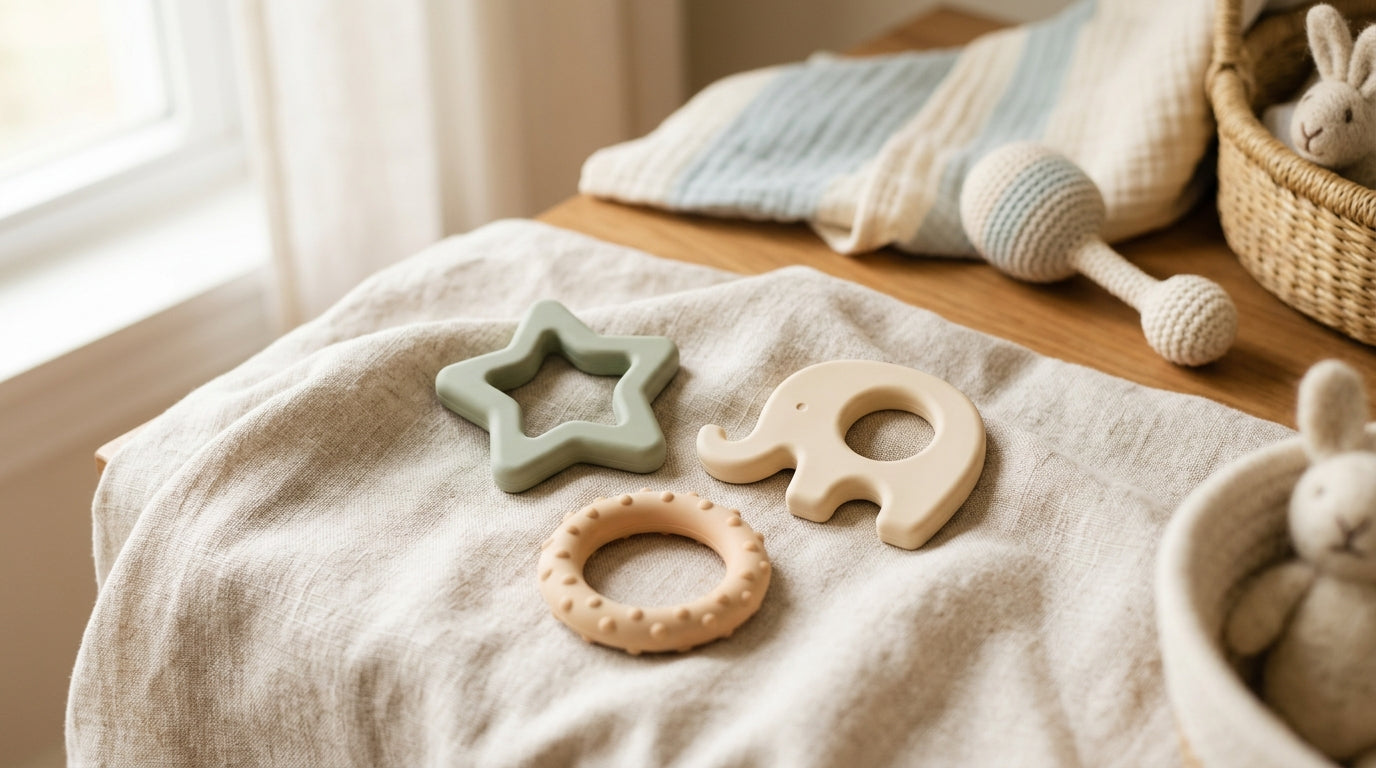
My absolute favorite is this textured Hevea rubber animal teether from Kianao. It has these little ridges on the back that act like a deep tissue massage for the gums. My son used to hold it by the neck and just aggressively saw it back and forth over his erupting canines. It held up beautifully. He gnawed on it daily for three months and it never cracked or degraded. Plus, it's one solid piece, so there are no hidden holes where mold can grow.
We also had a simple round rubber teething ring that was just okay. The material was fine, but the perfectly round shape meant that every time he dropped it, it would roll under the couch like it was trying to escape. I spent half my life on my hands and knees retrieving that stupid ring.
If you're trying to swap out your plastic gear, starting with something that goes directly into their mouth is the easiest win. You can browse some reliable organic baby toys that won't melt into a toxic puddle.
My doctor on the latex thing
My doctor is a very tired woman who has seen it all. When I brought in the new rubber teether to ask if it was safe, she gave it a quick look and nodded.

But she did mention the allergy risk. Natural rubber contains latex proteins. It's rare, but some babies develop an allergy. She told me to watch for redness or a rash around his mouth after he chewed on it. If that happened, we would have to pull the toy immediately.
I think the cross-reactivity with foods like bananas or avocados is a real medical phenomenon, but who really knows how an infant immune system decides to panic on any given Tuesday. We just watched his face for a few days. He was fine. No rash, just a lot of drool.
How to not destroy your rubber teether
Taking care of these things requires ignoring almost every modern convenience we've for cleaning baby gear. You have to go back to basics.
- The fridge is your friend. You can chill natural rubber in the refrigerator for maybe twenty minutes to get it cool. Don't put it in the freezer unless you want the rubber to crack and your baby to get frostbite.
- Soap and water only. Wash it in the sink with a mild dish soap and warm water. Let it air dry on a clean towel.
- The smell is normal. When you first open the package, it'll smell slightly oily, like a yoga mat. That's just what pure tree sap smells like. It fades after a few days of washing.
- Check for damage. Before you hand it over, give the rubber a hard tug in all directions to see if any micro-tears have formed.
Honestly, just stop trying to boil the poor thing and definitely check it for cracks instead of blindly tossing it in the crib every night while you pray for sleep.
Ready to ditch the plastic
I looked at my son one afternoon, holding his chewed-up rubber toy, and said, beta, we're done with the neon plastic. It took a while to phase out the junk I accumulated at my baby shower, but getting rid of the synthetic teethers was the biggest relief.
If you're tired of wondering what chemicals your kid is ingesting while they try to soothe their gums, it might be time to upgrade your teething arsenal. You can find some genuinely safe, sustainable teething options here that won't make you question your life choices at three in the morning.
The messy reality of teething products (FAQ)
Why does my new teether smell like a tire factory?
Because it's literally made of rubber sap from a tree. When companies don't use chemical deodorizers or fake vanilla scents to mask the smell, you get the raw material scent. It smells weird for about three days. Wash it with soapy water, let it sit out, and the smell goes away. If it smells like strawberries, be worried.
Can I put it in the fridge overnight?
You probably shouldn't. The fridge is better than the freezer, but leaving it in there for ten hours makes the rubber too stiff. Just pop it in while you're making a bottle or changing a diaper. Twenty minutes is enough to get the surface cool without degrading the material.
How long do these things really last?
In my house, about two months of heavy, aggressive chewing before I get paranoid and replace them. The official guidance usually says replace every one to two months for hygiene and safety reasons. The second the rubber feels sticky or looks lighter in color when you stretch it, throw it in the trash.
What if my baby bites a piece off?
And that's why we do the pull-test every single day. If they honestly manage to bite off a piece of natural rubber, it's a choking hazard, pure and simple. If they swallow a tiny fragment, it'll likely pass through their system because it's a natural material, but you want to avoid that entirely by throwing the toy away at the first sign of a crack.
Is silicone worse than natural rubber?
Silicone is fine. It's a synthetic polymer, so it's basically a very high-grade plastic alternative. It doesn't break down as easily as natural rubber, which makes it durable, but it also attracts dust and dog hair like a magnet. I prefer the soft, skin-like texture of rubber for teethers, but silicone is a decent backup if you're dealing with a latex allergy.




Share:
Beißring Holz: Why I Tossed the Plastic for Wooden Teethers
Naturkautschuk Beißring: A Dad’s Guide to Teething Hardware (66 chars)