

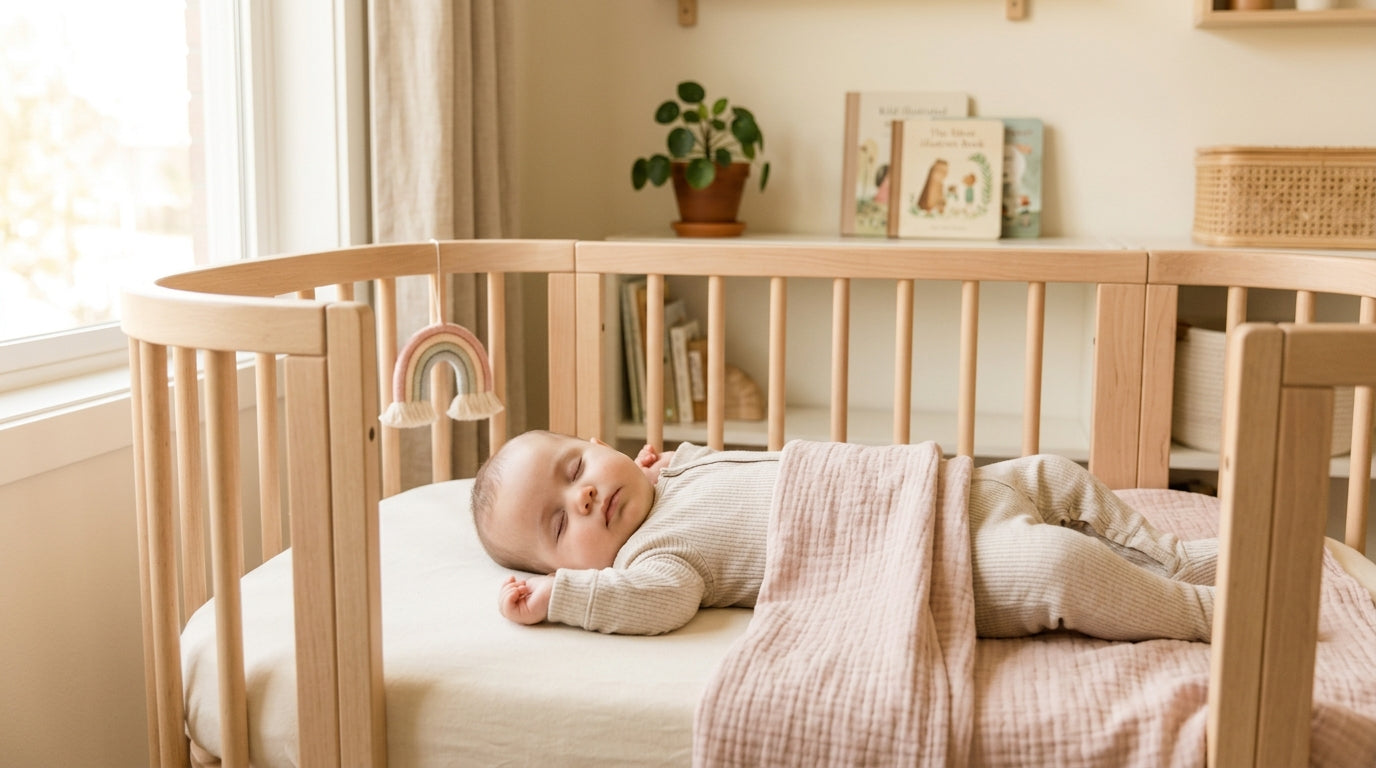
It's 3:14 AM on a Tuesday, the Portland rain is actively trying to break my windowpanes, and I'm standing in the exact center of the nursery desperately trying to remember the bridge to a 1996 Mariah Carey pop anthem. My 11-month-old son is currently outputting a sustained 85-decibel shriek into my left clavicle. The standard "Twinkle Twinkle" script is totally deprecated at this point. It stopped working somewhere around month nine, and now I'm frantically scrolling through Safari in dark mode, searching for the exact wording to a song I haven't heard since middle school.
My wife, Sarah, had mumbled something about a viral TikTok trend before pulling the duvet over her head an hour ago. Apparently, millennials are ditching nursery rhymes and just singing acoustic versions of R&B tracks to get their kids to sleep. At first, I thought she was joking, but when you're dealing with a critical system failure at 3 AM, you'll run whatever code might compile. I found the baby lyrics I was looking for, took a deep breath, and started humming.
And shockingly, it worked. The screaming dialed down to a whimper, then heavy breathing, and finally, the glorious dead-weight slump of a sleeping infant.
The terrifying structural failure of nursery rhymes
Let's just take a minute to talk about how absolutely unhinged traditional children's music is. I don't know who wrote these songs, but I've spent the last 11 months analyzing the data, and the results are grim. "Rock-a-bye Baby" is literally a story about catastrophic structural failure. A baby is placed in a tree, the wind breaks the bough, the cradle plummets to the earth, and somehow this is supposed to induce peaceful slumber? It's a sudden deceleration trauma event set to a waltz.
And don't even get me started on "Hush Little Baby." You're just bribing a child with livestock and mirrors, promising that if the mockingbird doesn't sing, you'll buy them a diamond ring. The financial implications alone are giving me anxiety. "Ring Around the Rosie" is about the bubonic plague. "London Bridge" is about a collapsing infrastructure project. I refuse to sing songs about medieval pandemics, municipal engineering failures, or falling from high altitudes to my child. It's stressful.
White noise machines are basically just static for adults who are afraid of their own thoughts, so we can skip those entirely.
So, when I stumbled onto the acoustic covers of 90s pop songs, it felt like a massive UI upgrade. You take a song about lingering romantic attachment, slow down the BPM, strip out the bass drop, and suddenly you've a perfectly harmless, soothing vocal loop. The words "you'll always be a part of me, I'm part of you indefinitely" actually map surprisingly well onto a baby's current developmental bug: object permanence. My son currently thinks that when I walk into the hallway, I cease to exist in the physical universe. Mariah is essentially just reassuring him that I'm, in fact, still rendering in the background.
Debugging the actual cause of the waking
Of course, singing an R&B classic doesn't fix the underlying hardware issue causing the night waking in the first place. I had been tracking his wake-ups in a spreadsheet for two weeks, and the timestamps were completely erratic. 1:12 AM. 3:45 AM. 11:30 PM. There was no pattern.

During a blurry doctor visit, I showed Dr. Chen my sleep charts, and she basically just waved them away, noting that his gums were swollen. A tooth was trying to breach the surface. The 2 AM screaming wasn't a sleep regression, it was localized oral pain. She suggested we focus on daytime soothing so he wouldn't be so inflamed by nighttime, and casually mentioned that when singing to a baby, my own heart rate matters more than the song itself.
That meant I needed better daytime tools to manage the teething so we could all sleep at night. I ended up ordering the Kianao Squirrel Teether, mostly because I thought the little acorn detail was funny, but it actually became my favorite piece of baby hardware we own. When a tooth is coming in, my son turns into an incredibly hostile little goblin, but this silicone ring is the one thing that calms him down. The ring shape is a mathematically perfect ergonomic handle for his tiny, uncoordinated hands. He can grip it tightly while aggressively gnawing on the squirrel's textured ears. It’s made of this 100% food-grade silicone that I usually just toss in the dishwasher with my coffee mugs. When things get really bad around 4 PM, I throw it in the fridge for ten minutes, and the cold silicone seems to temporarily patch the screaming bug.
Checking my own resting heart rate
Back to the 3 AM singing. Dr. Chen had told me that infants co-control with their caregivers, meaning if I'm holding him while my own heart rate is spiking at 115 BPM because I'm terrified he's never going to sleep again, his heart rate is going to stay high too. The science on this is incredibly fuzzy to me, but apparently, the vagus nerve acts like a Bluetooth connection between us.
So, singing the acoustic cover of always be my baby wasn't just about distracting him. It was about forcing me to take slow, rhythmic breaths. You physically can't sing a slow Mariah Carey ballad while hyperventilating. The song was a hack for my nervous system, which in turn downloaded a calming update to his nervous system. We synced.
I even downloaded a decibel meter app on my phone because I read on some forum that the AAP recommends keeping nursery audio below 50 decibels to protect their hearing. I tested my singing voice. I was clocking in at 45 dB. Perfect. Just loud enough to drown out the Portland rain, quiet enough not to fry his auditory processing centers.
The daytime scaffolding
I’ve realized that nighttime sleep is entirely dependent on how much sensory data he processes during the day. If he just sits around, he doesn't accumulate enough sleep pressure to crash at night. We use the Kianao Basic Play Gym Frame to try and tire him out. Honestly, it's just okay. It's literally just a wooden A-frame with three rings on it. Sarah loves it because it fits her "Scandinavian minimalist" aesthetic, but to me, it's just empty scaffolding. The kid mostly just stares at the bare wood until I actually tie interesting things to it, like measuring spoons or crinkly fabric.

But when he gets frustrated with the wooden gym and starts fussing, we swap out his toys. Recently I've been handing him the Handmade Wood & Silicone Teether as a backup to the squirrel. It's got these untreated beechwood rings that clack against silicone beads, which gives him some auditory feedback while he chews. It keeps him occupied for exactly 14 minutes at a time, which I've timed, and those 14 minutes allow me to drink a cup of coffee while staring blankly at the wall.
If you're stuck in a similar loop of exhausted troubleshooting, you can check out some of these daytime teething and play solutions to help build that major sleep pressure in Kianao's toy collection.
Embracing the weird new routine
We're now two weeks into the new protocol, and it has officially become a locked-in routine. I don't really understand how or why be my baby became the magic password that unlocks sleep mode, but I'm not going to question it. As an engineer, when a workaround functions perfectly, you don't touch the code. You just document it and move on.
So, our evenings now look entirely ridiculous, but highly optimized. We skip the creepy nursery rhymes entirely, turn down the dimmers to 10%, hand him his squirrel teether for a final chew session while we put on his sleep sack, and I softly hum 90s R&B until his eyes roll back into his head.
Parenthood is incredibly weird. You spend nine months preparing for this tiny human, reading all the manuals, buying all the neutral-toned organic gear, and planning to sing classical Brahms to them. Then, less than a year later, you find yourself standing in the dark, bouncing on your heels, whispering "boy don't you know you can't escape me" to a snoring baby who has a fist tightly wrapped around your thumb.
It's not the exact my baby experience I visualized, but honestly? It's better. Even if I do occasionally get the chorus stuck in my head during my morning Zoom standups.
If your nighttime debugging sessions are getting rough, upgrade your daytime soothing hardware. Explore Kianao's collection of safe, sustainable teethers to help patch those daytime bugs before they ruin your night.
My highly unscientific troubleshooting FAQ
Why do millennial pop songs work better than actual lullabies?
I'm convinced it's because we seriously know the melodies. When I try to sing standard nursery rhymes, I sound like a robot reading a script because I'm stressing about the words. When I sing a pop song I've heard 400 times in a grocery store, I genuinely relax. Dr. Chen said my relaxation lowers my heart rate, which lowers the baby's heart rate. Plus, the beats are predictable.
How loud should I genuinely be singing in the nursery?
Apparently, 50 decibels is the absolute max limit according to the pediatric guidelines I obsessively read at 4 AM. That's about the volume of a quiet conversation or a running refrigerator. You don't need to project to the back of the room; you just need to vibrate your chest a little bit while holding them. I downloaded a free decibel app just to check myself, which Sarah thought was insane, but data is data.
Does silicone really work better than plastic for teething?
Yes, and I tested this by aggressively squishing both. Plastic just feels like a hard barrier against their gums, which seems like it would hurt more when there's an actual sharp tooth underneath. The 100% food-grade silicone we use has a rubbery resistance to it. It gives way just enough. Plus, I don't have to worry about weird chemical leaching when I accidentally leave it in the sterilizer too long.
How long do I've to keep singing before I can put him down?
In my very specific, sleep-deprived tracking experience, there's a false-sleep phase that happens around minute 4. They close their eyes, but their breathing is still a little shallow. If you attempt the crib transfer then, you'll trigger an immediate system reboot and have to start over. I wait for the deep, rhythmic breathing and the "limp noodle" arm drop, which usually takes about 12 minutes of continuous humming.
Can I just play the track on my phone instead of singing?
You can, but it didn't work as well for us. There's something about the physical vibration of my chest against his head when I'm holding him that acts like a physical soothing mechanism. A phone speaker across the room just doesn't deliver that same tactile feedback, though I've absolutely used the acoustic Spotify versions as a backup when my throat was completely dry.




Share:
The Brutal, Beautiful Truth About the Always Be My Baby Phase
The late-night angela baby search and other postpartum traps