

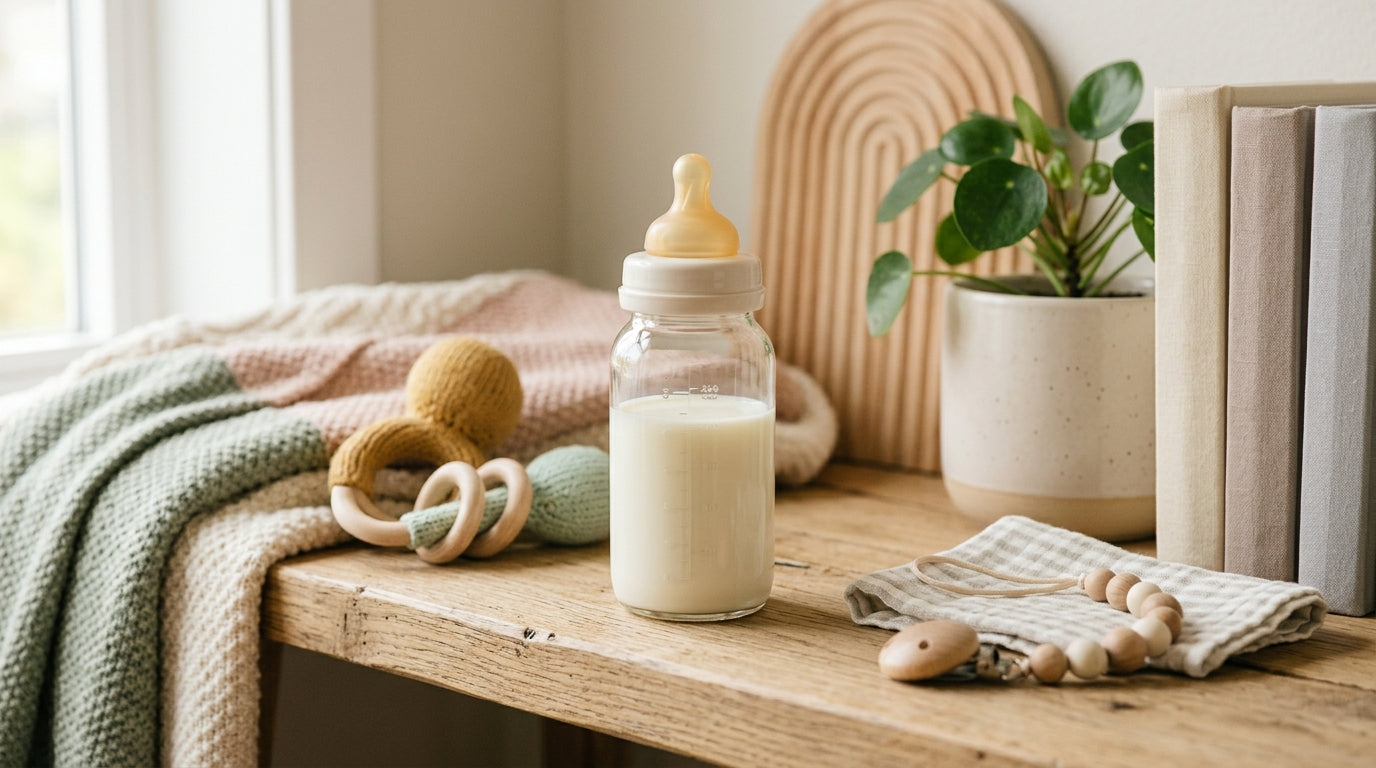
It was 2:14 in the morning with my oldest son, Wyatt, and I was sitting on the edge of the glider sobbing into a burp cloth. He was screaming like a banshee, rooting around like a little feral piglet, and I was completely, utterly empty. Pumping had yielded about a teaspoon of what looked like sad skim milk. My husband was frantically digging through the pantry trying to find a sample can of generic formula my grandma had brought over weeks ago. When you're standing in the dark with a screaming infant and a can of mystery powder, trying to figure out the best formula for breastfed babies is the absolute last thing you want to be researching on your phone.
We mixed the powder. He chugged it like a frat boy at a tailgate. Two minutes later, he projectile vomited the entire six ounces directly down the front of my only clean shirt. It smelled like pennies and old cheese.
I'm just gonna be real with you, transitioning a nursing baby to a bottle is a special kind of fresh hell if you don't know what to look for. Your kid's stomach is used to this custom-made, perfectly warm, highly digestible liquid gold, and suddenly you're tossing powdered cow milk down the hatch and wondering why they're backed up for three days. My Aunt Carol constantly texts me asking "how the new babi is taking to the bottle," and honestly, it took a lot of trial and literal error to give her a good answer. Here's everything I learned the hard way so you don't have to ruin your favorite shirts.
What my doctor actually said about cow milk
I dragged Wyatt into the doctor's office looking like a shell of a human being, convinced I had broken my child's digestive system. Our doctor, Dr. Miller, bless his heart, basically drew me a diagram on the exam table paper. He explained that breast milk and cow's milk have totally different proteins, which sounds obvious now but at 3 AM it's not something you consider.
Apparently, breast milk has this delicate balance of proteins—mostly whey, which digests super fast, and a little bit of casein, which forms curds in the stomach. Cow's milk is the exact opposite. It's packed full of casein. So if you just buy the cheapest can on the shelf, you're essentially filling your baby's stomach with heavy cheese curds, and then you're surprised when they scream. Dr. Miller told me I needed to look for formulas that artificially pump up the whey to hit a 60:40 whey-to-casein ratio, because that mimics the real stuff. He also mumbled something about lactose being the main sugar you want to see on the label instead of corn syrup, unless you want your kid bouncing off the walls and crashing later.
When they're thrashing around from gas pain, their clothes bear the brunt of the stretching and pulling. We had Wyatt in these stiff, terrible outfits that made everything worse until we finally switched to the Organic Cotton Baby Bodysuit Sleeveless Infant Onesie from Kianao. It's 95% organic cotton and 5% elastane, which means when he would arch his back in full-on formula-induced reflux mode, the suit just stretched with him instead of bunching up around his neck. Plus, it washes clean even when it gets hit with the worst blowouts, and the flat seams don't irritate that sensitive newborn skin that already seems mad at the world.
The great palm oil constipation disaster
Let me tell you about palm oil. I hate it. I despise it with the fire of a thousand suns. When we first started trying out different brands, nobody told me to read the ingredient list for palm oil or palm olein. We just bought a popular name brand, and within forty-eight hours, Wyatt’s diapers were filled with these sad, firm little rocks.

I thought it was just a normal part of the formula transition. My grandma left me a voicemail saying the "sweet little babie" just needed a teaspoon of Karo syrup mixed into his bottle to get things moving. Don't do this. I repeat, ignore the 1980s advice. It turns out, palm oil binds with the calcium in the formula and creates these literal soap-like compounds in their intestines, making the poop hard and impossible to pass. You're basically making bathroom mortar inside your child.
I spent an entire weekend doing bicycle legs with a screaming infant, massaging his stomach with warm oil, and crying in solidarity. I was so mad. Why do they even put it in there? I guess it's supposed to mimic the fat profile of breast milk, but our bodies clearly don't process it the same way. Once I threw that can in the garbage and switched to a brand that used coconut or sunflower oil instead, the problem vanished overnight. The poop went back to that mustardy, messy texture that you somehow miss when it's gone.
As for DHA and ARA, they're supposedly brain-boosting fatty acids, so grab a brand that has them if you want your kid to eventually do their own taxes.
The actual brands that didn't ruin my life
After the great constipation incident, I became an obsessive label reader. It turns out European formulas have had this figured out way longer than we've, but thankfully the US is catching up.

- Bobbie Organic: This was our holy grail for my second kid. It's basically an American formula made to European standards. It has the magic 60:40 protein ratio, no palm oil, and it actually smells okay. It doesn't foam up like a rabid dog when you shake it, either.
- Kendamil: If you want to feel fancy, this one uses whole cow's milk instead of skim milk. That means it naturally retains the milk fat globule membrane (MFGM), which is a fancy acronym my doctor says is great for their brains. It's incredibly creamy.
- Kirkland Signature ProCare: Look, I love the clean organic stuff, but I also love paying my mortgage. Costco's store brand is shockingly good. It doesn't have palm oil, it has all the right nutrients, and it costs half as much as the big name brands. If your baby has an iron stomach, start here and save your money.
If your kid has a diagnosed cow's milk protein allergy, your doctor is going to prescribe you the extensively hydrolyzed stuff that smells like crushed vitamins and old potatoes, so just plug your nose and buy it.
Through all of this bottle-feeding drama, you end up spending hours in the rocking chair. For my sanity, I needed the environment to feel cozy, not clinical. We basically lived under the Organic Cotton Baby Blanket with Squirrel Print. I'm obsessed with this blanket. It's double-layered, completely chemical-free, and the perfect weight for those late-night feeds where you're sweating but the baby is freezing. Wyatt used to run his little fingers over the squirrel pattern while he drank. It somehow survived getting washed three times a week and actually got softer. It's the one baby item I refuse to pack away in the attic.
On the flip side, we also had the Malaysian Tapir Teether Toy. It's 100% food-grade silicone and teaches wildlife conservation, which is great in theory. It's totally safe and easy to clean, but I'll be honest—my middle kid, Sadie, completely ignored it and preferred to chew on my television remote and my husband's car keys. It's a fantastic, high-quality teether if you've one of those compliant babies who seriously plays with baby toys, but don't expect it to cure teething crankiness if your kid is a little weirdo.
How to trick them into taking the bottle
You can buy the most expensive, organic, grass-fed formula on the planet, but if you just shove a cold plastic bottle into a breastfed baby's mouth, they're going to look at you like you've deeply offended their ancestors.
Stop stressing about finding the perfect bottle nipple and just warm the water to exactly body temperature while having your partner give the feed in a different room so your baby can't smell your milk. Seriously, my kids could smell me from the hallway. If I was in the house, they wanted the tap, not the bottle. My husband had to take Wyatt out to the screened-in porch with a slow-flow nipple and use paced feeding, which basically just means holding the bottle horizontal so the milk doesn't waterboard them.
Take it slow. Introduce one bottle a day. Let their little digestive tracts figure out what this new powder is before you completely cut them off the good stuff. You're doing a great job, even if it feels like you're failing right now. Fed is fed, and sanity is a requirement for motherhood, not a luxury.
If you're in the thick of the formula transition and dealing with the inevitable spit-up and extra laundry, take a breath and check out our organic baby clothes collection for durable, soft outfits that make wardrobe changes a little less miserable.
Ready to make your baby's nursery the cozy sanctuary you both deserve during these long feeding nights? Grab our organic blankets and essentials to create a safe, chemical-free environment for your little one before you tackle the FAQs below.
Questions tired parents ask at 2 AM
Is European formula seriously better than American formula?
Honestly, it depends on who you ask and how much money you want to spend. European brands like HiPP and Holle have stricter rules about certain sugars and organic farming, but brands like Bobbie and Kendamil are legally sold in the US now and meet those same high standards without the shady third-party shipping fees.
Why is my breastfed baby so gassy after starting formula?
Because their stomach is confused! Breast milk digests incredibly fast. Formula takes longer to break down. You're introducing new proteins and fats, and their gut flora has to adjust. Give it a solid two weeks before you panic and switch brands, unless they're breaking out in a rash or there's blood in their stool.
Can I mix breast milk and formula in the same bottle?
My doctor said yes, but with a warning: if you mix two ounces of your precious pumped milk with two ounces of formula, and the baby falls asleep after two ounces, you just threw your liquid gold down the drain. Feed the breast milk first, then top them off with the formula dessert.
What the heck is a partially hydrolyzed formula?
It's just the gentle stuff where the proteins are already chewed up a bit mechanically, making it easier for a sensitive stomach to digest. If standard cow's milk formula is giving your baby terrible cramps, this is usually the next step the doctor will suggest before going to the super expensive hypoallergenic options.
Do I really have to boil the water for powdered formula?
According to the official rules, yes, you're supposed to boil the water to sterilize the powder, not just the water itself. But I'm going to tell you a secret: by baby number three, I was using room temperature filtered water from the fridge dispenser, and she's currently thriving and eating dirt in the backyard. Follow your doctor's advice, especially if your baby is premature, but don't let the prep anxiety consume your life.




Share:
Stroller Shopping Destroyed My Sanity And Ruined My Spreadsheets
The Search for the Best Humidifier for Baby (Without the Mold)