

It was 3:14 AM on a Tuesday, and I was sitting in the dark nursery wearing a nursing tank that smelled strongly of sour milk and desperation. Leo, my oldest, was four months old and currently latched onto me like a tiny, aggressive barnacle. My back ached, my cold brew from the previous morning was sitting half-finished on the dresser mocking me, and I was frantically typing "when can babi eat solid food" into my phone with my non-dominant hand. My thumb kept slipping because of the lanolin, hence the typo, but I didn't care. I just needed to know when this kid could eat an actual meal so I could maybe, possibly, sleep for more than two consecutive hours.
My husband Mark was snoring gently in the other room, completely oblivious to my late-night Google spiral. I was reading conflicting advice on some sketchy forum from 2008 where people were arguing about pureed ham, and honestly, I just wanted someone to hand me a manual. Or a strong coffee. Hell, I'd have settled for a lukewarm coffee.
Anyway, the point is, the transition to solids is a massive, anxiety-inducing milestone that nobody really prepares you for. You spend months basically acting as a human dairy farm, and suddenly you're supposed to be a tiny-gourmet chef who understands the complex mechanics of a baby's digestive tract. It's wild.
The pediatrician appointment at four months
A few days after my 3 AM internet panic, we had Leo's four-month checkup. Dr. Aris walked in, checked Leo's ears, and asked how we were doing. Mark, bless his heart, immediately asked, "So, can we give him a steak yet?"
Dr. Aris laughed, but then he gave us the actual rundown. He told us that according to basically every medical group ever—the AAP, the WHO, probably the FBI—you're supposed to aim for around six months. He was super strict about not starting before four months, though. Apparently, their little digestive tracts are completely useless at processing anything other than milk or formula before then. He said their gut lining is basically too permeable or something? I don't know, I was sleep-deprived, but the takeaway was clear: no solids yet.
I felt a weird mix of relief and devastation. Relief because I didn't have to figure out how to steam a sweet potato right that second, but devastation because my dream of him eating a bowl of oatmeal and sleeping twelve hours was crushed.
Signs your kid might actually want food
Dr. Aris also told us that six months is just a guess, and babies develop on their own weird timelines. He gave me a checklist of things to look for, which I diligently wrote on a Post-it note that I immediately lost in the diaper bag. Luckily, I remembered the gist of it when Maya came along three years later.
My pediatrician said you basically need to see all of these things happen before you bust out the spoon:
- The head wobble test: Basically, they need to hold their heavy little bowling ball heads up completely unassisted for the entire time they're in the high chair. If they're bobbing around like an apple in a barrel, they aren't ready.
- Sitting like a real person: They should be able to sit up with minimal support. If you put them in a high chair and they immediately fold in half like a cheap lawn chair, hold off.
- The creepy stare: You know they're ready when they watch you eat a sandwich like a starving Victorian street urchin. Leo used to literally try to grab my morning muffin right out of my hand.
- Weight stuff: Apparently they usually double their birth weight first, which Leo did by like, week ten because he was an absolute unit.
But the biggest thing was the tongue-thrust reflex. Oh god, the tongue-thrust reflex.
I had no idea what this was until I tried to give Leo a tiny taste of mashed banana at five and a half months. I put the spoon to his lips, he opened his mouth, and then his tongue shot out like a lizard catching a fly, pushing the entire glob of banana directly onto his chin. I scooped it up, tried again. Tongue out, banana on chin. It was like a very gross, very sticky game of ping-pong.
I genuinely thought his mouth was broken. I almost called the nurse's line in a panic, but then I remembered Dr. Aris mentioning this. Babies are apparently born with a survival reflex that makes them automatically push anything solid out of their mouths so they don't choke on random debris. It usually disappears between four and six months.
Until that reflex is gone, feeding them is completely pointless. You're just smearing expensive organic vegetable puree on their face and calling it lunch. I waited two more weeks, tried the banana again, and suddenly he swallowed it. Just like that. The lizard tongue was gone. It's so weird how they just wake up one day and their neurological pathways have completely changed.
The great cereal debate and boomer advice
Right around the time we started looking for these signs, my mother-in-law texted me asking if her "sweet little babie" was eating rice cereal yet. My aunt Linda also cornered me at a family barbecue and told me I needed to put a scoop of cereal directly into Leo's bedtime bottle so he would sleep through the night.

I brought this up to Dr. Aris, and he looked at me like I had suggested giving the baby a shot of espresso. He told me absolutely never to put cereal in a bottle unless he specifically prescribed it for severe reflux. Apparently, it's a huge choking hazard and it completely messes up their ability to realize they're full, which just leads to massive tummy aches and excessive weight gain.
Plus, the CDC apparently put out a warning about rice cereal having trace amounts of arsenic in it? Which is terrifying. Dr. Aris suggested we skip the rice entirely and go for oat or barley cereal if we wanted to do grains, but he also said we didn't even have to start with cereal at all.
What we fed them first
Honestly, what you give them first doesn't matter much—we did mashed avocado for Leo and pureed beef for Maya, just pick something mushy and iron-rich.
Gear that saved my kitchen floor
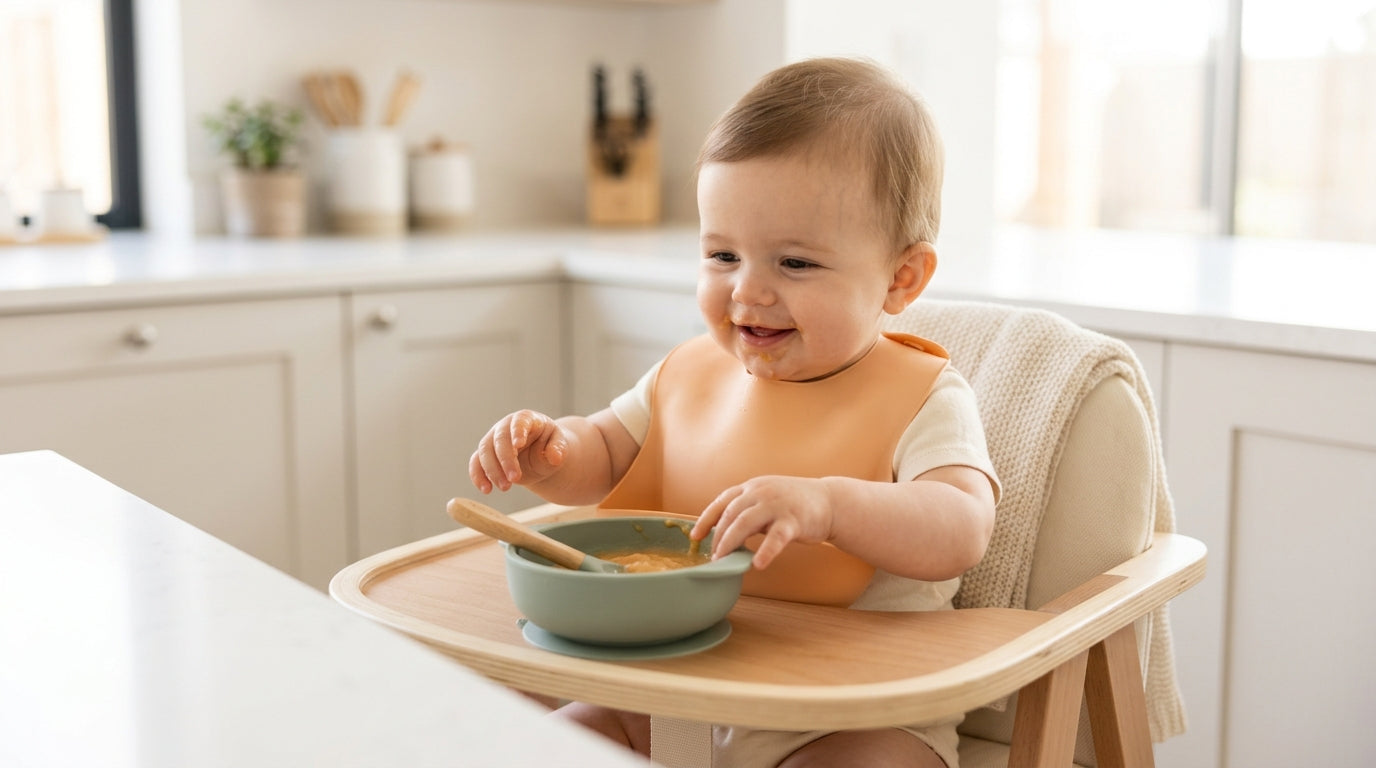
Once we actually started the feeding process, I realized my house was woefully unprepared for the sheer volume of mess. Babies are basically tiny chaos engines, and when you hand them a fistful of spaghetti squash, they view it as finger paint, not nutrition. I bought so much useless plastic crap from big box stores before I finally found things that actually worked.

If you're spiraling about your kitchen looking like a disaster zone, you might want to browse Kianao's feeding collection before you make the same mistakes I did.
The absolute holy grail of my kitchen was the Baby Silicone Plate | Bear-Shaped & Suction Base. I'm not exaggerating when I say this plate saved my sanity. Leo went through a phase where his favorite game was "throw the plate at the dog." He thought it was hilarious. I was losing my mind scrubbing marinara sauce out of the grout. The suction on this bear plate is ridiculously strong. Mark really stuck it to the side of our fridge once just to see if it would hold, and it stayed there for three days. Plus, the little bear ears are perfect for separating a scoop of yogurt from a pile of peas, because heaven forbid the foods touch.
Then there was the Silicone Baby Spoon and Fork Set. When Maya was around eight months old, she absolutely refused to let me feed her. She would clamp her mouth shut and glare at me until I handed over the spoon. Regular metal spoons were too hard on her gums, and the plastic ones we had were too long and awkward for her little hands. These silicone ones are chubby and short, so she could really grip them. She mostly just used them to hammer mashed potatoes into her high chair tray, but hey, she was developing her fine motor skills, right?
I also grabbed their Waterproof Silicone Baby Bib. Look, I'll be totally honest here—it's a good bib. It caught about 80% of the food that missed Maya's mouth, and washing it in the sink was way better than doing three loads of laundry a day. But by the time she was nine months old, she figured out how to yank the neck fastener open if she was mad about her lunch. So, it's great for the early months, but once they hit that weird toddler-strength phase, they might rip it off. Still better than ruining all their cute onesies, though.
The allergy panic attack
My absolute least favorite part of starting solids was the allergy stuff. When I was a kid, parents were told to hide peanuts and eggs from babies until they were basically in preschool. But Dr. Aris told us the science had totally flipped. My pediatrician claimed that early allergen introduction somehow teaches their immune system not to freak out, so we were seriously supposed to give them common allergens right away.
He told us to water down a tiny bit of peanut butter and spoon-feed it to Leo. I was terrified. I literally packed the diaper bag, drove to the hospital, and fed Leo his first taste of peanut butter in the front seat of my car while parked right outside the emergency room doors. Mark thought I was a lunatic, but I needed to know I was thirty seconds away from a doctor if his face swelled up.
He was fine. He just smacked his lips and demanded more. We followed the 3-to-5 day rule, though. You introduce one new food, wait three to five days to see if they get a rash or weird diarrhea, and then introduce the next one. It makes the process incredibly slow, but it's much easier to figure out what's causing a reaction if you aren't feeding them an omelet, strawberry, and peanut butter smoothie all at once.
A note on gag reflexes
I can't talk about starting solids without mentioning the gagging. Oh god, the gagging. It takes years off your life.
The first time Maya gagged on a piece of steamed carrot, my heart stopped. I dropped my coffee mug on the floor and was halfway to giving her infant Heimlich before Mark grabbed my shoulder. She coughed, spit the carrot out, and laughed.
Dr. Aris had warned me about this, but seeing it's totally different. A baby's gag reflex is way further forward in their mouth than an adult's. It's a safety mechanism to prevent them from choking. Gagging is loud, red-faced, and dramatic. Choking is completely silent. If they're coughing and making noise, they're handling it. You just have to sit there, digging your fingernails into your palms, and let them work it out.
It's terrifying, messy, and exhausting. You'll spend an ungodly amount of time steaming vegetables that will ultimately end up smeared in their hair. But one day, you'll be sitting at a restaurant, and you'll hand them a french fry, and they'll just eat it. No fanfare, no pureeing, no screaming. And it's glorious.
Anyway, if you're about to start this messy chapter, grab a suction plate and some deep breaths, because you're gonna need both.
Frequently Asked Questions About Feeding Babies
How do I know if my baby is honestly ready for solids?
Honestly, you just have to watch them like a hawk. If they're around six months, can sit up in their high chair without slouching over, can hold their head steady, and have stopped thrusting their tongue out every time you put a spoon near their mouth, they're probably ready. Oh, and if they start aggressively staring at your dinner, that's a huge clue.
Can I start solids at 4 months if they seem hungry?
My pediatrician was super firm about this—don't rush it. Their little guts just aren't ready before four months at the absolute minimum. Even if they're waking up a lot at night, shoving cereal in them won't magically make them sleep. Wait until they hit the milestones, usually closer to six months. Just drink more coffee to survive the nights, I promise it's safer.
What if my baby hates everything I feed them?
Then you've a completely normal baby! Leo spat out peas for a solid month before he decided they were acceptable. Dr. Aris told me it can take up to ten tries for a baby to genuinely like a new flavor. Don't force it. If they turn their head away or get mad, just clean them up and try again tomorrow. They get most of their nutrition from breastmilk or formula for the first year anyway, so just view it as messy sensory play.
Is gagging normal or am I doing it wrong?
It's so normal, and it's also the worst thing to watch. Their gag reflex is super far forward to protect them. If they're red, coughing, and making noise, they're gagging and figuring it out. Let them work through it. But if they're silent, turning blue, or looking panicked, that's choking and you need to intervene immediately. Take an infant CPR class, it really helps with the anxiety.
When can I give my baby water?
Once you start solids around six months, you can introduce a little bit of water in an open cup or a straw cup. Just a few ounces a day, mostly to help them practice swallowing and wash down the thick purees. Don't give them juice, though. It's basically just sugar water and ruins their tiny new teeth. Stick to breastmilk, formula, and tiny sips of tap water.




Share:
When Can Babies Have Juice: The 3 AM Apple Juice Disaster
Exactly When Can Babies Eat Food According To A Tired ER Nurse