

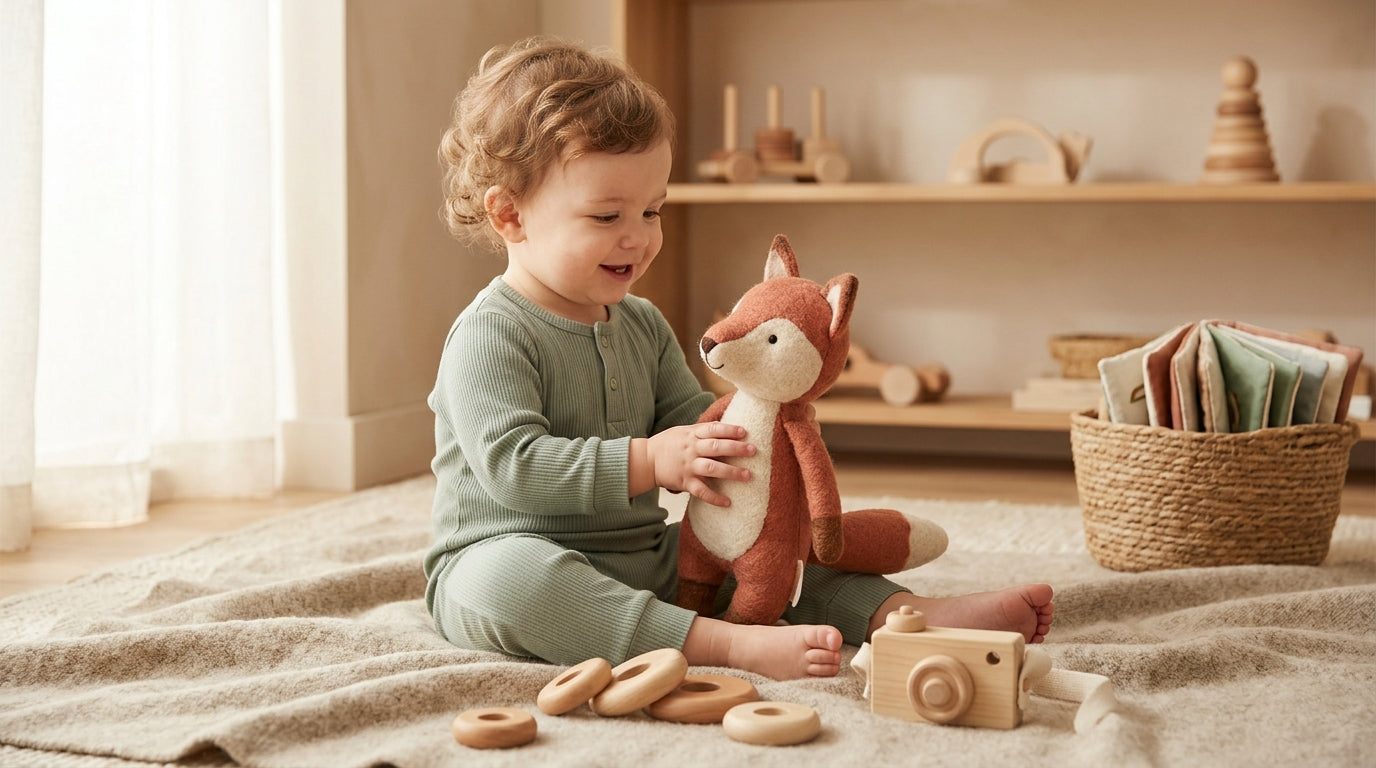
My left hand is currently clamped around the collar of a toddler who's vibrating with the intense, terrifying desire to strangle a squirrel with pure love. We're in St. James’s Park, it's raining, and I'm actively disproving the greatest myth ever sold to modern parents: the idea that children possess an innate, gentle communion with the natural world.
I don't know who started this rumor. I suspect it was the picture book industry, or perhaps a conglomerate of well-meaning grandparents who selectively edited their memories of the 1990s. We're fed this narrative that if you expose a young child to a furry woodland creature, a magical Disney-esque moment of peaceful coexistence will occur. The reality is that my two-year-old twins view any living creature smaller than a spaniel as a squeaky toy that just needs a good, aggressive squeezing.
I once read a parenting blog that suggested nature walks are a calming sensory experience for the whole family, which is fundamentally hilarious if you've ever had to pry a handful of goose feathers out of a screaming child's fist while apologizing profusely to a highly aggressive bird.
Because the truth is, children don't want to observe nature. They want to capture it, crush it to their chests, and carry it around in their pockets until it stops moving.
The great biological hijacking of my living room
When I finally got them back to the flat and bribed them with half a banana each, I started looking into why they act like this. The bloke I saw at the NHS walk-in centre (after Twin A tried to aggressively cuddle a rather sharp stick she thought was a worm) vaguely mentioned something about our brains being hijacked by big eyes and chubby cheeks.
Apparently, some Austrian researcher named Konrad Lorenz figured this out back in the forties. He called it the "baby schema" — this specific blueprint of physical traits like a massive head, a high forehead, and round cheeks. It's basically an evolutionary trick. According to some frantic late-night reading I did while one of the girls was refusing to sleep, seeing an adorable young creature sets off a massive fireworks display of dopamine in the orbitofrontal cortex. The brain's reward center basically short-circuits, screaming at us to nurture the thing before it dies of exposure.
And somewhere along the line, the people at the University of Lincoln apparently figured out that this urge is hardwired into kids by the time they hit three years old. But here’s what the academics leave out: a toddler’s version of "nurturing" involves putting things in their mouths, sitting on them, or throwing them down the stairs to see if they bounce.
Why my kids are banned from the local petting zoo
You’d think knowing the science would help, but it doesn't do you much good when you’re standing in a muddy field surrounded by highly suspicious sheep. Last autumn, in a moment of big weakness and sleep deprivation, I took them to a local petting farm. I had this vision of them gently patting a newborn lamb while I took a photograph that would finally justify the amount of money I spend on their winter coats.

It was a bloodbath of boundaries. Within four minutes, Twin B had tried to ride a goat, Twin A was attempting to feed a perfectly good dummy to a donkey, and I was covered in what I can only pray was mud. The sheer, terrifying speed of a toddler who has spotted an infant farm animal is something that can't be adequately described; it can only be survived.
The wildlife rehabilitators will tell you to enforce a strict "look but don't touch" rule to protect the animals from human interference and the humans from zoonotic diseases, but trying to enforce that rule with a two-year-old is like trying to reason with a drunk hooligan outside a pub at closing time.
If you're desperately looking for a way to satisfy this instinct without actual property damage, I highly suggest looking into Kianao's wooden baby gyms before your living room turns into a chaotic menagerie.
Faking it with sustainable textiles
Eventually, I realized that introducing them to actual, breathing wildlife was taking years off my life. So we pivoted to incredibly realistic pretend play. If their orbitofrontal cortex just wants to see big eyes and round heads, I figured I could trick it with carefully selected merchandise.
This is where the Wild Jungle Play Gym Set with Safari Animals completely saved my sanity when they were a bit younger. Unlike those plastic, battery-operated monstrosities that flash primary colors and play a distorted, tinny version of "Old MacDonald" until you want to throw them out the window, this thing is just... quiet. It's a wooden A-frame with crocheted animals hanging from it. A little lion, an elephant, a giraffe.
And it worked. It actually worked. They would lie there on their backs, absolutely mesmerized by the oversized heads of the crocheted safari animals. It hit all those biological "cute" triggers without the risk of anyone contracting rabies. The wood feels lovely and smooth, and the crochet gives them something textured to grab onto when the urge to strangle something cute inevitably rises up in them. I specifically remember managing to drink an entire cup of tea while it was still hot because Twin B was deeply involved in a staring contest with the wooden palm tree. It remains one of my most cherished parenting memories.
On the flip side, my attempt to introduce them to conservation via dental care was slightly less magical. I bought the Malaysian Tapir Teether because I loved the idea of supporting endangered species awareness, and it’s made of medical-grade silicone without any of the terrifying phthalates you read about at 2 am. It’s a very noble product. However, Twin A used it almost exclusively as a blunt instrument to thwack her sister on the forehead, and Twin B just gnawed on its snout for three minutes before throwing it into the washing machine. It cleans up nicely, at least, but I don't think they fully grasped the plight of the Malaysian tapir.
Humiliating animal facts I learned from the telly
Because we spend so much time avoiding real animals, we watch an absurd amount of nature documentaries. I sit there on the sofa, covered in crushed rice cakes, watching these infant creatures on the screen achieve miraculous feats of survival while my children struggle to use a spoon.

For instance, I recently learned that a baby elephant, which weighs roughly the same as a grand piano when it pops out, can stand up and walk within a few hours of birth. A few hours. It took my twins fourteen agonizing months to take a single step without face-planting into the skirting board, and they weigh less than a sack of potatoes.
Then there are piglets. Apparently, a piglet can learn and respond to its own name by the time it's two weeks old. My daughters are two years old and still occasionally answer to the dog’s name if I shout it loudly enough near the biscuit tin.
And don't even get me started on baby giraffes, which are apparently capable of sprinting alongside their herd just ten hours after being born. If I tried to make my toddlers sprint ten hours after they wake up, someone would call social services.
The rules of engagement out in the wild
If you absolutely must take them out of the house to see breathing creatures, you sort of have to accept that everything you do will be an exercise in damage limitation. We went to a beach holiday once, and some extremely stern coastal warden shouted at me because I hadn't realized that using a phone torch near the shoreline confuses the hatching sea turtles and sends them walking toward the car park instead of the ocean.
So rather than delivering a lecture on the fragile ecosystem to a child who's currently eating sand, you just have to grab them by the waterproofs, shove your hands firmly into your own pockets, drag everyone to an AZA-accredited facility where the glass is thick enough to withstand a toddler's fists, and loudly point out that the animals are sleeping even when they're visibly sprinting across the enclosure.
We do a lot of swaddling to restrict their movement. Well, we used to. Now I just wrap them tightly in the Organic Cotton Baby Blanket Playful Penguin Adventure Design when we're in the pram. It’s GOTS-certified organic, which means it doesn't have any of the weird flame retardants that smell like a chemistry set, and it’s big enough to act as a straightjacket when we pass a flock of pigeons. The black and yellow penguins distract them just long enough for me to push the pram to safety.
The truth is, they'll grow out of it. Or so my doctor claims, though she also said the teething would be over by 18 months, which was a spectacular lie. Until then, we'll observe nature from a very safe distance, preferably through a screen, or in the form of high-quality wooden replicas.
Do yourself a favor and browse the full Kianao organic collection to set up a safe, indestructible nursery before your next wildlife disaster strikes.
Parenting and wildlife survival FAQs
Why does my toddler aggressively squeeze the cat?
Because their brains are physically wired to find the cat so cute that they short-circuit and express love through mild violence. It's that orbitofrontal cortex dopamine rush I mentioned. They literally don't know what to do with the emotion, so they just squeeze. Keep the cat in a high place.
Is it okay to let my kid pet the wild ducks at the park?
Absolutely not. Aside from the fact that human interaction stresses the absolute life out of wild birds, your kid will definitely end up covered in pond water, bird droppings, or worse. The rehabilitators say touching wildlife can cause maternal abandonment, but mostly, I just don't want to deal with the mud in my car.
How can I teach them about animals without leaving the house?
Documentaries are brilliant, but honestly, having well-designed toys that look like actual animals helps a lot. We relied heavily on our wooden safari gym. The tactile feedback of the wood and crochet seemed to satisfy that weird biological urge they've to grab and hold small creatures.
Are those organic cotton blankets actually worth the extra money?
In my sleep-deprived opinion, yes. The penguin one we've is massive, holds up to being washed 400 times a week, and doesn't feel like it's woven out of recycled plastic bags. Plus, having a bold, high-contrast print gives the kids something to stare at when you're desperately trying to distract them from a stray dog.
My kid is obsessed with baby animals but terrified of real ones. Is this normal?
It's the most normal thing in the world. Twin B will scream with delight at a picture of a cow in a book, but when we met an actual cow in a field, she burst into tears and hid behind my legs for twenty minutes. Real animals smell weird, move unpredictably, and are generally massive compared to a toddler. Stick to the books and the wooden toys until they're old enough to outrun a goat.




Share:
Why the Days of Our Lives Tate's Baby Drama Sent Me Spiraling
The Truth About Baby Shower Game Prizes: What Guests Truly Want