

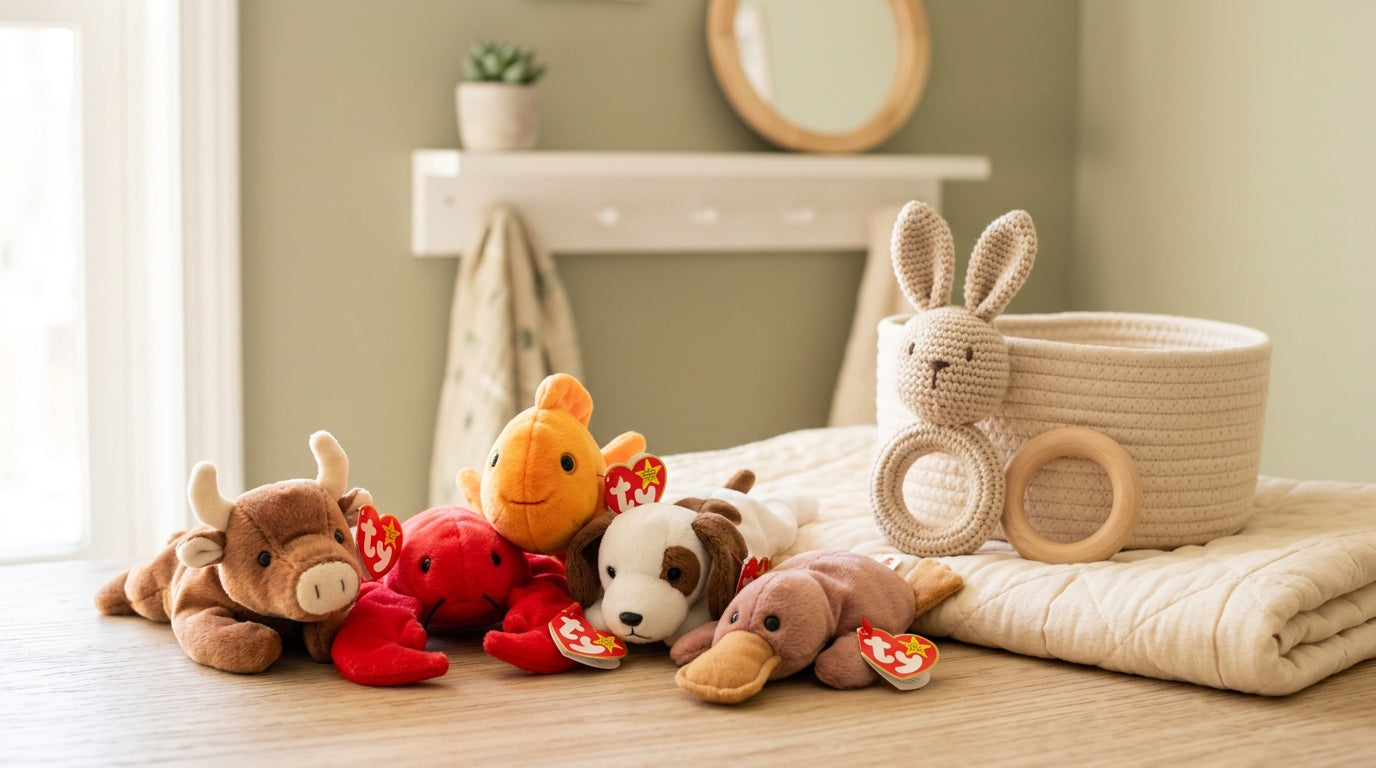
I'm sitting on the freezing concrete floor of my parents' garage in the Chicago suburbs, staring at three massive plastic tubs filled with Princess Diana bears and tie-dye lobsters. My mom is standing over me, casually mentioning that this plastic bin is going to pay for my toddler's college tuition. It's the ultimate millennial lie. We all thought those little bean-filled animals were our retirement plan.
Every parent my age seems to be having this exact conversation right now. We're digging through our childhood closets, blowing the dust off heart-shaped tags, and wondering if we're sitting on a goldmine. The reality is usually just a lot of sneezes and a heavy dose of disappointment.
Why your retirement plan is stuffed with plastic pellets
The delusion out there's truly staggering. You log online and see someone asking ten thousand dollars for a purple bear because the tag has a typo on it. People genuinely believe that because someone typed a ridiculous number into an active listing, that number is gospel. It creates this mass hysteria where perfectly rational adults start storing plush toys in fireproof safes like they're state secrets.
I've heard every excuse for why a particular collection is special. The fabric is slightly darker. The star on the tag is off-center. It was manufactured in Indonesia instead of China. We cling to these minor manufacturing defects because admitting that we spent our entire allowance in 1997 on worthless bags of plastic beans is a tough pill to swallow.
The truth is that the market was flooded by the late nineties. Everyone was hoarding them, which means nobody threw them away, which means they're not rare at all. I see parents on forums stressing over the perfect temperature to store a plush crab as if they're preserving a historical artifact.
To find out what your vintage toys are actually worth, just filter an auction site by sold listings and accept that your prized collection might buy you a mediocre cup of coffee.
What a nurse sees when looking at vintage manufacturing
Listen, when I worked pediatric triage, we treated baby care like a chaotic game of risk management. You look at everything in a room and calculate exactly how a toddler is going to try to off themselves with it. When I look at a vintage beanie baby, I don't see a valuable collectible. I see a choking hazard wrapped in a respiratory infection.
Those hard little black button eyes are a disaster waiting to happen. The thread holding them on is older than most of the medical residents I used to work with. I've seen a thousand of these foreign body cases. A teething infant gets their jaws on that plastic eye, the brittle twenty-year-old thread snaps, and suddenly you're spending your Tuesday night in the emergency room waiting for an x-ray.
Then there's the stuffing. They're filled with tiny polyvinyl chloride pellets. My pediatrician told me the plastics used back in the nineties probably degrade over time in ways we don't fully understand, maybe leaking phthalates or other endocrine disruptors whenever a kid sucks on a wet seam. Nobody knows the exact science of what happens when a baby ingests twenty-five-year-old PVC, but my guess is that it's not doing their cellular development any favors.
Finding things they can actually chew on
If your kid needs something to gnaw on, leave the vintage toys in the garage. When my son was cutting his first molars, he was an absolute nightmare. I was running on maybe three hours of sleep and desperate for anything that would stop the crying.

I ended up getting the Malaysian Tapir Teether Toy Silicone BPA-Free Educational Baby Gum Soother. It's honestly my favorite thing we own because it doesn't look like neon plastic trash and it actually works. It's a solid piece of food-grade silicone shaped like a little tapir. The best part is that the ears and the little heart cutout perfectly reach those inflamed back gums.
There are no seams to rip open and no hard plastic eyes to swallow. I can just throw it in the dishwasher when it gets covered in that weird mix of drool and whatever cracker he just ate. It gives me peace of mind, which is basically the only currency I care about these days.
The respiratory nightmare in your attic
Even if the toy is perfectly intact, you've to think about where it has been living. Most of these collections have been sitting in damp basements, humid attics, or dusty closets for over two decades. Taking a porous fabric object that has been marinating in a garage for twenty-five years and handing it to a newborn is just asking for trouble.
My pediatrician mentioned that old stuffed animals are basically luxury condos for dust mites and mold spores. A lot of the unexplained rashes and chronic runny noses we see in toddlers come down to environmental allergens. You really can't wash these vintage toys properly without destroying the cardboard tags or melting the pellets inside, which means they're never honestly clean.
I was browsing some e baby aesthetic page the other night and saw an influencer decorating a nursery with all her old nineties plushies. It looked cute for the photos, but all I could think about was the sheer volume of dust mites hovering right over the crib.
If you want to surround your kid with safe things, check out Kianao's collection of modern, washable baby gear and organic nursery essentials instead of relying on dusty nostalgia.
Toys that handle the reality of toddlers
When you're buying things for your kid, you've to assume everything is going to end up in their mouth, covered in yogurt, and thrown across the room. That's just the baseline.

We have the Gentle Baby Building Block Set. They're fine. They do exactly what they're supposed to do, which is give me five uninterrupted minutes to drink a cup of tea while my toddler stacks them up and knocks them down. They're made of a soft rubber that doesn't hurt when I inevitably step on one in the dark.
The main reason I tolerate them is that I can toss them in the sink with some soapy water and they're completely clean in two minutes. You can't do that with a vintage plush toy filled with degrading plastic beans.
Letting go of the nostalgia guilt
There's a weird pressure on millennial parents to recreate our own childhoods for our kids. We want them to love the things we loved. But forcing a dusty, potentially toxic toy on your kid just because you've fond memories of buying it at a mall kiosk in 1998 is not really about them. It's about you.
Beta, you've to let the past go. Your kid doesn't care about the perceived monetary worth of a plush bear. They just want something to hold that feels nice and doesn't make them sneeze.
I much prefer setting up a play space with intentional, natural materials. We use the Wooden Baby Gym | Wild Western Set with Horse & Buffalo in our living room. It has these beautiful wooden and crocheted elements hanging from it. The wooden buffalo is solid, the crochet horse is soft, and there are absolutely zero plastic eyes waiting to pop off and block an airway.
It looks beautiful, it's entirely safe, and it honors the reality of how babies honestly play. Throw out the dusty storage bins and wash the modern organic toys instead of turning your nursery into a museum for your own childhood.
Explore Kianao's full range of sustainable wooden play gyms and organic cotton blankets to create a space that's safe for your baby today, not stuck in the nineties.
Questions I hear constantly about this
Can I just wash my old collection to make it safe?
Listen, throwing a twenty-five-year-old stuffed animal in the washing machine is basically a science experiment. The hot water can melt the PVC pellets inside into a toxic clump, and the fabric is so old that the seams will probably give out. Even if it survives the spin cycle, the interior will likely never dry completely, which means you're just swapping dust mites for mildew. It's really not worth the risk.
What if the tag on my bear has a rare printing error?
I hate to break it to you yaar, but a typo on a piece of cardboard doesn't magically turn a mass-produced toy into a mortgage payment. During the height of the craze, the factories were churning out millions of these things a day. Typos were incredibly common because quality control was basically non-existent. Unless you find a very specific collector who cares about a misspelled word, it's just a piece of trivia, not a financial asset.
Are the beans inside really that dangerous for a baby?
I've pulled enough random household objects out of toddlers in the ER to know that a bag of tiny, slippery plastic pellets is my worst nightmare. If the seam rips, a baby can inhale those pellets in seconds. Beyond the immediate choking hazard, the plastics from that era often contained chemicals that modern regulations strictly ban from baby products. You don't want those anywhere near a teething mouth.
At what age is it safe to give them a vintage plush toy?
My pediatrician said kids under three shouldn't have toys with small hard parts like button eyes at all. But honestly, given the degrading plastics and the allergen buildup, I wouldn't give a vintage nineties toy to a kid of any age to sleep with. If you absolutely must keep one for sentimental reasons, put it on a high shelf out of reach where it can just be decorative.
Why do people list them for thousands of dollars online if they aren't worth anything?
It's mostly just stubborn delusion. Anyone can list an item on an auction site for any price they want. Some people see an article about a rare prototype selling for a lot of money and assume their mass-market version is exactly the same. Others just list them high hoping to catch an uneducated buyer. Just because someone is asking for a ridiculous amount of money doesn't mean anyone is seriously writing that check.




Share:
Dear Past Tom: The Great Beanie Baby Birthday Calendar Incident
The Honest Mom Guide to Bella Baby Photography in the Hospital