

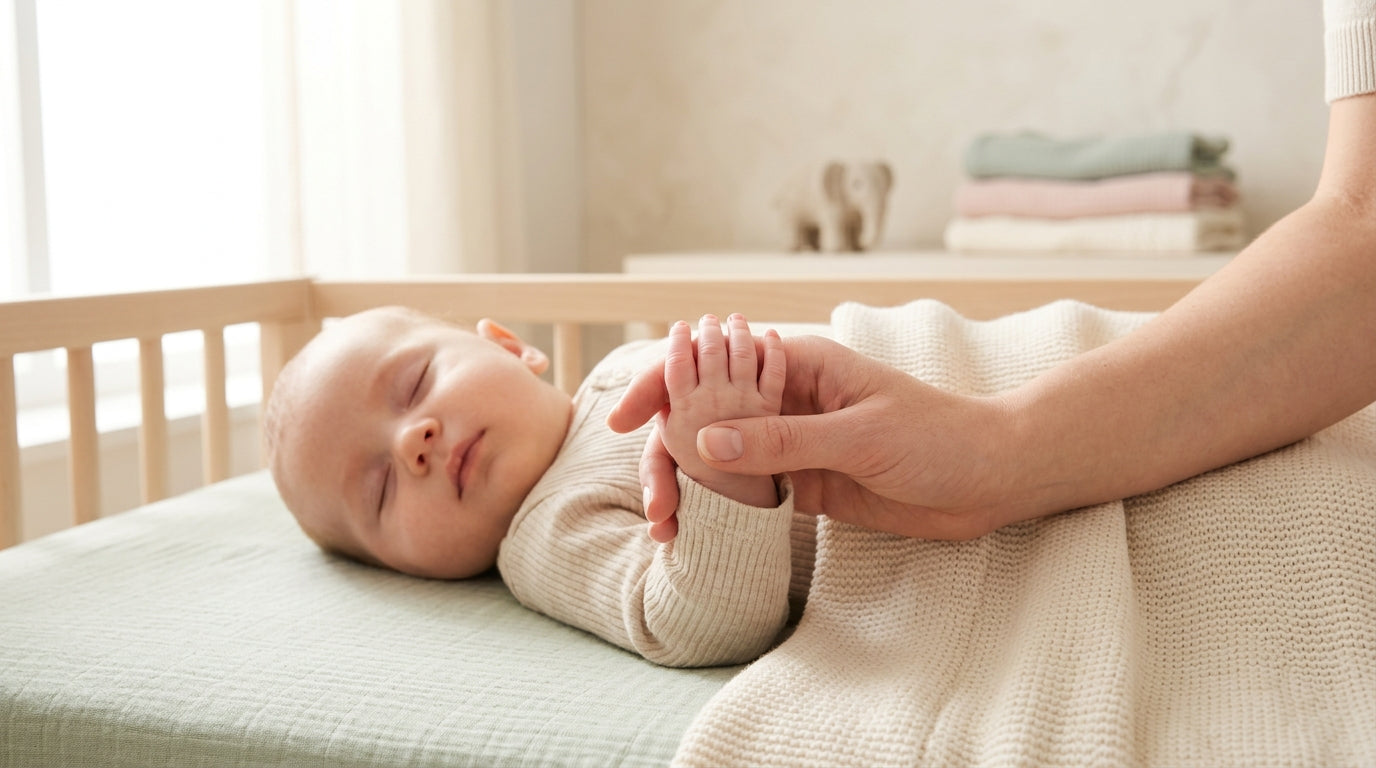
I was standing right in the middle of the produce section at H-E-B with my oldest, violently rubbing his tiny, ice-cold purple hands between my own, completely convinced I had somehow given my two-week-old frostbite in South Texas in late September. I panicked and layered three thick receiving blankets over his car seat right there by the avocados, which my pediatrician later gently informed me was exactly the wrong thing to do for a newborn. If there's one specific thing that will send a new mom spiraling into a 3 AM internet panic, it's a baby hand.
My mom and my grandma always told me that if a baby has cold hands, they're freezing to death and need immediate mittens and a quilt, bless their hearts. But when you actually follow that old-school advice, you end up with a sweaty, dangerously overheated infant. I'm just gonna be real with you, learning how to decode what my babies' hands were actually telling me took three whole kids to figure out, and I made a lot of really dumb mistakes along the way.
That ice-cold purple fist panic
For the first few months with my oldest, I spent half my day touching his little hands and freaking out because they felt like ice cubes and looked exactly like those creepy little purple rubber baby hands you buy at a joke shop. He just kept them clenched tight up by his face, looking like a tiny, freezing boxer.
When I finally broke down and asked the pediatrician if my kid had a heart defect, she basically told me that newborn circulatory systems are just kind of trash for the first few months. From what I understand of her explanation, their little bodies are working so hard just keeping the heart and brain running that they don't really bother sending warm blood all the way out to the extremities. So the blueish-purple tint on their hands and feet is totally normal, even if it looks terrifying, provided their lips and chest aren't turning blue too.
Instead of burying your kid under a mountain of fleece blankets or wrestling them into those useless little scratch mittens that just fall off anyway, just shove your warm hand down the back of their onesie to check their neck or their chest to see if their core is warm. If their chest feels warm and dry, they're perfectly fine, no matter how cold their fingers are, and over-bundling them to fix cold hands is actually a huge SIDS risk.
How to defeat the newborn death grip
I don't know if you've experienced this yet, but a newborn baby hand possesses the grip strength of a grown man, especially when they manage to get their little fingers tangled up in your postpartum hair. My second baby used to lock onto my hair right at the nape of my neck while I was nursing her, and it hurt so bad I'd literally be in tears trying to get her to let go.

For the longest time, I'd try to pry her fingers open one by one, which is terrifying because their bones feel like fragile little bird twigs and you're so scared you're going to snap one. A physical therapist mom I met at the park finally took pity on me and taught me the greatest trick of my life. If you just take their tiny fist and gently bend their wrist downward toward their inner arm, the tendons in the back of their hand naturally pull tight and force their fingers to spring open on their own, completely saving you from having to pry anything apart.
That weird cheesy smell between their fingers
We need to talk about the smell, because nobody warns you that a beautiful, innocent baby can smell like old sour milk and feet. Because newborns keep their hands clenched in tight fists all the time, they trap an ungodly amount of weird gray lint, dead skin, and dried spit-up right in the creases of their palms.
I learned this the hard way with my firstborn when I didn't realize I was supposed to be meticulously drying between his fingers after bath time. I'd just sort of rub a towel over him and put his pajamas on, and one day I opened his fist to find this angry, bright red fungal rash blooming in the skin folds because the trapped moisture had just sat there festering. Now I take a warm, damp washcloth every single morning and wipe out the palm of the baby hand, and then I make absolutely sure to dry every single crevice completely.
And please, if your mother-in-law tries to squirt harsh alcohol hand sanitizer onto your three-month-old's hands at a restaurant, you've my full permission to swat it away. Those tiny hands go straight into their mouths five seconds later, and their skin is way too delicate for that stuff anyway. Warm water and mild soap are literally all you need.
When they try to eat their own thumbs
Right around three or four months, it’s like a lightbulb goes off and they suddenly realize these two flailing appendages genuinely belong to them, and their immediate response is to try and swallow them whole.

When my youngest started viciously chewing on his own fists, leaving his knuckles red and chapped, I thought he was starving. I was cluster feeding him around the clock until I was exhausted and touched out, but it turns out he was just starting the early phases of teething and using his hands to soothe his sore gums. If you're currently in the thick of the drool-soaked, fist-eating phase, you really ought to look at getting some safe teething gear before they chew their own skin raw.
I'm just gonna be real with you, baby stuff adds up fast and you don't need a million toys, but you do need one really good teether. I absolutely swear by the Bear Teething Rattle. Honestly, this thing saved my sanity while I was trying to pack up Etsy orders at the kitchen table. The natural beechwood ring is hard enough to honestly give them relief when those gums are throbbing, but the crochet bear part gives them a softer texture to gnaw on when they want it. It's 100% cotton yarn so I don't freak out about him sucking on it, and it doesn't look like a garish piece of plastic trash sitting on my living room rug.
I also tried the Squirrel Silicone Teether, and I'll be honest, it's just okay for us. It’s a perfectly fine silicone ring, and the mint color is cute, but my youngest just kind of looked at it and then threw it at the dog. Every baby is different, though, so yours might love the squishy silicone texture more than the wood.
Graduating to the grab-and-smash phase
By the time they hit six months, those hands transition from being terrifying little mysteries to actual tools of destruction. They go from just batting wildly at the air to really coordinating their hand and eye movements to grab your coffee mug, your earrings, and the dog's tail.
I spent way too much money on my first kid buying those obnoxious, loud, battery-operated plastic play centers that overstimulated him to the point of a meltdown. With my third, I wised up and kept it stupid simple. The Fishs Wooden Play Gym is pretty much the only thing you need for this developmental window. When they lay under it and practice reaching for those hanging wooden rings, they're building the exact fine motor skills they need without aggressive flashing lights screaming at them. Plus, the price point is reasonable, and you can adjust the height of the rings as their arms get longer.
Watching your baby's hands evolve from those tightly clenched, wrinkly little newborn fists into capable little hands that can reach out and grab your finger is one of the wildest things about motherhood. It happens so fast that one day you're worrying about them scratching their own corneas out, and the next day they're using a pincer grasp to pick a single Cheerio off the floor that you missed while sweeping.
Before you dive into the internet rabbit hole trying to figure out if your baby's hand movements are normal, browse our full collection of sustainable, mom-approved baby essentials that really make this chaotic season a little bit easier.
My Messy, Real-Life FAQ
Why are my baby's hands always cold?
Because their circulation is basically under construction. My pediatrician explained that their little bodies prioritize keeping the heart, brain, and lungs warm, so the hands and feet get left out in the cold. Don't put mittens on them indoors or layer them in blankets just because their fingers feel like ice. If the back of their neck or their chest feels warm to the touch, your baby is perfectly fine.
How do I safely cut those razor-sharp baby nails?
With a lot of prayer and sweat, honestly. Those things are like tiny little daggers that grow back every three days. I gave up on traditional baby clippers after I accidentally nicked my oldest's finger and cried for an hour. Now I only use an electric baby nail file that gently grinds them down, and I highly suggest only doing it while they're deeply asleep in their car seat or crib so they can't jerk their hand away.
Is it normal for my baby to aggressively chew their fists?
Yeah, and it usually means one of two things. For the first couple of months, it's almost always a hunger cue, so get the milk ready. But once they hit around three or four months, it’s usually them discovering their hands for the first time, self-soothing, or trying to relieve the pressure of early teething. Just keep their hands clean and offer them a safe wooden or silicone teether to chew on instead.
What's that weird smell in my baby's hands?
It's a gross combination of dead skin cells, clothing lint, sweat, and spit-up that gets trapped in the deep creases of their clenched fists. If you don't clean it out and dry it thoroughly, it can really turn into a nasty fungal yeast infection. Just wipe their palms out gently with a damp washcloth during bath time and make sure you dry completely between every single finger.
Why won't my newborn open their hands?
They're born with something called the palmar grasp reflex, which just makes them want to hold onto everything for dear life. It's a survival instinct. They'll naturally start unclenching their fists on their own around two to three months. If they've a death grip on your hair or shirt and you need them to let go, don't pull their fingers—just press their little wrist downward to flex the joint and their fingers will pop right open.




Share:
Surviving the polyester nightmare of baby halloween costumes
The Great Infant Hat Standoff: When Your Child Refuses to Wear One