

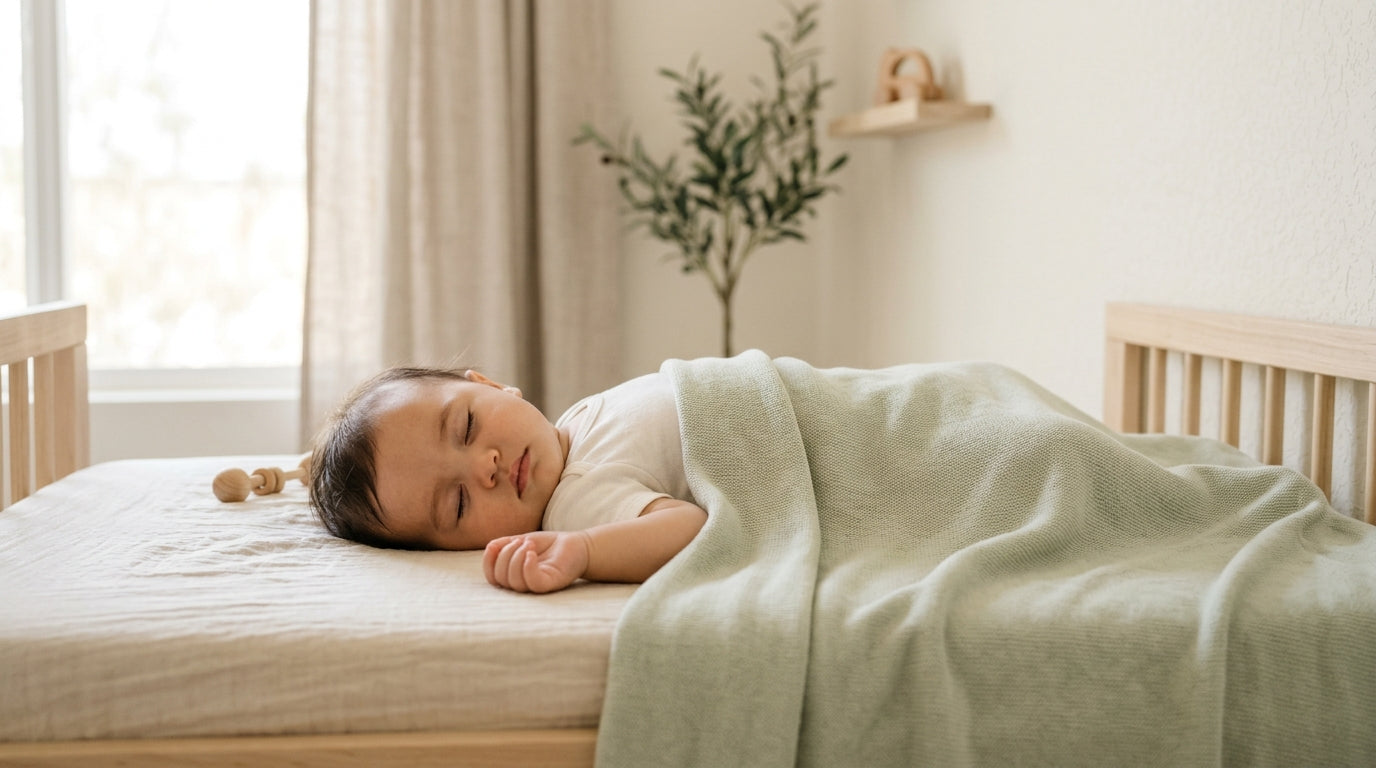
I asked three different people what to do about the fact that my wife and I were waking up at 3 am glued to our mattress like damp Post-it notes. My mum suggested leaving a window open, which in November in London is a genuinely lethal suggestion. The barista at Costa told me to stop drinking dairy and align my chakras. My mate Dave, who has a disturbing amount of disposable income and absolutely zero children, told me to buy a refrigerated mattress pad that requires its own plumbing system and costs more than my first car.
None of this was helpful when I was standing in the dark, rocking a teething two-year-old, trying to peel a sweat-soaked cotton t-shirt off my chest. When you've kids, particularly in those first couple of years, your body temperature is no longer your own. You're a biological radiator for a tiny human who runs incredibly hot, whilst your partner is likely experiencing the absolute joy of postpartum or sleep-deprivation night sweats. The hunt for the best cooling blanket quickly morphs from a casual Google search into a desperate midnight obsession.
The absolute witchcraft of thermal regulation
Before we had the twins, I thought all blankets were essentially the same, varying only by how much they made you look like a Scandinavian lifestyle blogger. I was spectacularly wrong. It turns out there's a whole sub-genre of textiles dedicated to preventing you from marinating in your own fluids.
From what I can gather through my highly imperfect, sleep-deprived reading of textile blogs at four in the morning, there are basically two ways a blanket stops you from overheating. I'm entirely guessing at the physics here, but it seems to boil down to active versus passive interference.
- The space-age synthetic stuff: These are the active cooling blankets. They're made from nylon, spandex, and things like "Mica Nylon" which sounds like something NASA uses to coat the outside of a shuttle. They actually feel cold to the touch, like the other side of the pillow but engineered in a lab. They somehow absorb your body heat and banish it into the ether.
- The nature-did-it-first stuff: This is passive cooling. We're talking linen, highly specific cotton weaves, and viscose derived from things like bamboo or eucalyptus. They don't feel like an ice pack, but they breathe so aggressively that the heat simply escapes before it can turn your bed into a swamp.
I tried a cooling weighted blanket once, but it just felt like being gently crushed to death by a chilled ghost, so we're not doing that again.
What the doctor actually said about freezing the babies
There's a terrifying learning curve when you bring babies home and realize they're basically tiny, un-insulated meatloafs that can't keep stable their own temperature. Naturally, when I discovered fabrics that actively cool you down, my first thought was to wrap the twins in them so they'd stop sweating through their sleep sacks.
Dr. Evans at our local NHS clinic looked at me with that specific mixture of pity and exhaustion reserved for first-time fathers and explained that babies don't get loose blankets. Period. She told me quite firmly that tossing a blanket into a cot with an infant under twelve months is a massive suffocation risk, regardless of how magical the fabric is. We had to manage their temperature by keeping the room between 16 to 20 degrees Celsius and dressing them appropriately, which usually meant I spent twenty minutes every night paralyzed with anxiety, gently touching the back of their necks to see if they felt too hot.
So, the high-tech adult cooling blankets stayed on our bed. But when the girls were finally old enough to be trusted with fabric without actively trying to end themselves, we started exploring breathable layers that wouldn't trap the heat of a thousand suns against their delicate little bodies.
Fabrics that actually do something other than suffocate you
If you're looking for the best cooling blankets for your own sanity, or just trying to find a breathable layer for a toddler who sleeps like a starfish on a griddle, the material is everything. You can't just buy a thin polyester fleece and hope for the best, because polyester is essentially wearable plastic.

We've cycled through a ridiculous number of textiles in this house. The absolute standout, and the one my wife immediately commandeered for her own postpartum night sweats, is the Blue Flowers Spirit Bamboo Baby Blanket. Technically, yes, I bought this for the twins. It has these lovely, serene cornflowers on it. But bamboo viscose is frankly brilliant at temperature regulation. It has this incredible silky drape that doesn't trigger my wife's sensory overload when she's touched out honestly, and it soaks up moisture so efficiently that she stopped waking up shivering in damp pyjamas. I ended up having to buy a second one just so the child it was originally intended for could really use it during stroller naps.
On the flip side, we also have the Infinite Rainbow Bamboo Baby Blanket. The material is exactly the same magical, hypoallergenic bamboo blend, but we got the massive 120x120cm size. It's aggressively cheerful, which is nice when it's raining for the ninth consecutive day, but honestly, it's just too big for everyday transport. I've run over the corners of this blanket with the pram wheels no less than four times. It's a fantastic floor playmat covering, but as a quick cover-up, it requires entirely too much folding for someone operating on two brain cells. Get the smaller size unless you enjoy wrestling with fabric in a coffee shop.
And because toddlers are entirely unreasonable and will sometimes refuse blankets altogether while simultaneously complaining that they're cold, we started putting them to sleep in the Sleeveless Organic Cotton Baby Bodysuit. It's undyed and chemical-free, meaning when they inevitably sweat into it, there's no weird synthetic dye leaching into their eczema-prone skin. It breathes beautifully and saves us from the 2 am blanket-kickoff tantrums.
If you're desperately searching for breathable layers that won't turn your child into a sweaty, cranky mess, you might want to browse Kianao's collection of baby blankets before you lose your mind entirely.
The absolute audacity of laundry instructions
Here's something nobody tells you when you're heavily researching the best cooling blanket on the market: the high-tech, space-age, icy-to-the-touch blankets are precious little divas with the washing machine.
I learned this the hard way after spending a frankly embarrassing amount of money on a highly-rated nylon-blend adult cooling comforter. It was glorious for exactly three nights. Then one of the twins contracted a stomach bug that violently exited both ends simultaneously, right in the middle of our bed. At 4 am, you're not reading care labels. You're shoving contaminated textiles into the washing machine on the hottest possible cycle and praying for salvation.
Don't do this. Don't boil a synthetic cooling blanket and then blast it in the tumble dryer on the "sun-surface" setting. I melted the proprietary cooling polymers. The blanket went in feeling like a frozen lake and came out feeling like a crunchy, static-charged piece of astroturf. It completely lost its cooling properties because, apparently, heat destroys the very magic that makes it work.
Which is why we've largely reverted to natural fibers in our house. Bamboo, linen, and loosely woven cotton don't require you to hold a degree in thermodynamics to clean them. You just chuck them in the wash on a normal, reasonable temperature, and if you accidentally dry them, they don't turn into a plastic tarp. They might shrink a tiny bit, but they'll still let your body heat escape, which is the entire point.
When you just need everything to stop being so damp
Parenting is wet. It's a profoundly damp experience. Between the milk spills, the drool, the tears, the unexplained sticky substances, and your own hormonal or stress-induced sweat, staying dry feels like a luxury reserved for people who sleep eight uninterrupted hours.

You don't need a blanket that requires an engineering manual, but you do need to stop wrapping yourself and your children in cheap polyester microfleece that traps heat like a greenhouse. Finding a genuinely breathable layer won't magically make your toddlers sleep through the night, but it might mean that when they do wake you up, you aren't completely adhered to the mattress.
If you're ready to upgrade your nursery from synthetic sweat-traps to textiles that honestly let human skin breathe, take a look at Kianao's organic baby essentials before the summer heat really kicks in.
Unqualified answers to your midnight panic searches
Do cooling blankets really work or is it just marketing nonsense?
From my highly scientific testing (sweating in bed while watching Bluey), yes, they work, but in different ways. The synthetic ones really feel cold to the touch and suck the heat out of you, while the natural ones (like bamboo or linen) just allow the heat to escape instead of trapping it. If you sleep hot, getting rid of your standard polyester duvet is half the battle.
Can my baby use a cooling blanket?
Not if they're under twelve months old, unless you enjoy getting a very stern lecture from your doctor. Young babies shouldn't have any loose blankets in their cots due to the suffocation risk. Dress them in breathable organic cotton or a lightweight sleep sack, and keep the room cool instead. Once they hit the toddler stage, breathable bamboo blankets are brilliant.
What's the absolute worst fabric for night sweats?
Polyester. Microfiber. Fleece. Anything that's essentially spun plastic. I don't care how soft it feels in the shop; wrapping yourself in a microfiber blanket when you've night sweats is like wearing a bin bag in a sauna. It traps the moisture against your skin and makes you miserable.
How do I wash a bamboo cooling blanket without ruining it?
Honestly, just treat it with a tiny bit of respect. Wash it on a cooler setting (around 30 or 40 degrees) and keep it away from fabric softeners, which coat the natural fibers and stop them from wicking away moisture. I usually just drape ours over the back of a dining chair to dry because it dries incredibly fast on its own, and it saves me from accidentally shrinking it in the dryer.
Why do toddlers sweat so much when they sleep?
Because their little nervous systems are still figuring out how to run the machinery, and they spend an enormous amount of energy growing, dreaming, and doing laps around the cot. It's totally normal for them to run hot, which is why putting them in breathable, natural fabrics is so much better than synthetic pajamas that trap all that heat inside.




Share:
Why My 2 AM Fleece Disaster Sparked a Bamboo Clothing Obsession
Is the Job of a Brand Ambassador Actually Worth the Stress?