

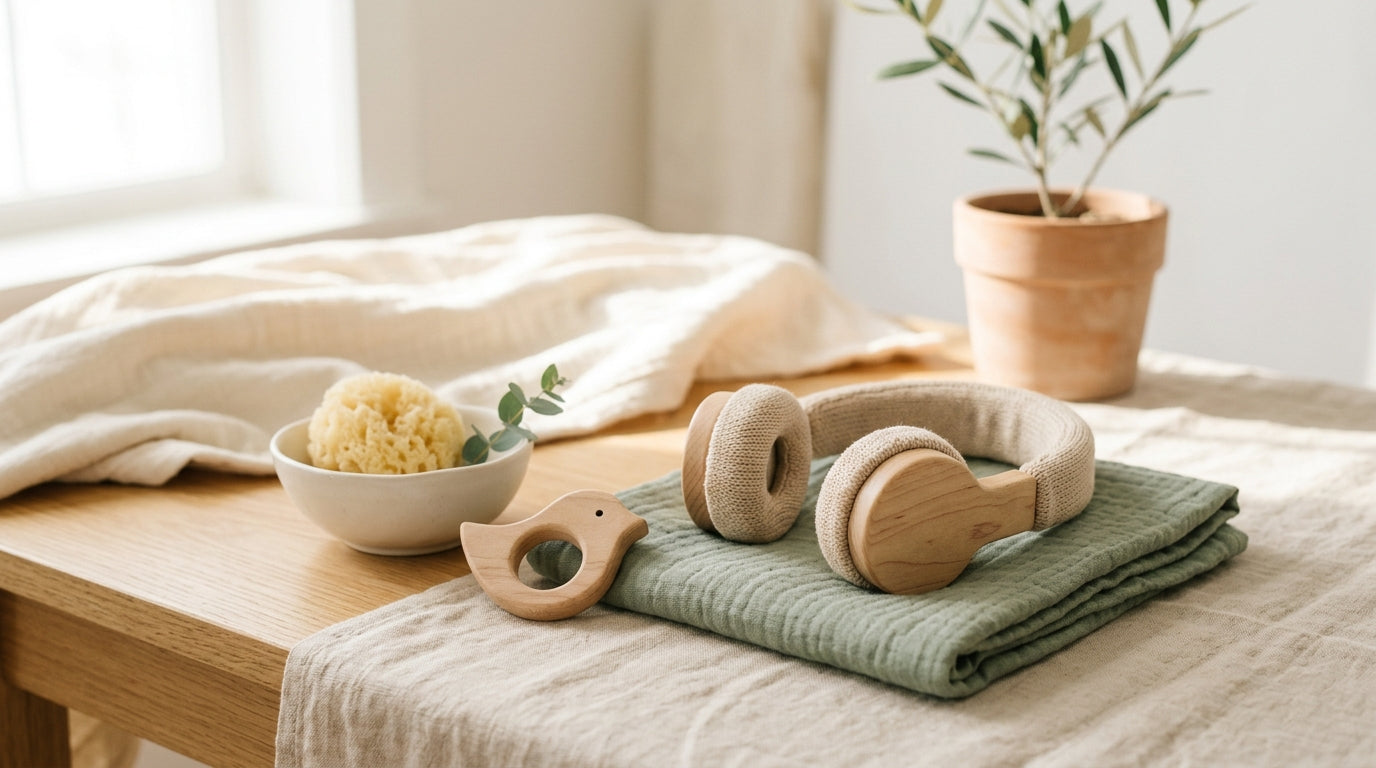
My mother-in-law told me listening to rap would stunt my kid's language acquisition and that I should stick strictly to classical flute. My husband claimed playing heavy bass in the car was important cultural exposure that builds character. The terrifying local mom group on Facebook insisted anything above a quiet whisper would cause permanent neurological damage.
I was just sitting there on my phone at two in the morning, trying to figure out what a baby keem was.
I kept seeing the phrase popping up on social media. My sleep-deprived brain naturally assumed it was a trendy new swaddle brand, or maybe some progressive sleep training method from Scandinavia. I spent twenty minutes searching for the developmental milestones linked to it.
Turns out, the rapper's age is twenty-three. He's Kendrick Lamar's cousin. He has Grammys. He is an adult man with a very successful career, and I'm a woman with mashed sweet potato in her hair who has completely lost touch with reality.
When your pop culture radar breaks
Listen, having a kid does something weird to your cultural awareness. You used to know who was charting on Billboard. Now you know the specific lore of every single Paw Patrol pup and the exact chemical makeup of a wet wipe.
It's jarring to realize you've aged out of the demographic that intuitively knows these things. When people search for this artist online, expecting to find hip-hop news, and instead stumble across exhausted mothers looking for baby k teething remedies, it just proves how deeply siloed our lives become.
I'll be honest, the abbreviation baby k sounds like a terrible vitamin supplement they try to sell you at a holistic pharmacy. I'm ignoring that entirely.
But this whole late-night Google misunderstanding actually brought up a very real clinical issue I used to see all the time on the pediatric floor. Parents want to share their lives with their kids. They want to play their favorite playlists in the car. They want to be cool parents. But they totally forget that tiny ears don't work like adult ears.
What my doctor actually said about decibels
I've seen a thousand of these cases in triage. A young couple brings in an inconsolable infant. They swear the baby was fine all day. When I'd take the history, it almost always slipped out that they were just at a family barbecue with a massive sound system, or riding around with the bass turned all the way up.
My doctor, who has the bedside manner of a tired librarian, put it perfectly. He said we treat baby eardrums like they're just smaller versions of ours, but they're actually tiny acoustic traps.
I'm pretty sure the AAP guidelines say ambient noise should stay under 60 decibels. For context, 60 decibels is basically the volume of my husband chewing cereal. It's not very loud. When you crank up a hip-hop track in a closed car, you're easily hitting 90 or 100 decibels.
Because an infant's ear canal is so narrow, it amplifies high-frequency sounds. The bass doesn't just wash over them. It enters that tiny canal, bounces around, and essentially turns your favorite song into physical pressure on their eardrum. It's why they scream. It hurts, yaar.
You can't just slap a pair of noise-canceling headphones on a three-month-old and call it a day. Their skulls are still fusing. Heavy earmuffs put weird pressure on their soft spots. Turn down the stereo, accept that your car is a quiet zone for the next two years, and maybe hum to them instead.
Toys that lack a volume button
Since we're severely lowering the volume in the house, you've to find other ways to stimulate them that don't involve blasting a Spotify playlist. This is where I get incredibly picky about toys.

I despise electronic toys. The ones that flash bright lights and play tinny, compressed audio files of public domain songs. They're an assault on my senses and honestly, the baby usually just ends up staring at them passively like a zombie.
If you want safe stimulation, you go analog.
We ended up getting the Rainbow Play Gym Set with Animal Toys when my kid was about three months old. It's literally just wood and fabric, which sounds boring, but to a baby, it's fascinating.
I liked it because the aesthetic didn't make my living room look like a plastic explosion. The natural wood is sturdy. My favorite part is the little elephant toy. When my kid first figured out how to bat at it and make the wooden rings clack together, it was a massive cognitive leap. The sound is natural. It's a soft, acoustic clack that happens because of their own physical effort, not because a microchip was triggered.
It helps with depth perception and spatial awareness without overstimulating their fragile little nervous systems. Plus, you can just wipe the wood down with a damp cloth when they inevitably spit up on it.
Explore more quiet, wooden baby toys that won't ruin your hearing or your decor.
The drool factor and sensory input
Quiet environments mean you start noticing other things. Like the sheer volume of saliva a single infant can produce when their gums are hurting.
Teething is the great equalizer. It doesn't matter if you're a pop star or a pediatric nurse, when a tooth is pushing through bone, everyone is miserable.
My kid drooled so much it soaked through three outfits a day. I learned very quickly that synthetic fabrics are the enemy of teething babies. When polyester gets wet with saliva, it just sits there and chafes against their neck folds until they get a nasty red rash.
I swapped everything out for organic cotton. The Organic Cotton Baby Bodysuit from Kianao is essentially the only thing I put him in during the summer months. It's 95 percent organic cotton and 5 percent elastane.
That elastane part is honestly important. When they're thrashing around because their mouth hurts, you need clothes that stretch over their giant heads without a struggle. The envelope shoulders on these suits slide right down. I've had to cut babies out of cheap bodysuits in the ER before because of diaper blowouts. Having shoulders that stretch saves you from pulling a ruined garment over their face.
The organic cotton absorbs the drool better, and because it's grown without the harsh pesticides, it doesn't irritate that raw skin under their chin. You just throw it in the wash on cold. It holds its shape fine.
Things they can safely chew
When the teething really hits, you're going to buy a dozen different things hoping one of them works. I bought so many teethers.

Some people swear by those water-filled plastic rings you put in the freezer. I hate them. They get too cold, they can cause frostnip on the baby's lips, and I'm always paranoid they're going to puncture it and drink whatever mysterious gel is inside.
We tried the Bear Teething Rattle Wooden Ring. It's just okay. It's cute, the blue crochet bear is very soft, and it looks great on a nursery shelf. The untreated beechwood is definitely safe for them to gnaw on.
But in my experience, when the molars are coming in, the wooden ring doesn't have enough give. It's a bit too hard for those really tender days. It works well as a sensory rattle because they like feeling the difference between the hard wood and the soft cotton yarn, but for pure pain relief, my kid usually just wanted to bite my index finger instead.
It's easy enough to clean, though. You just spot wash the yarn and wipe the wood. Don't submerge the wooden ring or it gets weird and porous.
Living in the real world
The truth is, you're going to make mistakes. You'll probably play a song too loud. You'll definitely buy an annoying plastic toy at some point in a moment of weakness at Target. You'll spend an hour googling pop culture trends trying to understand what the teenagers at the grocery store are talking about.
We're all just guessing most of the time.
But protecting their physical senses is one of the few things we can really control. Their eardrums are fragile. Their skin is reactive. Their nervous systems are brand new.
You don't need to wrap them in bubble wrap, but you do need to be mindful of the input you're providing. Soft, breathable fabrics. Natural, quiet toys. And maybe saving the heavy bass playlists for when you're driving alone to pick up takeout.
Shop our full collection of sensory-friendly baby essentials before your next quiet time.
Messy questions about tiny ears
Is loud music going to ruin my kid's hearing forever?
Probably not from one car ride, but chronic exposure is the real issue. The hair cells in the inner ear don't regenerate once they're damaged. If you're constantly playing loud music around them, you're slowly chipping away at their auditory health. Just turn it down. It's not that deep.
How do I know if the room is too loud for them?
If you've to raise your voice to speak to someone sitting right next to you, it's too loud for the baby. Period. I use the dishwasher test. If the music is louder than my dishwasher running on the heavy cycle, I turn it down.
What if we want to take them to a summer music festival?
I mean, good luck. Taking a baby to a festival sounds like my personal version of hell. But if you must go, you absolutely need heavy-duty infant ear protection. Not the cheap foam earplugs. Real, over-the-ear muffs designed for babies. And keep them far away from the speakers. Better yet, leave them with a sitter.
Why is everyone talking about this rapper anyway?
He's talented, he won a Grammy, and the internet loves a catchy beat. Pop culture moves fast. By the time your kid is old enough to seriously listen to his music safely, there will be someone entirely new topping the charts. Don't stress about keeping up.
Can ear damage cause sleep issues?
Yes. Ringing in the ears, known as tinnitus, happens to babies too. If their ears are ringing because you had the TV blasting all afternoon, they aren't going to settle down for a nap. They can't tell you their ears are ringing, so they just scream instead. Keep the environment calm before sleep.




Share:
Decoding Baby Lasagna: How to Feed Your Infant Without a System Crash
The Accidental Chaos of Searching for Joker Baby Stuff