

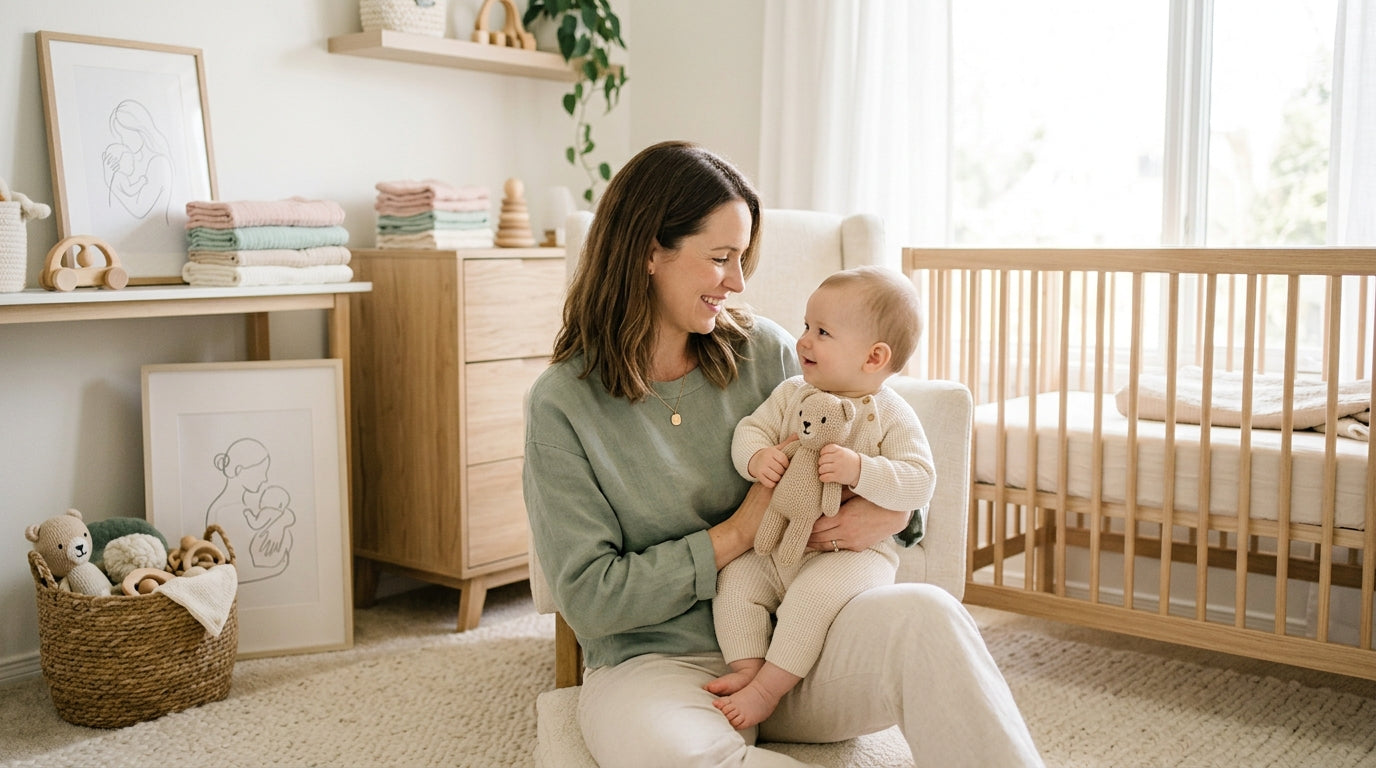
I was sitting on the edge of the guest bathroom bathtub at 3:17 AM in a pair of gray college sweatpants that smelled vaguely like sour milk and desperation, crying over an Excel spreadsheet. Literally. I was aggressively typing Maya's sleep intervals into my phone with my thumb while she screamed in her bassinet down the hall, trying to find some kind of magical data pattern that would explain why she was awake. My mom, who was visiting to help with the baby, shuffled in wearing her fluffy pink robe, blinked at the harsh blue light of my screen, and said, "Sarah, honey, just put the phone down and pick up your kid."
I wanted to scream into a towel.
I was doing exactly what modern millennial parenting told me to do—track, measure, analyze, optimize—but I was absolutely miserable. I was treating my actual human child like a literal e baby, you know, those little digital Tamagotchis we had on our backpacks in middle school where if you missed one pixelated feeding beep, the thing died. And it wasn't working. It was just making my anxiety spike to levels that required a prescription.
My mom is a classic boomer. And look, my husband Dave and I love to complain about baby boomer parenting logic, especially when his dad tells us we're "coddling" Leo by acknowledging his feelings instead of just telling him to walk it off. But sitting there on the cold tile, I realized something incredibly annoying. My mom was right. The generation that raised us actually had some things figured out, and we've completely lost the plot.
The historical data I barely understand
I found myself randomly googling when was the baby boom actually happening the other day, mostly because my mom kept making comments about how many siblings she had and how nobody made a big deal out of it. From what I remember from my high school AP US History class—which is honestly super blurry because I mostly spent that period passing folded paper notes to a girl named Jessica—it was from 1946 to 1964. The war ended, everyone came home, the economy did whatever it did, and suddenly the population exploded.
I think I read somewhere that like 76 million people were born in the US during the baby boom? Which is just an unfathomable amount of diapers to process, especially without Amazon Prime. They didn't have next-day delivery. They didn't have white noise machines that connect to Wi-Fi. They just had babies. Everywhere.
Right around this time, this doctor named Dr. Benjamin Spock wrote a childcare book that completely changed the game. Before him, apparently, doctors in the early 1900s told moms to basically never hug their kids and put them on rigid military schedules so they wouldn't get "spoiled." Can you imagine looking at a newborn and being like, nope, no snuggles for you, it's not on the itinerary? Madness. Anyway, Spock basically came in and told parents to ignore that rigid crap. He famously wrote that parents know more than they think they do, and that they should just trust their instincts.
God, don't we need to hear that right now?
Because I don't trust my gut at all. I trust the internet. I trust the 400 aesthetic parenting influencers on Instagram telling me that if I don't do baby-led weaning with perfectly steamed organic carrots, Leo is going to end up emotionally stunted. We're drowning in data. We log every milliliter of breastmilk. We stare at color-coded spreadsheets. I’d lean over the crib at 4 AM whispering go to sleep my little baby boo while simultaneously checking a Reddit thread to see if a 45-minute nap meant her brain development was delayed.
When Maya was a newborn, Dave came home one Tuesday—wearing his blue Patagonia fleece, holding a half-empty Americano—and I literally handed him a printed chart of her bowel movements. A printed chart. He looked at me like I needed an exorcism. I was convinced that if I just had enough data, I could hack motherhood. I spent hours reading about wake windows and sleep regressions until my eyes crossed. I'm not even going to get into sleep training because honestly who has the energy for that internet bloodbath.
But the boomer parents? They didn't have apps. They had a rotary phone and maybe a neighbor who had older kids. They just kind of winged it. And honestly, we survived.
Where the boomers got it horribly wrong
But here's where I've to draw a hard line. They had the right relaxed mental attitude, but they had terrible, terrible gear. The baby boom coincided with the mass invention of cheap synthetic crap. Plastics. Polyester. Everything in the 1960s and 70s was made of chemicals that we now know are basically toxic waste.

My doctor—this incredibly blunt woman named Dr. Aris who takes zero nonsense from anyone—told me at Leo's six-month checkup that holding onto vintage baby gear is a massive mistake. She explained that the endocrine disruptors and phthalates in old, scratched mid-century plastics can actually mess with infant development. I don't totally understand the molecular chemistry behind it, but she looked me dead in the eye and told me that heating up plastic baby bowls is a recipe for disaster. Her face was so serious I went home and threw out half our kitchen.
And that's why I'm currently obsessed with food-grade silicone. It's the modern, safe upgrade to the boomer plastic problem.
When Leo was cutting his molars, he was an absolute nightmare. The drool was endless. He was chewing on everything in sight. The coffee table edge. Dave's sneakers. The poor dog's tail. I ended up buying the Squirrel Teether Silicone Baby Gum Soother and it literally saved my sanity.
I know it sounds overly dramatic to say a teething toy saved my life, but I'm being completely serious. It's this soft mint green ring with a little textured acorn detail on it. Because it's 100% food-grade silicone, there are no weird chemicals leaching into his mouth, and it doesn't harbor bacteria in hidden crevices like those creepy rubber squeaky toys from our childhood (seriously, don't cut those open, you'll gag). I'd throw this little squirrel in the fridge for ten minutes, hand it to his chubby little fists, and he would sit in his high chair gnawing on it peacefully. For twenty minutes. I drank my coffee hot. It was glorious.
The other boomer-era thing I violently rejected was the chaotic, light-up plastic toys. You know the ones. My mother-in-law kept buying us these massive plastic monstrosities that require six D batteries and sing a tinny, robotic song at maximum volume. They have flashing red lights and beeping buttons and they randomly go off in the middle of the night when the house shifts.
I boxed them all up and put them in the attic. Instead, we got the Wooden Baby Gym.
It's just so... quiet. It’s made of responsibly sourced wood, and the hanging toys are these soft little sensory things in calm, earthy tones like a little fabric elephant. Dr. Aris mentioned once that babies don't honestly need flashing neon lights to develop their brains; in fact, the aggressive lights usually just overstimulate them and make them cranky. The simple reaching and grasping for wooden rings is way better for their spatial awareness anyway. Plus, it doesn't look like a plastic factory exploded in my living room. Dave accidentally tripped over it while carrying laundry and stepped on one of the wooden legs, and it didn't even dent. It's incredibly solid.
If you're also currently losing your mind tripping over loud, toxic plastic junk in your living room and want to purge it all, you can take a breather and check out Kianao’s collection of calming wooden play gyms here.
The truth about organic clothing
Now, let's talk about clothes. The boomers loved their synthetic blends because they were cheap and didn't wrinkle. But infant skin is terrible. Like, honestly, it's so finicky and prone to rashes. Maya had awful eczema as a newborn, angry red patches behind her knees and in her elbow creases. The doctor suggested we ditch the polyester blends because non-breathable fabrics just trap sweat and aggravate the skin barrier.

So I went on a late-night shopping binge and bought a bunch of organic cotton pieces, including this Flutter Sleeve Organic Cotton Baby Bodysuit.
Here's my totally unfiltered take on it. The fabric itself? Incredible. It’s 95% organic cotton and it genuinely helped clear up the angry red patches on Maya's legs. It's insanely soft, like butter. BUT, those little flutter sleeves? They're adorable if you're taking a staged photo for Grandma, but they're kind of annoying when you're trying to cram a squirming, screaming infant into a winter cardigan. They bunch up in the armpits. Also, I managed to completely ruin the gorgeous earthy color with a massive sweet potato puree explosion on day two because I'm foolish. So, buy it for the amazing skin benefits and the breathability, but maybe stick to the sleeveless options if you're layering, or strip them down to a diaper before serving orange root vegetables.
Anyway, the point of all this rambling is that parenting is just this giant pendulum swinging back and forth across generations. The boomers trusted their intuition but used horrible, chemical-laden materials. We obsess over finding the perfect organic, non-toxic, sustainable materials, but we've absolutely zero trust in our own intuition.
Instead of treating your kid like a digital pet and logging every single blink into a spreadsheet, just grab some safe silicone and wooden gear, put your phone in another room, and trust your own messy intuition. You know your kid better than an app does.
At least, that's what Dr. Spock said back in the day. And sitting here drinking my lukewarm coffee, I think I’m finally starting to believe him.
Ready to swap out the sketchy plastic hand-me-downs for something you don't have to stress about? Shop Kianao’s full collection of sustainable, safe baby essentials here before your next 3 AM anxiety spiral.
The Late Night Anxiety FAQ
Why are we millennials so obsessed with tracking apps?
Because we grew up with the internet and we think data equals control. When you've a newborn, you've zero control over your life. None. Your schedule is dictated by a tiny tyrant. The apps give us the illusion that if we just find the right pattern, we can predict the future. Spoiler: you can't. They just make you cry in bathrooms.
Wait, so was Dr. Spock honestly right about everything?
I mean, probably not everything. I haven't read the whole book because who has the time to read a book from 1946? But his core message of "trust yourself, you know more than you think" is desperately needed right now. We need to stop crowdsourcing every single parenting decision on Facebook groups.
Are the plastic toys my boomer mom saved from the 80s safe to use?
God, no. Please throw them away. According to my doctor, vintage plastics degrade over time and leach stuff like BPA and phthalates, which are endocrine disruptors. Plus, they were made before modern safety standards. It’s sweet that your mom saved your old rattle, but put it in a shadow box or something. Don't let your kid chew on it.
How do I get my boomer parents to respect my modern boundaries?
If you figure this out, please email me immediately. Dave and I usually just smile, nod, say "thanks for the advice," and then go home and do exactly what we were going to do anyway. You can't change how they parented, but you get to decide what happens in your own house. Stand your ground on the safety stuff (like safe sleep and toxic plastics), but maybe let it slide when they say you're spoiling the baby by holding them too much.




Share:
Where Do Babies Come From: Surviving The Ultimate Toddler Question
When to Take a Baby With RSV to the Hospital: A Nurse's Guide