

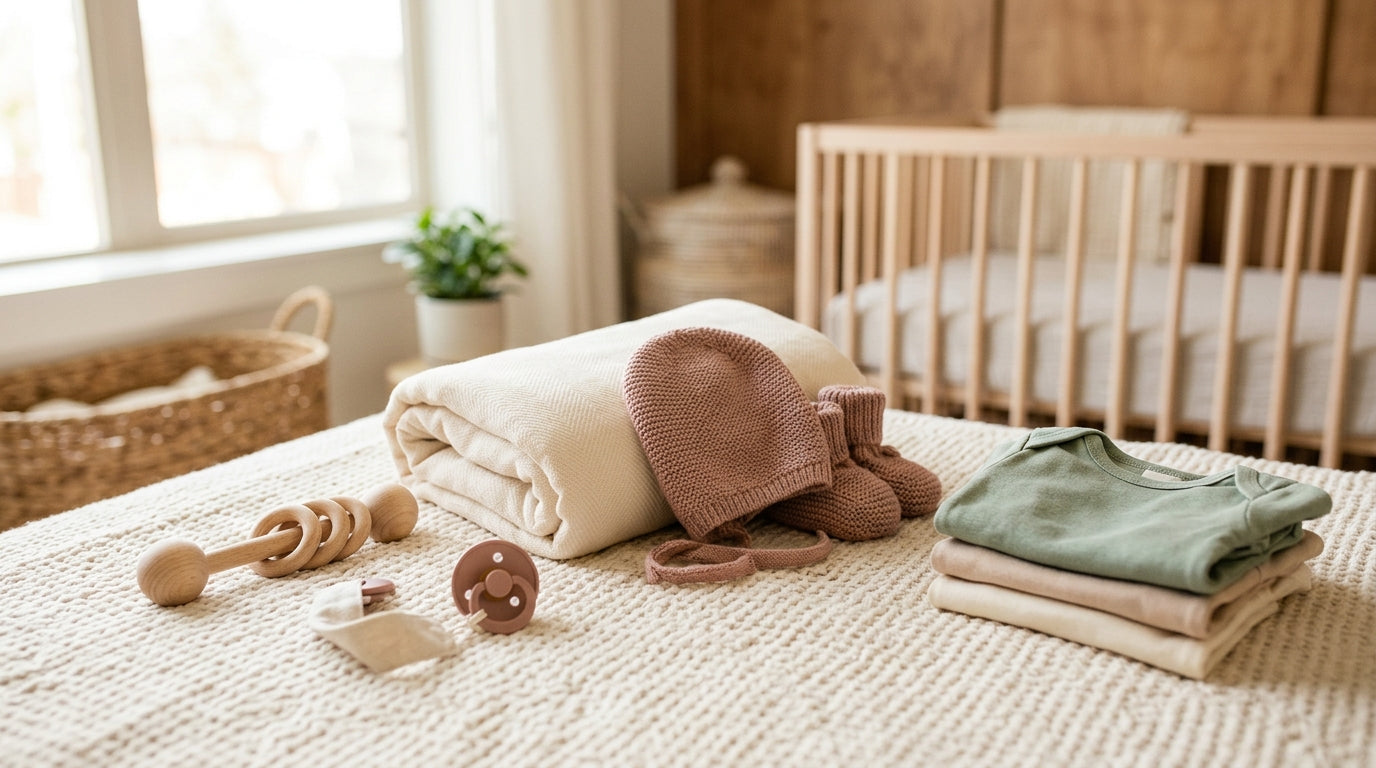
Whatever you do, don't boldly tell the discharge nurse that you already configured the car seat hardware when your only actual training was skimming a YouTube Short on 1.5x speed. I learned this the hard way while sweating profusely in the hospital loading zone, trying to remember how the chest clip algorithm worked while a veteran nurse watched me with a mixture of pity and mild alarm. Our son, who weighed less than my work laptop, looked furious about being evicted from his climate-controlled uterine server. The realization that they were actually letting us leave with him hit me like a brick.
The hospital departure is basically a forced deployment to a production environment where you've root access but absolutely no documentation. There are no more helpful nurses to page at 3 AM. It's just you, your recovering partner, and a tiny human whose entire communication protocol consists of screaming.
Driving at the speed of panic
I drove exactly 12 miles per hour on I-84. Cars were honking. A guy on a bicycle passed us on a side street. My wife sat in the back seat, hovering over the car seat like she was guarding an unexploded ordinance. To break the deafening, anxious silence in the car, I turned on the radio, only to find the station doing some bizarre "Christmas in July" promotion.
Darlene Love was suddenly belting out christmas baby please come home through the car speakers. I remember gripping the steering wheel so tightly my knuckles went entirely white, ironically analyzing the christmas baby please come home lyrics where she's desperately begging someone to return, while my own internal monologue was just a frantic loop of baby please, just don't cry before we hit the driveway, please don't stop breathing, please don't hate us. We pulled into our driveway forty-five minutes later, exhausted, terrified, and acutely aware that our lives were permanently altered.
The hardware constraints of car seats
The amount of conflicting data about car seats on the internet is staggering. My doctor, Dr. Chen, sat me down before we left and aggressively debunked half of what I’d Googled. She looked me right in the eye and said that any aftermarket headrests or fuzzy sleeping bag inserts are absolute suffocation traps because they haven't been crash-tested with your specific seat. We ripped the cute little head support pillow out of our registry immediately.
Dr. Chen also mentioned that babies must ride rear-facing until they're at least two years old, which seems like a long time to look at the back of a seat, but apparently, their neck muscles are basically wet noodles. Another massive rookie error is overdressing them for the ride. You're supposed to dress them exactly how you feel comfortable. If the AC is blasting, you tightly tuck a blanket over the buckled harness, never under the straps.
We used the Happy Whale Bamboo Baby Blanket for this exact purpose on the way home. It's easily my favorite piece of fabric we own. I specifically love it because our son aggressively spit up on it the second we carried him through the front door, and when I threw it in the wash, it came out softer. The bamboo material feels strangely cool to the touch but keeps him warm, which is a neat thermal trick. Plus, the ocean print gives me something to stare at when I’m sleep-deprived and hallucinating.
Safe sleep and the sudden obsession with oxygen
I'm going to rant about sleep for a minute because nothing prepares you for the sheer, suffocating terror of putting your newborn in a bassinet for the first time. We spent nine months designing a Pinterest-worthy nursery, only to realize that a safe sleep environment looks like a solitary confinement cell.

According to my doctor, the crib needs to be completely, brutally empty. No bumpers. No pillows. No loose blankets. No cute stuffed bears. Absolutely nothing except a firm mattress and a fitted sheet. I spent the first three nights waking up every twenty minutes, shining my phone flashlight on his chest just to confirm the firmware was still running and he was breathing. I literally held a compact mirror under his nose at one point to check for condensation like a paranoid 19th-century doctor.
You have to put them on their back to sleep, every single time. My grandmother keeps calling to tell me we all slept on our stomachs in literal dresser drawers and turned out fine, but Dr. Chen warned us that the risk of SIDS drops dramatically when they're on their backs. So, on his back he stays, swaddled up like a very angry little burrito.
Because you can't use blankets in the crib, you end up buying a ton of weird sleepwear. My wife panic-ordered the Baby Finger Toothbrush Set around 3 AM during one of these sleepless shifts. It’s a neat little silicone sleeve for your finger, but honestly, it’s completely useless right now. We jokingly call our son baby p—short for Baby Production—and Baby P has exactly zero teeth. He won't have teeth for months. I tried putting it on my finger once and he just looked at me like I was an idiot. I threw it in a drawer to wait for the update patch where his teeth finally spawn.
Output logs and staring at dirty diapers
When you're a software engineer, you want dashboards. You want metrics. A newborn gives you none of that, so you obsess over the only measurable data you've: inputs and outputs. Mainly, poop.
Don't bother buying a wipe warmer because it just breeds weird bacteria and your kid honestly doesn't care if the wet wipe is room temperature.
I built a massive spreadsheet to track his diapers. Dr. Chen told us that tracking the outputs is the only way to know if he’s getting enough milk since his stomach is roughly the size of a cherry. Day one, you want one wet diaper and one terrifyingly black, sticky poop called meconium that looks like roofing tar. Day two, you want two wet diapers and two slightly less dark poops. We spent hours hovering over the changing table, analyzing the color gradient of his waste like we were authenticating fine art.
Newborn skin is insanely permeable, meaning it absorbs basically everything you put on it. We completely ditched the heavily scented commercial wipes after noticing his skin turning red. Instead, we set up three different changing stations around the house with water-based wipes and natural zinc creams. If you don't have stations staged in multiple rooms, you'll inevitably find yourself carrying a leaking baby across a white rug while trying to pinch a diaper shut with one hand, which is a risk management disaster.
If you're looking for ways to stock your own diaper stations with non-toxic items, you should check out Kianao’s organic care collection.
System failures and medical red flags
The hardest part of the first 48 hours is not knowing what's a normal glitch and what's a catastrophic hardware failure. Babies make horrible noises. They grunt, they squeak, they pause their breathing for ten seconds and then pant like dogs. Apparently, this is just their respiratory system figuring out how to work outside of fluid.

But Dr. Chen gave us a very specific list of hard stops. If the baby gets a rectal temperature of 100.4°F or higher, we bypass urgent care, grab our keys, and drive straight to the emergency room. A fever in a baby under three months is an immediate critical error. Same goes for dehydration. If he goes six to eight hours without a wet diaper or his soft spot looks sunken in, we call the doctor.
Vomit is another weird one. Babies spit up constantly. It smells like sour milk and ruins all your shirts. But Dr. Chen specifically noted that if the vomit is bright green, it could mean a bowel blockage, which requires immediate medical intervention. Trying to remember all these rules while running on zero REM sleep is like trying to defuse a bomb while someone is shining a strobe light in your eyes.
Resetting the hierarchy
We don't have a toddler, but my sister does, and she warned me about the psychological warfare of bringing a new baby into an existing kid's territory. She read somewhere—I think from Dr. Becky Kennedy—that toddlers view love as physical proximity. If a toddler walks into the house and sees their mom holding a strange new baby, their tiny brain instantly assumes they've been permanently replaced.
The workaround is brilliant. You leave the baby in the bassinet when the toddler walks in. Mom greets the older kid with open arms, validates their existence, and then they both go "discover" the new baby together. It makes the older kid the protagonist of the event rather than a bystander.
To make our living room look less like a sterile medical ward, we set up the Wooden Baby Gym | Fishs Play Gym Set on the rug. It's a beautiful, minimalist wooden A-frame with these nice smooth rings. Right now, our baby is basically a warm potato who can't even hold his own head up, let alone reach for a wooden fish. But having it sitting there's a nice reminder that eventually, he will do more than just eat, sleep, and scream. It gives us a little glimpse into a future where he actually interacts with his environment.
Final diagnostics
Bringing a baby home is the most terrifying, beautiful, chaotic transition you'll ever experience. You will cry over spilled milk. You will argue with your partner about the correct way to fold a swaddle at three in the morning. You will Google the most unhinged questions imaginable.
Just remember that humans have been successfully keeping babies alive for thousands of years without smart monitors or organic bamboo sleep sacks. You're going to make mistakes, but as long as you follow the hard safety parameters, your little production environment will eventually stabilize.
If you want to upgrade your nursery hardware with items that are actually safe and sustainable, browse Kianao’s full lineup of organic baby products right here.
Messy data: Answering your newborn questions
When do they stop looking so incredibly fragile?
Honestly, around the three or four-week mark. The first few days they look like little aliens who might break if you hold them wrong. Once they start filling out and gaining their birth weight back, the panic subsides a bit. By month two, they feel way more solid, like a bag of flour instead of a glass vase.
Is it normal for them to lose weight right after coming home?
My doctor said it's completely normal for them to drop up to 10% of their birth weight in the first few days. It freaked me out watching the scale go down, but apparently, they're just shedding water weight. They usually bulk back up to their original weight by day ten or fourteen, assuming the feeding logs look good.
How many layers should the baby honestly wear?
The general rule we were told is to dress them in one more layer than you're wearing. If I'm sitting around in a t-shirt, he gets a long-sleeve onesie and a light swaddle. I used to check the back of his neck constantly—if it feels hot and sweaty, you need to strip a layer off immediately because overheating is super dangerous.
When do I honestly start using a baby gym?
We put ours together on day two just to feel productive, but they don't really start interacting with hanging toys until they're a few months old. Right now, it just looks nice in the living room. Once their vision clears up and they discover they've hands, it becomes a great tool to keep them distracted while you desperately try to drink a warm cup of coffee.
How do you survive the sleep deprivation without losing your mind?
You don't. You just accept the temporary madness. My wife and I started taking shifts. I'd take the baby from 9 PM to 2 AM so she could get a solid block of uninterrupted sleep, and then we would swap. Sleep in separate rooms if you've to. Just survive the first month.




Share:
"Baby Please" Go To Sleep: My Messy Fourth Trimester Survival Guide
Decoding The Baby Poop Chart By Age (Without Losing Your Mind)