

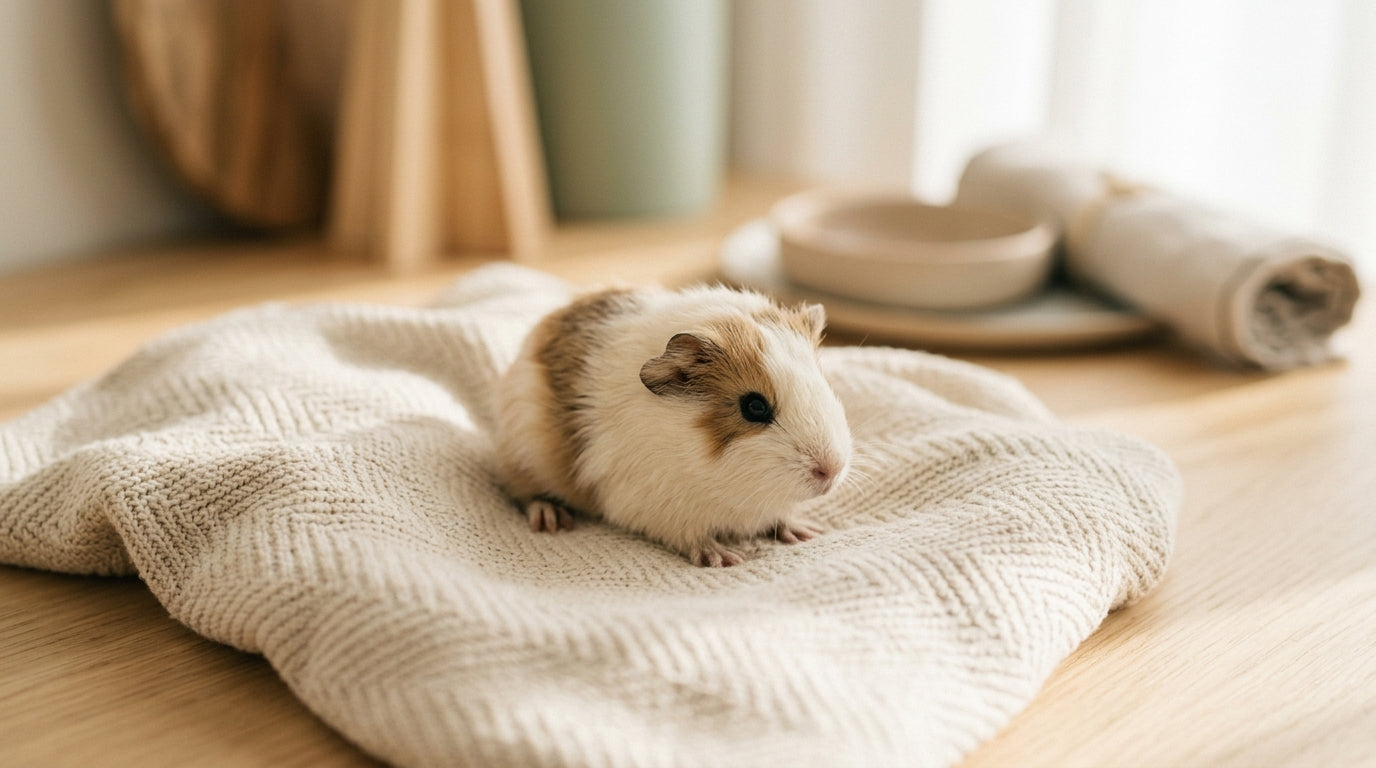
The teenager behind the counter at the pet store was casually explaining to a mother that if she touched her new baby guinea pig, the mother pig would smell human on the baby and eat it. I had to physically bite the inside of my cheek to stop myself from intervening. Listen. I spent years doing pediatric triage before becoming a stay-at-home mom, and the amount of medical misinformation out there about both human infants and animal babies is staggering. That whole cannibalism thing is a myth born from hamster owners and weird urban legends.
If you're thinking of bringing a baby guinea pig into a house that already contains children, you need to know what you're actually getting into. They're not like other rodents. You don't treat them like a newborn puppy or a tiny kitten. A baby g is an entirely different biological machine, and taking care of one requires a very specific kind of neurosis.
The bizarre reality of precocial births
With human babies, we spend the fourth trimester carrying around a helpless, bald little potato that can't even hold up its own head. My toddler was essentially a decorative weight for the first three months of his life. But a baby guinea pig is what biologists call precocial. They come out of the womb looking exactly like a miniature adult.
My vet mentioned once that they're born with their eyes wide open, covered in a full coat of hair, and they know exactly how to run. They weigh roughly the same as two boiled eggs, which is both adorable and terrifying when you're trying not to step on them. Within twenty-four hours of being born, they'll just wander over to the food bowl and start eating solid food. It's deeply unsettling if you're used to the slow, agonizing weaning process of human babies.
The three-week reproductive time bomb
Here's where I need to rant, because the pet industry completely fails to warn parents about this. Male guinea pigs apparently reach sexual maturity at three weeks old. Three weeks. You blink, and the tiny baby g you just brought home is suddenly capable of starting a family with its own mother or sisters.
I've seen a lot of medical marvels in my nursing career, but the idea of a three-week-old hitting puberty makes me want to lie down. If you end up with a mixed-gender litter, you basically have to act like a strict chaperone at a middle school dance and separate the males into a completely different enclosure by day twenty-one. Figuring out their sex is also incredibly difficult since everything is so tiny, so you inevitably end up paying a veterinarian to check their anatomy just to avoid an accidental teenage pregnancy in your living room.
Twenty teeth and the teething problem
Human teething is a well-documented nightmare. My son took ten months to push his first tooth through, and he made sure the entire neighborhood suffered with him. Meanwhile, a baby guinea pig is born with twenty perfectly formed teeth. They arrive in the world fully equipped to chew through whatever is in front of them.

It made me acutely aware of how difficult human infant development is by comparison. When my kid was going through his worst teething phase, he was trying to gnaw on the edges of our wooden coffee table. We finally got him the Panda Teether Silicone Baby Bamboo Chew Toy from Kianao just to save our furniture. It's honestly my favorite thing we own. It has a flat shape that his clumsy hands could actually hold, and the silicone is dense enough that he could really dig his gums into it. I washed it in the dishwasher every night, which is my baseline requirement for anything that goes in a child's mouth.
Cage requirements and respiratory panic
People think because the baby is small, it can live in one of those plastic starter cages they sell at big box stores. The reality is that they grow rapidly, and they need massive amounts of square footage. I think the standard recommendation is something like eight square feet minimum, but even that seems small when you watch them try to sprint.
There's also the issue of the cage bars. Adult cages often have one-inch spacing. A determined baby guinea pig will just flatten its little body and squeeze right through those bars to go wandering under your refrigerator. You usually have to modify the cage with extra grids or deep plastic pans until they put on some weight.
Then there's the bedding. Never buy cedar or pine shavings. I treated enough babies with RSV in the hospital to know what respiratory distress looks like, and those wood oils apparently destroy a guinea pig's delicate lungs. We're hyper-vigilant about what touches our kids' skin, and we should probably extend that to pets. It's the same reason I only dress my kid in things like the Organic Cotton Baby Bodysuit. Synthetic fabrics gave him horrible contact dermatitis, and switching to organic cotton was the only thing that stopped the redness. You want soft, breathable layers for your kid, and you want dust-free fleece or paper bedding for the baby g. Everything else is just asking for a medical intervention.
If you're currently trying to upgrade your human baby's environment to be less toxic, you might want to look at Kianao's baby care collection.
The vitamin C and poop situation
From what I gather, guinea pigs lack the enzyme needed to synthesize vitamin C. They're kind of like us in that way. If they don't get daily bell peppers or fortified pellets, they can actually develop scurvy. My vet said their joints swell up and they become lethargic. You end up chopping more organic vegetables for a rodent than you do for your own family.

But the most shocking part of their diet is the coprophagia. That's the clinical term for eating feces. When a baby g is born, it needs to establish its gut flora. We buy expensive probiotic drops for our human babies, but guinea pigs just eat a special, soft stool produced by their mother. It's highly efficient and incredibly gross to witness, especially when your toddler is watching and taking notes. You just have to look away and let nature do its weird thing.
Enrichment and hiding spots
Because they're prey animals, baby guinea pigs are naturally terrified of everything. A sudden movement or a loud toddler will send them scrambling for cover. They need little tunnels and hidey-holes to feel secure.
It's funny how different species handle environmental stress. We buy our human kids elaborate setups to keep them stimulated. We got the Wooden Baby Gym for my son when he was small. It's just okay. The wood is smooth and it looks very aesthetically pleasing in a minimalist living room, but honestly, half the time my kid preferred staring at the ceiling fan or chewing on the cardboard box it arrived in. It's fine for basic visual tracking, but don't expect it to magically entertain them for hours. Meanwhile, a baby guinea pig just wants a dark fleece pocket to hide in so it doesn't have to perceive the outside world. I can relate to that.
Taking care of these tiny animals is a massive commitment masked as a starter pet. They need specialized diets, massive cages, and constant monitoring of their weird little bodies. If you're ready to take the plunge, just make sure you've a good vet on speed dial.
Before you get completely overwhelmed by pet research, you might want to check out Kianao's organic nursery essentials to keep the human side of your house running smoothly.
Your messy questions about baby guinea pigs
Are male or female pups better if you've a toddler?
Honestly, gender doesn't dictate their personality as much as people claim. My old clinic vet told me that males might be slightly more outgoing, while females can be a bit more reserved, but it mostly depends on how much you handle them. Just remember the three-week puberty rule. If you don't want to deal with complex reproductive math, just adopt a bonded pair of females and save yourself the headache.
How exactly are you supposed to hold a newborn pup?
Carefully, and close to the ground. You can touch them right after birth once the mother has cleaned them off, despite what the pet store teenagers say. But they're squirmy and fast. If a toddler is involved, the rule in my house is that the toddler sits flat on the floor with a towel in their lap, and the baby g stays on the towel. No walking around with the animal. One drop can break their fragile little bones.
Can my kid share their snacks with the guinea pig?
Only if your kid's snack is raw bell peppers, romaine lettuce, or Timothy hay. My toddler tried to offer a Cheerio to a guinea pig once. Their digestive tracts are incredibly sensitive and meant only for fibrous plants. Any processed human food, dairy, or meat will likely cause a fatal gut stasis. Keep the goldfish crackers far away from the cage.
Why do they scream when I open the refrigerator?
That noise is called wheeking, and it's a learned behavior. They associate the sound of the fridge opening or the rustle of a plastic bag with the arrival of fresh vegetables. It's basically the rodent equivalent of a human baby recognizing the sound of a formula canister popping open. It's cute the first ten times, and deeply annoying when you're just trying to get a midnight snack without waking the whole house.
What happens if the mother rejects the baby?
It's rare, but if it happens, you're suddenly on the hook for around-the-clock feedings. You can't use cow's milk or human infant formula. From what I understand, you've to syringe-feed them a specific critical care formula or diluted goat's milk every few hours. It's exactly like having a newborn human again, complete with the sleep deprivation and the constant anxiety about weight gain. Avoid it if you can.




Share:
What Actually Happened When I Tried A Baby Guinness For My Milk
Decoding the 3 AM Baby Grunting Sounds Without Losing Your Mind