

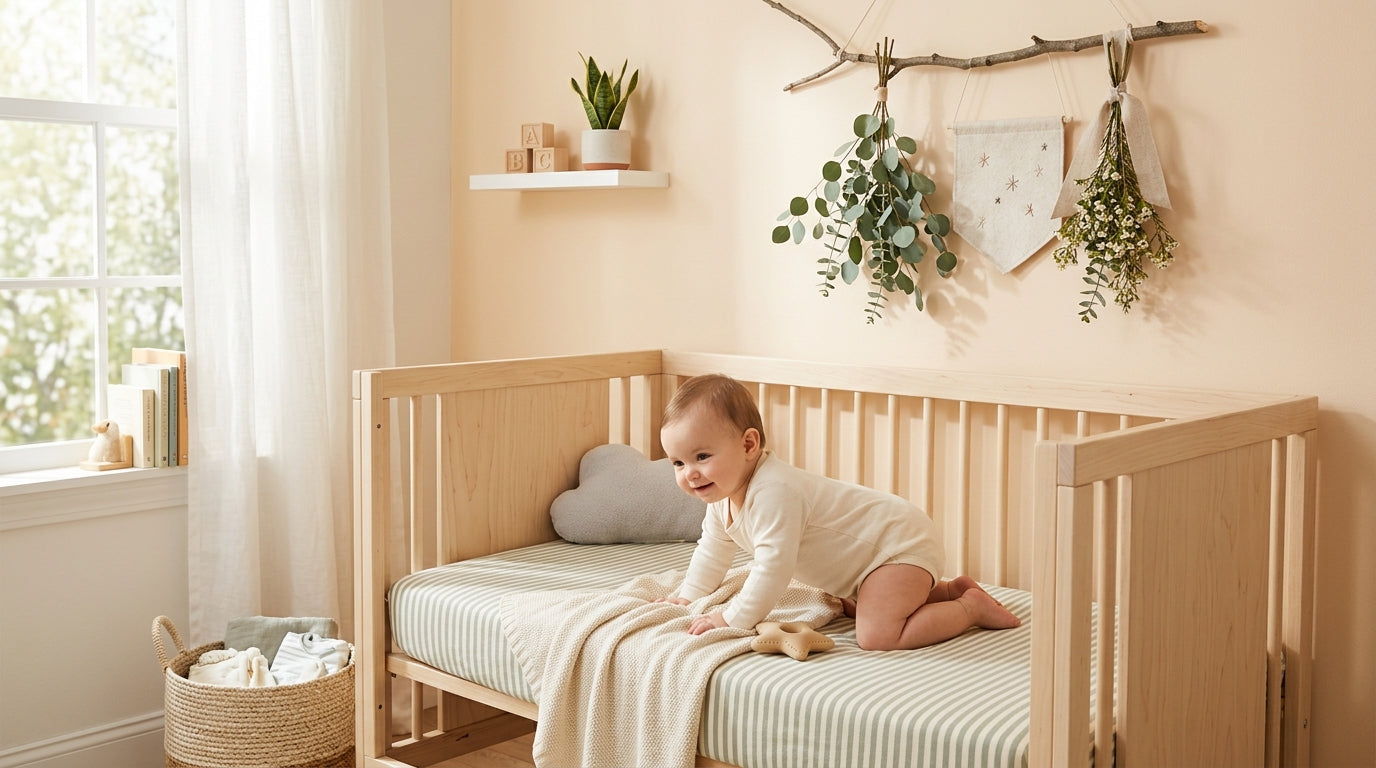
My mother-in-law texted me four massive paragraphs about how Gypsophila represents everlasting love and is a hard requirement for the nursery design if we wanted to respect tradition. Three hours later, our Portland neighbor—a guy who brews his own seasonal kombucha in a converted garage—leaned over the fence to tell me those specific white blooms are ethically passé and I should really be foraging local damp ferns for our infant's room instead. But the real system crash happened the next day when I showed Dr. Gupta a picture of Sarah’s DIY crib floral crown concept on her phone. He just stared at me over his clipboard, sighed heavily, and asked why I wanted to suspend a known asthma trigger directly above my nine-week-old daughter's face.
I was caught in an endless loop of conflicting user requirements. I just wanted a nice, aesthetic photo for the birth announcements to appease the grandparents. I didn't realize that bringing a few delicate white stems into our house was going to require a full risk assessment and a deep dive into botanical toxicity.
The romantic meaning versus the actual hardware specs
Apparently, there's a whole cultural meaning linked to these tiny white clouds. Sarah informed me that the traditional baby's breath flower meaning centers around purity, innocence, and an unending bond of love. That all sounds perfectly optimized for a baby shower or a nursery corner. It looks light, it looks airy, and Pinterest is absolutely flooded with images of sleeping newborns swaddled in baskets completely surrounded by the stuff.
But here's a piece of data that nobody puts on the mood board: they smell terrible.
I track the ambient temperature, humidity, and general air quality of the nursery using a smart monitor I mounted near the door. The day after the baby shower, I walked in and was hit by a scent that I can only describe as slightly sour, old socks mixed with damp paper. I spent forty-five minutes on my hands and knees sniffing the diaper pail, checking the baseboards for hidden moisture, and recalibrating the air purifier. Sarah eventually walked in, watched me crawling around like a confused roomba, and pointed out the massive floral centerpiece on the dresser. Apparently, botanists actually classify the scent of these blooms as "malodorous." They're literally programmed to smell bad to attract specific types of pollinating flies in the wild, which is absolutely not the vibe I'm trying to cultivate when my 11-month-old is finally sleeping through the night.
A rant about terrible botanical naming conventions
Whoever named this plant needs to be permanently banned from marketing. Imagine releasing a software update called "Battery Saver Plus" that actually melts your laptop's motherboard in four minutes. That's exactly what naming a toxic plant after a human infant feels like to me. You hear the name and you immediately assume it's the safest, most gentle organic matter on the planet, practically designed to be woven into a tiny bracelet for a newborn.
But when I started troubleshooting why Dr. Gupta looked so annoyed, I found a PDF from some university's agricultural extension office at 3 AM. It turns out this plant has what they call "medium severity poison characteristics." It contains high levels of saponins. From what I managed to decode through my sleep-deprived brain, saponins are a naturally occurring chemical defense protocol that makes the plant mildly poisonous to humans if ingested, and highly toxic to dogs and cats. It causes immediate and severe gastrointestinal failure in pets.
We don't even own a dog, but my daughter currently interfaces with the physical world entirely through her mouth. She tried to eat a silicone coaster yesterday. If one of those tiny, dried-up white buds fell off a wreath and landed on the carpet, she would ingest it before my brain could even process the visual input. The idea that a plant specifically heavily branded for nurseries is actually a choking hazard filled with gastrointestinal toxins is a logic failure I simply can't get past.
Drying them out apparently takes two weeks of hanging them upside down in a dark closet anyway, which just seems like a massive waste of processing power for something that actively wants to give my kid a rash.
Red patches and respiratory glitches
Beyond the ingestion risk, there's the external hardware incompatibility. Dr. Gupta casually mentioned that the sap and flowers can cause contact dermatitis, which is the medical term for those angry, red, mystery glitches that occasionally show up on a baby's incredibly sensitive skin. If you take fresh stems and press them against an infant's head for a cute photo op, you're essentially gambling with their skin barrier.

More importantly, handling the flowers releases tiny particles that are notorious for irritating eyes, noses, and sinuses. The doctor told us it's a wildly common asthma trigger. I've enough baseline anxiety watching the baby monitor to see if her chest is rising and falling at night. I'm not going to voluntarily introduce a known respiratory irritant into her localized air supply just because it looks nice next to the changing table.
Patching the decor bug with safer alternatives
Obviously, Sarah still wanted the botanical aesthetic. I can't just veto everything without providing a viable workaround, so we compromised by upgrading our textiles instead of bringing volatile organic matter into the house. If you want the garden vibe without the saponins and the weird smell, you just have to simulate it with fabric.
My absolute favorite piece of gear we own is the Bamboo Baby Blanket with the Blue Floral Pattern. I love this thing mostly because it functions like a localized cooling system. My daughter runs hot, like a server rack under heavy load, and she used to wake up screaming with damp hair from her old synthetic blankets. This bamboo fabric really thermoregulates her. It’s incredibly soft, wicks the sweat away, and the blue cornflower pattern gives Sarah that natural, delicate floral aesthetic she wanted for the nursery photos without triggering the HEPA filter's red warning light.
On the other hand, Sarah ordered the Flutter Sleeve Organic Cotton Baby Bodysuit, and I've highly mixed feelings about it. Don't get me wrong, the organic cotton is incredibly soft and it doesn't give the baby any of those red friction rashes around the collar. But from an engineering standpoint, the flutter sleeves are incredibly confusing when you're operating on three hours of sleep in the dark. I keep trying to put her legs through the arm ruffles. Sarah thinks it's adorable and loves the whimsical look, but I actively avoid dressing her in it unless I've a full cup of coffee in my system to handle the complexity of the fabric architecture.
If you're trying to figure out how to dress a kid without irritating their skin or losing your mind over synthetic snaps, it's worth taking a minute to browse through Kianao's organic baby clothes collection to find something that matches your specific operational threshold.
Building a stable offline environment
Once we completely deleted the idea of real floral arrangements from the nursery, I got a little obsessive about the room's overall environmental stability. I realized that a lot of the standard advice about bringing nature indoors doesn't really scale well when you've a tiny human with an underdeveloped immune system living in the space.

Real plants require soil, and soil is basically just a hosting environment for mold spores and fungus gnats. Between the humidifier we run at exactly 45% to keep her nasal passages clear and the ambient heat of an Oregon summer, introducing a potted plant or a vase of water into the room is just asking for a mold outbreak.
Instead, we use things like the Colorful Leaves Bamboo Blanket as a makeshift playmat when we're hanging out on the floor. It gives us that nature-inspired visual input that developmental psychologists are always writing about, but I can throw it in the washing machine at 40 degrees when she inevitably spits up on it. You can't machine-wash a fern, and you certainly can't machine-wash a vase of toxic white buds.
By keeping the nursery strictly limited to hypoallergenic textiles and running a mechanical air purifier, we've managed to keep her skin totally clear and her breathing completely unobstructed for the last three months.
Final thoughts before you execute the shower plan
Parenting so far seems to be a continuous series of discovering that the things everyone does by default are honestly terrible ideas when you look at the raw data. The delicate little white stems might look stunning draped over a bassinet in an influencer's heavily edited photo, but in reality, they're smelly, rash-inducing, mildly toxic weed-like structures that have no business being near an infant's underdeveloped lungs.
Instead of risking a botanical respiratory event by dragging real stems into your house just upgrade your baby's bedding to organic, nature-printed fabrics and keep your air purifier running on medium.
Ready to upgrade your nursery's safety protocols while keeping the aesthetic intact? Explore our complete collection of organic baby blankets to find the perfect, non-toxic floral alternative.
FAQ: Troubleshooting Floral Decor
Is the baby's breath flower seriously toxic to humans?
From what my pediatrician and midnight internet research tell me, yes, but mildly. It has saponins in it, which are compounds that can mess up your stomach if you eat them. An adult isn't going to snack on a bouquet, but an 11-month-old absolutely will try to eat a dried flower that falls on the rug. It's much worse for dogs and cats, though.
Why do people say it causes asthma?
Apparently, the dried versions shed heavily, and the fresh ones release pollen and volatile compounds that irritate the respiratory system. Dr. Gupta basically told me it's one of the worst things you can put in a poorly ventilated room if you want to avoid wheezing and coughing in an infant.
Can I use fake plastic flowers instead?
You could, but honestly, plastic dust-catchers in a nursery seem like a bad idea too. They just accumulate household dust and eventually require you to wipe down 400 tiny plastic bulbs with a damp rag. I prefer using high-quality organic cotton or bamboo blankets with floral prints because I can just toss them in the laundry when they get dirty.
What does the baby's breath flower meaning honestly signify?
Historically, it's supposed to mean everlasting love, innocence, and purity, which is why your mother-in-law will insist you need it at the baby shower. I usually just nod, say the meaning is beautiful, and then politely decline to put the malodorous, skin-irritating plant near my child.
Are there any safe real plants for a baby's room?
Probably, but I refuse to test them. Between the risk of mold in the potting soil, the child pulling dirt onto the carpet, and the water management, adding live horticulture to a room where I'm already struggling to keep a human alive seems like unnecessary scope creep. Stick to printed textiles.




Share:
Why a 5-Yard Baby Wrap Saved My Sanity (and My Etsy Shop)
The "Be My Baby" Delusion: Surviving Your First Year Alive