

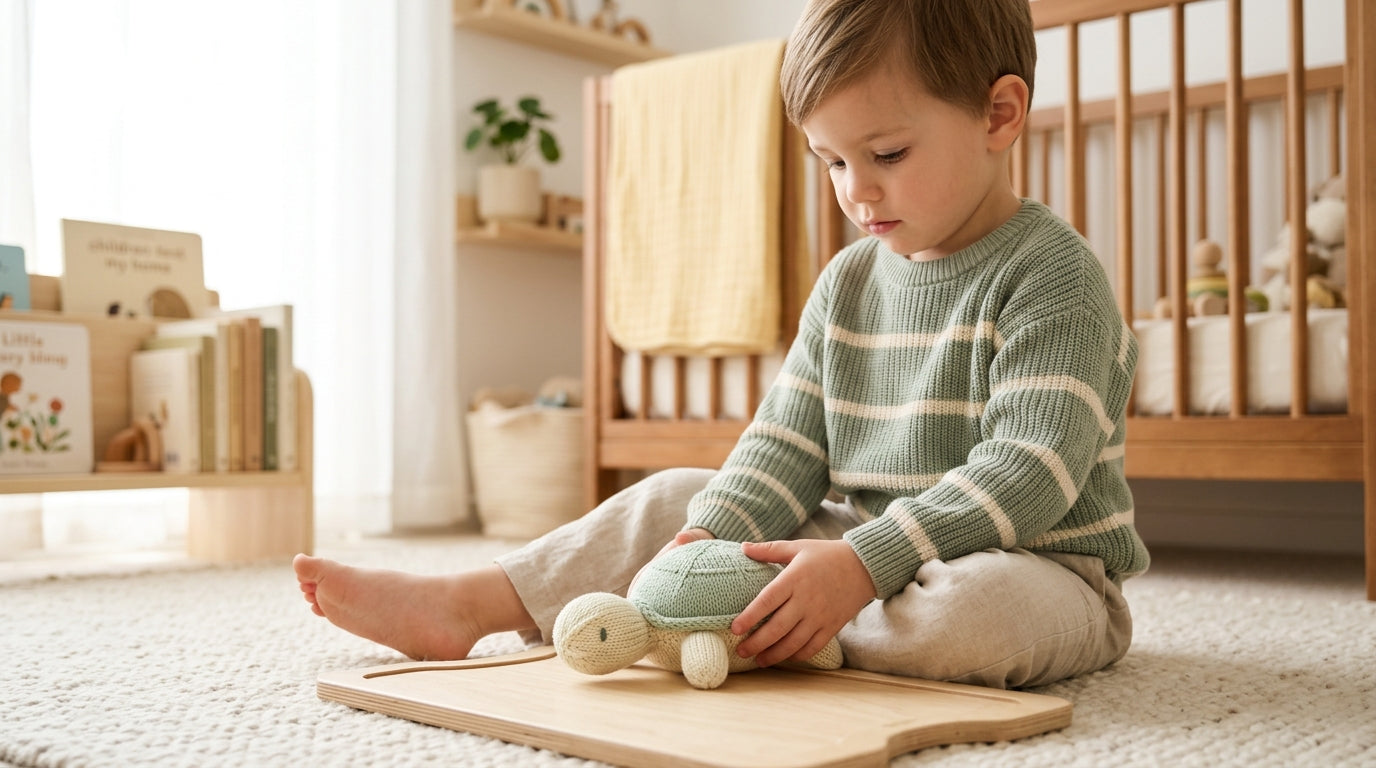
My index finger is pressed against the remarkably smudged glass of a terrarium at a strip-mall pet store in Beaverton, desperately trying to explain the concept of a "shell" to an 11-month-old who's currently attempting to eat my shoelaces. It started as a harmless weekend outing. I had seen a shady Craigslist ad for baby turtles for sale locally, and my sleep-deprived brain immediately processed this as a brilliant, low-maintenance starter pet for a child. I’m a software engineer. I like self-contained systems. A turtle in a box with some water seemed like the biological equivalent of a plug-and-play device.
My wife, Sarah, just stood a few feet away, sipping her lukewarm coffee with that specific, terrifying smirk she reserves for moments right before she absolutely demolishes one of my theories.
Apparently, everything I thought I knew about the adorable, quarter-sized reptiles of my 90s childhood was a complete fabrication. These tiny, slow-moving rocks are actually complex, legacy hardware systems that will outlive your mortgage, break your bank account, and potentially send your kid to the emergency room.
The firmware update nobody warns you about
Before we even get into the aquatic infrastructure, we need to talk about the bacteria. I track my son's temperature to the second decimal point and sanitize his pacifiers like I'm prepping them for deep space orbit, so I was deeply unprepared for the medical reality of reptiles. Our doctor, Dr. Chen, actually laughed out loud at my next appointment when I floated the idea of a turtle, mentioning casually that these little guys are essentially swimming biological weapons.
From what I vaguely understand from my frantic late-night Googling, turtles naturally shed Salmonella in their droppings, which means their shell and their water are basically just a bacterial soup. Dr. Chen made it crystal clear that toddlers and turtles shouldn't exist in the same zip code until the kid is at least five years old, because 11-month-olds put literally everything in their mouths.
This is actually why you can't buy those incredibly tiny ones anymore. Back in the 70s, the FDA enacted what's known as the 4-inch law, making it a federal crime to sell a turtle with a shell smaller than four inches. I guess toddlers were just treating them like forbidden jawbreakers, and the government had to step in with a hard patch to stop children from putting live salmonella vectors into their digestive tracts. So that dream of bringing home a tiny, pocket-sized buddy is completely dead on arrival.
The absolute nightmare of aquatic infrastructure
If you think changing diapers is bad, wait until you look into the hardware requirements for aquatic reptiles. I naturally assumed you just needed a glass bowl and a rock, but a turtle habitat is basically a high-availability server farm that requires constant, infuriating maintenance.

The golden rule for tank sizing is ten gallons of water per inch of turtle shell, which sounds reasonable when they're two inches long, but these things grow. A standard red-eared slider is going to need a 75 to 125-gallon tank eventually, which means you're essentially building a small, heavy, fragile swamp in the middle of your living room. You can't just downsize them, either. It’s an infrastructure scale-up that you can never, ever reverse.
Then there's the filtration system. Turtles eat and excrete in the exact same water, which is a design flaw I'd immediately log a bug ticket for if I could. Because of this, standard fish filters are useless. You need a massive, industrial-grade canister filter rated for three to four times the volume of your tank, and you've to clean the biological media inside it manually. I spend forty hours a week debugging code, and the last thing I want to do on a Saturday is troubleshoot a motorized tube full of reptile sludge just to keep the nitrate levels from spiking and crashing the whole system.
Honestly, you just throw some expensive pellets and a terrified cricket into the tank once a day and pray the filter handles the aftermath.
And the lighting! They're cold-blooded, meaning they've no internal temperature regulation and rely entirely on external hardware. You need a water heater tuned exactly to 78 degrees, a heat lamp for their dry basking dock to hit 90 degrees, and a specialized UVB bulb just so their shells don't collapse in on themselves from Metabolic Bone Disease. Oh, and those UVB bulbs silently degrade over time and have to be replaced every six months, which feels like the most egregious planned obsolescence I've ever encountered in nature.
Stories are way cheaper than canister filters
Right about the time I was mentally calculating the electrical load a 125-gallon heated swamp would put on our breaker box, Sarah intervened. She grew up in the Midwest and has this incredible talent for pulling obscure cultural facts out of thin air to redirect my spiraling obsessions. While I was staring blankly at a $300 filter, she gently steered us away from the live animals and brought up this beautiful piece of native american lore about baby turtles in minnesota.

According to the Ojibwe traditions she was telling me about, the turtle isn't just a pet—it's the foundation of the whole continent. There's this creation story where, after a massive flood, various animals tried to dive down into the deep water to bring up a handful of earth. A little muskrat finally succeeded, and they placed that tiny bit of soil on the back of a giant snapping turtle. That earth grew and grew until it became North America, which is why it's historically referred to as Turtle Island. The turtle also represents truth in their Seven Grandfather Teachings.
I stood there in the pet store aisle, holding my squirming son, realizing this was a much better API for teaching him about nature. We don't need to trap a complex, long-living creature in a glass box to appreciate it. We can just tell him the stories, teach him the respect, and entirely avoid the whole salmonella-swamp situation.
Looking for sustainable ways to outfit your little explorer without bringing home an exotic pet? Check out Kianao's organic cotton baby collection.
What we really bought instead
Since we were aggressively abandoning the pet store plan, we still had an 11-month-old who was demanding entertainment and currently acting like a baby t-rex tearing through the house. So we redirected our budget toward things that genuinely solve my daily parenting bugs without requiring a PhD in water chemistry.
We did end up getting a Gentle Baby Building Block Set. It’s fine. I think there’s a turtle shape on one of the sides, which loosely fits the theme of the day. They're squishy, he gnaws on them, and they float in the bathtub, which is honestly the highest technical specification I require from a toy right now. They don't need a heat lamp, so that's a win.
But the real lifesaver we grabbed recently has nothing to do with reptiles. We bought the Organic Cotton Baby Bodysuit Sleeveless Infant Onesie from Kianao, and it's genuinely the most reliable piece of fabric in our house. A few weeks ago, my son had a diaper blowout so catastrophic it violated several laws of physics, and this bodysuit somehow contained the blast radius. The 95% organic cotton is incredibly soft, but the 5% elastane is the real MVP—it gives just enough stretch that I can pull the whole thing down over his shoulders instead of dragging the mess over his head. It’s undyed, breathable, and doesn’t irritate the weird eczema patches he randomly gets. I bought four more immediately.
Also, because everything is currently a chew toy for his incoming incisors, we picked up the Panda Teether Silicone Baby Bamboo Chew Toy. If we had brought a turtle home, he absolutely would have tried to put its shell in his mouth by Tuesday. This panda is 100% food-grade silicone, completely safe, and I can just chuck it in the dishwasher when it gets gross. It has these little textured bumps that he aggressively grinds his gums against while maintaining intense eye contact with me. It’s deeply unsettling, but it stops the crying, so I consider it a flawless product.
We survived the pet store with zero new heartbeats in our house. We have the stories of Turtle Island, we've a silicone panda, and I don't have to clean a motorized sludge-tube this weekend. I call that a successful iteration.
Ready to upgrade your baby's daily gear without the 50-year commitment? Shop Kianao’s sustainable essentials today.
Questions I frantically googled about turtles and kids
How long do pet turtles honestly live?
Apparently, they're practically immortal. A standard red-eared slider easily lives 20 to 50 years. If I bought one for my infant today, I'd literally be writing this reptile into my last will and testament. They're not starter pets; they're generational wealth transfers, except instead of money, you're passing down a smelly tank.
Can a toddler safely hold a turtle?
Absolutely not. My doctor made it abundantly clear that turtles are a "look, don't touch" situation. Aside from the terrifying salmonella risk, picking them up stresses them out horribly. Toddlers lack the fine motor control to handle a fragile, panic-prone animal, and you'll spend your entire afternoon washing everyone's hands with industrial soap.
What's the 4-inch law exactly?
From what I can tell, the FDA banned the sale of turtles with shells under 4 inches back in 1975. Little kids were buying these tiny, coin-sized baby turtles and doing what little kids do best—sticking them directly into their mouths. The bacteria outbreaks were so bad the federal government had to step in and ban the cute ones entirely.
Are there any low-maintenance pets for an 11-month-old?
No. The 11-month-old is the high-maintenance pet. Between the feeding, the waste management, and the constant threat of them walking into sharp furniture, your bandwidth is completely maxed out. If you really want them to interact with animals, take them to a local park and point at a duck from a safe distance. It’s free and requires zero filtration systems.




Share:
The Truth About Baby Shower Party Favors People Actually Want
Dear Past Me: Just Buy the Damn Baby Shusher and Go to Sleep