

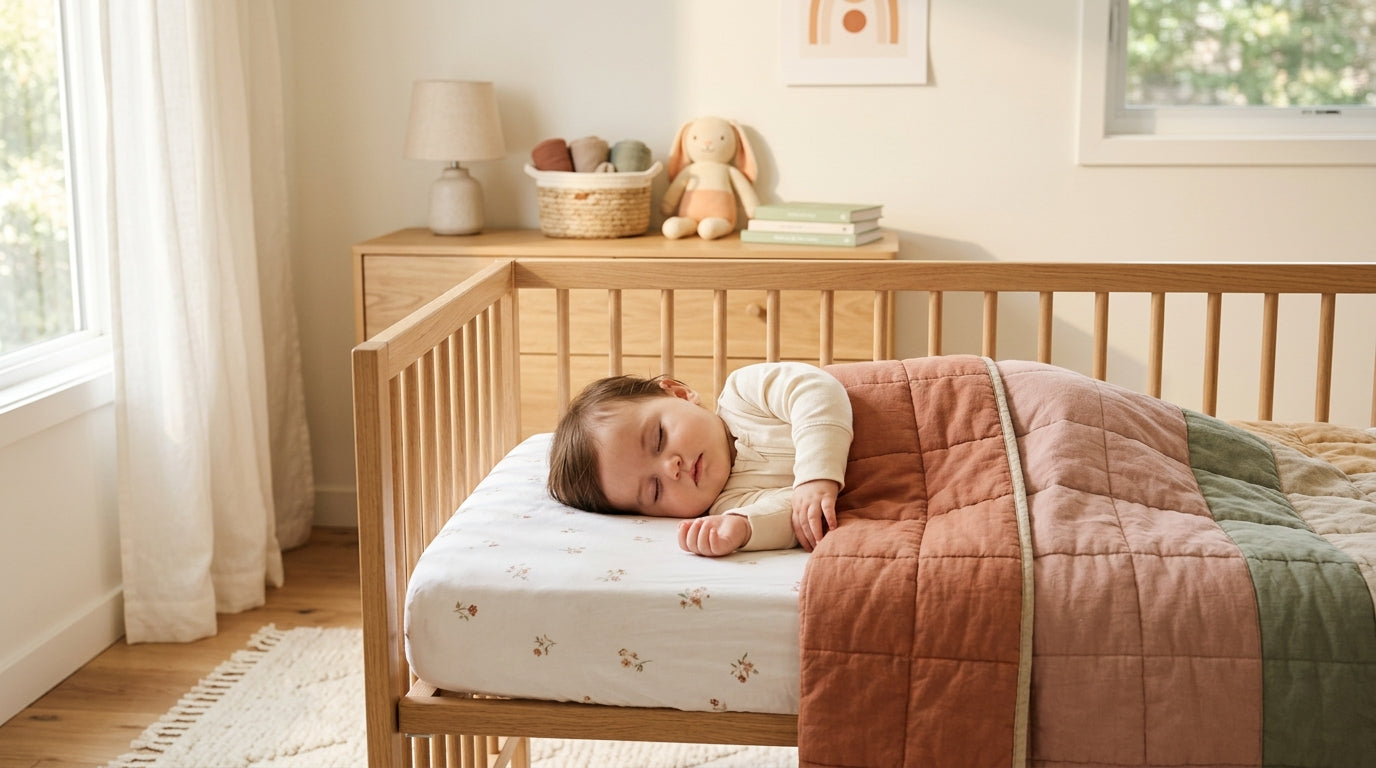
When the night terrors started last week, I naturally asked three different people for advice, which was my first mistake. The woman who runs our local playgroup suggested I let the twins "lean into their dark emotions" and process the fear naturally (page 47 of her favourite gentle parenting manual presumably suggests doing this while burning sage, which I find deeply unhelpful at 3am when someone is screaming about shadows). My mother, calling from a landline, loudly informed me that this was my fault for letting them look at screens, reminding me that in 1993 I only had access to wooden blocks and two terrestrial television channels. And a bloke at the park, entirely unprompted, suggested I throw our internet router into the Thames and raise the girls in a yurt.
None of them were particularly helpful, mostly because none of them understood the modern, uniquely millennial nightmare of having an algorithm accidentally traumatise your offspring. We aren't dealing with a fear of the dark or a monster under the bed. We're dealing with the fallout of the welcome to derry baby phenomenon.
How a horror prequel invaded our living room
If you've absolutely no idea what I'm talking about, count yourself lucky and perhaps stop reading, lest you invite the curse into your own search history. For the rest of us, the welcome to derry baby isn't some sort of trendy new aesthetic for newborns or a cute brand of sustainable wellies. It's a highly graphic, profoundly disturbing scene from a Stephen King television prequel on HBO.
I'd love to tell you I'm the sort of diligent, eagle-eyed father who monitors every single frame of media that passes before his children's eyes. The reality is that at 5:45 in the morning, while trying to wrestle Sophie into a clean nappy and simultaneously prevent Maya from eating a rogue piece of cat food, I handed over my phone. I just needed three minutes of peace. I thought I had queued up a harmless compilation of baby animals. I was wrong.
The YouTube algorithm, in its infinite and chaotic wisdom, decided that since the word "baby" was trending alongside this new horror series, a "lore breakdown" video of the terrifying demon creature was exactly what a two-year-old wanted to see. Sophie saw exactly four seconds of it before I practically threw the phone across the kitchen, shattering the screen protector and my own dignity in the process. Four seconds. That was all it took.
I spent the next three days trying to convince myself she hadn't registered it. They're two, after all. Their brains are mostly occupied with trying to figure out how door handles work and why they aren't allowed to drink bathwater. But by night four, the screaming started. Not the usual "I dropped my dummy" whimper, but a full-throated, blood-curdling shriek that had me sprinting down the hallway of our London flat so fast I nearly took the doorframe clean off its hinges.
What Dr Evans thinks about our algorithmic disaster
After a week of surviving on roughly forty-two minutes of broken sleep per night, I dragged myself and the girls to the GP. I sat in a sticky plastic chair in the waiting room, entirely covered in someone else's porridge, preparing to confess my sins as a guardian of the digital age.

Dr Evans is a pragmatist who has seen me at my absolute worst. I explained the accidental horror screening, expecting him to dial social services. Instead, he just sighed and explained that this happens all the time now. From what I could gather from his slightly exhausted explanation, toddlers possess brains that are essentially wet sponges completely lacking the neurological hardware to separate fantasy from reality.
He mumbled something about their cognitive development making it impossible for them to understand computer graphics, meaning to Sophie, that horrific monster was just as real as our postman. I read later on an NHS forum—or maybe it was just a panicked mum on Reddit, the lines blur when you haven't slept—that sudden exposure to intense visual frights can trigger massive spikes in cortisol, effectively rewiring their immediate sleep cycles and leading to these intense night terrors where they aren't even fully awake while screaming.
There was no magic pill, no Calpol dose for existential dread. The medical advice was essentially a sympathetic shrug and a suggestion to radically overhaul their sleep environment to make them feel impossibly, overwhelmingly secure.
Cot fortifications against invisible demons
Rebuilding a toddler's shattered sense of security at midnight is an exercise in extreme patience and strategic textile deployment. You can't reason with them, you can't show them the iPad to prove the monster isn't real (which would just restart the cycle anyway), and you certainly can't leave them to cry it out when they're genuinely terrified.

What actually worked for us was leaning heavily into physical, tactile comfort. When Sophie woke up thrashing and terrified, the only thing that seemed to anchor her back to reality was sensory input. We ended up relying completely on her Organic Cotton Baby Bodysuit, which I initially bought just because I liked the colour, but it turned out to be the only thing she wouldn't sweat straight through during a panic attack. When toddlers wake up screaming, their internal temperature skyrockets, and synthetic pajamas just turn them into furious, clammy little radiators. The organic cotton at least breathed, meaning I didn't have to attempt a full wardrobe change in the dark while she was mid-meltdown.
But the real hero of this miserable chapter was a specific blanket. Not just any blanket, but one of the Kianao Deer Organic Cotton Blankets that my sister gifted us. I don't know if it's the weight of the weave or just the fact that it smells like our laundry detergent, but we essentially turned it into a magical anti-monster shield. I found myself sitting on the floor at 2am, wrapping her in this terribly aesthetic, sustainable fabric, whispering absolute nonsense about how the deer on the blanket eat shadows for breakfast. It's incredibly soft, which provided the tactile grounding she needed to stop hyperventilating, and after a few nights, just tucking it tightly around her mattress seemed to signal that the cot was a safe zone.
I'll say, though, that not every product is a miracle worker against sleep regression. In a desperate bid to soothe her during one of the less intense wake-ups, I handed her her Panda Teether. It's a brilliant little silicone chew toy during the day when she's gnawing on the furniture, but in the middle of a night terror? It’s completely useless. She just threw the poor panda across the room where it bounced off the skirting board. You can't chew your way out of a nightmare, apparently.
If your own household has been completely derailed by a bad sleep phase, you might want to look at updating their nursery comfort items to make the cot feel a bit more secure.
The great digital lockdown
The hardest part of this entire ordeal wasn't the sleep deprivation, though the bags under my eyes currently have their own postcodes. The hardest part was the guilt. It's a uniquely isolating feeling to know that your own desire for three minutes of quiet caused your child's distress.
The aftermath required a complete overhaul of how technology exists in our flat. You essentially have to turn into a paranoid intelligence officer overnight, spending hours wrestling with obscure tablet settings to forcibly disable autoplay while simultaneously setting up complex PIN codes on every streaming app we own, all while trying to explain to a suspicious two-year-old why my phone is suddenly a permanent resident of the top kitchen cupboard.
Maya, of course, slept through the entire two-week ordeal. Twin dynamics are entirely absurd; one child is traumatised by a fleeting glance at a screen, and the other could sleep peacefully through a marching band in the bedroom. But Sophie has finally settled. The night terrors have downgraded to mild whimpers, the organic cotton shield holds strong, and we've established a strict household rule: the only things allowed on screens until they're at least thirty-five years old are shows featuring claymation penguins and people baking cakes in tents.
If you're currently in the trenches of a sleep regression because your kid saw something they shouldn't have, just know you aren't the only one who has messed up the screen time balance. Wash their favourite blanket, prepare yourself for some very long nights, and hide the router.
Ready to upgrade your bedtime routine? Take a look at our organic sleepwear before the next midnight wake-up call.
Frequently asked panic questions
Will seeing one scary video permanently damage my child?
From what Dr Evans told me (and what I desperately tell myself in the mirror every morning), no, a brief accidental exposure isn't going to ruin their lives forever. Their brains are incredibly resilient, and while the immediate fallout is an absolute nightmare of broken sleep and clinginess, they do eventually forget it as long as you re-establish that their physical environment is incredibly boring and safe.
How do you actually block this welcome to derry baby stuff?
You can't trust the basic "kids mode" on regular apps because algorithmic tags get messy when a horror show uses the word "baby." You have to physically go into the settings of your streaming services and YouTube accounts, lock the adult profiles behind a PIN, and switch their viewing over to the highly restricted, curated-only apps where autoplay is entirely disabled. It's a faff, but it's better than dealing with night terrors.
Are night lights making the scary shadows worse?
This was a huge debate in our house. At first, the night light seemed to just cast weird shadows on the wardrobe that looked like the monster, which made things infinitely worse. We ended up moving a very dim, warm-toned lamp to the floor behind a chair, which gives the room a soft glow without creating sharp, terrifying silhouettes on the ceiling.
Why won't they just go back to sleep after a nightmare?
Because their tiny nervous systems are flooded with adrenaline. You know that feeling when you jolt awake from a dream where you're falling, and your heart is hammering against your ribs? Imagine that, but you possess the emotional regulation of a drunk badger. They physically can't calm down until that chemical spike passes, which is why tactile comforts like a heavy blanket or a tight cuddle do more than logical explanations.
What if I actually want to watch the show myself?
I completely understand the irony of banning the show from the living room while desperately wanting to watch it myself once they're asleep. Just buy a very good pair of wireless headphones, sit facing the door so you aren't startled, and triple-check that you've closed the app completely before you put the tablet down for the night.




Share:
My 3 AM Diaper Rash Disaster: The Truth About Water Wipes Baby Care
When Babies Roll Over: The Unexpected Chaos of the Milestone