

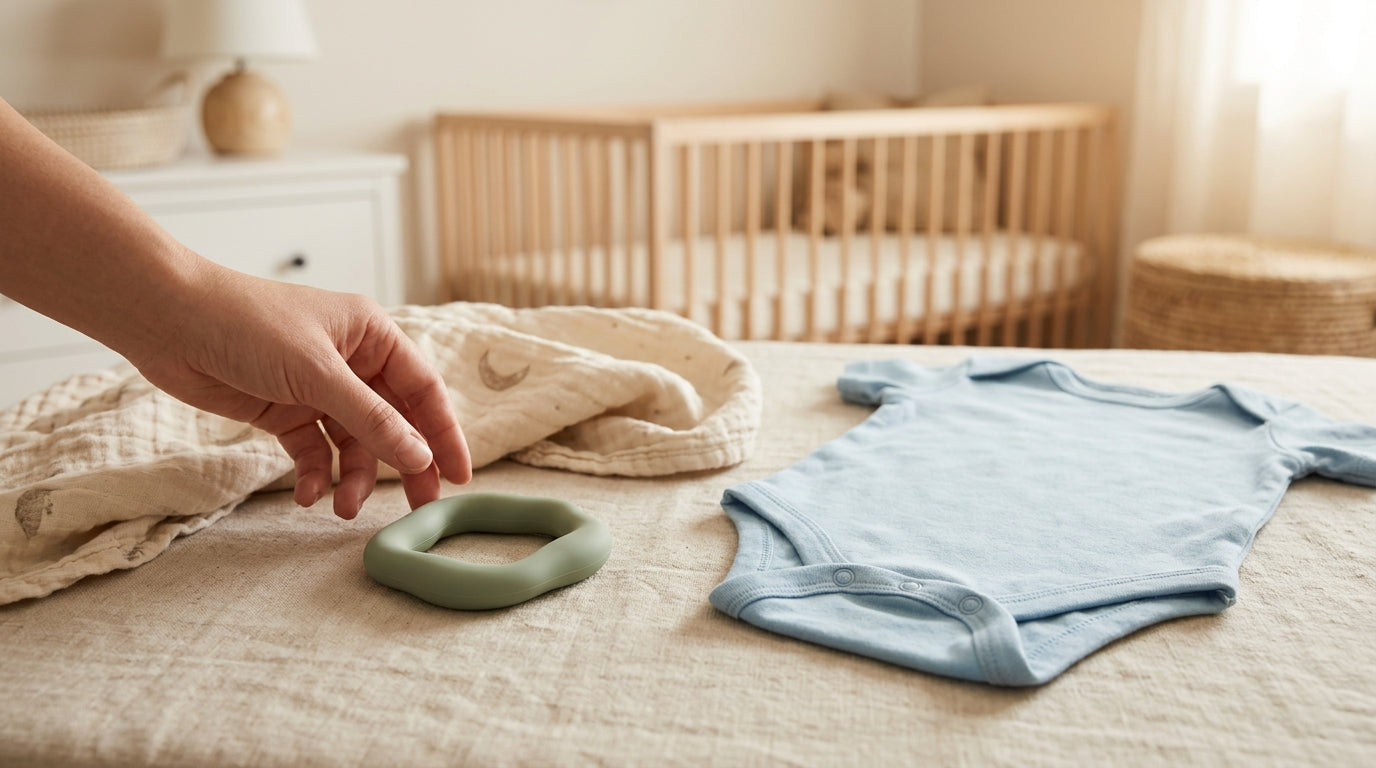
The digital thermometer read 99.1°F at exactly 3:14 AM on a Tuesday, and my daughter was methodically attempting to gnaw through the wooden rail of her crib like a beaver possessed. Outside, the Portland rain was doing its usual endless drizzle, but inside my brain, alarm bells were absolutely blaring. I had my phone brightness turned all the way down to avoid waking my wife, aggressively typing when do babies start teething into a search bar while holding a squirming, drooling sixteen-pound weight in my other arm. Up until this point, I thought I had the infant firmware somewhat figured out, but apparently, the introduction of tiny bones pushing through gums completely scrambles their logic board.
My daughter is eleven months old now, and we've successfully spawned about six teeth, but that initial month-four hardware upgrade was a total system shock. I track almost everything—sleep windows, ounces consumed, exactly how many diapers we burn through in a 24-hour cycle—but nothing prepared me for the sheer volume of fluid a human head can produce when teething begins. It's a miracle she didn't dehydrate from the drool alone.
The Drool Anomaly And Pediatrician Guesses
We ended up at the pediatrician's office two days later because I was convinced the 99.1°F temperature was a massive system failure. Dr. Aris just laughed at my spreadsheet of temperature logs and casually dismantled my entire mental model of how human teeth arrive. From what I understand through her explanation, the whole "massive fever and wild diaper rash" thing is mostly a myth that parents pass around to feel better about their kids being miserable.
She told me that while a slightly elevated temp is normal, a true fever over 100.4°F means there's a separate bug in the system, not just a tooth. And as for the timeline, she basically said it happens whenever it happens. The textbooks claim those bottom two front teeth usually show up between four and seven months, but she's seen babies cut them at three months and others wait until their first birthday. Wrapping medical science in that much uncertainty really messes with my analytical brain, but I've learned that infant development doesn't care about my preferred timelines.
Hardware Solutions For Mouth Pain
Once we established that the crib-chewing wasn't a medical emergency, I had to figure out how to patch the problem. The constant gnawing is just their way of applying counter-pressure to the swollen gums, which makes sense from a physics standpoint. Naturally, I immediately sourced a bunch of teething relief for babies and proceeded to make a terrible mistake.

Instead of doing basic research, I assumed colder was mathematically better and threw a gel-filled ring straight into the deep freeze, which apparently is a fantastic way to give your five-month-old frostbite on their incredibly delicate mouth tissue. My wife caught me handing this literal block of ice to our daughter and swiftly corrected my troubleshooting method. You just put them in the fridge so they get chill enough to reduce swelling without causing tissue damage.
But the absolute MVP of our teething survival kit wasn't a cold ring at all. I'm slightly obsessed with the Panda Teether Silicone Baby Bamboo Chew Toy, and I've got the data to prove its efficacy. I tracked the latency between handing her this panda and the crying stopping, and it always clocks in under four seconds. It's made of food-grade silicone, which is great because I don't have to worry about weird plastic chemicals, but the real genius is the flat, multi-textured bamboo-shaped section. It fits perfectly into her tiny fist, and she can mash it against her gums without gagging herself. Plus, I can just throw it on the top rack of the dishwasher when it inevitably gets covered in dog hair from the living room floor.
We also have the Bunny Silicone & Wood Teether, which is just okay in my book. Don't get me wrong, the sustainable beechwood looks fantastic in all the aesthetic nursery photos my wife curates, and the baby definitely likes the hard resistance of the wood. But from an operational standpoint, I prefer the all-silicone panda because I don't have to think about hand-washing and air-drying wooden parts when I'm running on four hours of sleep.
Distraction As A Core Feature
Around month five, I noticed that pain relief isn't always about pressure or temperature. Sometimes, it's just about overriding their sensory inputs. When her gums were particularly bad, she'd get stuck in a crying boot loop that wouldn't stop until we interrupted her thought process.
This is where I discovered the hidden utility of rattle toys for babies. I always thought rattles were just annoying noise-makers designed to drive parents crazy, but they actually serve a critical developmental function. If you shake a wooden rattle right in her field of vision, the auditory and visual feedback completely distracts her from the pain signal coming from her mouth. She reaches for it, realizes she has a hand, remembers she likes making noise, and suddenly the teething crisis is paused for at least twenty minutes.
If you're currently trying to debug a screaming infant at two in the morning, you should probably take a look at Kianao's organic teething toys and baby accessories before you completely lose your grip on reality. Having the right tools on standby is the only way to survive.
My Ongoing War Against Metal Snaps
The secondary effect of all this teething is the drool, which leads directly to my biggest parenting grievance. The sheer volume of saliva means babies clothes are constantly wet, which causes drool rash on their neck, which means you've to change their outfit four times a day.

I firmly believe the person who invented tiny metal snaps on baby rompers hated parents with a fiery passion. There's nothing quite like standing in a dark nursery at 4 AM, trying to perfectly align fifteen microscopic metal buttons on a kicking, screaming infant. If you miss one snap at the top, you don't realize it until you reach the ankle, and your kid ends up with one leg completely trapped while the other is exposed to the elements. It's a fundamentally broken user interface. I've spent hours cursing at these garments while my daughter laughs at my incompetence. Socks are a totally useless concept for infants and I refuse to engage with them entirely, but you can't exactly skip the bodysuit.
The only saving grace in the wardrobe department has been discovering garments engineered with actual human use cases in mind. We shifted heavily toward the Organic Cotton Baby Bodysuit for our daily rotation. The organic cotton is great because it doesn't trigger her eczema when it gets damp with drool, but the real engineering marvel is the envelope shoulders.
If you haven't experienced a code-red diaper blowout yet, your time is coming. When toxic waste breaches the containment zone and travels up the back, you can't pull the shirt over the baby's head without painting their hair with the aftermath. Envelope shoulders are overlapping flaps of fabric that allow you to stretch the neck hole incredibly wide and pull the entire contaminated garment down over their shoulders and legs. It's brilliant. It's the kind of fail-safe design I appreciate in my daily life.
Finding Safe Supply Chains
My wife handles most of the babies shop runs these days because I've a habit of making purchasing decisions based purely on fabric data rather than cuteness. I'm the guy standing in the aisle googling the toxicity levels of synthetic dyes while the baby tries to eat my shoelaces.
Apparently, newborn skin is incredibly permeable, meaning it absorbs whatever chemicals are sitting in the fabric. We stick to organic cotton and bamboo now because they're grown without the heavy pesticides that end up lingering in conventional textiles. It just makes logical sense to limit unnecessary chemical inputs when their little systems are already working overtime to build teeth, learn motor skills, and process the world.
Looking back at month four from my current vantage point at month eleven, the whole teething and clothing ordeal feels like a blur of damp fabric and silicone toys. The teeth keep coming, and the clothes keep getting outgrown, but you eventually figure out the user manual for your specific kid. You learn which teether stops the crying, which bodysuit survives the blowout, and exactly how many seconds you've before a wet shirt turns into a meltdown.
If your kid's firmware is currently glitching out over a new tooth, grab some decent, data-backed gear at Kianao to patch the problem before tonight's sleep cycle.
Dad-Sourced Troubleshooting FAQs
Wait, when do the first teeth actually show up?
From my highly stressful experience and what my pediatrician explained, there's no fixed release date. Most manuals say four to seven months, but my daughter started chewing on her crib at four months and didn't actually cut a visible tooth until month six. You just have to watch for the drool floods and the aggressive gnawing on everything in sight.
Is a fever a normal teething bug?
A slight temperature bump seems to happen, but my doctor was super clear that anything over 100.4°F is a separate issue entirely. I used to blame every weird symptom on teething, but apparently, big fevers and massive stomach issues mean they probably just picked up a virus from chewing on a public shopping cart.
How do I seriously clean these teethers?
If it's purely silicone like my favorite panda one, I just aggressively throw it in the top rack of the dishwasher and let the machine handle it. If you've the aesthetic wooden ones, you can't submerge the wood or it'll warp and get gross. You just wipe the wooden parts with a damp cloth and a little mild soap, then let it air dry completely before handing it back to the screaming gremlin.
Why do people care so much about organic baby clothes?
I thought it was just marketing hype until my kid's neck turned into a red, irritated mess from wearing cheap synthetic blends mixed with her constant teething drool. Organic cotton breathes way better, which controls their temperature, and it doesn't have the harsh residual chemicals from manufacturing that aggravate sensitive baby skin.
Can I just freeze the teething rings to make them extra cold?
I tried this exact thing and got scolded. Don't freeze them into literal ice blocks because it can genuinely cause frostbite on their super sensitive gum tissue. Just toss them in the refrigerator so they get nicely chilled. It drops the temperature enough to reduce the swelling without causing a localized freeze injury in your baby's mouth.




Share:
How to Talk About the Babi Yar Massacre Without Breaking Your Kids
Why Searching "Babies R Us Near Me" Won't Save Your Sanity