

Before I ordered my first custom onesie, my mother called me in a panic to say that putting a baby's name on their chest is how kidnappers lure them out of strollers. My neighbor, who coordinates her family's outfits for Tuesday grocery runs, told me the monogrammed hospital announcement set was the single most important purchase of my third trimester. Meanwhile, the charge nurse I used to work with told me to just buy gray rags because everything would eventually be ruined by a fluid that smells like sour milk.
They were all wrong, mostly. Nobody is kidnapping my toddler because his initials are on his chest, but the charge nurse completely underestimated the sheer volume of laundry. And the neighbor doesn't realize that the stiff plastic lettering she bought on Etsy is probably giving her kid contact dermatitis right now.
Let's talk about the trend of babystrampler personalisieren. That's the Swiss term for customizing baby rompers, which is what I'm looking at since I exclusively buy my kid's clothes from Kianao now. You want the cute photos to send to your relatives. I get it. But there's a clinical side to slapping a name on a piece of cotton that most parents completely ignore until they're dealing with a mysterious rash at three in the morning.
Why I care about what ink touches the skin
Infant skin is apparently twenty to thirty percent thinner than ours. My pediatrician explained this to me during a frantic telehealth visit when my son broke out in hives, and she sounded about as sure as a weather forecaster predicting rain. But the basic premise holds up in practice. Their skin barrier is basically a sieve. Whatever you put on it goes right into the bloodstream.
When you buy a cheap custom romper online, they usually print the letters using heavy plastic foils or thick glues. It feels like a bumper sticker. It doesn't breathe at all. Your baby sweats under it, the pores open up, and suddenly that mystery chemical glue is merging with your kid's dermis. I've seen a thousand of these unexplained rashes in the pediatric ward. The parents always think it's a sudden food allergy to sweet potatoes. It's usually their heavily scented detergent or a terrible iron-on decal.
Listen yaar, if you're going to do the whole custom clothing thing, the ink matters a lot more than the font choice. You want water-based pigment inks. They sink into the fabric instead of sitting on top of it blocking the airflow. It's called direct-to-garment printing, which sounds like something an industrial engineer cares about, but you'll care about it when your kid sleeps through the night without scratching his chest raw.
You also need to look for the Oeko-Tex Standard 100 Class 1 certification. It means an independent lab checked the fabric and the ink for heavy metals, pesticides, and formaldehyde. I'd rather not have formaldehyde touching my kid's chest.
The anatomy of a blowout-proof garment
People think designing clothes for a baby is about making them look like miniature adults attending a brunch. It's not. It's strictly about damage control. Dressing an infant is basically hospital triage. You need quick access, secure lines, and a foolproof way to contain biological hazards.

The envelope neckline is non-negotiable. The Swiss call it a Schlupfkragen, which sounds rough but is actually a lifesaver. It's those little overlapping fabric folds on the shoulders. I didn't know what they were for until my son had a diaper blowout that frankly defied the laws of physics. If you've a standard neckline, you've to pull that heavily soiled garment over the baby's head. You end up dragging mustard-colored bodily waste through their hair and over their face while they scream.
With an envelope neckline, you just pull the whole thing down. Right over the shoulders, past the waist, and off the feet. It's a sanitary extraction.
Then there are the snaps. You need crotch snaps for daytime outfits. Zippers are great for sleep, but for daytime custom rompers, snaps let you check a diaper without fully exposing the kid to the ambient air of a Target bathroom. Just make sure they're nickel-free. Nickel is a massive trigger for allergic contact dermatitis. If the product description doesn't explicitly say nickel-free, assume it's made of the cheapest scrap metal available and your kid will react to it within hours.
My complicated relationship with organic cotton
I used to roll my eyes at the organic cotton moms in my neighborhood. It seemed like a ridiculous tax on parenting to buy fancy dirt-free cotton. Then I touched regular polyester-blend babys clothes after washing them fifty times. They feel like industrial sandpaper.
Global Organic Textile Standard certification, or GOTS, is the only label I actually trust anymore. It means there aren't toxic pesticides woven into the fibers. The cotton is usually an interlock weave, which just means it stretches without losing its shape when you're wrestling a squirming toddler into it.
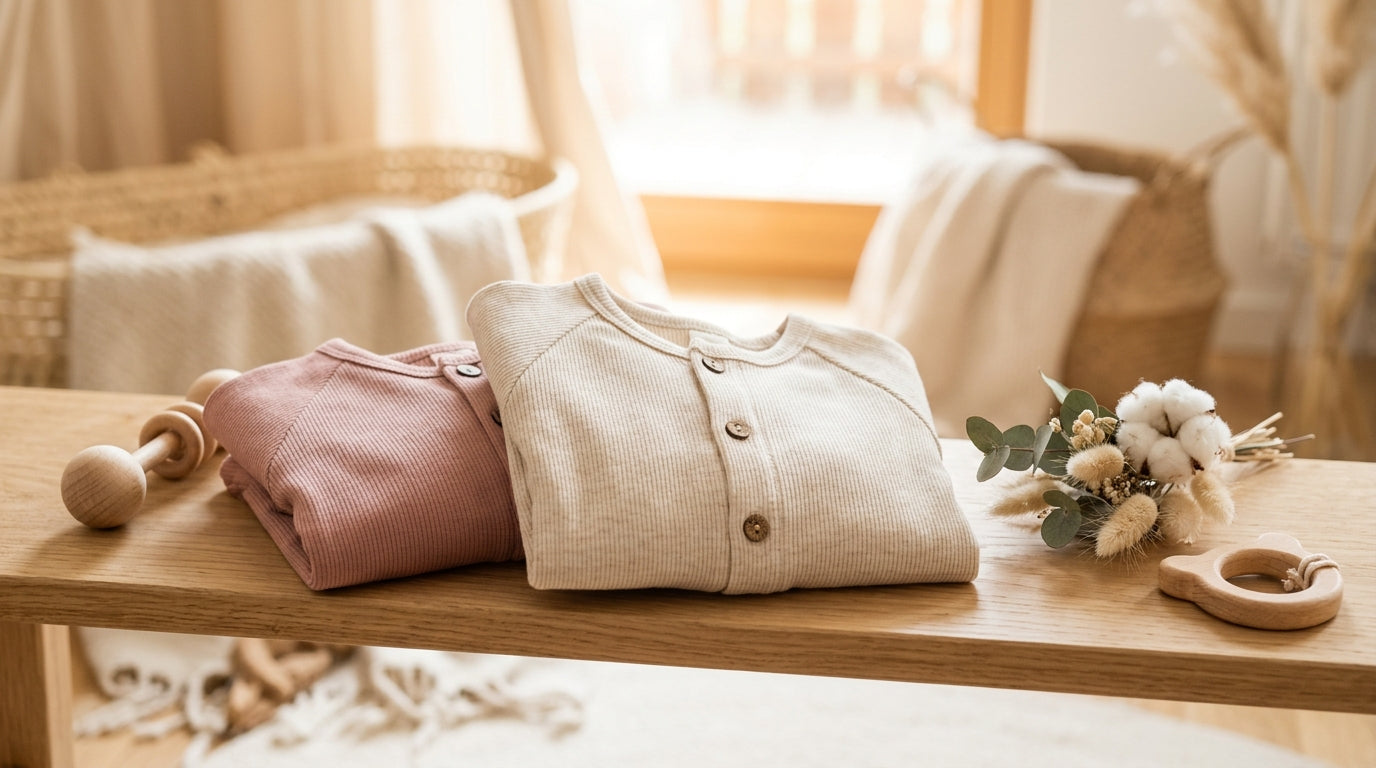
I'm currently putting my son in the Kianao personalized organic romper when we need to look somewhat presentable. This is the one that actually works. They use water-based inks so the fabric stays soft, and the snaps don't give him a rash around his thighs. It survived a severe gastrointestinal event last Tuesday, which is the absolute highest compliment I can give a piece of clothing.
I also tried their organic fold-over scratch mittens. They're okay. The quality is fine, but they fall off his hands within three minutes. He's too busy trying to destroy the living room to keep them on. I prefer rompers that just have the scratch protection built right into the cuffs so I don't have to keep track of tiny accessories that inevitably end up under the couch.
If you're browsing for a gift and don't want to get it completely wrong, take a look at the organic baby clothes collection. Just buy something neutral and let the parents deal with styling it.
How to buy custom clothes without wasting money
Babies grow at a frankly alarming rate. If you're buying a custom outfit for a newborn, they'll wear it for exactly two weeks before it gets tight around the thighs and you've to pack it away forever.

Always size up. If the baby is due in June, buy a size 68 or 74. Let them wear it baggy at first so they can seriously grow into it.
Washing these things is another headache entirely. You can't just throw a custom-printed piece into a boiling sanitize cycle. You have to wash it inside out at thirty or forty degrees Celsius. Never iron directly over the print. I did that once in a sleep-deprived haze and melted my son's name onto the soleplate of my iron. It's still there, taunting me every time I try to press a shirt.
When you're trying to figure out the baby apparel market, you'll see a lot of garbage. Things that look cute on Instagram but feel like stiff plastic wrap in person. Just stick to natural fibers. Your washing machine will thank you.
I sometimes throw on the Kianao bamboo knit cardigan over his custom romper when we go out. Bamboo is incredibly breathable and hides the spit-up stains reasonably well. It's a solid layering piece when the Chicago wind is acting up and I don't want to ruin the aesthetic of the custom piece underneath.
The gift-giving survival strategy
If you're the one buying a custom gift for someone else's baby, don't put a weird slogan on it. Nobody wants a shirt that says lady killer on a three-month-old. It's creepy. Stick to the name or a simple initial.
Keep the colors muted. Earth tones wash better and hide the inevitable carrot puree stains. And for the love of everything, check the certifications. If it doesn't have the standard safety checks, don't buy it. You don't want to be the friend who gifted the baby a chronic rash.
Find a safe personalized gift here before you end up panic-buying something toxic on a discount site.
Questions I get asked about custom clothes
Can I wash custom baby clothes in hot water?
No, you'll ruin it. I tried washing a custom onesie on the sanitize cycle because of a particularly bad blowout. The water-based ink faded immediately, and the cotton shrank so much it looked like it belonged to a doll. Wash it inside out on cold or warm. Just use a good stain remover and hope for the best.
Are iron-on decals safe for my kid?
I wouldn't risk it. Most iron-on decals use heavy glues that block airflow. Your baby will sweat underneath the plastic patch, and that trapped moisture causes heat rashes. Stick to prints that genuinely absorb into the fabric.
Why does everyone talk about the envelope neckline?
Because nobody wants to pull poop over a screaming infant's face. The envelope folds let you pull the garment down over the shoulders instead of up. It's a tiny design feature that saves you from giving your baby an unscheduled bath in a public restroom sink.
What size should I order for a baby shower gift?
Don't buy newborn sizes. They grow out of them while you're still cutting the tags off. Buy a size that fits a six-month-old or a nine-month-old. The parents will be thrilled to have something in the closet when the baby inevitably outgrows their entire wardrobe overnight.
Is Oeko-Tex certification really that important?
Yes. It's not just marketing fluff to charge you more. It means an independent lab checked the fabric and the ink for heavy metals, pesticides, and formaldehyde. I don't want formaldehyde touching my kid. You probably don't either.




Share:
The Truth About Funny Baby Rompers When You Have Twins
Bedruckte Baby Strampler: Troubleshooting the Custom Romper