

Dear Jess from last May,
I know you're currently hyperventilating beside the inflatable kiddie pool, tasting cheap PVC plastic because you lost the air pump again, while Jackson—our lovely, feral four-year-old—is threatening to launch himself off the patio furniture into the deep end. You're sweating through your shirt in this ninety-degree Texas humidity, trying to jam a squirming infant into a ten-dollar plastic ring you bought on a late-night Target run. I'm writing this to you from the future while folding my fourth load of laundry for the day, mostly to save you some money, a lot of anxiety, and a highly embarrassing conversation with our doctor about infant water gear.
I know mom and grandma keep telling us that we just bobbed around in old black tire tubes in the creek and we turned out fine, bless their hearts, but their survival bias is showing. Water safety with three kids under five is a completely different ballgame, and the stuff you're about to buy is going to make your life so much harder than it needs to be. So grab your iced coffee, ignore the toddler trying to eat pool chalk for two minutes, and listen to me about what actually works.
Those cute plastic sit-in rings are a literal trap
You know the ones I'm talking about. The classic baby float for the pool where their little legs dangle through two holes in the bottom, and they sit upright like they're in a floating high chair. I bought three of them because they were cheap, they had a cute little steering wheel, and I figured they would keep the baby contained while I dealt with the older kids. I'm just gonna be real with you—throw them in the trash right now.
When I took the baby for his nine-month checkup, our doctor casual dropped this terrifying piece of information on me that completely ruined my week. She made it sound like putting babies in a vertical, upright position in the water teaches their developing muscles the exact wrong thing to do. Apparently, when they sit straight up and down in a float, their muscle memory learns that vertical equals floating and breathing. But out in the real world without a float, being vertical in the water is the drowning position, which means if they ever fall in, their instinct is to just try and stand up in the water instead of kicking onto their bellies or their backs.
I honestly thought she was being a little dramatic until I watched Jackson bobbing in one of those cheap rings at the community pool last summer. He leaned forward to grab a wet leaf, the entire ring flipped completely upside down, and his legs were trapped in the holes while his head was underwater. I was sitting right there on the edge and grabbed him instantly, but that split second took five years off my life and made me realize that these things are just toys, not life jackets.
Oh, and those weird inflatable rings that go around a baby's neck to make them look like floating disembodied heads on social media? I read somewhere that the FDA said they can severely strain their little neck muscles and deflate without warning, so let's just agree to never bring one of those into our house.
Why the expensive foam thing is actually worth the money
Look, I'm a budget-conscious person who runs a small Etsy shop, and I physically recoil at spending fifty bucks or more on a baby accessory that they're only going to use for a few months out of the year. But after the flipping incident with the cheap plastic ring, I went down a late-night internet rabbit hole and found this horizontal trainer thing called a mambo baby float.
I know you're rolling your eyes at the price, but you need to buy it. Instead of forcing them to sit straight up, it straps them in so they're lying on their stomach like a little frog, which my doctor seemed to think was much better for actually learning how to swim later on. But the real reason I love it's because it's not inflatable at all.
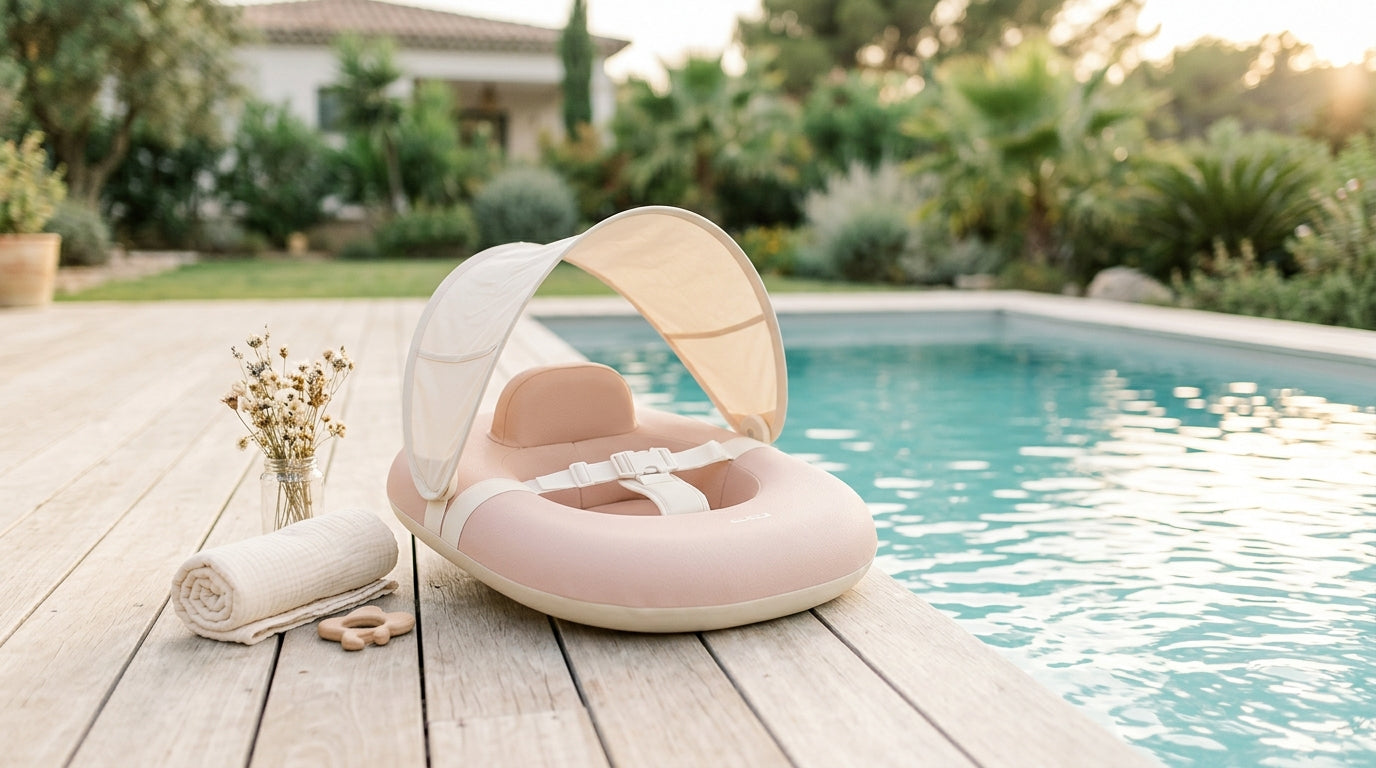
It's made out of solid pearl foam, which means there are no air chambers to pop when the dog inevitably steps on it, and you don't have to spend twenty minutes huffing and puffing into a tiny plastic valve while your kids scream at you to get in the water. It has a five-point harness that honestly clicks together like a car seat, so the baby can't slip out the bottom when you turn your head to yell at Jackson to stop drinking the pool water.
The aesthetic color palette needs to die
I get it, you want the backyard to look like a serene, neutral-toned oasis. You're eyeing those muted beige and sage green pool accessories because they match the patio furniture and look great in photos. Please, for the love of everything, stop trying to make beige happen in the water.

I saw an interview with this Olympic swimmer, Cullen Jones, and he basically said that blue and neutral-colored swimwear or floats are a death sentence. Water distorts everything, and if a kid goes under wearing a blue swimsuit or trapped in a green float, they literally vanish against the pool bottom. Drowning isn't loud and splashy like it's in the movies; it's completely silent and happens in the time it takes you to reach into your bag for a baby wipe. I read a statistic that said it takes less than twenty seconds in just two inches of water, which sounds completely made up until you watch a slippery toddler wipe out on wet concrete.
Buy the obnoxious, eye-bleeding neon colors. I'm talking construction worker orange, highlighter yellow, and radioactive pink. If your neighbors judge your lack of aesthetic cohesion, let them. You need to be able to see exactly where that baby is from across the yard without even trying.
The aftermath of pool time is a sensory nightmare
Here's something nobody warns you about when you spend the whole afternoon at the pool: the chemical rash. After a few hours of marinating in chlorine, sunscreen, and the sweaty friction of a heavy float harness rubbing against his shoulders, the baby's skin usually looks like an angry, red disaster zone by the time we get back to the house.
I used to try wrestling him into synthetic rash guards after a bath, but it just trapped the heat and made him scream louder. This summer, I finally tossed all that cheap polyester and started putting him straight into the Organic Cotton Baby Bodysuit the second he's clean and dry. I'm not usually one to obsess over organic labels, but this thing is genuinely a lifesaver for his eczema flare-ups. The fabric is 95% organic cotton with just enough stretch that I don't have to pull his ears off trying to get it over his head. It's so breathable that he doesn't immediately start sweating again in the awful afternoon humidity, and the flat seams don't aggravate the friction patches on his neck. It's basically the only thing he wears from June to August now.
If you're looking to update your rotation of things that really survive the summer heat, you should really explore our summer baby gear collection for pieces that don't make your kid break out in hives.
Poolside entertainment that won't make you crazy
When you're trying to manage the baby in the float while keeping an eye on the older two, you're going to want to bring toys out to the patio. We brought the Gentle Baby Building Block Set out there a few times. They're just okay for this specific scenario. I mean, they do float, and the soft rubber is completely fine when it gets wet, but let's be real—half of them end up jammed into the skimmer basket by Tuesday, and I get tired of fishing them out with the pool net. They're great for the living room floor, but maybe leave them inside.

What you really need to bring outside is something for the baby to chew on, because for some reason, the minute they get into the water, they try to gnaw on the foam edge of the float. When the baby starts getting fussy, I just hand him the Panda Teether. It's made of food-grade silicone, so the pool water doesn't ruin it, and the little bamboo-textured parts give him something safe to bite down on instead of the harness straps. It's super easy for him to hold on to even when his hands are wet and slippery, and I can just toss it in the dishwasher when we finally drag ourselves inside for dinner.
What you seriously need to check for
Since I know you're going to ignore half of what I say and try to hunt for a bargain anyway, please just make sure whatever baby float you end up buying has these things before you strap our kid into it:
- Solid foam construction: If you absolutely must buy an inflatable one, it better have dual air chambers so the whole thing doesn't sink if one side pops, but honestly, just get the solid pearl foam and save yourself the stress.
- A real harness system: Not just leg holes. You need a five-point harness with a crotch strap that adjusts tightly, because a wet baby is essentially a bar of soap.
- A UPF 50+ sun canopy: Slathering sunscreen on a squirming, angry infant who's covered in pool water and sweat is my personal hell, so having a removable shade built right into the float cuts that battle in half.
Being out by the water with the kids is supposed to be fun, not a constant source of low-grade panic. Throw away the cheap plastic rings, spend a little extra on the horizontal foam trainer, and accept that you're going to be in the water with them the entire time anyway. It's exhausting, but it's worth it.
If you want to make your daily routine a little less chaotic, upgrade your summer setup and check out our sustainable baby gear right here.
My messy, real-life answers to your pool questions
What's the deal with touch supervision?
My doctor hammered this into my head, and basically, it just means you've to be within arm's reach of the baby at all times when they're in or near the water. You can't put them in a float, push them into the shallow end, and turn your back to read a book on a lounge chair. The float is not a babysitter. If they flip over, they can't right themselves, so you've to be close enough to literally grab them before they inhale water.
Are puddle jumpers okay for toddlers?
I used to put Jackson in those arm-band puddle jumper things all the time because everyone else did, but our swim instructor completely tore me a new one over it. She said they train kids to cycle their arms and legs vertically, which again, is the drowning position. Now we just use a Coast Guard-approved life vest if we're on a boat, and if we're in the pool, I'm just holding him or he's on the steps. It's annoying, but I'd rather be annoyed than terrified.
Why do people obsess over the mambobaby?
Honestly, I thought it was just another overpriced Instagram trend, but it's the fact that it doesn't inflate. Knowing that there's zero chance of it popping while we're in the water gives me so much peace of mind. Plus, it puts them on their tummy, so they can really splash and kick their legs behind them instead of just dangling there like a jellyfish.
How do you keep the float from getting gross?
If you leave any pool toy outside in the Texas heat for a week, it's going to grow some kind of weird science experiment on it. With the foam floats, I just rinse it off with the garden hose when we get out to get the chlorine off, and then I stand it up in the shade on the patio to dry. Don't leave it baking in the direct sun, or the fabric cover will bleach out and the foam can warp.
Can I just size up so it lasts two summers?
Absolutely not. Sizing up means the harness won't fit tightly against their chest, and if it's too loose, the baby will slide right through the bottom or tip out the side when they lean over to grab a toy. Buy the size that fits them right now, and when they outgrow it, sell it on Facebook Marketplace to recoup some of the cash. It's just not worth the risk to save a few dollars.




Share:
Decoding Baby First Tooth Symptoms: A Late-Night Debugging Guide
My Messy, Caffeinated Guide to Decoding Infant Nutrition