

It was 3:14 AM on a Tuesday, and I was standing over a pot of rolling boiling water with a pair of metal kitchen tongs, desperately trying to fish out a pump flange before it melted to the bottom of my favorite pasta pot. My oldest son was screaming from his bassinet in the other room, there was water everywhere, and I had already ruined two pacifiers that week by leaving them in the boiling water too long. I remember staring at the steam fogging up my kitchen window and thinking there had to be a way to keep this kid's feeding gear clean without feeling like a sleep-deprived pioneer woman.
My mom, bless her heart, sat at my kitchen island the very next afternoon drinking sweet tea and telling me I was being completely ridiculous. She loved to remind me that she never sterilized a single thing in 1991 and I turned out fine because I was drinking water straight out of the garden hose by the time I could walk. But I’m just gonna be real with you—when you're a first-time mom running on two hours of sleep and pure anxiety, "they'll survive" isn't exactly the comforting medical advice you're looking for.
What my doctor actually told me about germs
I finally broke down at our two-month checkup and asked our doctor if I was going to accidentally poison my baby if I didn't boil every single piece of plastic that touched his mouth. She gave me this incredibly sympathetic look and told me to put the kitchen tongs down. From what I gathered through the fog of my sleep deprivation, there's a pretty big difference between just washing the crusty milk out of a baby bottle and actually sanitizing it to kill the scary germs.
She told me that for a healthy, full-term baby, you really only need to be militant about sterilizing everything for those first couple of months when their immune systems are basically non-existent. I think she said something about how after they hit two or three months, hot soapy water is usually enough for daily cleaning, unless they've been sick with a bug or you've questionable well water. But you absolutely have to sterilize brand new stuff right out of the packaging, which makes sense when you think about how many dirty warehouse shelves those boxes sat on before they got to your front porch.
The absolute nightmare of the drying phase
Here's where I'm going to rant for a minute, because nobody warns you about the moisture. You can boil your bottles or run them through a fancy dishwasher cycle all you want, but if you live in rural Texas where the humidity is constantly at 90 percent, those bottles will never, ever air dry on your kitchen counter.

With my first, I had one of those cute little grass patch drying racks taking up half my counter space. I'd wash the bottles, stick them on the rack, and three days later there would still be condensation clinging to the inside of the nipples. It drove me crazy because wet plastic is basically a luxury resort for bacteria. I'd try to dry them with paper towels, which just left little white fuzzies inside the bottle, defeating the entire purpose of cleaning them in the first place.
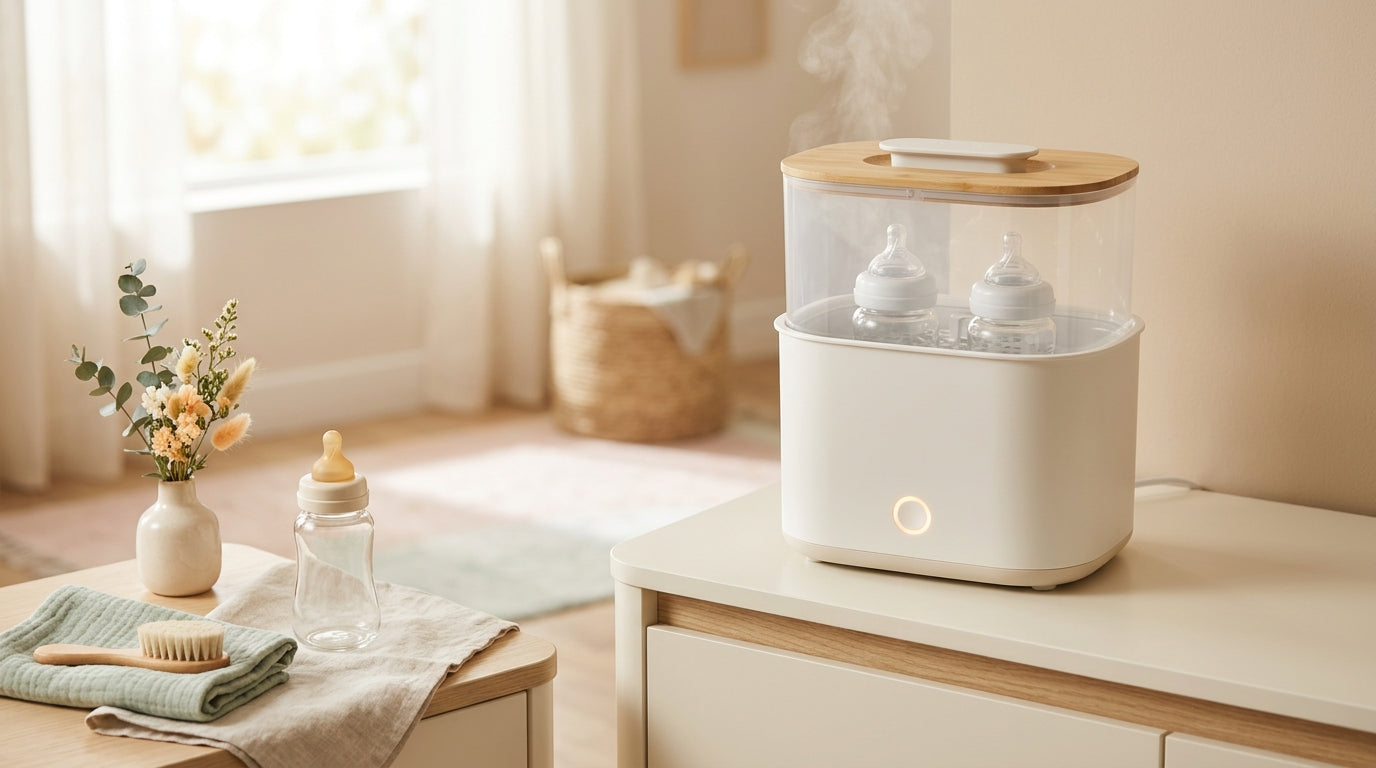
This is why, when baby number two came along, I finally caved and bought an actual countertop appliance. If you're going to spend the money, you absolutely must get a baby bottle sterilizer and dryer combination unit. Don't buy one that just steams things and leaves them soaking wet. The drying function is the only feature that actually matters because it blasts all the leftover moisture out of the nooks and crannies in about forty-five minutes. Most of the newer ones even have some kind of HEPA filter built into the fan, which I guess means it isn't just blowing dusty dog air onto the clean nipples.
Microwave steam bags are basically third-degree burns waiting to happen in your kitchen, so I'm not even going to waste your time talking about those.
A quick word about melting your plastic stuff
Once I started using a dedicated machine, I stumbled across some articles about microplastics that completely panicked me. I read somewhere—and honestly I can't remember if it was an actual scientific study or just a really aggressive natural parenting forum—that blasting plastic baby bot... well, baby bottles with 200-degree steam every single day can cause the plastic to break down faster and leach weird chemicals into the milk.

I don't have a science degree, but seeing how cloudy and scratched up my plastic bottles got after a few months in the machine was enough to convince me. I ended up switching almost entirely to glass and food-grade silicone. They cost a little more up front, but they don't break down in the heat, they don't hold onto that sour milk smell, and you don't have to worry about what invisible garbage is flaking off into your baby's formula.
My favorite things to throw in the machine
The beauty of finding the best baby bottle sterilizer isn't just about bottles—it's about all the other random stuff your kid drops on the floor. I toss everything in there now. Pacifiers, breast pump parts, medicine syringes, you name it.
My absolute favorite thing right now is the Llama Teether Silicone Soothing Gum Soother. My youngest is currently cutting three teeth at once and this llama is the only thing keeping us all sane. I specifically love it because last week she chucked it out of the stroller directly into a puddle in the Tractor Supply parking lot. Instead of throwing it away or trying to scrub parking lot grease out of the little textured grooves with a toothbrush, I just brought it home, washed the visible dirt off, and tossed it into the sterilizer. It's 100% food-grade silicone, so it survived the steam cycle perfectly without melting or getting weirdly sticky.
I also bought the Rainbow Silicone Teether, which is fine, I guess. The colors are pretty and the soft cloud base is cute, but my middle kid mostly just used it as a weapon to hit her older brother, so it spends a lot of time sitting in the sterilizer basket anyway just to keep it out of her hands.
If you're starting to build your stash of heat-safe baby gear, I highly suggest browsing Kianao's organic and sustainable collections for things that won't fall apart in the wash.
Once you hit that six-month mark and start introducing purees, the sterilizer comes in handy all over again. We use the Silicone Baby Spoon and Fork Set constantly. They're soft enough that my baby doesn't gag herself when she violently shoves the spoon into her mouth, and the chunky handles are perfect for her little hands. But honestly, the best part is that after a messy sweet potato disaster, I can just rinse the orange chunks off and throw the utensils straight into the sterilizer basket with the evening bottles.
Instead of making yourself crazy scrubbing, boiling, and crying over wet plastic at midnight, just rinse the crusty milk out of your bottles and let a machine handle the steam and the drying while you go sit on the couch for ten minutes.
Before we get to the questions I usually get from my mom friends about this stuff, definitely take a look at Kianao's silicone feeding gear to make sure you're stocking up on items that can seriously survive the high heat of a steam cycle without leaching nasty chemicals.
Answers to the questions you're probably asking
Do I've to wash the bottles with soap before putting them in the machine?
Yes, you absolutely do. I learned this the hard way. A sterilizer just bakes whatever is left inside the bottle. If you leave milk residue in there and run the steam cycle, you're just going to cook the milk proteins onto the plastic and it'll smell like a dumpster.
Can I just use regular tap water in the heating reservoir?
Honestly, if you use tap water, your machine's heating plate will look like a crusty science experiment in about three days. Tap water has minerals in it that turn into hard brown scale when boiled dry. I buy a cheap gallon of distilled water from the grocery store and it keeps the machine totally clean.
What happens if I forget to descale the machine?
If you're like me and forget to clean it, that brown mineral buildup will eventually start smelling like burnt toast every time you run a cycle, and it can honestly ruin the heating element. Just pour a little white vinegar and water in there once a week, let it sit for half an hour, and wipe it out. It's super easy.
How long do the bottles genuinely stay sterile after the machine beeps?
My doctor told me that the second you open the lid and stick your unwashed hands in there to grab a bottle, the inside is technically no longer sterile. But as long as you leave the lid closed, most machines keep things sanitized for about 24 hours. I usually just leave them in the machine and pull them out as I need them throughout the day.




Share:
A Baby Born In Portland: My Complete First-Time Dad Meltdown
The Truth About Baby Bows (And The Red Marks They Leave)