

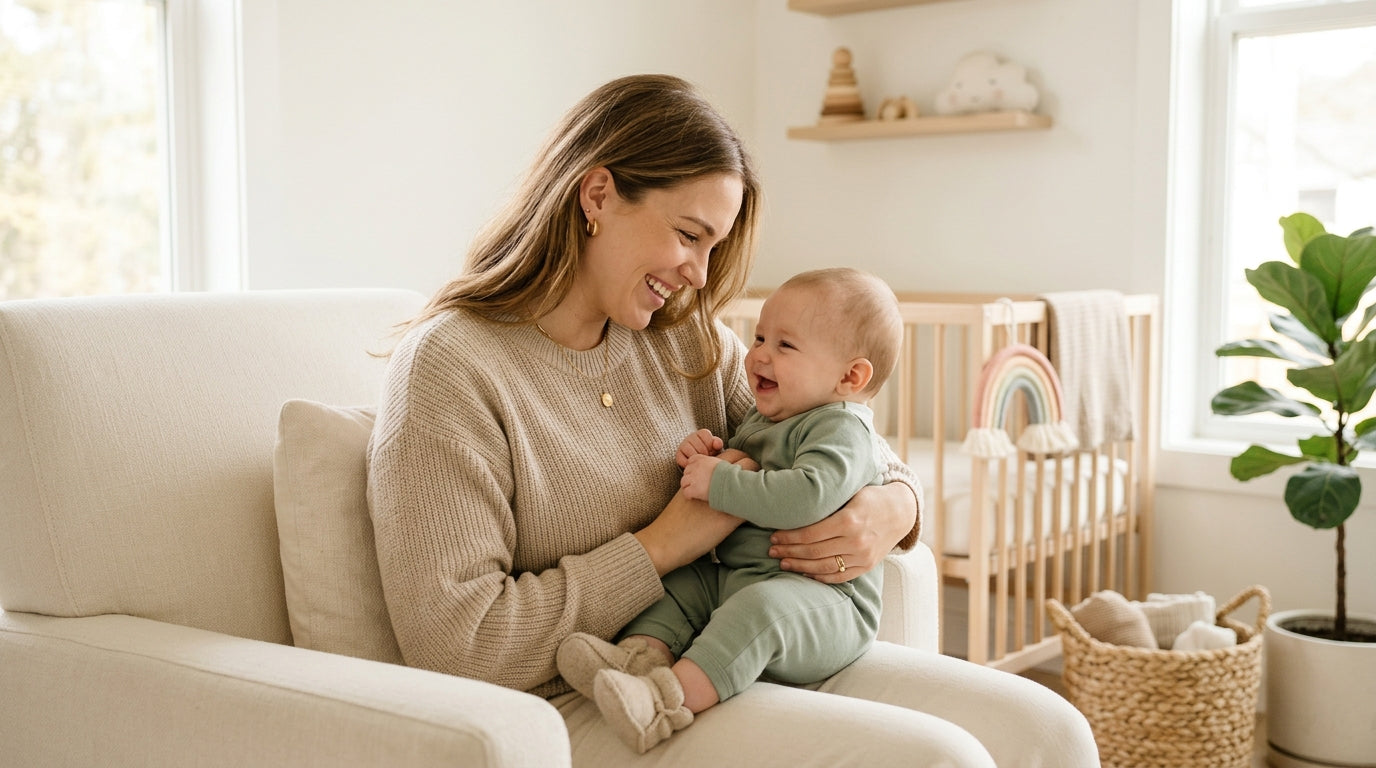
I was sitting on the floor of my guest bedroom—which I generously call my "Etsy shipping headquarters"—with packing tape stuck to my thigh, listening to a 90s hip-hop playlist, when a song came on loudly dropping the phrase "baby mama." I looked over at my eight-month-old, who was currently trying to eat a piece of cardboard, and it just hit me how drastically my understanding of that phrase has changed. Before I had three kids under five here in rural Texas, I thought I knew exactly what that term was all about. Now? I'm just gonna be real with you, the only thing I care about with that phrase is the agonizing wait for this squishy little dictator to actually look me in the eye and say the "mama" part.
The whole pop culture slang situation
If you grew up when I did, you probably associate the term with reality TV stars throwing drinks at each other on reunion episodes. It started out decades ago as a slang term, and for a long time, it was mostly used as an insult. People used it to talk about unmarried mothers, usually with a heavy dose of judgment and drama mixed in. My grandma, bless her heart, would have clutched her pearls and probably washed my mouth out with dish soap if she ever caught me using it to describe someone. To her generation, it was the ultimate disrespect to motherhood.
But the internet took it, chewed it up, and spit it back out, and now you see it everywhere from tabloid magazines to Instagram captions. Some people try to reclaim it as this cute badge of honor, printing it in cursive on matching t-shirts, while others still use it to tear women down in the comments section. It's exhausting, honestly. I don't have the energy for internet drama when I'm running on four hours of sleep and cold coffee. Whether you're married, single, co-parenting, or flying solo, keeping a tiny human alive is universally chaotic, and trying to slap a sassy pop culture label on it just feels like one more thing we're supposed to care about when we barely have time to shower.
I guess if you look in the dictionary, it just says it's an informal noun for the biological mother of a child, but whatever.
How my doctor explained the Dada betrayal
Let's talk about the real drama of being a mom to a baby, which is the absolute betrayal of waiting almost a year for your kid to talk, only for them to look right past you and say "Dada." Or "dog." Or "ball." With my oldest—who's my living, breathing cautionary tale for basically every parenting mistake you can make—I was crushed. I pushed that nine-pound boy out, I nursed him until my soul felt tired, and his first word was "Dada" while pointing at a ceiling fan.

I brought it up to my doctor, Dr. Evans, while she was checking his ears at a checkup, convinced my own kid didn't like me. She kind of laughed and told me it’s almost never personal. From what I understand of her explanation, it all comes down to mouth mechanics and how lazy babies are with their lips. The "D" sound is apparently just physically easier for them to smack out than the "M" sound, which takes a bit more lip coordination. Also, she pointed out that since I was the one home with him all day, I was constantly talking about his dad or the dog. Since I don't walk around referring to myself in the third person like a weird royal, he just didn't hear the word "mama" nearly as often.
Dr. Evans also told me that a baby babbling "mamamama" to a wall doesn't count as a true word anyway, since it's only real when they reliably look right at you and say it on purpose, but honestly, who knows what's actually going on in their fuzzy little heads most of the time.
My thoughts on toys that supposedly help with talking
When Wyatt wasn't talking, I panicked and bought every loud, flashing, plastic toy on the market that promised to teach him words. It was a disaster. He was so overstimulated he just sat there staring at the flashing lights like a zombie. By the time my middle kid came along, I wised up and looked for things that actually encouraged us to interact with each other, rather than letting a machine do the talking.

I stumbled across the Alpaca Play Gym Set with Rainbow & Desert Toys and I'm not exaggerating when I say it's one of the few baby items I kept for baby number three. I'm pretty strict about my budget, and at around $95, it was an investment, but worth every penny. It's just simple, beautiful wood with these gorgeous little crocheted elements. I'd lay under it with her, hide my face behind the hanging alpaca, and pop out exaggerating the "Mmmmmama" sound over and over. Because the gym isn't screaming electronic songs at her, she could genuinely focus on my voice and my mouth. The simplicity of it gave us space to really communicate.
On the flip side, I also bought the Panda Teether Silicone Chew Toy during a desperate 2 AM shopping spree. It's around fifteen bucks, which is great, and it's completely safe and BPA-free, which I care about. But I'm just going to be real with you—it's just okay. It's cute and it gets the job done when their gums are hurting, but my youngest still prefers trying to chew on my actual car keys. It's a solid teething toy, just don't expect it to magically make your kid recite the alphabet.
If you're tired of stepping on loud plastic junk that overstimulates your kid, I highly think browsing Kianao's wooden play gyms and organic essentials to bring a little peace back to your living room.
The reality of getting them to talk
You'll read a million articles telling you exactly how to optimize your baby's language development, but I swear half those writers have never negotiated with a toddler while scraping oatmeal off the ceiling.
I put my youngest in the Organic Cotton Baby Bodysuit almost every day because the stretch in that fabric is the only thing that survives him aggressively wiggling away from me, and instead of stressing over flashcards, I just grab a hand mirror and sit on the floor with him, narrating my utterly boring life in the third person so he can watch my lips move when I say "Mama is drinking cold coffee again."
It feels ridiculous to talk like that. You feel like a narcissist pointing at yourself in the mirror going "Mama, Mama, Mama" while your kid tries to eat their own foot. But it honestly works. You just have to let go of looking dignified. My grandma would probably think I've lost my mind, but then again, she thought a lot of things.
honestly, whether you call yourself a baby mama, a mother, or just a tired lady in sweatpants, that milestone is going to happen on your kid's schedule, not yours. You can buy all the right toys and do all the right mirror exercises, and they might still just yell at the cat first.
Take a deep breath, stop letting the internet make you feel behind, and maybe check out Kianao's collection of sustainable wooden toys if you need a distraction from the waiting game.
A few messy answers to your questions
Why did my baby say Dada first when I do literally everything?
Because the universe has a sick sense of humor, honestly. But practically speaking, my doctor swore to me that the "D" sound is just physically easier for their little lazy mouths to form than the "M" sound. Plus, if you're the one home with them, you're probably saying "look, there's Dada!" all day long. They just hear it more.
When does it count as an actual word and not just babbling?
I used to count every time my oldest made an "mmmm" sound while chewing on a block. But from what I've learned, it's only a true milestone when they look right at you, say it reliably, and clearly mean *you*. If they're just staring at a wall going "mamamama," they're just playing with their spit.
Is the slang term offensive?
Depends entirely on who you ask and what generation they belong to. My mom's generation thinks it's trashy. A lot of people today use it as a joke or a term of endearment. I personally just think it's tired internet slang, and I'm too busy doing actual mothering to care about the label.
How can I get my kid to say Mama faster?
You can't force it, but you can make yourself look ridiculous by talking in the third person constantly. "Give the cup to Mama." "Mama is tired." Get in front of a mirror with them and over-enunciate the sound so they can see your lips moving. But mostly, you just have to wait them out.
Should I be worried if my 10-month-old isn't saying it yet?
My oldest didn't say a clear, intentional word until he was way past a year, and now the kid won't stop talking about Minecraft from the moment he wakes up until he passes out. Every kid is on their own weird timeline. If you're stressed, bring it up at their next checkup, but mostly, just try to enjoy the quiet while it lasts.




Share:
Baby Mel Queries: Decoding Late-Night Infant Sleep Searches
The Real Baby Mama Cast: Surviving Postpartum Without Hollywood