

I was sitting in the dark nursing my son while the Chicago winter tried to break my living room windows. My phone screen was the only light in the room. I had fallen down a 3 AM internet rabbit hole about this new demographic cohort. The kids born between 2025 and 2039. The AI naturals. The ones who will apparently inherit a boiling planet and work jobs that haven't even been conceptualized yet. My mom had just texted me from her time zone asking if the babi needed a heavier winter coat, completely oblivious to the existential dread I was currently marinating in. I closed her text and opened a parenting forum where someone had literally titled their panicked post asking how to prepare their unborn babie for the robot workforce. I almost threw my phone across the room.
Listen, as a former pediatric nurse, I look at everything through the lens of hospital triage. In the ER, a child comes through the doors and you instantly categorize them. Level one is critical resuscitation. Level two is emergent. Level three is urgent. Level four is less urgent. Level five is a scraped knee. Modern parents are walking around treating everything about raising infants like a level one trauma. We read that this new generation is going to be hyper-connected and we immediately assume their brains are going to short-circuit by age three if we make the wrong choices.
What the doctor actually thinks
I dragged this heavy dread to my son's nine-month well-child check. My doctor, Dr. Ali, has been doing this since the nineties. He sits on his little rolling stool and still writes on a paper chart because he refuses to look at a tablet while talking to a family. He looked at my typed list of questions about digital fluency and let out a long, tired sigh. My doctor said we've to stop projecting corporate tech anxiety onto an infant who's currently trying to eat his own foot.
He mentioned that while the culture around us is shifting at lightspeed, the actual architecture of a human brain is identical to one born forty years ago. They still need the exact same boring, offline things to build neural pathways. He told me the science on early AI exposure is basically non-existent right now, so we're all just flying blind in the dark, but the data on unstructured play is rock solid. I walked out of the clinic realizing I couldn't control the global job market in 2040, but I could control what was sitting on my living room rug today.
The plastic toy epidemic
Let's talk about the modern toy aisle for a minute. It looks like a Vegas casino floor. Everything flashes, sings, or speaks two languages simultaneously. We buy these plastic monstrosities thinking they'll somehow give our kids a developmental edge, but they just create tiny dopamine addicts who cry when the plastic dog stops singing the alphabet. I've seen a thousand of these overstimulated kids in the clinic waiting room. They stare blankly at tablets or toys that do all the work for them. When a toy sings, lights up, and moves on its own, the child is just a passive audience member. The brain goes quiet. It's a wildly inefficient way to learn anything about cause and effect.

Then there's the sheer volume of it all. The endless dead batteries. The sudden terrifying music at 2 AM when you accidentally kick a plastic barn in the dark while going to the kitchen for water. It creates a baseline level of sensory chaos in your house that quietly shreds your nervous system while you're just trying to drink a cup of lukewarm chai. On the other hand, some people think raising a kid in a completely silent, beige home is the answer, which is equally unhinged.
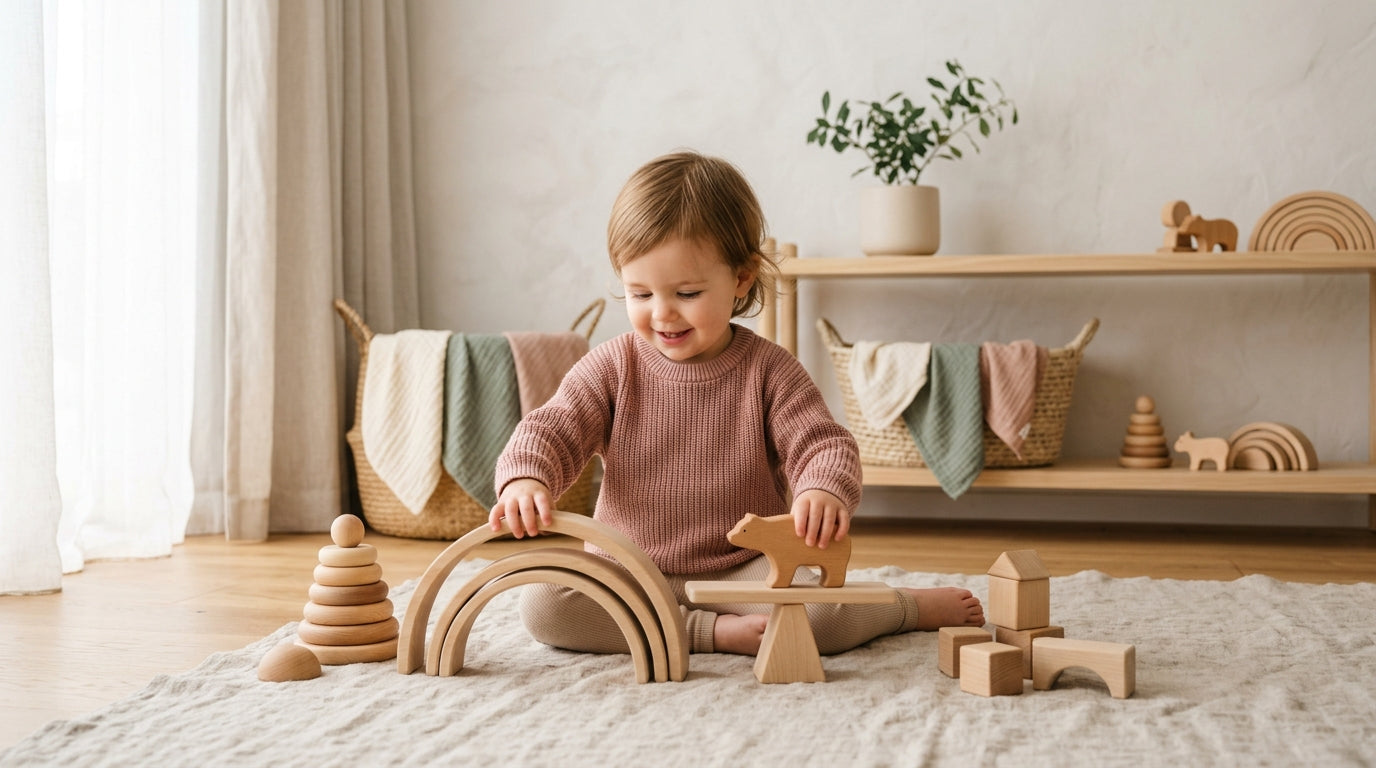
I threw out the singing farm animals and bought the Wild Western Wooden Baby Gym from Kianao. This thing is my actual favorite piece of gear we own. I bought it during a late-night spiral about my kid losing his attention span to screens before he even knew what a screen was. The wooden buffalo and crocheted horse just hang there. They do absolutely nothing unless he reaches up and makes them move. It forces him to use his hands, his eyes, and his brain at the exact same time. The wood gives heavy tactile feedback while the crochet gives soft feedback. It's just a very grounding, analog experience in a house that's otherwise full of glowing screens.
If you find yourself trying to quietly detox your playroom from flashing plastics, look at the Kianao natural collection to find things that won't give you a migraine.
Climate guilt and organic cotton
Then there's the climate reality. The experts say this beta cohort is going to be taught carbon literacy before they learn algebra. As millennial and Gen Z parents, we carry this crushing guilt about the landfills and the oceans. We desperately want to buy sustainable things, but we also don't have the time or energy to hand-weave diapers out of hemp while functioning on three hours of sleep. It's a constant tug of war between my eco-anxiety and my basic need for convenience.

I grabbed the Organic Cotton Baby Blanket with Bunny Print entirely because I was tired of those weird synthetic blankets that make babies sweat through their pajamas during naps. It's exactly what it claims to be. It's breathable, huge, and it survives the washing machine when my kid inevitably covers it in sweet potato puree. It's soft enough that I feel like a good mom for wrapping him in it, and the organic cotton makes my climate panic shut up for five minutes. We use it every single day.
I also picked up the Panda Silicone Teether around the same time. It's fine. It does the job when he's screaming about his front teeth pushing through. The silicone is safe and food-grade, but he drops it on the Chicago pavement constantly so I spend half my life washing the grit off it. It gets the job done when we're desperate and stuck in traffic, even if it's not my favorite thing we own.
Navigating the screen time war
The screen time debate is where everyone loses their minds. The child psychologists insist that technology should be a team sport, meaning we shouldn't use screens as a babysitter. They want us to co-view media and discuss the emotional nuances of a cartoon dog with our toddlers. That's a beautiful concept when you've a full night of sleep and zero laundry. The messy reality is that sometimes you just need to hand over a screen so you can scrub a pot without a child clinging to your leg crying.
Stop panic-buying flashcards to start teaching your six-month-old coding because you need to just let them eat dirt in the backyard. I try to enforce screen-free zones in the car and at the dinner table. Those are the times when my kid is trapped with me anyway, so we might as well interact. Car rides are supposedly the best time for kids to open up emotionally because they don't have to make eye contact with you. Right now, my son's emotional depth extends to pointing at trucks, but we're laying the groundwork.
The reality is we've no idea what the world will actually look like in fifteen years. The sociologists are guessing that critical thinking, collaboration, and emotional resilience will be the only human traits that matter. I don't fully understand the technicalities of how the developing prefrontal cortex handles the digital age. I just know that when I put my phone in a drawer, turn off the smart speaker, and sit on the rug with my kid, he stops whining and I stop clenching my jaw. We survive by keeping things simple, yaar.
If you want to start building a playroom that actually supports your child's brain without destroying the planet, explore the Kianao sustainable essentials.
Questions you're probably asking yourself at 2 AM
How do I prepare my infant for an AI future?
You don't. You prepare them to be a functional human being first. You let them play with wooden blocks, you let them get bored, and you teach them how to handle frustration when a tower falls over. The resilience they learn from analog play is exactly what they'll need to handle whatever weird digital landscape is waiting for them.
What does low-stimulation play honestly look like?
It looks boring to us. It's a baby staring at a shadow on the wall, or shaking a wooden rattle for twenty minutes to see how the sound changes. It's toys that don't require batteries. It means the toy doesn't do the work for the child.
Are organic and sustainable materials really necessary?
Nothing is strictly necessary except food and love. But the synthetic fabrics trigger skin issues, and the cheap plastic toys break in three days and sit in a landfill forever. Buying fewer, better things made from natural materials just makes the daily grind of parenting slightly less toxic for everyone involved.
How do we handle the inevitable screen time?
You set hard boundaries early and expect them to be broken occasionally. Make the dining table a dead zone for phones. Keep the iPads out of the bedroom. When you do use screens, accept that it's a survival tool for that specific moment, forgive yourself, and move on. Guilt is a useless emotion in modern parenting.




Share:
Letter To My Sleep-Deprived Self About This Incredibly Gassy Baby
Honest Girl Baby Shower Themes That Will Not Make You Cringe