

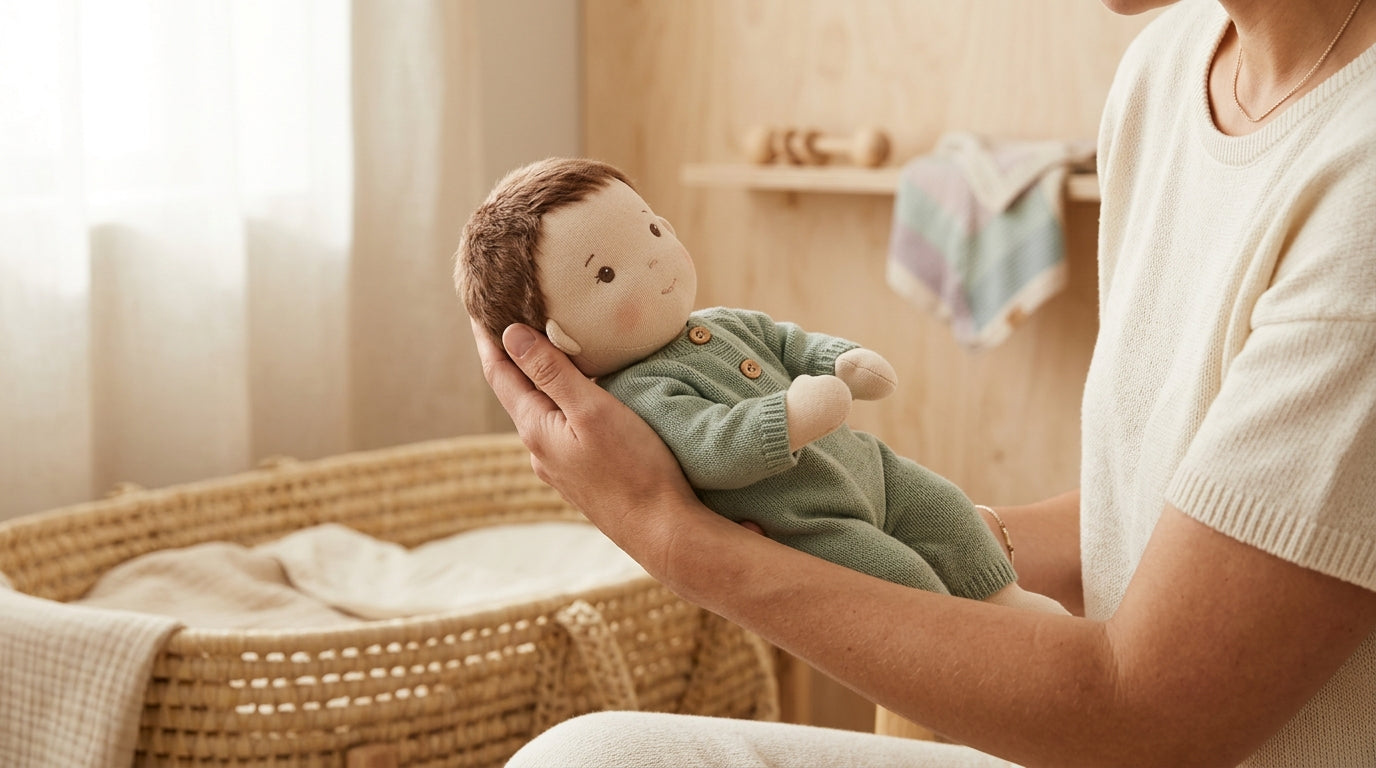
I'm standing over my kitchen sink at two in the morning with a pair of surgical tweezers, a flashlight held between my teeth, and a deep sense of regret. My toddler's favorite interactive infant—the one that supposedly eats synthetic powdered peas and aggressively soils itself—has a suspected bowel obstruction. I used to manage pediatric airways in a brightly lit hospital room, and now I find myself basically performing a microscopic endoscopy on a piece of plastic. I'm snaking a pipe cleaner through a tiny synthetic esophagus trying to dislodge a hardened lump of artificial food before the morning meltdown commences. This is not what I pictured when I thought about the magic of childhood play.
Listen, you buy these things because you want your kid to learn how to be a decent human. We want them to develop the capacity to care for something smaller than themselves. My doctor casually mentioned at our two-year well visit that role-playing care routines helps toddlers process their own chaotic existence and maybe keeps them from terrorizing a future sibling. I guess the pediatric occupational therapists love these things for transition phases. I've seen a thousand kids in the clinic clutching some bald, wide-eyed doll like it holds the secrets to the universe. It definitely keeps them away from screen time for a solid forty minutes, which is a victory in itself. But the trade-off is that you, the exhausted parent, inadvertently become a maintenance worker for a toy.
The dark side of synthetic digestion
You need to understand the anatomy of these alive dolls before you let them cross your threshold. When you feed a doll a mixture of tap water and flour-based play food, it travels down a dark, unventilated plastic tube. Think about what happens to a wet kitchen sponge if you seal it in a plastic container and leave it in a warm house. It becomes a thriving biological experiment. The moisture gets trapped in the internal reservoir because nobody tells a three-year-old how to properly flush a toy's gastrointestinal tract with a mild vinegar solution after mealtime.
I've seen inside the torso of a beloved baby alive model after six months of heavy rotation. It's mildly traumatic. It operates on the same principle as those rubber bath toys that squirt water, which the American Academy of Pediatrics has loose guidelines about regarding standing water. I'm telling you from my own somewhat blurry understanding of fungal growth that black mold thrives in these exact dark, damp conditions. You will eventually notice a smell, or you'll hold it up to the light, and you'll realize a fuzzy black colony has taken up residence inside your child's favorite companion.
The recommended maintenance protocol is honestly insulting to my intelligence. You're supposedly meant to flush the doll with warm soapy water after every single use, disassemble whatever pieces you can pry apart without breaking the warranty, and leave it to air dry for forty-eight hours. Two entire days. Try telling a toddler that their baby is currently in a mandatory two-day quarantine for mold prevention. It goes over about as well as a needle at a vaccination appointment. It's a whole tamasha that always ends in tears.
The truth about choking hazards
The other thing nobody warns you about is the sheer volume of microscopic accessories. These feeding dolls always come with tiny spoons, bizarrely small pacifiers, and little packets of powdered food that look dangerously similar to sugar packets. The box says it's rated for ages three and up, but age ratings often feel like arbitrary guesses designed by corporate lawyers. If you've a younger baby crawling around the house, those accessories are basically homing beacons for their mouths.
It's a textbook code blue waiting to happen on your living room rug. If your actual infant needs something to gnaw on, skip the plastic doll shoes and just buy a purpose-built teether. We ended up tossing the Panda Silicone Baby Teether at my youngest after I caught him trying to chew on the hard plastic foot of his sister's doll. The panda is just okay, honestly. It does the job well enough. It's made of food-grade silicone and I can throw it in the dishwasher, which is my absolute baseline requirement for anything entering this house. The bamboo detailing is fine, but my primary attachment to it's that it's physically too large to swallow and distracts him from the doll's tiny choking hazards.
The disposable diaper racket
This is the part that offends me on a cellular level. The dolls that simulate urination and defecation obviously require diapers. The toy companies conveniently sell microscopic disposable diapers that cost an unreasonable amount of money for what they're. You're essentially paying a premium to put tiny plastic diapers into a real landfill for a completely fake infant.

I refuse to participate in this cycle. I just can't bring myself to buy single-use products for a piece of plastic. When my daughter demanded a fresh diaper for her baby, I simply handed her a real cloth diaper insert and a safety pin, though I quickly realized handing a sharp object to a toddler was a lapse in judgment. Now we just use preemie-sized cloth covers if she insists on the full experience.
Real clothes on fake infants
Instead of buying the overpriced, stiff synthetic accessories, I just started handing over actual infant clothes that we had outgrown. The premature or newborn sizes fit the larger baby dolls surprisingly well. It feels slightly more responsible than buying tiny outfits wrapped in single-use plastic, and the clothes are actually soft.
Plus, when the doll inevitably leaks its synthetic formula—and it'll absolutely leak everywhere—a real cotton garment actually absorbs the mess before it ruins your upholstery. We had this Organic Cotton Baby Bodysuit from Kianao that I absolutely loved when my kid was a newborn. It's that ridiculous soft fabric that somehow survived a million hot washes without pilling or losing its shape. When she grew out of it, it became the official doll uniform. The envelope shoulders make it incredibly easy for an uncoordinated toddler to wrestle onto a plastic torso without asking me for help every four seconds. Buying a few minutes of independence is worth whatever I originally paid for that bodysuit.
A sterile field for playtime
If you're going to cave and let them do the wet feeding and the messy diapering, you've to approach it like a minor medical procedure. You basically have to throw down a sacrificial towel while limiting their water access and praying the internal seals hold. We have a strict towel rule in our house where the doll only eats on a designated bath sheet because the internal plumbing is notoriously unreliable. The liquid systems are prone to catastrophic failure. They call it a blowout on the packaging, but I call it a ruined vintage rug.

I try to teach her to pace the feeding by offering a tiny bit of the food mixture and then immediately flushing the system with a bottle of clear water. It's exactly like flushing an IV line on the ward. If you skip the saline flush, the line clogs. If the toy line clogs, you're the one performing emergency surgery at midnight with a pipe cleaner.
Sibling dynamics and safe zones
The absolute hardest part of having these interactive toys around is managing the split attention between your children. The older one wants to perform complex, highly focused care routines with the powdered food and the tiny spoons. The actual baby just wants to Godzilla their way through the room and destroy everything in their path. You have to physically separate the play zones or someone is going to get a plastic spoon to the eye.
I usually set up the Wooden Rainbow Play Gym on the complete opposite side of the living room. It's one of the very few pieces of baby gear I actually suggest without a single hesitation. It's just wood and fabric. There are no batteries, no flashing lights to induce a migraine, and no robotic voices asking to be fed. It's just quiet, analog distraction. The baby stares at the wooden elephant and works on spatial awareness, while the older one gets to safely mix fake peas for their synthetic child in a different zip code. It's the closest thing to peace you get in a house with two kids.
If you need a way to keep your youngest safely occupied while the older one plays doctor, you can explore Kianao's wooden play gyms and sensory accessories.
The verdict on artificial nurturing
I guess what I'm really saying is that you shouldn't buy the complex, fluid-filled models for a young toddler. You will end up doing all the maintenance work while they just reap the benefits of making a mess. If you want the developmental perks of nurturing play without the hazardous waste management, just get a basic care model. Find one that doesn't eat. Find one that doesn't have an internal digestive tract.
Leave the electronic, eating models for the older kids who can really take responsibility for the cleanup. Because beta, wiping up a real human's bodily fluids is exhausting enough. You really don't need to volunteer to clean up artificial ones in your limited free time.
If you're looking for things that are really easy to wash and won't harbor a secret mold colony in your living room, browse Kianao's organic cotton essentials and safe silicone teethers before you buy another plastic toy.
Questions you're probably asking
How do you really get the mold out of a doll?
You mostly don't. If the black mold has already established a colony inside the plastic tubing, it's basically a wrap. I vaguely remember from my microbiology days that porous plastics hold onto fungal spores forever. You can try a bleach solution syringe, but honestly, it's safer to just throw the doll away and tell your kid it went to live on a farm. Don't risk the respiratory exposure.
Are the food packets toxic if my real baby eats them?
The official brand powders are technically non-toxic, which just means they won't immediately poison a child. It's mostly baking soda, food coloring, and whatever binders they use. But non-toxic doesn't mean edible. If your baby eats a packet, they might get an upset stomach or funky colored poop. Just call poison control for peace of mind, they get this exact question thirty times a day.
Can I use real food instead of the powder?
Absolutely not. Don't even think about it. I had a friend who let her kid feed the doll real applesauce because they ran out of the packets. The sugar and organic matter rotted inside the plastic cavity within a week. The smell was like a level one trauma room on a full moon. Stick to water.
Do I've to use the official brand diapers?
No. They want you to think you do, but it's just a money grab. Any premature baby diaper works perfectly. Better yet, just buy a cheap pack of newborn cloth diaper covers and wash them in the sink. The doll doesn't care about absorbency.
What age is seriously appropriate for the feeding dolls?
The box says three, but my professional opinion as a tired mother is five or six. A three-year-old lacks the fine motor skills to mix the food without painting your kitchen with it, and they definitely lack the executive function to clean the tubes afterward. Save the complicated toys for when they can read the cleaning instructions themselves.




Share:
Real Talk on Baby Acne Treatments (What Actually Saved My Newborn)
The Brutal Truth About Baby Allergy Medicine and Sniffles