

The wind off Lake Michigan is currently performing a hostile takeover of the sidewalk. My toddler, who fit perfectly into his heavy coat exactly three days ago, is now hulking out of the sleeves like a tiny, irritated bodybuilder. The main zipper just split down the middle. We're ten blocks from our apartment, he's starting to turn a concerning shade of pink, and my brain goes entirely blank. This is the exact moment you pull out your phone with freezing fingers, type your desperate query into the search bar, and pray the algorithm points you toward salvation.
It never does.
Panic buying locally is a specific kind of modern parental torture. You stumble into whatever independent shop the map promised was open, dragging a screaming child, only to find a highly curated showroom. A woman in a linen jumpsuit will inevitably approach you to offer a hand-woven alpaca wool playsuit for the price of a mid-size car payment. You just wanted a functional cotton layer to get you home, but now you're standing there debating if your child actually needs a college fund.
The neighborhood boutique trap
In the ER, triage is about sorting the true disasters from the noise. You assess the airway, the breathing, the circulation, and you completely ignore the superficial scrapes. I approach a kids store the exact same way. The problem is that most of these neighborhood boutiques are entirely composed of superficial scrapes. They stock the aesthetic, the trendy, the wooden toys that look beautiful on a shelf but offer zero practical utility when you're elbow-deep in a blowout crisis.
You go in looking for organic basics and leave with a silicone teether shaped like a geometric abstract sculpture that your baby will immediately throw under the couch. The inventory is always completely unpredictable. You might find a single rack of decent onesies, but they'll only have them in newborn sizes or for four-year-olds. There's no middle ground.
Why the local thrift shop gives me palpitations
The alternative to the high-end boutique is usually the local consignment shop. I know the circular economy is the big push right now. Keeping things out of landfills is objectively good. But as a former pediatric nurse, the used gear market makes my left eye twitch.
Listen, you need to abandon the idea of scoring a cheap thrifted car seat and just buy a new one because invisible micro-fractures in degrading plastic will fail spectacularly in a crash, ruining your life faster than you can blink. I've seen a thousand of these well-meaning parents in the clinic who thought a pristine-looking seat from a local resale group was a massive win. My old attending pediatrician used to talk about how the plastic polymers break down over time, especially when left baking in hot cars for years. You have no idea if that seat was in a minor fender bender that compromised the internal structure. You simply don't gamble with structural integrity.
The same goes for sleep furniture. The vintage crib aesthetic is a trap. Drop-side cribs were banned by the federal government over a decade ago for fatal design flaws, yet they still routinely show up in local antique shops and neighborhood swaps. My pediatrician muttered something once about old varnish off-gassing, which sounds terrifying even if the clinical studies are a bit murky, so I just avoid the whole category.
Used denim overalls are completely fine as long as you wash them on hot.
The fragile skin barrier situation
Local shops also struggle with hygiene and skincare basics. A baby's skin is incredibly thin. Some of the older nurses used to say it was thirty percent thinner than adult skin, making it highly permeable to whatever you rub on it. I've treated enough mystery rashes to respect the skin barrier.

When you browse the shelves of a small physical shop, you're often looking at clean, natural products that have been sitting there gathering dust since the previous administration. Natural ingredients expire. Oils go rancid. The preservatives in clean skincare are inherently weaker by design, which is great for your kid's endocrine system but terrible for shelf life.
And that's why I prefer to source my fabrics and basics directly from reliable brands rather than whatever the corner shop happens to have lying around. The Colorful Leaves Bamboo Baby Blanket is my usual emergency layer for the stroller. It's fine. The woodland fairy leaf print is not really my personal vibe, but the bamboo fabric is genuinely cooling and it stops the wind from giving my kid windburn. My pediatrician mentioned that bamboo fibers are rounder and cause less friction than synthetic blends, which seems to track with reality since it absorbs the sweat before my toddler wakes up furious and damp.
How to avoid the sensory nightmare
If the local boutique isn't selling you sad beige aesthetics, the big box stores down the street are peddling the opposite extreme. The toy aisles are a violent assault on the senses. Everything is made of primary-colored plastic, requires six batteries, and sings an off-key nursery rhyme that will haunt your waking hours.
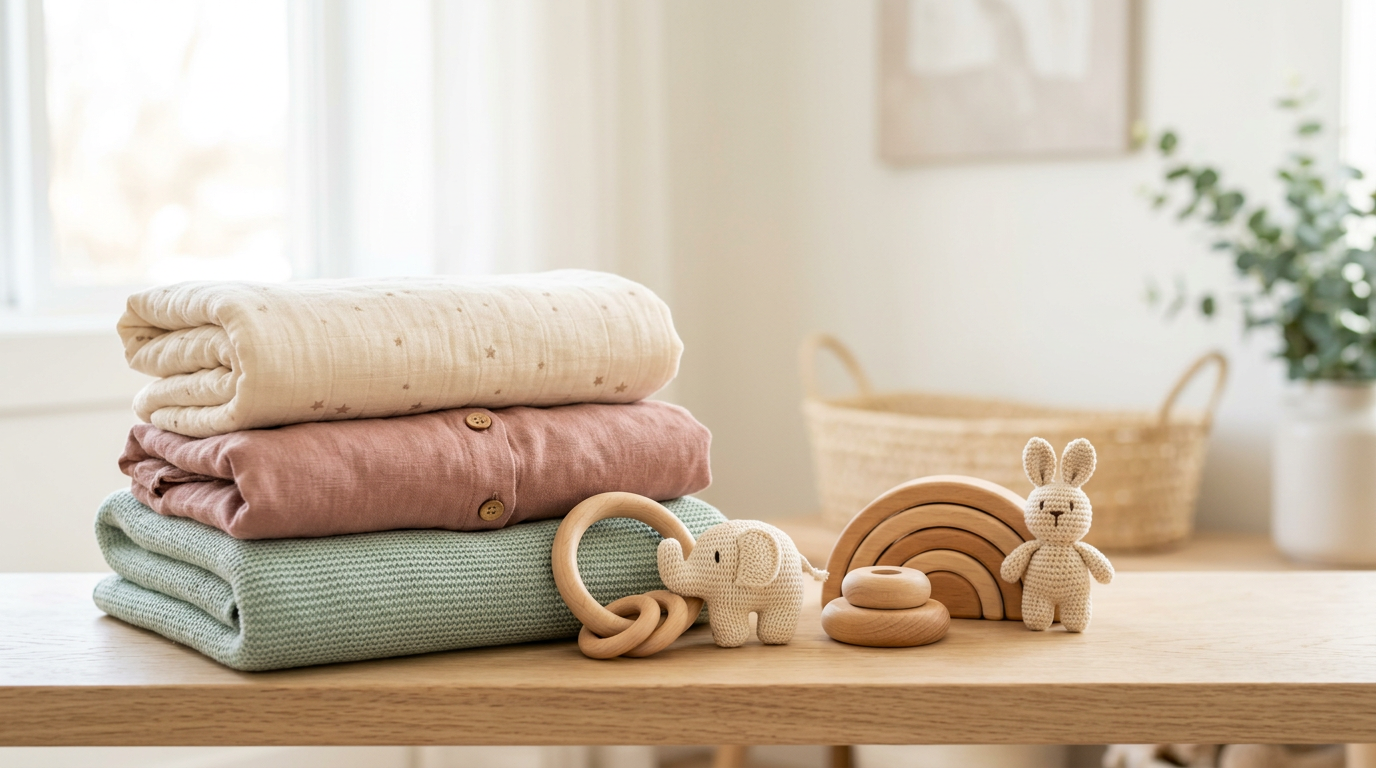
We received a plastic piano mat from a well-meaning relative that nearly pushed me to a breakdown during the four-month sleep regression. I threw it in the closet and swapped it for the Rainbow Play Gym Set. This thing actually saved my sanity. It's just a wooden A-frame with some quiet hanging animals. The elephant doesn't sing to you. The wooden rings just click together softly when batted. It looks like an architectural model rather than a carnival ride, and the baby just stares at the geometry while I get to drink my coffee in total silence.
If you want to skip the unpredictable retail panic entirely, you can look through Kianao's organic cotton collection right here.
The community cover charge
I'll admit that physical stores serve one vital, undeniable purpose. They're an excuse to leave your house when the walls are closing in.

When you've a newborn, the days stretch out into a blur of feedings and laundry. Sometimes you just need to see another adult who hasn't slept in three weeks. The stores that offer lactation rooms, mommy-and-me classes, or a carpeted play area in the back are a lifeline for maternal mental health. You go there to feel human, you chat with a stranger about sleep training failures, you buy a twelve-dollar organic cotton bib as an unofficial cover charge for using the space, and you leave. That's their true function in the ecosystem.
My actual baseline inventory
The trick to surviving early parenthood without relying on geographic luck is to keep your baseline inventory solid. If you've the essentials handled, you're never at the mercy of the neighborhood boutique's strange opening hours or their absurd markups.
I just keep multiples of the Polar Bear Organic Cotton Blanket around the apartment and in the car. It's a workhorse. Organic cotton actually survives my aggressive laundry habits without unraveling. The medical community is always debating the exact impact of agricultural pesticides on conventional cotton, and while the data feels a bit abstract at times, I just buy the organic version to bypass the mental spiral entirely. The blue background hides minor stains, the fabric breathes, and I don't have to think about it.
Stop treating your local boutiques like emergency rooms and build a reliable stash of the basics you seriously need so you can reserve your neighborhood walks for grabbing coffee instead of panic-buying cashmere.
You can browse the full range of sustainable baby essentials right here before your next crisis hits.
Frequently asked questions from the trenches
Are local baby boutiques always more expensive?
Usually, yaar. They have physical overhead, rent, and a very niche inventory. You're paying a premium for the curation and the privilege of touching the fabric before you buy it. It's fine for a special gift, but it's a terrible strategy for building your everyday stash.
Is it safe to buy baby clothes from a local thrift shop?
Clothes are generally fine. Baby skin is sensitive, but a run through the washing machine on the highest heat setting with a free-and-clear detergent usually strips away whatever heavily perfumed soap the previous owner used. Just check the snaps and zippers to make sure they aren't loose choking hazards.
Why are you so against buying used cribs locally?
Because sleep safety rules change constantly based on new injury data, and the crib sitting in a consignment shop was likely manufactured before the current standards were enforced. Hardware loosens, wood warps, and recall notices get lost. I prefer my baby's sleep environment to be boring, new, and structurally sound.
Can I just buy conventional cotton in an emergency?
Yeah, your child won't spontaneously combust if they wear a conventional cotton shirt for an afternoon. The organic cotton preference is about long-term exposure and skin barrier protection, especially for kids prone to eczema. In a pinch, you do what you've to do to keep them warm.
What should I really buy at a physical kids store?
Heavy machinery. Strollers, high chairs, and travel cribs. You need to physically fold a stroller with one hand while holding a ten-pound bag of flour to understand if you can really use it in your daily life. Test drive the gear locally, buy the textiles and basics online.




Share:
Dear past Priya: Surviving the bunny blanket hostage crisis
Dear past Priya: The truth about wooden blocks for your toddler