

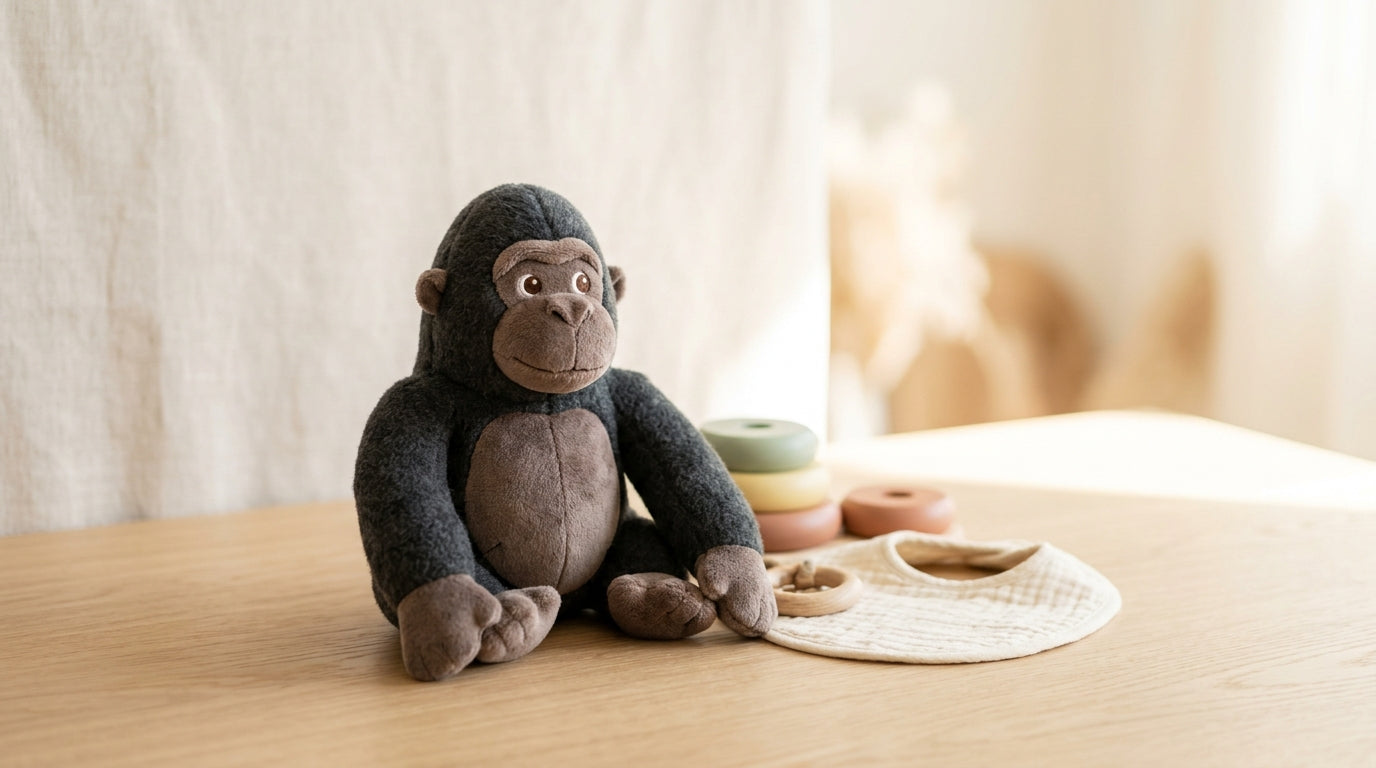
It was 6:14 AM on a Tuesday, I was wearing my husband Mark’s college lacrosse hoodie that smells faintly of old garlic, and I was staring at a gorilla on my phone while my coffee went completely cold. Like, literally ice cold. Mark was in the kitchen arguing with our four-year-old, Leo, who was screaming because his oatmeal was "too bumpy," and I was just sitting there completely ignoring my family because I was down a massive internet rabbit hole about Gladys, the new mother gorilla at the Cincinnati Zoo.
I used to think nature was so majestic and effortless. Before I had my daughter Maya (who's seven now, oh god how did that happen), I pictured wild animals just, like, squatting in a beautiful sunlit forest and bringing a baby into the world without tearing a single thing or shedding a tear. I thought they just intuitively KNEW what to do.
Then I read about Gladys.
That whole peeing on a stick thing
It turns out that in accredited zoos, they manage primate family planning using standard human birth control pills. And when they finally want them to conceive? The zookeepers literally use the exact same over-the-counter urine pregnancy tests I bought at CVS in a panic at 11 PM. I just love the mental image of this majestic 400-pound animal waiting three minutes for a little pink plus sign to show up.
And the morning sickness! Oh my god, the nausea. I was so sick with Leo I couldn't look at a refrigerator without gagging for three straight months. Apparently, Gladys experienced the exact same crap. My OB, Dr. Miller, told me once during a prenatal checkup that morning sickness is just your body reacting to a massive, chaotic hormone surge, which I guess means Gladys and I share the same miserable hormonal soup. It makes me feel weirdly validated to know that even a powerful primate spends her first trimester feeling like hot garbage.
They also have a gestation period of about eight and a half months, which is so close to our nine months that I instantly felt a deep, biological sympathy for her lower back pain. Anyway, moving on.
Where the hell is our village anyway
So Gladys delivered this tiny new gorilla baby, and they named him Mboka Jo. "Mboka" translates to "community" or "village" in Lingala. Which made me cry, obviously, because my hormones are permanently unbalanced and I had only had four hours of sleep, but mostly because the story behind it's so intense. Gladys was actually rejected by her own biological mother. She had to be raised by human surrogates at the zoo who stepped in and became her village.

This whole concept makes me so fiercely angry about modern parenting. We talk endlessly about how "it takes a village" but nobody tells you that the village has completely vanished. I remember sitting on my bathroom floor when Maya was three weeks old, crying into a damp towel because I had no one to hold her while I took a five-minute shower. We're biologically wired to raise a baby with a massive network of aunts and cousins and grandmothers living in the same literal cave, but instead, we're expected to do it completely alone in a house with a partner who maybe gets two weeks of unpaid paternity leave. It's an absolute joke.
The reason your infant grabs your hair so hard
Here's a wild fact that I stumbled onto while totally avoiding getting Leo dressed for preschool. When the human caretakers were raising Gladys, they had to wear these weird, thick "hair vests." Why? Because primate infants are born with the instinct and the actual upper body strength to cling tightly to their mother's fur for dear life.
Human babies have this instinct too. It's called the palmar grasp. My pediatrician, Dr. Aris, mentioned it during Maya's two-month checkup when she reached up and nearly ripped my gold chain necklace right off my throat. The main difference is that we don't have fur anymore, and our babies are essentially floppy little potatoes with zero core strength. They desperately want to cling to us, but they physically can't hold their own weight.
This is exactly why baby carriers are so vital. From what I vaguely remember reading on some hip dysplasia website at 3 AM, you need a carrier that supports their little legs in an "M" shape so their hip joints don't get messed up. It basically acts like our modern version of a hair vest. If you're trying to build your own little eco-friendly nest for your wild things, you should definitely browse Kianao's organic baby collections because they actually source sustainable materials that make this whole parenting gig slightly less destructive to the planet.
Stuff we bought that actually worked
Speaking of the planet, we went through so much gear with Maya and Leo, and a lot of it was cheap plastic junk that definitely ended up in a landfill. It gives me massive eco-guilt now. Especially when you realize that Western lowland gorillas are critically endangered because humans keep destroying their natural habitats for raw materials. There are only a few hundred left in zoos worldwide.

I try to be so much better about what I buy now. My absolute favorite piece of clothing Maya ever wore was the Flutter Sleeve Organic Cotton Baby Bodysuit. I was obsessed with this thing. Maya had super sensitive skin and this was one of the only outfits that didn't leave weird red angry rashes behind her knees. She wore it to her first birthday party, completely mashed a piece of chocolate cake into the collar, and it still washed out perfectly. It’s so soft, and I love knowing the organic cotton wasn't sprayed with toxic pesticides.
On the flip side, we also bought a Wooden Baby Gym for Leo. Look, it's gorgeous. Aesthetically, it made my living room look like a chic Scandinavian nursery instead of a primary-colored plastic explosion. But honestly? It was just okay. Leo would lie under it and stare at the little hanging elephant for maybe five minutes before aggressively rolling away to try and eat a dog hair off the rug. It’s pretty, but don't expect it to magically buy you an hour of free time.
What you WILL desperately need is something for them to bite when those terrible little teeth start cutting through the gums. I swear Leo turned into a feral biting animal when his molars hit. We relied heavily on something exactly like the Panda Teether. It's food-grade silicone and you can just chuck it right in the dishwasher, which is the only way I've the energy to sanitize anything anymore. The texture mimics the natural resistance babies are looking for, which saves your fingers from getting gnawed off.
What I want my kids to know
I finally dragged myself off the couch, poured my cold coffee down the sink, and made a fresh cup. Mark had somehow negotiated a peace treaty with Leo over the bumpy oatmeal. I think watching animals parent just makes me feel a little less insane. If a powerful primate can struggle with morning sickness and need a surrogate community to help raise her infant, maybe it’s perfectly fine that I texted my neighbor yesterday begging her to watch my kids for twenty minutes so I could just breathe.
Before you dive into the messy FAQ below, take a quick second to look at Kianao’s sustainable shop. Because every little eco-friendly choice we make for our kids might seriously help protect the wild spaces for animals like Gladys.
Some messy answers to your questions
Do humans and gorillas really have the same kind of pregnancy?
Basically, yes! From what my doctor vaguely explained to me once, the hormonal shifts are incredibly similar. They even get the same kind of morning sickness and carry for almost nine months. So next time you're throwing up in a bathroom sink at 8 AM, just remember you're participating in a deeply natural primate experience. Or whatever thought helps you survive the day.
Why does my baby pull my hair so hard?
It's that palmar grasp reflex I was talking about. Evolutionarily, they think you're covered in thick fur and they're trying to save their own lives by holding on tight so you don't drop them while foraging in the jungle. It hurts like hell when they grab the sensitive hairs at the nape of your neck, but it's just total biological wiring.
How do I honestly find my "village" if I don't have family nearby?
Oh god, this is easily the hardest part of modern motherhood. You literally just have to force yourself to be intensely vulnerable. You have to awkwardly chat up the tired-looking mom at the park or text your neighbor to ask for a favor. It feels so unnatural when Instagram tells us we should be flawlessly doing it all ourselves, but you just have to swallow your pride and admit you're drowning sometimes. People want to help more than you think.
Are organic baby clothes really worth the extra money?
I absolutely used to think organic baby clothes were just a pretentious, crunchy mom trend. But after dealing with Maya's mysterious skin rashes for six months, I'm a total convert. The lack of harsh chemical pesticides means way less skin irritation. Plus, if we really want these endangered wild animals to survive, we kind of have to stop buying the cheap, toxic fast-fashion crap that pollutes their natural habitats.




Share:
The 3 AM Baby Handoff Protocol: Surviving The Night Shift As A Dad
Surviving the Trend: Keeping a Glassy Baby Safe Around Real Twins